A car shaking when braking is defined as a vibration or pulsing felt through the steering wheel, brake pedal, or vehicle body during deceleration. This symptom signals uneven friction between brake components and is a direct safety concern. Brake-related issues cause about 22% of crashes from component failure, according to NHTSA data. Ignoring the shaking increases stopping distance and accelerates component wear. The good news is that replacing rotors and pads fixes the issue in roughly 9 out of 10 cases, provided the root cause is correctly identified first.
1. Why do warped brake rotors cause shaking when braking?
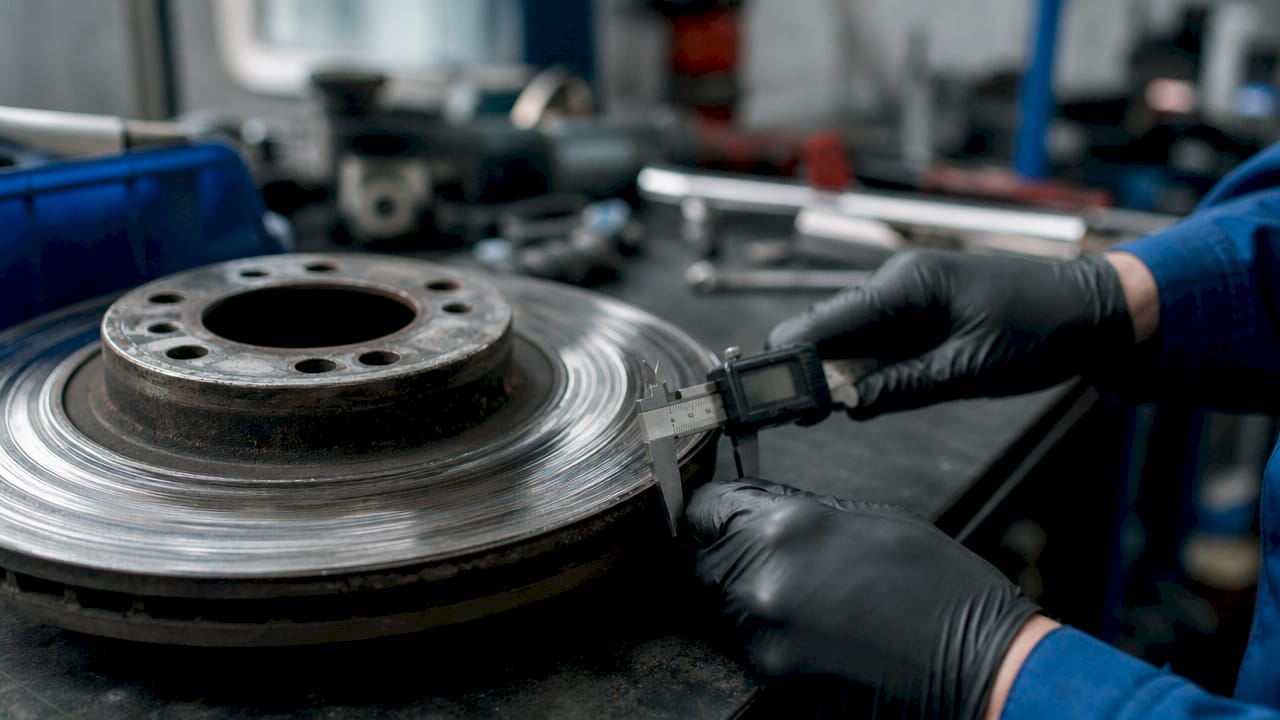
Warped rotors are the most commonly cited cause of braking vibration, but the real culprit is usually Disc Thickness Variation (DTV). DTV refers to microscopic differences in rotor thickness around its circumference. As the rotor spins and the brake pads clamp down, those thickness variations create alternating high and low friction points. The result is a pulsing sensation you feel through the brake pedal and steering wheel.
DTV develops from several sources:
- Lateral runout: The rotor wobbles slightly as it spins, causing the pads to contact it unevenly over time.
- Debris on the hub: Rust, dirt, or old gasket material between the hub face and rotor forces the rotor to sit at an angle.
- Improper lug nut torque: Over-tightening or uneven tightening distorts the rotor hat, creating runout.
- Thermal damage: Repeated hard stops without cooling time bake uneven deposits onto the rotor surface.
Resurfacing a rotor without fixing the underlying runout or hub condition causes the vibration to return within weeks. Proper hub cleaning and lug nut torque in a star pattern to manufacturer specifications is the only way to prevent recurrence. Typical torque specifications fall between 100–140 Nm depending on the vehicle.
Pro Tip: Never use an impact gun to tighten lug nuts. A calibrated torque wrench is the only tool that prevents rotor distortion from uneven clamping force.
2. How worn or glazed brake pads contribute to vibration
Brake pads are the friction material that clamps against the rotor to slow the vehicle. When pads wear unevenly or become glazed from excessive heat, they lose consistent contact with the rotor surface. Glazed pads harden from heat, reducing grip and causing the pad to skip or chatter across the rotor rather than grip smoothly.
Signs that pad condition is contributing to the shaking include:
- Squealing or squeaking during light braking, especially when the car is cold
- Pulsing through the pedal that varies with braking pressure
- Reduced stopping power requiring more pedal effort than usual
- Visible uneven wear when inspecting pads from behind the wheel
Contaminated pads, from oil, brake fluid, or grease, cause the same inconsistent rotor contact as glazing. Selecting quality replacement pads matched to your driving style and replacing them before they reach the wear indicator prevents glazing from developing. Pads that are allowed to wear metal-on-metal will score the rotor surface and turn a simple pad replacement into a full rotor replacement job.
3. The role of seized brake calipers in brake-induced shaking
The brake caliper houses the pistons that push the pads against the rotor when you press the pedal. Each caliper rides on slide pins that allow it to move slightly and release pressure evenly when braking ends. When those slide pins corrode or seize from lack of lubrication, the caliper stays partially engaged. That constant, uneven pad pressure creates localized overheating on one section of the rotor, which rapidly develops DTV.
Key symptoms of a seized or sticking caliper include:
- Pulling to one side during braking, even on a straight road
- One wheel significantly hotter than the others after driving
- Burning smell from a specific wheel, especially after highway driving
- Uneven pad wear where one pad is thinner than its partner on the same axle
Seized caliper slide pins are frequently overlooked during brake service, yet they are a primary driver of rapid rotor wear and recurring vibration. Addressing the caliper without replacing the rotor it damaged leaves the root cause partially unresolved.
Pro Tip: Use only silicone or ceramic grease on caliper slide pins. Petroleum-based grease degrades rubber boots, accelerates corrosion, and makes seizure worse over time.
4. How worn suspension components amplify braking vibration
Suspension components do not cause braking vibration on their own, but they make existing vibration dramatically worse. Ball joints, control arm bushings, tie rod ends, and wheel bearings all work together to keep each wheel tracking straight and stable under load. When any of these components wear out, the wheel gains unwanted movement. Under braking, that movement turns a minor DTV vibration into a violent steering wheel shake.
Worn control arm bushings and ball joints cause dynamic toe changes during braking. The wheel shifts slightly inward or outward as braking force is applied, and that shift amplifies the vibration signal through the steering column. A car with healthy brakes but worn suspension can still shake badly when stopping.
Signs that suspension wear is contributing to the problem:
- Steering looseness or wandering on straight roads
- Clunking or knocking over bumps or during braking
- Uneven or cupped tire wear across the tread face
- Vibration that worsens when braking on rough or uneven pavement
Inspecting suspension components during every brake service visit is standard practice at Integrityautoinc. A worn wheel bearing can mimic brake vibration closely enough to mislead a diagnosis, making a thorough inspection of both systems necessary before any parts are ordered.
5. The impact of tire issues and wheel alignment on brake shaking
Tire and alignment problems generate vibration that can be difficult to separate from true brake-related shaking. The key distinction is timing. Tire imbalance causes vibration at a steady highway speed, typically between 55 and 70 mph, regardless of whether the brakes are applied. Brake-related vibration appears specifically when the pedal is pressed. Unbalanced or unevenly worn tires generate vibration that intensifies under braking because the braking force amplifies any existing wheel instability.
Misalignment adds a different layer to the problem. When wheels are out of alignment, braking forces are not applied evenly across the axle. One side experiences more friction than the other, which creates a pulling sensation and uneven pad wear that eventually produces rotor DTV.
Simple diagnostic steps to separate tire from brake vibration:
- Note when the shaking starts. Constant vibration at speed points to tires. Vibration only when braking points to brake components.
- Check for pulling. Alignment issues cause the car to drift left or right under braking.
- Inspect tire tread. Cupping, feathering, or bald patches indicate balance or alignment problems.
- Rotate and balance tires first if the vibration is constant, then retest under braking.
Regular wheel alignment checks prevent uneven brake force distribution and extend the life of both tires and brake pads. Alignment should be verified any time new tires or suspension components are installed.
6. When should you stop driving if your car shakes while braking?
A shaking car during braking is not always an emergency, but certain symptoms demand immediate attention. A shaking car while braking signals compromised braking that increases stopping distance and raises the risk of component failure. Driving with a severely pulsing pedal or a caliper that is causing the car to pull hard to one side is genuinely dangerous.
Stop driving and arrange an inspection immediately if you notice any of the following:
- The brake pedal sinks toward the floor before the car stops
- The shaking is violent enough to affect steering control
- You smell burning from a wheel after normal driving
- The car pulls sharply to one side under braking
- The shaking has worsened noticeably over a short period
Mild vibration that has been present for some time and is not getting worse can typically be addressed at your next scheduled service. However, routine brake inspection every 12,000 miles is the standard recommendation to catch developing issues before they reach a dangerous threshold. Delaying inspection converts a rotor resurfacing job into a full caliper, rotor, and pad replacement.
7. Should you repair or replace brake rotors to fix the shaking?
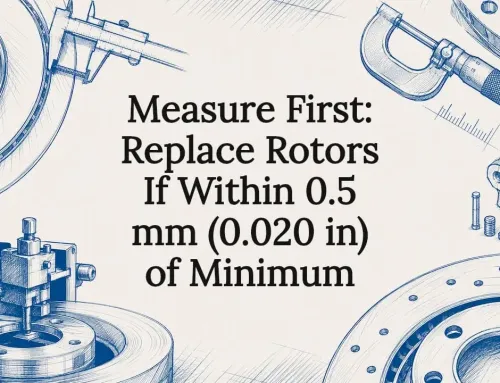
The decision to repair or replace brake rotors depends on rotor thickness, the severity of DTV, and whether the hub and caliper conditions have been addressed. Rotors have a minimum thickness specification stamped on the edge or hat. If the rotor is at or below that specification, resurfacing removes too much material and the rotor must be replaced. If the rotor has adequate thickness and the hub is clean, machining can restore a flat surface and eliminate the vibration.
Resurfacing without correcting runout or caliper issues guarantees the vibration returns. The rotor must be mounted on a lathe that compensates for hub runout, or the machined surface will simply replicate the existing problem. At Integrityautoinc, technicians evaluate hub condition, measure rotor runout, and inspect caliper function before recommending machining or replacement. That sequence prevents repeat repairs and protects the investment in new parts.
Pro Tip: Ask your technician to measure rotor runout before and after installation. A reading above 0.05 mm after mounting indicates a hub or torque issue that will cause the vibration to return.
Key takeaways
Brake vibration is almost always traceable to a specific mechanical cause. Identifying that cause correctly the first time prevents repeat repairs and keeps the vehicle safe.
| Point | Details |
|---|---|
| DTV is the real cause | Disc Thickness Variation, not true warping, creates brake vibration in most cases. |
| Calipers matter as much as rotors | Seized slide pins cause uneven heat and rapid rotor wear that produces shaking. |
| Suspension amplifies the problem | Worn ball joints and bushings turn minor brake vibration into severe steering shake. |
| Tire and brake causes differ | Tire vibration is constant at speed; brake vibration appears only when the pedal is pressed. |
| Correct torque prevents recurrence | Lug nuts tightened in a star pattern to spec stop rotor distortion from returning. |
What I have learned diagnosing brake vibration over the years
A mechanic’s honest take on brake shaking
After years of working on Toyota, Lexus, Subaru, and Honda vehicles, the most common mistake I see is blaming the rotors alone. A technician replaces the rotors and pads, the customer drives away satisfied, and three months later the shaking is back. The rotors did not fail. The hub was never cleaned, or the caliper slide pins were left dry, or the lug nuts were run down with an impact gun instead of a torque wrench.
The diagnosis of “warped rotors” is often technically wrong. What the vehicle actually has is Disc Thickness Variation caused by lateral runout. Machining a rotor without measuring and correcting that runout first is like painting over rust. The surface looks fine for a while, and then the problem comes back worse.
What I have found is that brake vibration is almost always a system problem, not a single-part problem. The rotor, caliper, hub, suspension, and even the technician’s torque procedure all contribute to whether the repair holds. Skipping any one of those checks saves ten minutes and costs the customer a repeat visit.
My advice is straightforward. If your car shakes when you brake, do not accept a diagnosis that only mentions the rotors. Ask whether the hub was cleaned, whether runout was measured, and whether the caliper slide pins were inspected and lubricated. A technician who answers those questions confidently is one you can trust.
— Kelly
Integrityautoinc brake diagnostics for Portland drivers
Brake vibration rarely has a single cause, and a misdiagnosis costs time and money. Integrityautoinc specializes in Toyota, Lexus, Subaru, and Honda brake systems, with technicians trained to evaluate the full system, including hub condition, caliper function, rotor runout, and suspension integrity, before recommending any repair.
If your car shakes under braking, the right starting point is a thorough inspection, not a parts guess. Integrityautoinc provides brake and suspension diagnostics with transparent pricing and honest recommendations. We use OEM-quality parts and calibrated torque procedures on every job. Schedule your inspection and get a clear answer about what is actually causing the vibration.
FAQ
What is the most common cause of a car shaking when braking?
Disc Thickness Variation (DTV) in the front brake rotors is the most common cause. It creates uneven friction during braking that produces vibration through the pedal and steering wheel.
Can I drive safely if my car shakes when I brake?
Mild shaking can be monitored short-term, but severe pulsing, pulling to one side, or a sinking pedal requires immediate inspection. Compromised braking increases stopping distance and the risk of component failure.
How often should brake components be inspected?
Brake inspection every 12,000 miles is the standard industry recommendation. Earlier inspection is warranted if shaking, squealing, or reduced stopping power develops between service intervals.
Does replacing rotors always fix brake vibration?
Not always. If the hub is dirty, the caliper is seized, or lug nuts were improperly torqued, new rotors will develop DTV again. The full brake system must be evaluated to prevent recurrence.
How do I tell if the shaking is from my tires or my brakes?
Tire imbalance causes vibration at steady highway speeds. Brake-related shaking appears specifically when the brake pedal is pressed. If the vibration only occurs during braking, the brake system is the likely source.
Recommended
- Brakes Machining Drums & Rotors: Repair or Replace? – Integrity Auto Inc
- Brake Hydraulic Fluid Flush | Portland OR | Integrity Auto
- Toyota Owners: What Your Check Engine Light Is Trying To Tell You – Integrity Auto Inc
- Is Flushing Your Toyota, Lexus, Scion Brake Fluid Really Necessary? – Integrity Auto Inc