Transmission failure is defined as the progressive breakdown of a vehicle’s ability to transfer engine power to the wheels, and the signs of transmission failure almost always appear long before the system gives out completely. A healthy automatic transmission engages within 0.5 seconds of shifting from Park to Drive. A delay of 1–3 seconds signals a problem that needs attention now. Recognizing these early warning signs separates a simple fluid service from a full transmission rebuild. Integrityautoinc sees this pattern constantly with Toyota, Lexus, Subaru, and Honda owners who waited too long.
1. What are the signs of transmission failure to watch first?
The earliest signs of automatic transmission failure are subtle. Most drivers dismiss them as minor quirks until the damage is severe. The symptoms below are the ones that matter most.
- Delayed gear engagement: The vehicle hesitates before moving after shifting from Park to Drive. A 1–3 second delay is a clear early warning.
- Slipping gears: The engine revs climb but the car does not accelerate. This happens because clutch pack wear or hydraulic pressure loss breaks the connection between engine and drivetrain.
- Burning smell: A sharp, acrid odor from under the hood or beneath the car signals overheated or degraded transmission fluid.
- Unusual noises: Grinding, whining, or clunking during gear changes point to low fluid, worn gears, or solenoid problems.
- Dashboard warning lights: A transmission temperature light or check engine light with a transmission-related fault code requires a scan immediately.
- Fluid leaks: A reddish puddle under the car is transmission fluid. Any leak reduces the fluid level and accelerates internal wear.
Pro Tip: If you notice two or more of these symptoms at the same time, stop driving and schedule a diagnostic inspection. Combining symptoms almost always means the problem has progressed past the easy-fix stage.
Early detection often means a simple fluid change or solenoid replacement rather than a costly rebuild. The window for affordable repair closes fast once slipping and burning smells appear together.

2. How does transmission fluid condition reveal failure signs?
Transmission fluid is the clearest diagnostic tool available without any special equipment. Its color tells a direct story about the health of the system.
| Fluid Color | Condition | Action Required |
|---|---|---|
| Bright red or pink | Healthy | Routine service interval |
| Light brown | Aging | Schedule fluid change soon |
| Dark red or brown | Degraded | Fluid change needed now |
| Black or gritty | Critically contaminated | Immediate inspection required |
Fluid color grades from bright red to black map directly to service urgency. Black or gritty fluid with a burnt smell demands same-day attention, not a scheduled appointment two weeks out.
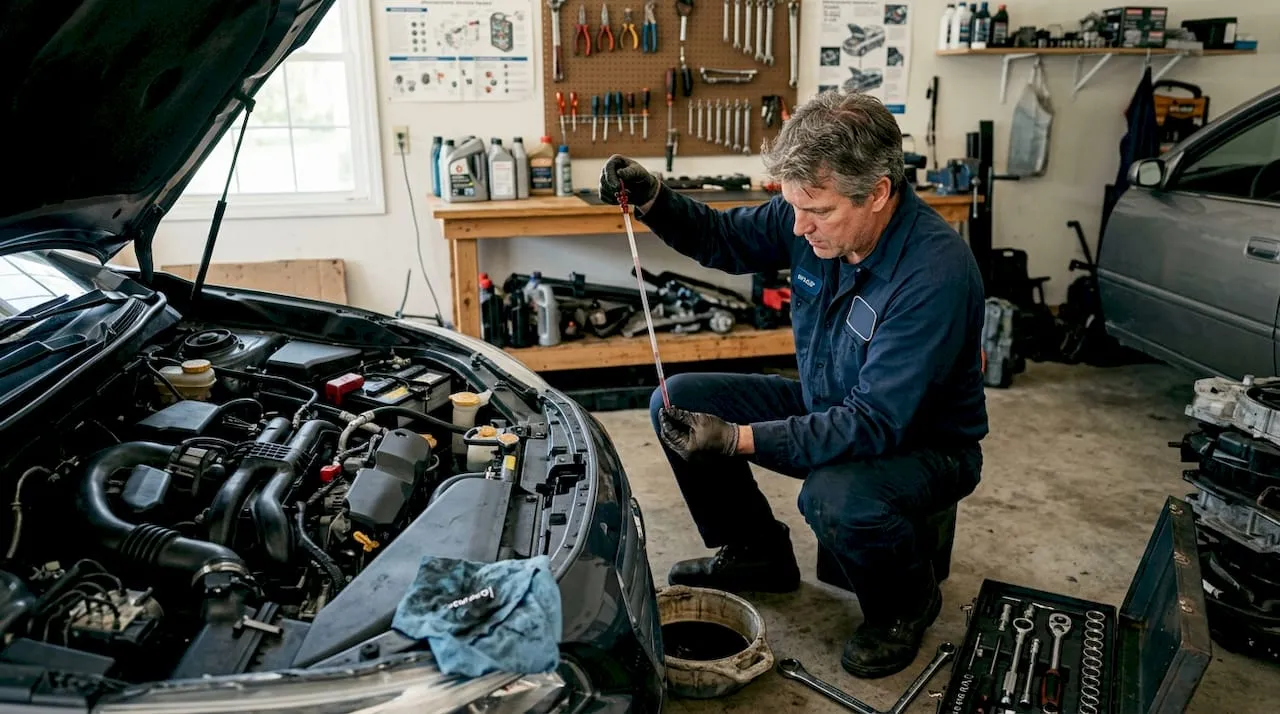
A correct fluid check requires the engine running, the transmission warmed up, and the vehicle on level ground. Cold checks produce false readings and lead to wrong decisions about service timing.
Pro Tip: Pull the transmission dipstick after a 10-minute drive, not a cold start. Wipe it clean, reinsert it fully, then pull it again for an accurate reading. The color and smell together tell you more than the level alone.
Transmission leaks do not always produce visible puddles on the ground. Internal seal wear can lower fluid silently, and a burning smell often appears before any puddle does. An automatic transmission flush at the right interval removes degraded fluid before it causes internal damage.
3. What do unusual noises and sensations indicate about transmission health?
Noise is the transmission’s most direct communication. Each type of sound points to a specific failure mode.
- Grinding during shifts: This typically signals low fluid or worn gear synchronizers. In an automatic, grinding often means clutch pack damage.
- Whining or humming: A steady whine that changes with vehicle speed usually points to a failing torque converter or low fluid pressure.
- Clunking when shifting: A hard clunk moving from Park to Drive or between gears indicates worn motor mounts or a failing transmission mount, though solenoid faults can also cause this.
- Vibration at highway speed: Shuddering at 45–65 mph often traces back to torque converter lockup clutch wear.
Dual-clutch transmission shuddering between 15–25 mph signals contaminated clutch surfaces or a mechatronic unit that needs recalibration, not necessarily a full transmission replacement. This is a common misdiagnosis that leads owners to approve expensive repairs they do not need. A proper clutch assembly inspection can confirm whether recalibration or replacement is the right call.
Rough shifting that feels like a hard jerk between gears connects directly to solenoid timing faults or clutch pack wear. Delayed or harsh shifts usually respond well to fluid service and solenoid testing before any major internal work is needed. Any noise that appears suddenly and worsens over a few days requires immediate inspection.
4. When and why do transmissions enter limp mode?
Limp mode is the transmission control module’s (TCM) protective response to a detected fault. The vehicle locks into a single gear, usually second or third, to allow the driver to reach a shop without causing further damage.
- The TCM detects an abnormal reading from a pressure sensor, solenoid, or temperature sensor.
- It stores a diagnostic trouble code (DTC) and restricts gear selection.
- The vehicle becomes sluggish and unresponsive to throttle input above a certain speed.
- A dashboard warning light illuminates, often the check engine light or a dedicated transmission warning.
Transmission overheating from towing, stop-and-go traffic, or degraded fluid is one of the most common triggers for limp mode. Overheating damages seals and clutch packs quickly, so the TCM acts fast to limit further harm.
Modern TCMs store fault codes that a scan tool can read in minutes. Some shifting problems are software-related and resolve with a TCM reset or software update, with no hardware replacement needed. Ignoring limp mode and continuing to drive aggressively causes the kind of damage that turns a $300 repair into a $3,000 rebuild.
5. What should you do after noticing signs of automatic transmission failure?
Acting quickly after spotting early warning signs is the single most effective way to control repair costs. The steps below apply to any vehicle owner who suspects transmission trouble.
- Stop aggressive driving immediately. Hard acceleration and towing stress a compromised transmission and accelerate internal wear.
- Check the fluid level and color. Use the warm-engine method described above. If the fluid is dark or smells burnt, do not delay service.
- Scan for fault codes. An OBD-II scanner reads TCM codes and gives a technician a starting point. Many auto parts retailers offer free code scans.
- Avoid transmission additives sold over the counter. These products rarely fix mechanical problems and can interfere with fluid chemistry, making diagnosis harder.
- Schedule a professional inspection promptly. A specialist familiar with your vehicle’s transmission design will catch problems a general shop might miss.
Proactive fluid checks and TCM scans are the two most effective prevention tools available to any vehicle owner. A transmission fluid service at the manufacturer’s recommended interval costs a fraction of what a rebuild runs. Preventive care based on current 2026 service standards means checking fluid condition every 30,000 miles for most automatic transmissions, or sooner if the vehicle tows regularly or operates in stop-and-go conditions.
Key Takeaways
Catching the signs of automatic transmission failure early, especially fluid condition and delayed engagement, is the most reliable way to avoid a full rebuild.
| Point | Details |
|---|---|
| Delayed engagement is a clear warning | A 1–3 second delay shifting into Drive signals low fluid or failing components. |
| Fluid color guides urgency | Black or gritty fluid with a burnt smell requires same-day inspection, not a scheduled visit. |
| Noise identifies the failure type | Grinding, whining, and shuddering each point to specific components that need testing. |
| Limp mode protects but demands action | A TCM fault code in limp mode needs a scan and diagnosis before driving continues. |
| Early service saves money | Fluid changes and solenoid tests often resolve symptoms before internal damage occurs. |
What I’ve learned from watching transmissions fail slowly
Most vehicle owners believe transmission failure happens suddenly. In practice, the warning signs appear weeks or months before the transmission stops working. The problem is that each individual symptom feels minor on its own. A slight hesitation shifting into Drive. A faint burning smell after a long commute. A brief shudder at low speed. Owners rationalize each one away until the transmission locks up on the highway.
The most expensive repairs I have seen at Integrityautoinc were all preventable. A Toyota Camry owner came in after ignoring a burning smell for six weeks. The fluid had turned black and the clutch packs were destroyed. A fluid change at week two would have cost under $200. The repair bill was over $2,800.
The other misconception worth addressing is that a check engine light always means an engine problem. A significant share of check engine codes on modern vehicles are transmission-related, stored by the TCM. Scanning the code takes five minutes and costs nothing at most parts retailers. Skipping that step because “the car still drives” is how minor solenoid faults become full transmission failures.
Affordable OBD-II scanners are available for under $30 and read TCM codes on most vehicles built after 1996. Every vehicle owner should have one. Catching a P0700 or P0730 code early and bringing it to a specialist like Integrityautoinc gives the technician a clear starting point and keeps the repair focused and affordable.
Integrityautoinc transmission diagnostics and repair
Transmission problems rarely announce themselves with certainty. The symptoms are gradual, and the cost of waiting grows fast. Integrityautoinc specializes in Toyota, Lexus, Subaru, and Honda transmissions, and the team approaches every concern with the same standard: diagnose accurately before recommending any repair.
From fluid condition checks to full TCM fault code analysis, Integrityautoinc uses the kind of thorough process that protects your vehicle and your budget. The shop’s ASE-certified mechanics bring real expertise to every inspection, and the goal is always to find the most affordable fix that solves the actual problem. Schedule a transmission inspection through Integrityautoinc’s maintenance and repair services before a small symptom becomes a large bill.
FAQ
What is the first sign of transmission failure?
Delayed gear engagement is the most common first sign. A healthy transmission engages in under 0.5 seconds; a 1–3 second hesitation after shifting into Drive signals a problem.
What color is transmission fluid when it needs to be changed?
Transmission fluid that has turned dark brown or black, especially with a burnt smell, needs immediate attention. Bright red or pink fluid is healthy; light brown means a change is due soon.
Can a transmission problem be fixed without a full rebuild?
Many transmission problems, including slipping gears and rough shifts, respond to fluid changes, solenoid replacement, or a TCM software reset. Early detection is the key factor that keeps repairs affordable.
What does limp mode mean for my transmission?
Limp mode is a protective state the TCM activates when it detects a fault. The vehicle locks into one gear to prevent further damage and stores a diagnostic code that a technician can read with a scan tool.
How often should transmission fluid be checked?
Transmission fluid should be checked every 30,000 miles under normal driving conditions, or sooner if the vehicle tows regularly or operates in heavy stop-and-go traffic. Always check with the engine warm and the vehicle on level ground for an accurate reading.
Recommended
- Toyota Owners: What Your Check Engine Light Is Trying To Tell You – Integrity Auto Inc
- Integrity Auto Honda-Subaru-Toyota-Lexus Repair Site Map
- Keep Your Vehicle Running Smoothly in Hot Weather – Integrity Auto Inc
- Maximize Your Vehicle’s Longevity: The Importance of 30k, 60k, and 90k Mileage Services – Part 3 – Integrity Auto Inc