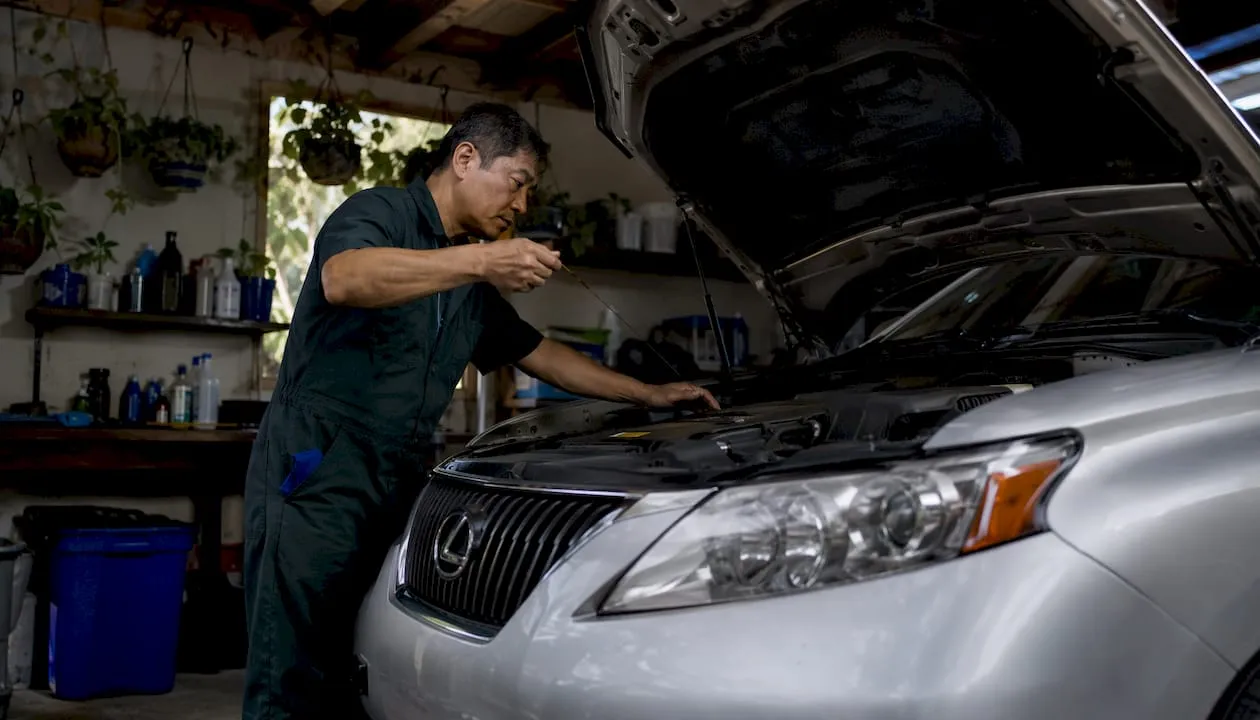
For most modern Lexus automatics and hybrid transaxles, the correct transmission fluid is Toyota/Lexus Genuine ATF WS (“World Standard”), a fully synthetic low-viscosity fluid engineered specifically for AISIN-WARNER automatic transmissions. The two most common OEM part numbers to look for are 08886-02305 (4 L pack) and 00289-ATFWS (1 L). If the owner’s manual describes the ATF as a “lifetime” fill requiring no scheduled replacement, that language reflects factory test conditions, not the real-world demands of high-mileage or severe-service driving. Independent specialists routinely recommend a conservative drain-and-fill at recommended intervals to maintain transmission health regardless of that wording.
Before scheduling anything, take these two steps:
- Confirm your transmission code. Check the owner’s manual, the service booklet, or the driver’s door placard. The code (for example, U760E, A960E, or a hybrid transaxle designation) tells you definitively whether ATF WS or an older Type T-IV is required.
- Inspect fluid condition now. If the fluid appears dark brown or black, smells burnt, or the car shows any shifting hesitation, do not wait for a scheduled interval. Plan service promptly.
Table of Contents
- Which Lexus models use ATF WS, and what are the part numbers?
- How do you check transmission fluid level on a Lexus?
- What are the signs that Lexus transmission fluid needs attention?
- Manufacturer “lifetime” guidance vs. what independent shops actually recommend
- Where to buy genuine Lexus ATF WS in the U.S.
- DIY drain-and-fill vs. professional service: what each actually requires
- Key Takeaways
- Integrityautoinc: independent Lexus transmission service in Portland
- Useful sources
- FAQ
Which Lexus models use ATF WS, and what are the part numbers?
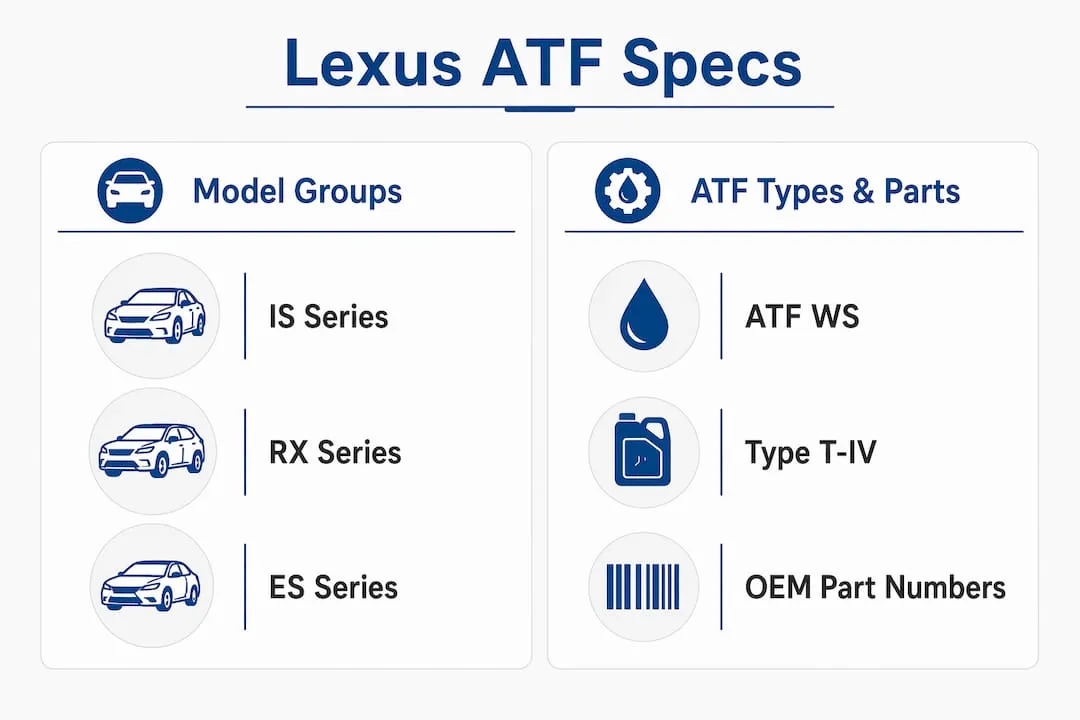
Toyota ATF WS is specified for most Lexus 5-speed and 6-speed automatic transmissions built from the mid-2000s onward, as well as many hybrid transaxles. The fluid is engineered for low viscosity, calibrated friction characteristics, and improved thermal stability — qualities that directly affect shift smoothness and fuel economy in these units.
One critical caveat: older Lexus transmissions built before certain production cutoffs require Type T-IV, not WS. Mixing the two is not recommended and can affect shift quality. The A750F used in Land Cruiser-based models built before August 2003 and the U151E/F built before the same date are examples where T-IV remains the correct specification.
The table below maps common Lexus model groups to their ATF specification and the relevant OEM part numbers.
| Lexus Model Group | Typical Transmission Code | ATF Specification | Common OEM Part Number |
|---|---|---|---|
| IS 250 (2006+) | A960E | ATF WS | 08886-02305 (4 L) |
| RX 450h (2007+) | U760E, hybrid transaxle | ATF WS | 08886-02305 / 00289-ATFWS |
| GS 460 (2006+) | A960E, AB60F | ATF WS | 08886-02305 |
| LS 460 (2007+) | AA80E, hybrid transaxle | ATF WS | 08886-02305 |
| ES 300h (2013+) | U760E, hybrid transaxle | ATF WS | 00289-ATFWS (1 L) |
| RX 500h (2022+) | — | ATF WS | 08886-02305 |
| ES 300 (1999–2006) | U151E | Type T-IV | N/A for WS |
To confirm the correct fluid before purchasing, cross-reference the transmission code in the service booklet with the OEM parts listing at an authorized dealer. Never rely solely on model year — build date and transmission code are the definitive references.
How do you check transmission fluid level on a Lexus?
The answer depends on whether the vehicle has a dipstick. Many older Lexus models (pre-2007 roughly) include a transmission dipstick; most modern models are sealed units with no dipstick at all, requiring a check-plug procedure performed at a specific fluid temperature.
Dipstick-equipped models
- Warm the engine and transmission to normal operating temperature (approximately 158–176°F / 70–80°C).
- Park on a level surface and set the parking brake.
- With the engine idling, move the shift lever through all positions (Park to Low) and return to Park.
- Remove the dipstick, wipe it clean, reinsert it fully, then withdraw it again.
- Confirm the fluid level falls within the HOT range marked on the dipstick. Add fluid only if it reads low.
Sealed transmissions (no dipstick)
- Warm the transmission to the manufacturer’s specified temperature window using a scan tool to monitor fluid temp.
- Raise the vehicle safely on jack stands or a lift.
- Locate the check plug on the transmission case (position varies by model).
- Remove the check plug. Fluid should seep out slowly at the correct level. If no fluid emerges, the level is low.
- Add ATF WS through the fill port in small increments, then recheck at the check plug.
- Reinstall the check plug to the specified torque.
This temperature-sensitive procedure is a primary reason sealed transmission service is best handled by a shop with a lift and a scan tool capable of reading transmission temperature.
Common mistakes to avoid: checking fluid when the transmission is cold produces a false low reading; topping off without diagnosing the cause of a low level can mask a leak; and using Type T-IV in a WS-specified transmission (or vice versa) affects shift calibration.
Pro Tip: When drawing a small fluid sample from the dipstick or check plug, hold it against a white paper towel. Fresh ATF WS is typically red or light pink. Dark brown fluid with a burnt odor is a clear signal that service is overdue. Note the mileage and any shifting symptoms in a service log before calling the shop.
What are the signs that Lexus transmission fluid needs attention?
Degraded or low transmission fluid produces recognizable symptoms. Catching them early is the difference between a straightforward drain-and-fill and a much costlier repair.
Common warning signs include:
- Slipping between gears — the engine revs rise but vehicle speed does not follow, indicating clutch pack wear or low fluid pressure.
- Delayed or harsh shifts — a noticeable pause before engaging Drive or Reverse, or a hard clunk when shifting, often points to additive breakdown in the fluid.
- Grinding or whining noise — particularly under load, suggesting inadequate lubrication in the planetary gear set.
- Transmission overheating — the temperature warning light or an unusually high reading on a scan tool; degraded fluid loses its thermal stability and cannot dissipate heat effectively.
- Dark fluid or burnt smell — dark, difficult-to-see fluid with a burnt odor is one of the most reliable first-line indicators that service is overdue.
Delaying service after these symptoms appear accelerates the damage. Additive breakdown allows metal-on-metal contact inside the clutch packs and valve body. What begins as a shifting complaint can progress to complete transmission failure if the fluid is not addressed. Driving with severe slipping also poses a safety risk, since the vehicle may not respond predictably under acceleration or when merging.
Leaking ATF is an additional concern. Transmission fluid on a hot exhaust component is a fire hazard, and fluid reaching the ground creates an environmental contamination risk. Most municipalities treat used ATF as hazardous waste; it should never be poured down a drain or onto soil.
For a broader checklist of transmission warning signs, including symptoms that indicate more urgent mechanical failure, reviewing a detailed diagnostic guide before calling a shop can help owners describe the problem accurately.

Manufacturer “lifetime” guidance vs. what independent shops actually recommend
The “lifetime” language in many Lexus owner’s manuals and service guides reflects a factory position that the ATF does not require periodic replacement under normal driving conditions. A 2010 GX460 service guide, for example, describes the transmission as a sealed unit and states that periodic fluid replacement is not required, recommending a qualified technician for any repair that involves fluid.
Independent specialists read that language differently. Forum experience and shop practice consistently point to drain-and-fill intervals of 60,000–90,000 miles as a reasonable conservative schedule, with earlier service under severe-use conditions (frequent towing, stop-and-go commuting, extreme heat). The reasoning is straightforward: ATF additives degrade over time regardless of mileage, and a fluid that has never been changed in 120,000 miles is not performing at the same level it was at 30,000.
| Approach | Interval | Pros | Cons | Best For |
|---|---|---|---|---|
| OEM “lifetime” | No scheduled change | Zero cost, factory-backed | Additive degradation over time; no early warning | Low-mileage, lightly used vehicles still under warranty |
| Drain-and-fill (independent) | Regular intervals | Removes degraded fluid, preserves clutch life | Replaces a portion of total fluid volume per service | Most owners; standard maintenance |
| Multiple drain-and-fills | Multiple services spaced miles apart | Progressively dilutes old fluid; safer on high-mileage units | More time and fluid cost | High-mileage transmissions never previously serviced |
| Machine flush | As needed | Replaces nearly all fluid at once | Risk of dislodging deposits in poorly maintained units | Recently serviced, lower-mileage transmissions only |
For more detail on when a flush is appropriate versus repeated drain-and-fills for Toyota and Lexus transmissions, the Integrityautoinc guide on transmission flush decisions covers the tradeoffs in depth.
Pro Tip: On a high-mileage Lexus that has never had its ATF changed, a single aggressive machine flush carries real risk. Deposits that have settled in the valve body or pan can be dislodged and cause immediate shifting problems. A sequence of multiple partial drain-and-fills spaced over a few hundred miles is the safer approach — it progressively dilutes the old fluid without the shock of a full system purge.
Used ATF is classified as hazardous waste in most U.S. states. Auto parts retailers such as AutoZone and O’Reilly Auto Parts accept used motor oil and ATF for recycling at no charge. Never pour used fluid down a drain or onto the ground.
Where to buy genuine Lexus ATF WS in the U.S.
Buying the correct fluid matters as much as changing it on time. Counterfeit or mislabeled ATF is a real concern in online marketplaces, and using a non-genuine fluid that does not meet the WS specification can affect shift quality and long-term clutch life.
Key product identifiers and container options to look for:
- 08886-02305 — Toyota/Lexus Genuine ATF WS, 4 L pack (most cost-effective for a full drain-and-fill)
- 00289-ATFWS — 1 L bottle, common seller SKU at authorized dealers and established online retailers
- 08886-80807 — 1 L bottle, alternate OEM part number
- 08886-81210 — 1 L bottle, another valid OEM variant
Reputable purchase channels in the U.S. include authorized Toyota and Lexus dealership parts counters, established online retailers (Amazon, RockAuto, and similar), and verified OEM parts suppliers. When buying online, confirm the part number on the product label matches one of the numbers above and that the container seal is intact. The label should read “ATF WS” clearly; if it does not, do not use it.
A few practical purchase notes: do not mix Type T-IV with WS in the same transmission, even in small quantities. Check the vendor’s return policy before ordering multiple quarts. Buy new, sealed containers only — fluid sold in open or reused containers should be avoided. Retail price for genuine ATF WS varies by seller and location, typically within a moderate price range at dealership parts counters.
DIY drain-and-fill vs. professional service: what each actually requires
The right choice depends largely on whether the transmission has a dipstick and whether the owner has access to a lift and a scan tool.
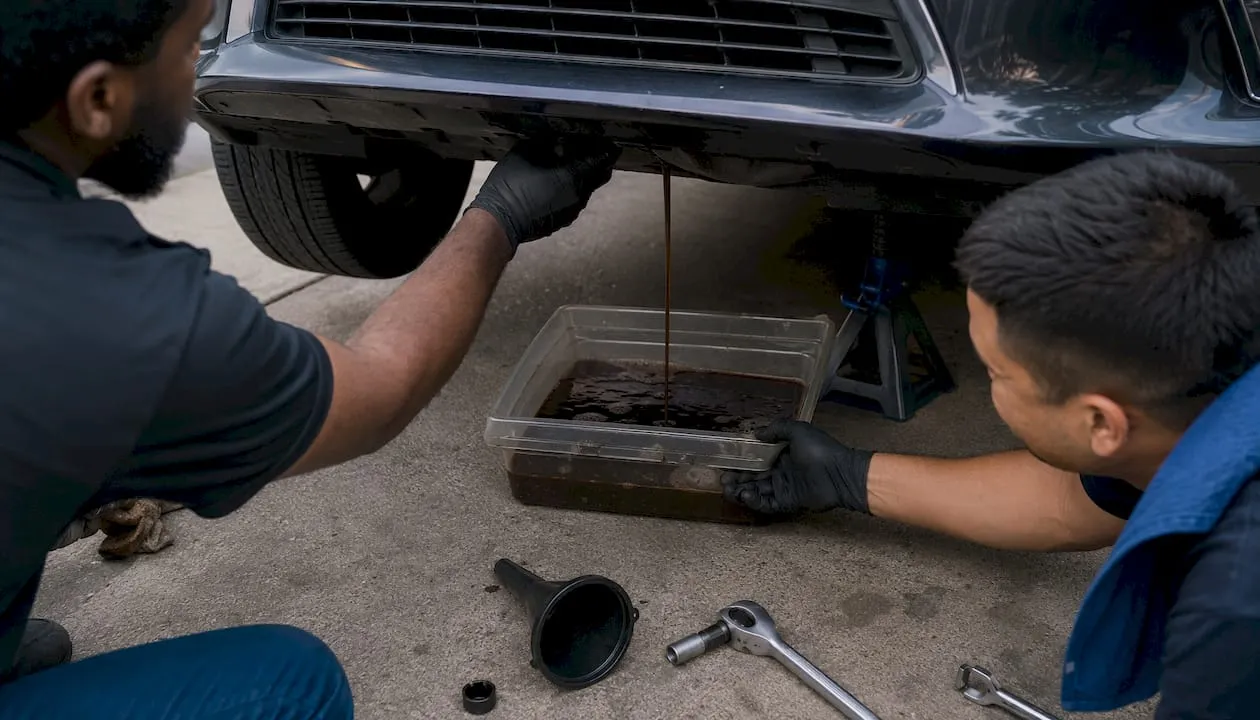
A drain-and-fill on a dipstick-equipped Lexus is a manageable DIY task for an owner with basic mechanical skills. A sealed transmission is a different matter. Setting the correct fluid level requires warming the unit to a specific temperature window and checking at the check plug, a procedure that demands a scan tool and, in most cases, a lift.
| Service Type | Fluid Qty Needed | Parts (if applicable) | Est. Labor Time | Approx. Cost Range |
|---|---|---|---|---|
| DIY drain-and-fill (dipstick) | Moderate fluid quantity | Drain plug washer | 1 hr | moderate cost (fluid + parts) |
| DIY drain-and-fill (sealed) | Moderate fluid quantity | Check plug washer | 2+ hrs + scan tool | Not recommended without lift |
| Independent shop | Moderate fluid quantity | Pan gasket if replaced | 1–2 hrs labor | $150–$300 total |
| Dealership | Moderate fluid quantity | OEM parts | 1–2 hrs labor | $250–$450 total |
Tools needed for a DIY service on a dipstick-equipped model: a drain pan, jack stands rated for the vehicle weight, a torque wrench, a fluid pump or squeeze bottle for refilling, and the correct ATF WS fluid. Safety checklist: never work under a vehicle supported only by a floor jack; wear nitrile gloves (ATF contains chemical additives); dispose of used fluid at a recycling point, not in household trash.
Decision guide:
- DIY — dipstick-equipped transmission, owner has jack stands and torque wrench, fluid is not severely degraded.
- Independent specialist — sealed transmission, high-mileage vehicle, fluid is dark or symptoms are present, or the owner wants documented service records.
- Dealership — active powertrain warranty, hybrid transaxle with complex fill procedures, or a transmission code that requires factory-level diagnostics.
Pro Tip: Save the OEM part number receipts and note the mileage and date in a service log every time ATF is changed. Documented maintenance history adds credibility at resale and can support a warranty claim if a dispute arises.
Key Takeaways
Toyota/Lexus Genuine ATF WS (part numbers 08886-02305 or 00289-ATFWS) is the correct fluid for most modern Lexus automatics, and conservative drain-and-fill service every 60,000–90,000 miles protects the transmission regardless of “lifetime” owner’s manual language.
| Point | Details |
|---|---|
| Use genuine ATF WS | OEM part numbers 08886-02305 (4 L) and 00289-ATFWS (1 L) are the correct products for most modern Lexus automatics. |
| Confirm transmission code first | Check the owner’s manual or door placard — older models may require Type T-IV, and mixing the two is not safe. |
| Plan conservative service intervals | Independent specialists recommend drain-and-fill every 60,000–90,000 miles despite “lifetime” owner’s manual language. |
| Sealed transmissions need a shop | Temperature-controlled fill procedures and a scan tool make sealed-unit service unsuitable for most DIY attempts. |
| Integrityautoinc for local service | Integrityautoinc provides Lexus transmission drain-and-fill, flush, and diagnostics in Portland, Oregon as a cost-effective dealer alternative. |
Integrityautoinc: independent Lexus transmission service in Portland
Owners who want professional transmission service without dealership pricing have a practical option in Portland. Integrityautoinc specializes in Toyota and Lexus vehicles and offers transmission drain-and-fill, machine flush evaluation, pan gasket replacement, and complimentary multipoint inspections — all performed with genuine OEM-specified fluids and documented service records.
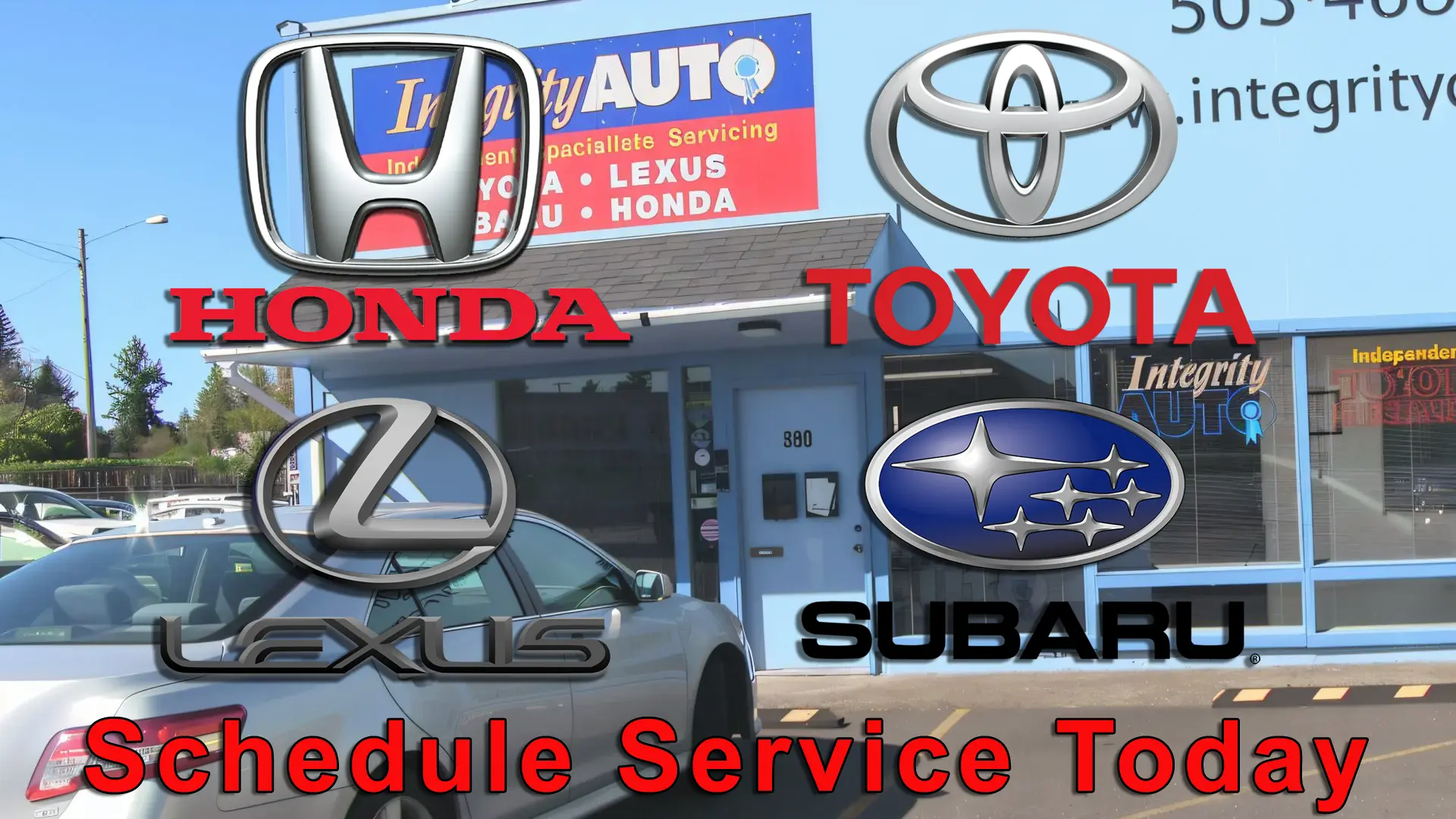
The shop’s approach is straightforward: use the correct fluid, follow the appropriate service interval for the vehicle’s actual condition, and give the owner a clear explanation of what was done and why. For sealed transmissions that require temperature-controlled fill procedures, having a shop with the right equipment is not optional — it is the difference between a correctly filled unit and one that shifts poorly from the first drive. Integrityautoinc also handles hybrid transaxle fluid service, which carries its own fill specifications distinct from standard ATF WS procedures.
Owners in the Portland area can schedule Lexus transmission service or request a diagnostic inspection by contacting Integrityautoinc directly. The shop treats every service as a long-term maintenance decision, not a one-time transaction.
Useful sources
The following primary sources and specialist references were used to compile this guide. Owners are advised to confirm model-specific fluid specifications in their own owner’s manual or through an authorized dealer parts listing before purchasing fluid or scheduling service.
- Toyota/Lexus ATF WS specifications, compatibility, and part numbers — detailed technical overview of WS fluid characteristics, OEM part numbers, and transmission compatibility
- Toyota-Club.Net: Lexus RX (2022+) fluids and capacities — factory fluid specifications for current RX models including hybrid and plug-in hybrid variants
- Lexus automatic transmission fluid type and capacity reference — model-by-model ATF type and capacity data across the Lexus lineup
- 2010 GX460 warranty and service guide (PDF) — factory documentation on sealed transmission status and OEM service language
- ClubLexus forum: transmission fluid change discussion — owner and specialist perspectives on conservative drain-and-fill intervals
- JustAnswer: 2004 Lexus RX330 transmission fluid Q&A — practical guidance on fluid color, odor, and first-line owner diagnostics
- ATF WS technical data sheet (Totachi) — fluid specification sheet confirming AISIN-WARNER compatibility and OEM cross-reference numbers
Owners handling used ATF disposal should consult p65warnings.ca.gov for chemical hazard information and contact their local municipality or auto parts retailer for accepted recycling locations.
FAQ
What type of transmission fluid does a Lexus take?
Most modern Lexus automatics and hybrid transaxles require Toyota/Lexus Genuine ATF WS (part numbers 08886-02305 or 00289-ATFWS). Older models built before the mid-2000s may require Type T-IV — confirm the correct specification using the transmission code in the owner’s manual.
How often should transmission fluid be changed in a Lexus?
Many Lexus owner’s manuals describe the ATF as a “lifetime” fill with no scheduled replacement, but independent specialists commonly recommend a drain-and-fill every 60,000–90,000 miles to prevent additive breakdown and shifting problems, especially under severe-use conditions.
Does Lexus do transmission fluid changes?
Yes, authorized Lexus dealerships perform transmission fluid service, typically priced between $250 and $450 depending on the model. Independent Toyota and Lexus specialists such as Integrityautoinc offer the same service at lower cost, generally in the $150–$300 range.
What are the signs of low or degraded transmission fluid?
Common signs include gear slipping, delayed or harsh shifts, grinding or whining noises under load, transmission overheating, and fluid that appears dark brown or smells burnt. Any of these symptoms warrants prompt inspection rather than waiting for a scheduled service interval.