A car that jerks or hesitates when the gas pedal is pressed is most often dealing with a misfire or a fuel, air or sensor problem. Less often the cause is the transmission. A flashing check engine light means the car should be stopped safely and not driven further. A steady light or no light at all still calls for a proper diagnosis, ideally by a technician who knows the make. For Toyota, Lexus, Subaru and Honda owners in the Portland area, Integrity Auto is an independent shop that specializes in these four brands and handles diagnosis and repair.
TL;DR
- Jerking or hesitation under acceleration usually traces to ignition (spark plugs, coils), fuel delivery (injectors, pump, filter), airflow (sensors, vacuum leaks, carbon deposits) or, less often, the transmission.
- A flashing check engine light, smoke, overheating, strong fuel smell or sudden power loss means stop driving as soon as it is safe.
- When and how the jerk happens (cold start, from a stop, uphill, during shifts) points to the likely cause and helps a technician find it faster.
- A steady check engine light also matters in Oregon: on 1996 and newer vehicles, it will in most cases fail the DEQ emissions test.
- Toyota, Lexus, Subaru and Honda each have known patterns, so brand-specific diagnosis saves time and avoids guessing at parts.
What the jerking actually is
Most jerking comes from the engine not delivering smooth power for a moment. One definition describes engine hesitation as the car lacking power, misfiring or stumbling when the gas pedal is pressed. The causes it lists are ignition, fuel delivery, sensors, control module or circuit faults, and vacuum problems.
Pressing the pedal moves the engine from idle to load in a fraction of a second. Anything marginal in spark, fuel or air metering shows up at that moment, even when the engine idles fine. That is why many drivers notice the problem only when pulling away from a light or merging.
A misfire is the most common version. One or more cylinders fail to fire properly because of a spark, fuel or air problem. The car then bucks, feels flat or shakes under throttle.
Match the symptom to the likely cause
The situation in which the jerk happens is the most useful clue. This table gives general patterns, not a diagnosis.
| When it happens | Common causes | Typical feel |
|---|---|---|
| Pulling away from a stop | Worn spark plugs, dirty injectors, throttle position sensor, throttle body deposits | Stumble or hiccup as the pedal goes down |
| Light throttle, low speed | Failing ignition coil, dirty air flow sensor, vacuum leak | Surging or intermittent bucking |
| Uphill or under load | Weak fuel pump, clogged fuel filter, weak coil | Shudder and loss of power |
| Highway speed | Dirty air flow sensor, fuel delivery, restricted exhaust | Hesitation when passing |
| During gear changes | Low or degraded transmission fluid, torque converter, CVT issues | Clunk, shudder or judder at shift points |
| All the time | Active misfire, vacuum leak, EGR problem | Rough running with a check engine light |
The pattern follows a situation-by-situation guide to causes. Several of these can look alike from the driver’s seat, which is why symptoms alone rarely settle it.
Ignition problems: plugs and coils
Worn spark plugs and failing ignition coils are among the most frequent causes. A weak spark leaves fuel unburned in a cylinder, and the driver feels it as a stumble under load. The longer the problem is ignored, the more likely it is to turn into a repeating misfire.
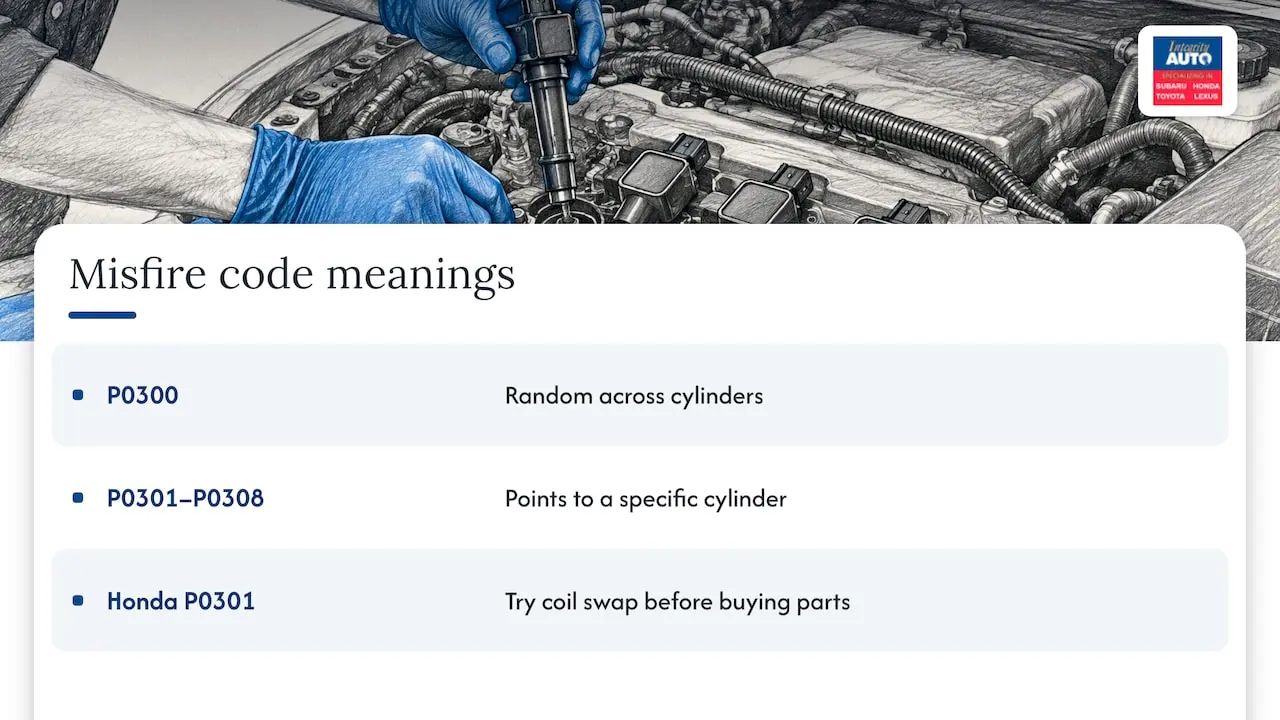
A misfire stored in the computer appears as a P0300 code when it is random across cylinders. A code from P0301 up to P0308 points to a specific cylinder, and that cylinder is the place to start. On Hondas, a P0301 can often be sorted with a simple coil swap before any parts are bought, as explained in this guide to a 10-minute coil swap on a Honda P0301. More background on the system is in car ignition problems, causes and fixes.
Fuel and air problems
The engine needs the right amount of fuel and air at the right moment. Faults on either side cause hesitation:
- Fuel delivery: dirty or failing injectors, a weak fuel pump, a restricted filter or a faulty pressure regulator.
- Air metering: a dirty mass airflow sensor, a faulty throttle position or manifold pressure sensor, or a cracked vacuum hose or intake boot letting in unmetered air.
A vacuum leak can hide at idle and show up under acceleration, because the engine is asking for more air than the leak-affected mixture can supply. Scan data such as fuel trims helps here. Generic scan data guidance treats fuel trims within about plus or minus 5 percent as ideal and beyond 10 percent as a sign of a problem. Reading them at different engine speeds helps separate a vacuum leak from a fuel supply fault.
Carbon buildup on direct-injection engines
Many newer Toyota, Lexus, Subaru and Honda engines use direct injection. Fuel is sprayed into the cylinder and no longer washes over the intake valves, so oil vapor can bake into deposits there. Trade reporting describes this as a cause of rough cold starts, misfires, hesitation and power loss. The same article notes a Subaru service bulletin covering carbon deposit removal on direct-injection engines.
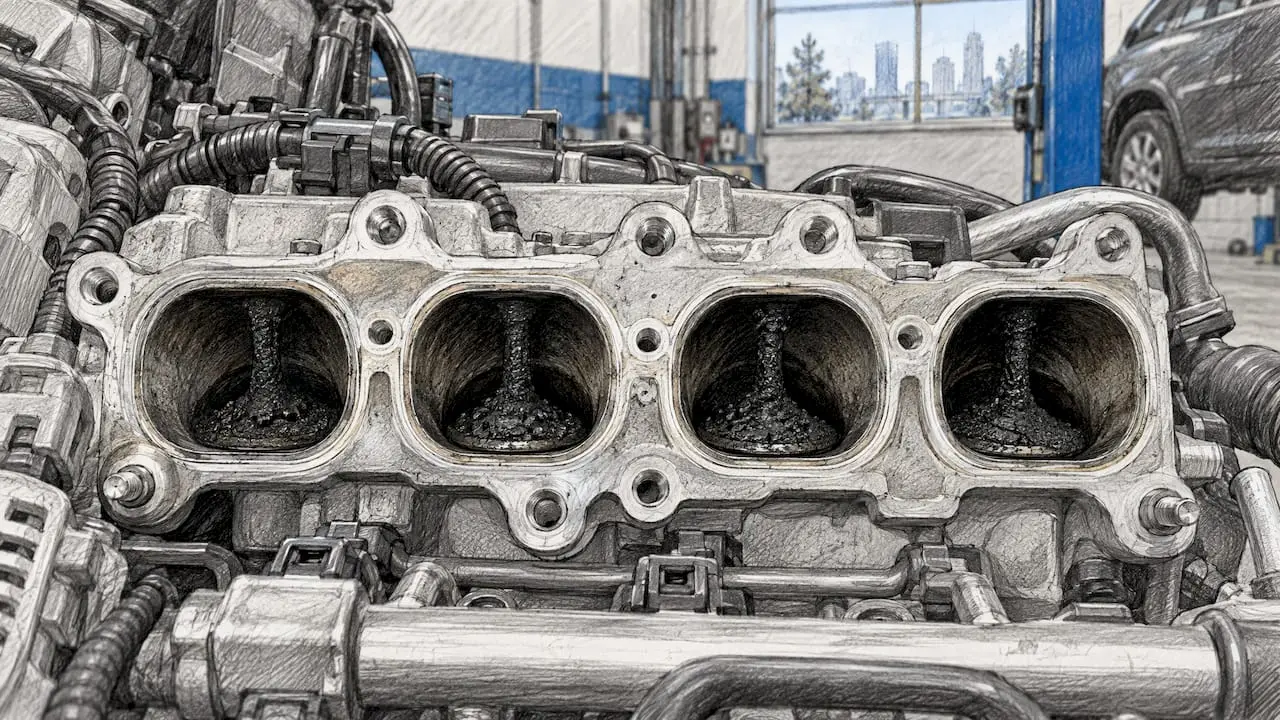
This cause can be tricky because it may set no code at all. Short trips make it more likely, since the engine rarely stays hot long enough to burn off crankcase moisture, according to a technician case study on no-code misfires. Toyota and Lexus owners can read more in this page on carbon buildup in combustion chambers.
When the transmission is involved
A jerk that comes at shift points, or a shudder at steady light throttle, may point to the transmission and not the engine. Low or old fluid, a worn component or a torque converter fault can all cause it. Fluid condition is the first thing to look at.
Honda owners with a CVT (continuously variable transmission, which uses a belt and pulleys instead of fixed gears) should read about CVT judder and why fluid comes first. Toyota owners can review transmission symptoms, costs and fixes. Not every transmission complaint needs a replacement, and many problems can be fixed without replacing the unit.
Is it safe to keep driving?
The light on the dashboard decides this.
- Flashing check engine light: this typically signals an active misfire. Unburned fuel can reach the catalytic converter and damage it. Pull over where it is safe, turn the engine off and arrange a tow or a diagnosis. One 2026 guide to flashing versus solid lights describes driving on as the costliest mistake, because a damaged converter can turn a small repair into a very large one.
- Stop right away for smoke, overheating, shaking, strong fuel or burning smells, or severe power loss, as consumer guidance on check engine lights advises.
- Steady light, no other symptoms: short, careful trips to a shop are generally reasonable. The jerking itself still needs attention, because it is the engine telling the driver something is wrong.
A car that jerks while crossing traffic or merging is also a safety issue in itself, since power can drop exactly when it is needed.
What the driver can note before the visit
No tools are required to collect information that speeds up a diagnosis. Technicians who chase no-code misfires typically ask about speed and load, warm or cold engine, fuel level, fuel type, trip type and past repairs. Useful notes include:
- Whether the engine is cold or warm when it jerks.
- The speed and throttle position (from a stop, around 20 mph, uphill).
- Whether the check engine light is off, steady or flashing.
- How the car is usually driven: short city trips or longer highway runs.
- Recent repairs, fuel fill-ups or maintenance.
A scan tool gives direction, not always the answer. Jeff Taylor, writing in Vehicle Service Pros, argues that a drivability complaint should be treated as a system problem, not a single-part problem, because the engine computer can adapt and make fuel trims look normal even with deposits present. That is the reason a code read alone, or a parts swap on a guess, can miss the cause.
Oregon emissions testing and the check engine light
In the Portland area, a drivability problem has a second consequence. The Oregon Department of Environmental Quality states that for model year 1996 and newer vehicles, an illuminated check engine light will in the vast majority of cases mean the car does not pass. Fixing the misfire first, then confirming the car is ready, avoids a failed test. This guide to emissions test prep and drive cycles explains what “not ready” means after repairs. Related symptoms such as shaking at a stop are covered in rough idle causes and when to stop driving.
Diagnosis for Toyota, Lexus, Subaru and Honda in Portland
Integrity Auto is an independent shop for Toyota, Lexus, Subaru and Honda vehicles in the Portland, Oregon area. Its listed services cover check engine light and DEQ diagnosis, tune-ups, engine oil services, transmission and CVT services, timing belts, and emission testing and repairs. Its technicians are described as ASE certified, and the shop says it uses OEM parts and offers longer warranties than dealerships.
For a jerking or hesitating car, the starting point is the diagnosis page, with brand pages for Toyota, Lexus, Honda and Subaru owners.
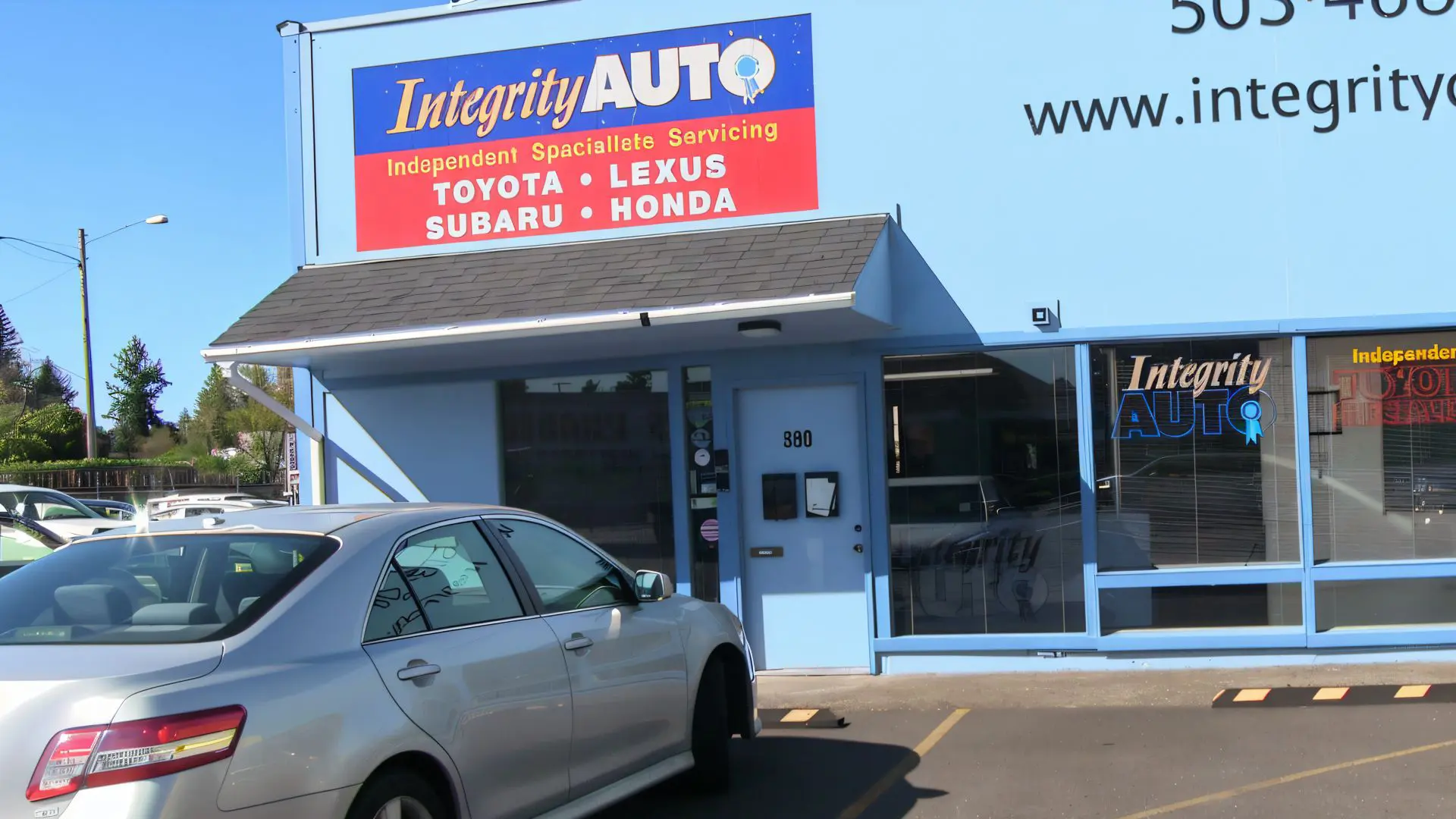
Complimentary multipoint inspections are part of the shop’s offering. Describing when the jerk happens and what the dashboard shows, as listed above, gives the technician a head start.
FAQ
Why does my car jerk when I accelerate from a stop?
The move from idle to load exposes weaknesses in spark, fuel delivery, air metering or throttle function. Worn plugs, dirty injectors, a failing coil and a faulty throttle position sensor are common causes. A proper scan and inspection identifies which one applies.
Can a bad transmission cause jerking?
Yes. Low or degraded fluid, worn internal parts or a torque converter problem can cause jerks, usually at shift points or steady light throttle. If the jerk matches gear changes rather than engine speed, the transmission is the first suspect and fluid condition is the first check.
Is it safe to drive with a flashing check engine light?
No. A flashing light usually signals an active misfire that can damage the catalytic converter. Stop where it is safe, turn the engine off and arrange a diagnosis or tow.
Will a jerking car pass Oregon’s DEQ test?
Usually not if the check engine light is on. The DEQ says that on 1996 and newer vehicles a lit light will in most cases mean failure. Repairing the cause first and confirming readiness before testing avoids a repeat trip.
Sources
- CarParts.com: Car Hesitates When Accelerating
- The Car Buzz: Car Jumps When Accelerating
- AutoZone: Causes of a Car to Misfire
- MOTOR: Interpreting Generic Scan Data
- Vehicle Service Pros: Dealing with GDI
- Vehicle Service Pros: Attacking no-code misfires
- HelpByExperts: Check Engine Light Flashing vs Solid
- Farmers: Check Engine Light Came On
- Oregon DEQ: Prepare for the Test