
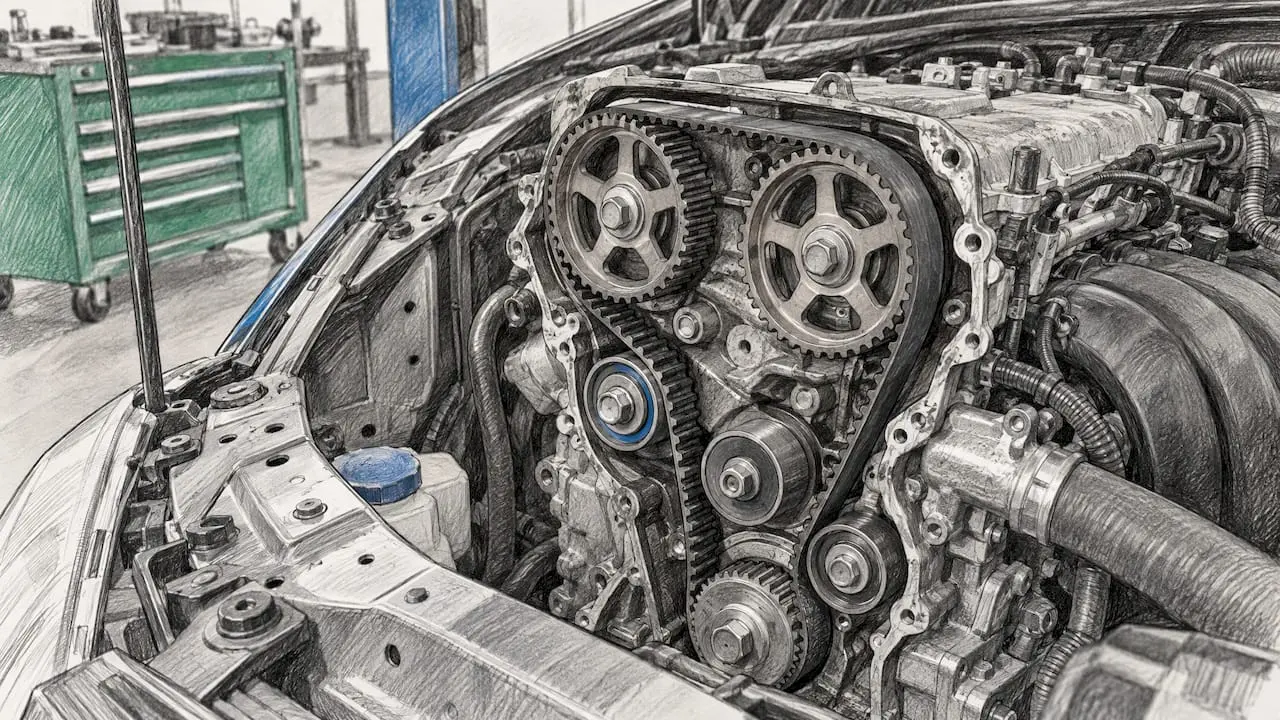
Timing belt replacement is a scheduled maintenance job, done by mileage or age rather than after a symptom appears. Many manufacturers specify an interval between 60,000 and 100,000 miles, and the owner’s manual sets the exact figure. A typical U.S. job costs $500 to $1,000. A belt that breaks can cost $2,000 or more. Engines with a timing chain follow a different pattern, covered below.
TL;DR
- The timing belt keeps the crankshaft and camshaft synchronized. If it fails, the engine can stop and may suffer internal damage.
- Typical intervals run 60,000 to 100,000 miles. The owner’s manual for the specific vehicle is the deciding document.
- Belt service usually costs $500 to $1,000. Chain replacement usually costs $1,500 to $4,000.
- The water pump, tensioner and idler pulleys are commonly replaced in the same visit because they share the labor.
- Integrity Auto services Toyota, Lexus, Subaru and Honda vehicles in the Portland, Oregon area.
What a timing belt does
The timing belt or chain synchronizes the crankshaft and camshaft so the valves open and close at the right moment. It is a separate part from the serpentine belt, which drives accessories such as the alternator.
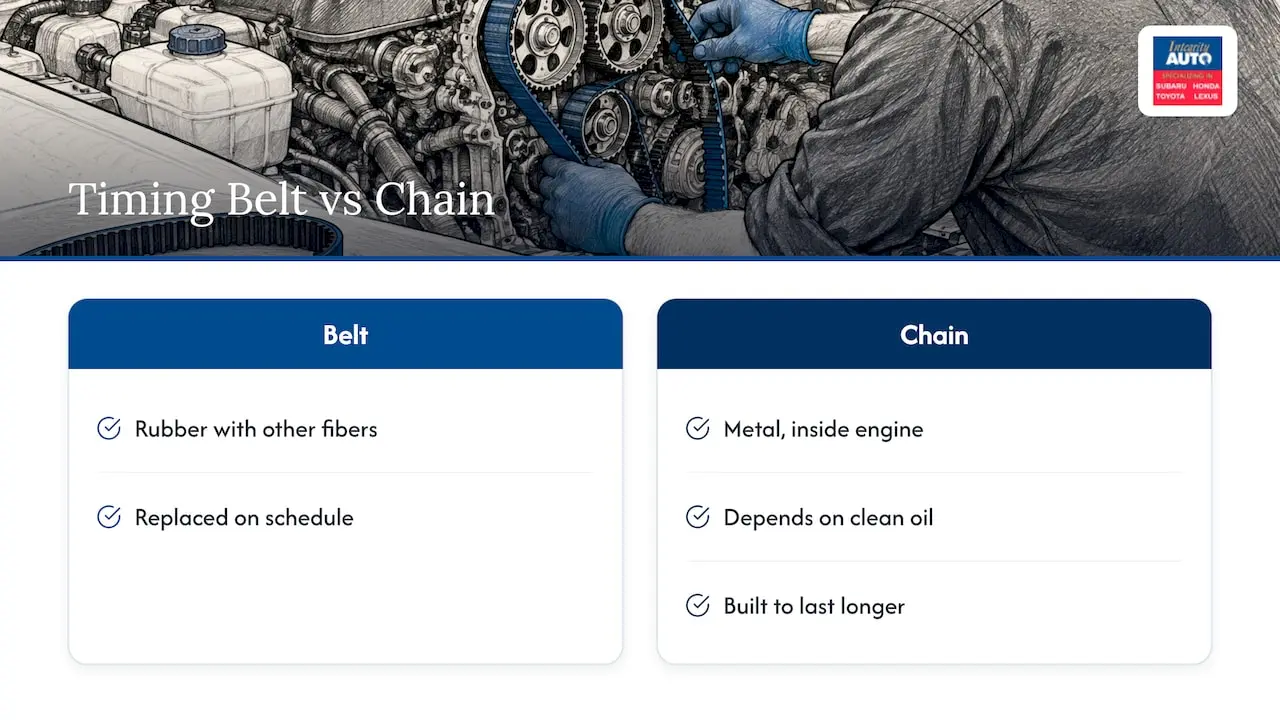
Belts and chains do the same job in different ways. A belt is typically rubber with other fibers. A chain is metal and runs inside the engine, where engine oil lubricates it. The practical difference is maintenance. Belts are replaced on a schedule. Chains are built to last much longer and depend on clean oil.
When timing belt replacement is due
Three inputs decide the timing:
- Mileage. Belts typically last 60,000 to 100,000 miles, depending on the engine.
- Age. Rubber degrades with time, so a low-mileage vehicle can still be due. Many manuals list both a mileage and a number of years.
- Driving conditions. A Honda owner’s manual from 2001 gives a 60,000-mile U.S. interval under repeated very hot or very cold driving. Severe-use schedules shorten many intervals. A tire rotation schedule tied to temperature extremes shows the same logic applied to a different service.
For Honda models, the Honda timing belt interval guide lists rules by model with a shop checklist. For Toyota and Lexus engines, see the page on Toyota, Lexus and Scion timing belts. Timing belt replacement also appears in the larger services described in the 30k/60k/90k mileage services guide.
Signs a timing belt may be failing
Belts often fail with little warning, which is why the schedule matters more than symptoms. Still, AAA lists several warning signs:
- Engine misfires
- Difficult starting
- Uneven performance above 2,000 rpm
- Ticking noises from the engine
- Smoke or fumes from the engine
Oil or coolant leaks matter as well. Dayco, a timing component manufacturer, states that leaking cam and crank seals contaminate the belt and cause early failure. A worn tensioner or idler pulley is also among the most common causes of belt failure. Any of these signs calls for a prompt inspection. Driving on a suspect belt risks the engine.
What happens when a timing belt breaks
AAA warns that a broken belt can leave the vehicle immobilized and cause bent valves, broken cylinders or other internal damage when engine parts fall out of sync. How much damage follows depends on the engine design. This is why preventive replacement costs far less than repair after a failure. Replacement at the scheduled interval is the planned expense, and engine repair after a break is the unplanned one.
A vehicle that has already lost its belt should not be restarted. It needs a diagnosis first to check for internal damage before new parts go in. The diagnosis page explains how Integrity Auto handles diagnostic charges and estimates.
What the service includes
A proper timing belt service replaces more than the belt. Dayco recommends that the tensioner, idler pulleys and water pump be inspected and replaced with the belt, because they wear at a similar rate. It also notes that replacing the whole system at once is inexpensive compared with repeating the labor later.
A typical job covers:
- Belt, tensioner and idler pulleys, usually sold as a kit
- Water pump, when the belt drives it
- Camshaft and crankshaft seals, when they leak or are accessible
- Coolant, when the water pump is replaced
- Setting the timing marks and a final test
On most engines the water pump sits behind the same covers, so the extra labor is small. Replacing it separately later means paying for the same teardown twice. The parts list varies by engine, and the shop’s estimate should name each item.
Timing belt replacement cost in the U.S.
Published figures vary by source, vehicle and region. These are the ranges from professional sources:
| Service | Typical U.S. range | Source |
|---|---|---|
| Timing belt replacement | $500 to $1,000 | J.D. Power |
| Belt failure repair (if it breaks) | $2,000 or more | J.D. Power |
| Timing chain replacement | $1,500 to $4,000 | J.D. Power |
| Timing chain, RepairPal average | $2,000 to $2,700 | ConsumerAffairs |
Price depends on engine layout, how hard the parts are to reach, which supporting parts are replaced and the shop type. A V6 with the belt behind other components takes more labor than a compact four-cylinder. Integrity Auto does not publish a fixed price for this service, so an estimate for a specific vehicle comes from the shop.
Timing chain replacement
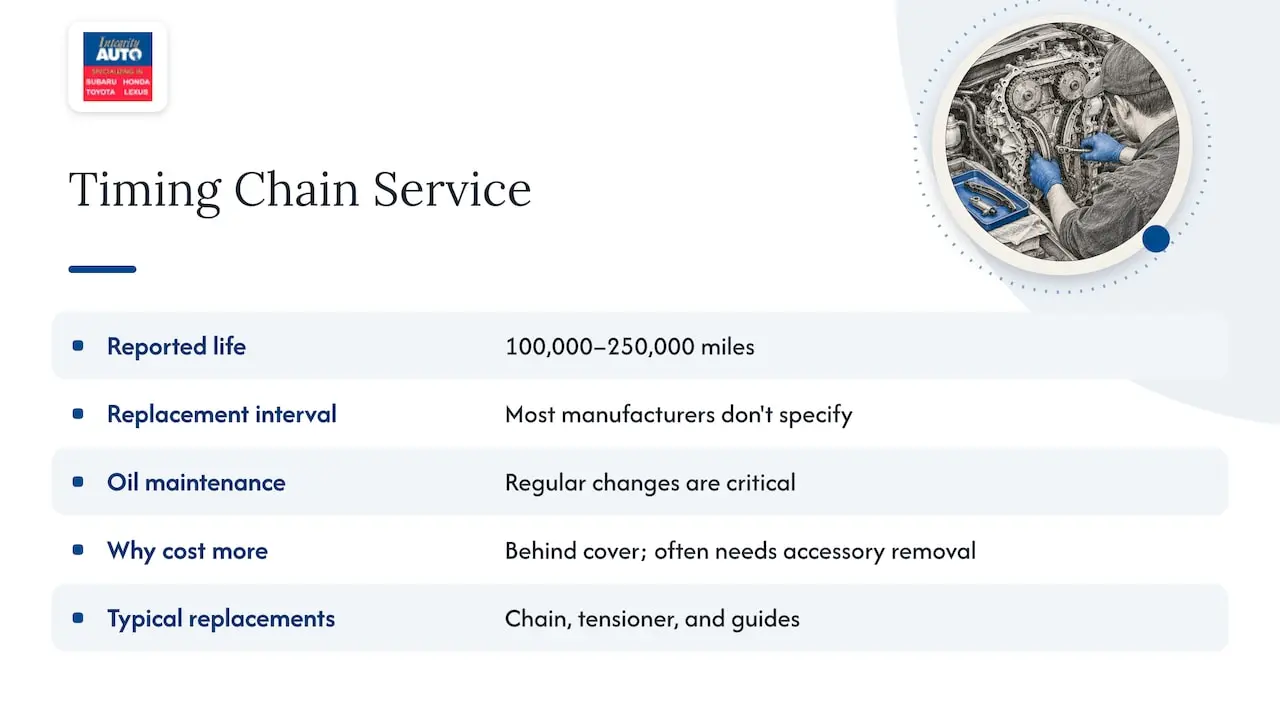
Chains are built to last the life of the engine. Many sources put their range at 100,000 to 250,000 miles. Engine Builder Magazine notes that most manufacturers do not specify a replacement interval for chains, which makes regular oil changes critical. Oil keeps a chain and its guides lubricated.
Chain jobs cost more because the chain sits behind the timing cover and the work often involves removing accessories and mounts. Chain service typically replaces the tensioner and guides along with the chain. Rattling at startup, a check engine light tied to cam timing, or metal debris in the oil are reasons to have the system inspected. Owners of Toyota and Lexus engines with chains can read the Toyota timing chain page. Regular oil service, covered in the benefits of changing your oil article, is the main way to protect a chain.
Timing belt service at Integrity Auto
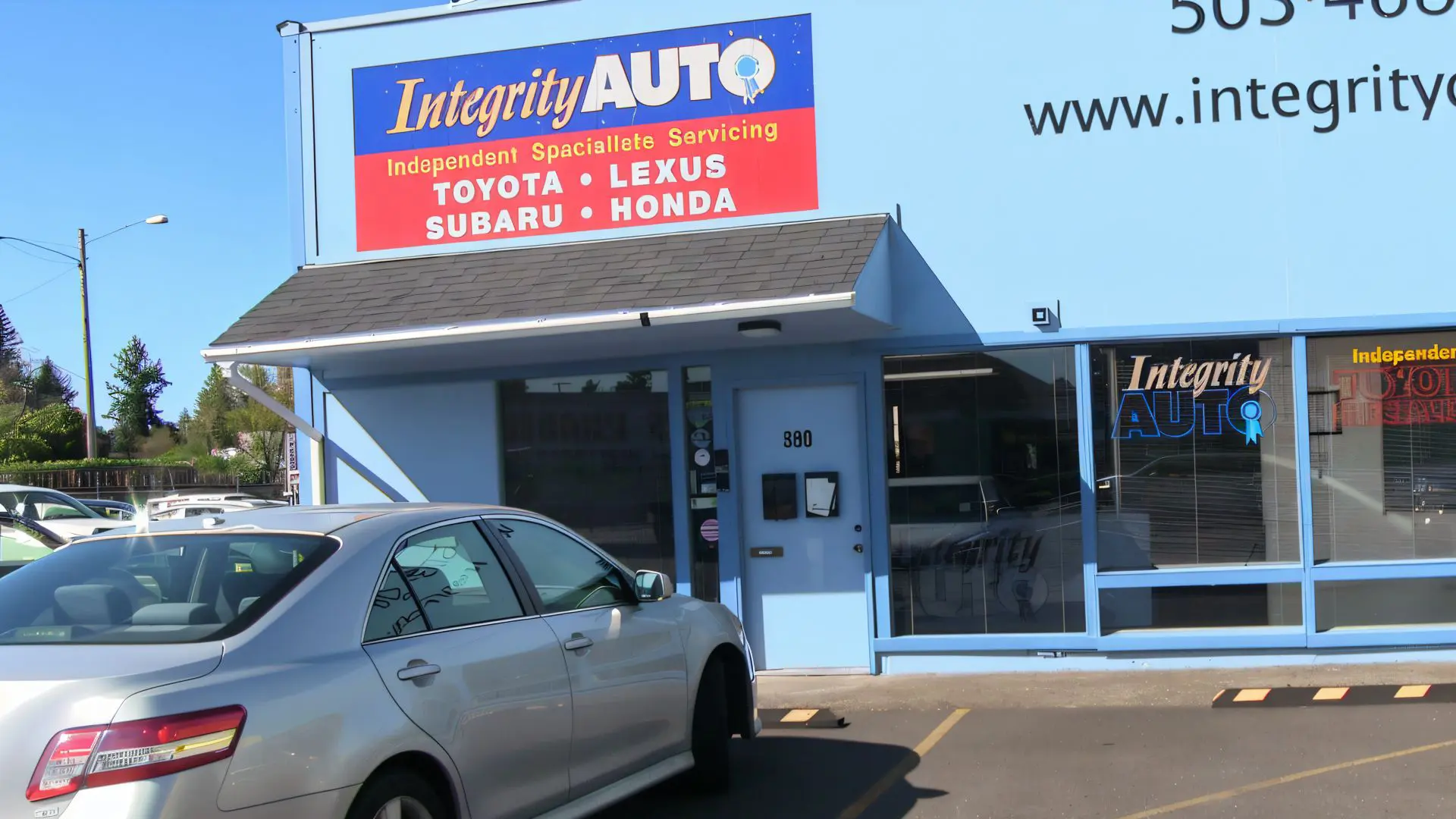
Integrity Auto is an independent shop for Toyota, Lexus, Subaru and Honda vehicles in the Portland, Oregon area. Its listed services include timing belts, scheduled maintenance at manufacturer-recommended intervals, engine and transmission work, and check engine light and DEQ diagnosis. The shop states that its technicians are ASE certified, that it uses OEM parts, and that its warranties are longer than those of dealership repairs.
Owners can start from the page for their make: Toyota, Lexus, Honda or Subaru. Bring the vehicle’s mileage and service history, and the shop can confirm whether the belt is due under the manufacturer’s schedule.
Questions to settle before the appointment
- What interval does the owner’s manual give, in miles and in years?
- Is there a service record showing when the belt was last replaced?
- Does the estimate include the water pump, tensioner, idlers and seals?
- Does the engine use a belt or a chain?
The answers narrow the job quickly and keep the estimate clear. Used vehicles with no record of a belt change are best treated as due.
FAQ
How often should a timing belt be replaced?
Most manufacturers specify an interval between 60,000 and 100,000 miles, and many also list an age limit. The owner’s manual controls the exact figure. Severe driving conditions can shorten the interval.
Should the water pump be replaced with the timing belt?
When the belt drives the water pump, replacement during the belt service is the standard recommendation. The parts sit behind the same covers. Dayco recommends replacing the tensioner, idlers and pump together to avoid repeating the labor.
Does my car have a timing belt or a timing chain?
The owner’s manual or a VIN lookup at a shop gives a definite answer. Belts are rubber and sit behind a plastic or metal cover. Chains run inside the engine and are lubricated by oil. Engines with chains usually have no scheduled replacement interval.
Is it worth replacing the timing belt before it fails?
Yes. A planned job typically falls between $500 and $1,000. A broken belt can cost $2,000 or more once valve or cylinder damage is included, and it can leave the vehicle stranded.
Sources
- When Should Timing Belts Be Replaced? (AAA Club Alliance)
- What are the Types of Belts in a Car? (Toyota)
- What are Timing Belts (Cambelts) and Timing Chains? (Ford UK)
- Honda owner’s manual, 2001
- Timing Chain Vs. Timing Belt (J.D. Power)
- Timing chain replacement cost (ConsumerAffairs)
- All About Timing Chains (Engine Builder Magazine)
- Timing Belt Components (Dayco)