
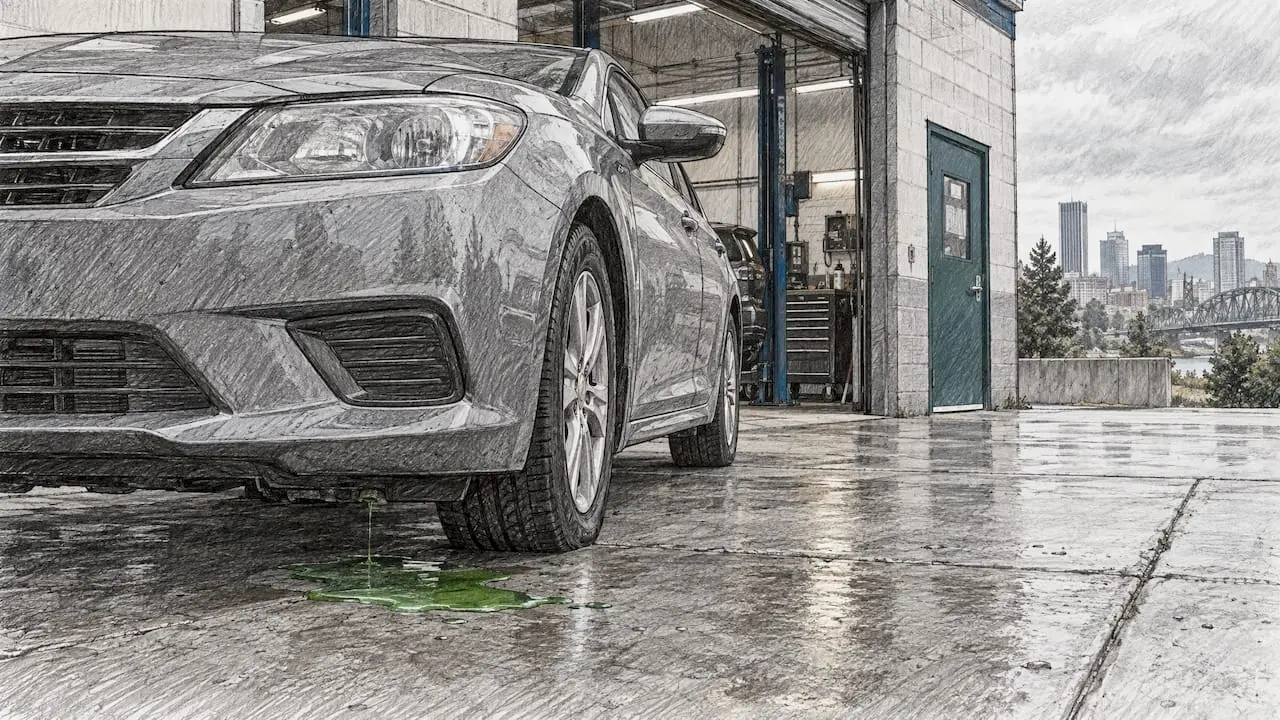
A coolant leak is any loss of the fluid that carries heat away from the engine, and it should be diagnosed promptly, because an engine that runs low on coolant can overheat and suffer serious damage. The typical signs are a colored puddle, a sweet smell, a falling coolant level and a rising temperature gauge. For Toyota, Lexus, Subaru and Honda owners in the Portland area, Integrity Auto diagnoses the source of the leak before any repair is recommended.
TL;DR
- Coolant is usually bright green, orange, pink or blue-green and smells sweet. Engine oil is gold or black, and transmission fluid is dark red.
- Common sources are hoses, the radiator, the radiator cap, the water pump, the heater core and the head gasket.
- A temperature warning, steam or coolant running out means pull over safely and shut the engine off.
- Minor hose or cap repairs are commonly estimated at $50 to $350. Radiator replacement is commonly $450 to $1,200 or more.
- A coolant level that keeps dropping with no visible puddle still points to a leak that needs a pressure test.
Signs of a coolant leak
The most direct sign is fluid under the car. Car and Driver notes that coolant commonly appears lime-green, orange, pink or blue-green and has a sweet aroma, while engine oil is typically gold or black and transmission fluid is dark red.
Other signs show up without any puddle:
- The coolant reservoir needs topping off more often than before, or a low-coolant warning appears.
- The temperature gauge climbs, particularly in stop-and-go traffic.
- Steam rises from under the hood.
- A sweet smell comes from the engine bay or the cabin.
- Dried, crusty residue in light colors collects around hose ends, the radiator or the cap.
- Bubbles show in the reservoir while the engine runs.
Coolant or air-conditioning water?
Clear water dripping under the car on a warm day is usually air-conditioning condensation. Car and Driver’s guide separates the two: A/C water is clear, while coolant leaves colored fluid or residue and a sweet smell. Coolant is also slick to the touch, which water is not.
A sweet smell inside the cabin
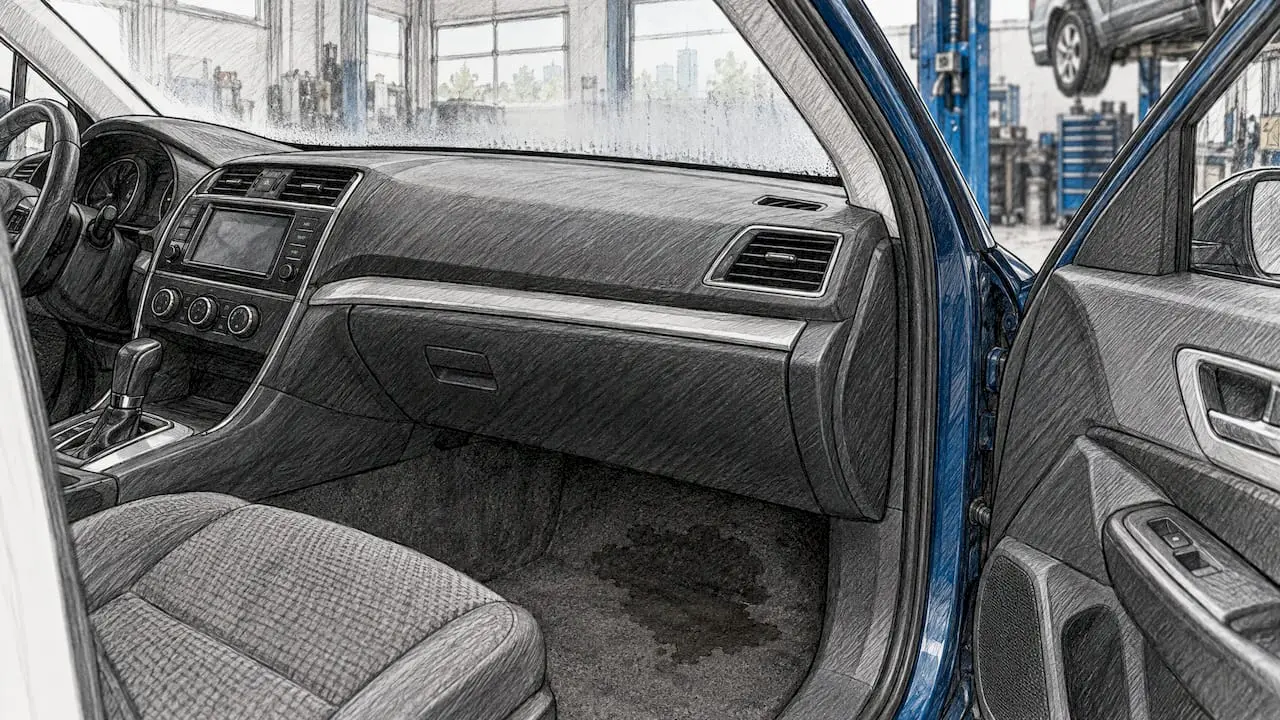
A stronger coolant smell inside the car, together with damp carpet or windows that fog easily, may indicate a leaking heater core, according to the same guide. Odors can have several sources, so diagnosing the source of car odors before trying to mask them keeps the real problem from being missed. A heater-core leak is a cooling-system repair, not a cleaning job.
Where coolant leaks usually come from
HowStuffWorks lists the common sources as damaged coolant hoses, a leaking heater core, a worn water pump, a faulty radiator cap, a corroded radiator and a blown head gasket. Each tends to leave a different trail.
| Source | Typical clue |
|---|---|
| Hoses and clamps | Dampness or dried residue at hose ends, often swollen or cracked rubber |
| Radiator | Wet or crusty spots on the core or at the plastic tank seams |
| Radiator cap | Residue around the cap, pressure not holding |
| Water pump | Drips or residue near the front of the engine |
| Heater core | Sweet smell in the cabin, damp carpet, fogging windows |
| Head gasket | Coolant loss with no puddle, bubbles in the reservoir, overheating |
Hoses are among the easiest to check. AAA’s belts and hoses guide advises inspecting them with the engine cold for cracks, fraying, abrasion, dampness and dried coolant deposits. Hoses that feel hard or crunchy, or very soft, sticky or oil-soaked, may be deteriorated.
Water pumps deserve attention even when the leak looks minor. A small seep often grows, and Integrity Auto explains the issue in its article on whether a small water pump leak is a big deal. Toyota owners can also read about cooling system leaks and cooling system hoses.
How to confirm the leak safely
Safety comes first, because the cooling system runs hot and under pressure. Car and Driver warns against opening a hot, pressurized coolant cap. The cap and reservoir should stay closed until the engine is fully cool.
A simple check follows this order:
- Park on clean, dry pavement after a drive, shut the engine off and let it cool.
- Look underneath for a fresh puddle and note its color and position.
- For slow leaks, slide a sheet of paper under the car overnight. Fel-Pro’s leak guide recommends this to see where drips land.
- With the engine cold, check the cap area, hose ends and clamps, and the radiator surfaces for wetness or light-colored residue.
- Note whether the reservoir level is dropping between checks.
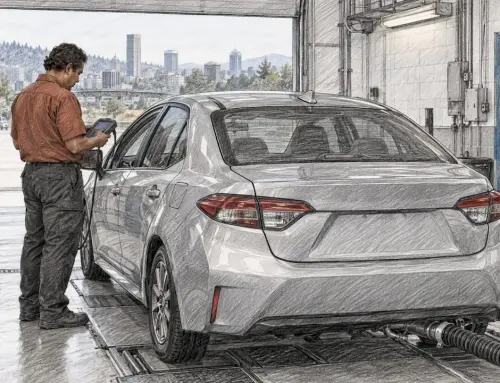
When coolant is disappearing and nothing is visible, the leak may be internal or too small to drip. A cooling-system pressure test is the usual next step: a tester is attached to the radiator neck or reservoir, the system is pressurized to the manufacturer’s specification, and the technician looks for pressure loss and seepage. This is the point where a professional diagnosis saves time, since a head gasket problem and a pinhole in a hose call for very different repairs.
Can you drive with a coolant leak?
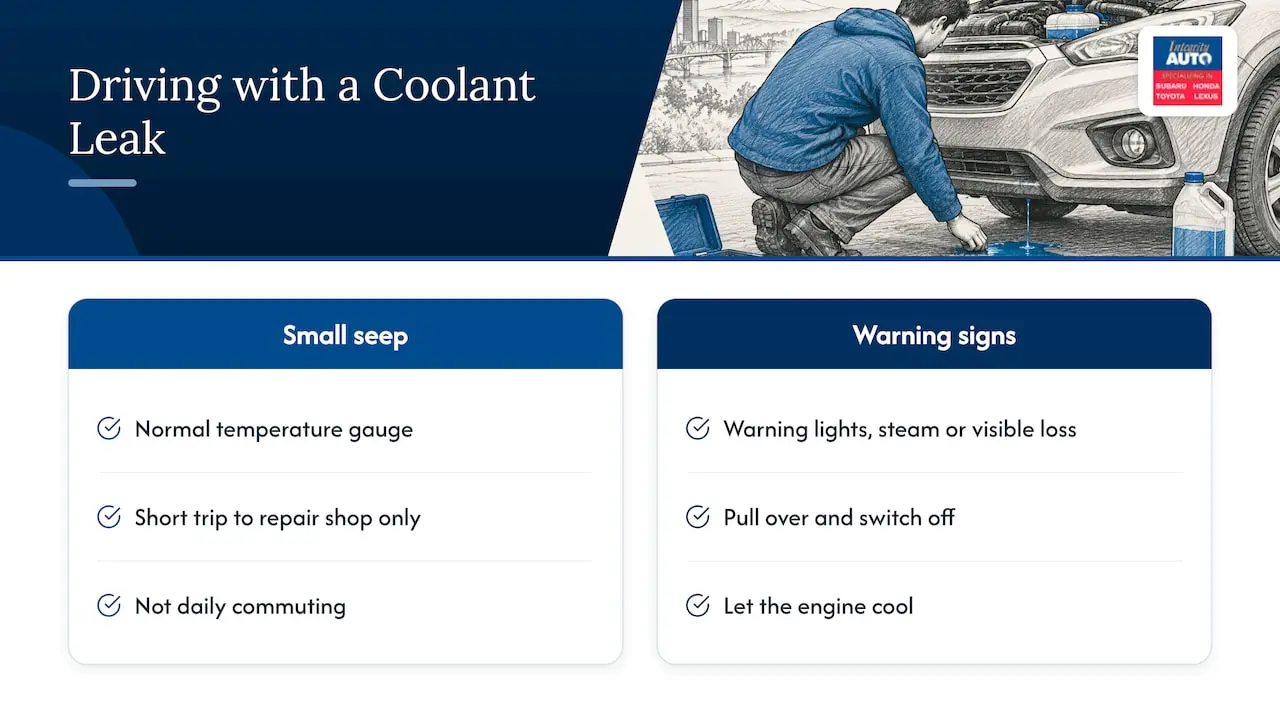
For a very small seep with a normal temperature gauge, a short trip to a repair shop is a different matter than daily commuting. Driving should stop when the temperature warning lights, steam appears from under the hood, or coolant is visibly running out. At that point the safe move is to pull over, switch the engine off and let it cool before anyone touches anything under the hood. Overheating can warp cylinder heads and damage the head gasket, which turns a modest repair into an engine repair.
Topping off with coolant only buys time and does not fix the cause. Overheating that happens mainly in traffic is covered in Integrity Auto’s guide to overheating in traffic.
What a coolant leak repair costs
Cost depends on the source. Jerry’s estimate, updated November 13, 2026, puts minor hose or cap repairs at about $50 to $350 and radiator replacement at $450 to $1,200 or more. Actual prices vary by shop, parts and the condition of the vehicle.
A few points explain the spread:
- A hose or clamp is a small parts bill with modest labor.
- A radiator involves a larger part, draining and refilling the system, and often hoses and cap at the same time.
- A water pump can be more labor, especially when it sits behind a timing belt.
- A head gasket is a major engine repair, which is why catching coolant loss early matters.
After any cooling-system repair, the system needs to be refilled with the correct coolant and bled of air. Fresh coolant also protects against corrosion, which is why a periodic cooling system flush belongs in scheduled maintenance.
Coolant leaks on Toyota, Lexus, Subaru and Honda vehicles
These brands use specific coolant types and, on many models, plastic radiator tanks, timing belts or water pumps that are serviced together. Mixing coolant types or using a generic fill can cause problems later, so the correct specification for the vehicle matters in any refill.
Integrity Auto is an independent shop specializing in Toyota, Lexus, Subaru and Honda vehicles in the Portland, Oregon area. Its services include coolant and antifreeze service, radiators, head gaskets, timing belts and diagnosis. Its technicians are ASE certified, and the shop states that it uses OEM parts and offers longer warranties than dealership repairs.
Getting a coolant leak checked in Portland
A leak is easiest to fix when it is found early. Integrity Auto offers complimentary multipoint inspections and a dedicated diagnosis service that finds the source before parts are replaced. Owners can book by brand:
- Toyota service and repair
- Lexus service and repair
- Honda service and repair, including coolant service, radiators and head gaskets
- Subaru service and repair
Bringing the vehicle in with notes on where the puddle appeared, what color it was and when the temperature gauge moved helps the technician narrow the search quickly.
FAQ
What does a coolant leak smell like?
Coolant has a sweet aroma. A sweet smell near the engine suggests a hose, radiator or water pump leak, while a stronger smell inside the cabin with damp carpet or fogging windows may point to the heater core.
Why is coolant disappearing with no puddle?
Small leaks can evaporate on a hot engine before they drip, and some leaks are internal, such as a head gasket. Residue around hoses and the radiator, bubbles in the reservoir and overheating are clues. A pressure test is the standard way to locate the loss.
Is it worth fixing a coolant leak?
Yes, in most cases. Hose and cap repairs are commonly estimated at $50 to $350, while overheating can lead to head gasket or engine damage that costs far more. Repairing the leak early protects the engine.
What is the most common place for a coolant leak?
Hoses, the radiator and the water pump are the usual sources, along with the radiator cap, heater core and head gasket. Which one it is depends on the vehicle’s age, mileage and the location of the drips.
Sources
- How to Recognize and Locate an Antifreeze Leak, Car and Driver
- How to Identify and Fix a Coolant Leak, HowStuffWorks
- Make Sense of Car Care: Belts & Hoses, AAA
- Antifreeze Leak Causes, Fel-Pro Gaskets
- How Much Does a Radiator Repair Cost?, Jerry
- Diagnosing the source of car odors, Diamondbrite