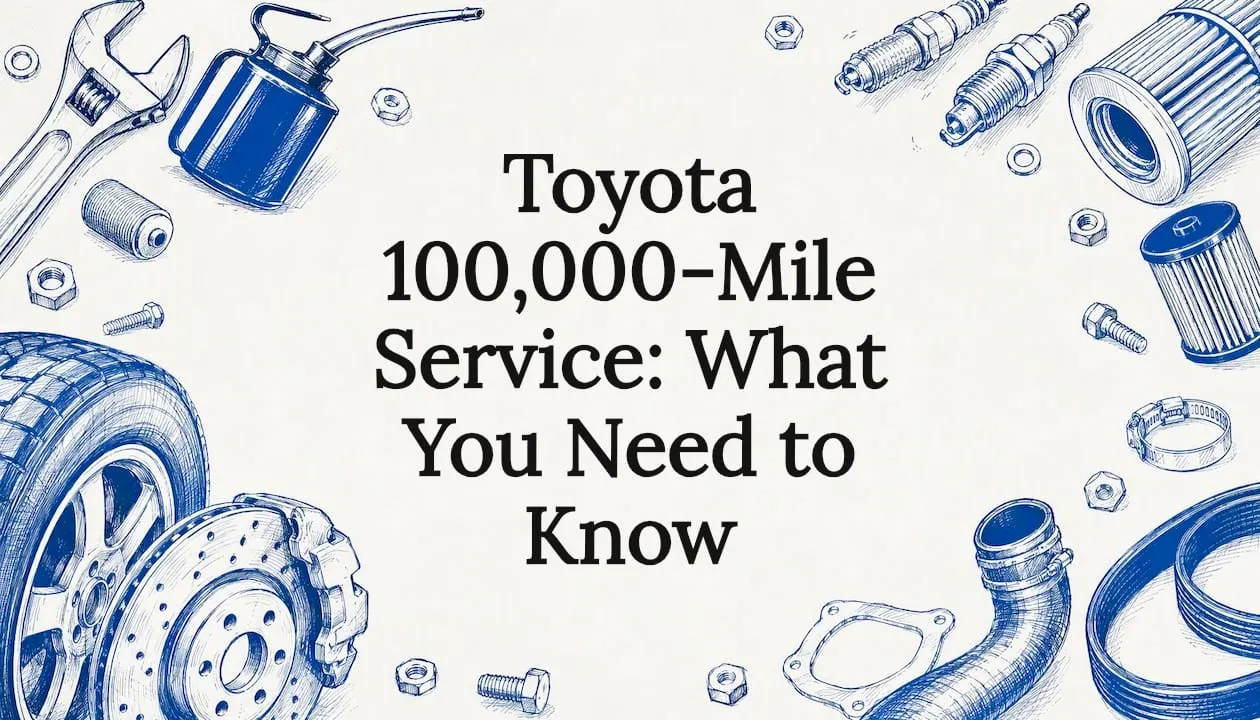
The Toyota 100k service is a scheduled, comprehensive maintenance interval that inspects and refreshes major vehicle systems, including engine fluids, brakes, spark plugs, belts, hoses, and filters; owners can consider an optional clean engine bay treatment for added protection. At this milestone, owners should check the Toyota Owner’s Manual maintenance schedule, confirm model-specific items like timing belt replacement, gather recent service records, and book an appointment with a qualified technician who uses Toyota Genuine Parts.
Priority tasks to schedule now:
- Engine oil and filter replacement (always due at this interval)
- Spark plug inspection or replacement (interval varies by engine; confirm in Owner’s Manual)
- Brake system inspection (pads, rotors, lines, and brake fluid condition)
- Coolant level check and flush (if not done at the prior major service)
Integrityautoinc serves Portland-area Toyota owners with scheduled maintenance and multipoint inspections at every major interval, including the 100,000-mile service.
Pro Tip: Before calling any shop, locate your Warranty & Maintenance Guide. The maintenance log inside is the single most useful document you can bring to the appointment.
Key Takeaways
The Toyota 100,000-mile service covers fluids, brakes, spark plugs, filters, and belts, and completing it with proper documentation protects both warranty coverage and resale value.
| Point | Details |
|---|---|
| Complete the full checklist | Oil, coolant, spark plugs, brakes, filters, and belts are all due for inspection or replacement at 100k. |
| Confirm model-specific items | Timing belt replacement and spark plug intervals vary by engine; verify both in the Owner’s Manual before booking. |
| Document every service | A dated, itemized invoice with part numbers supports warranty claims and adds resale value. |
| Check recalls first | Review toyota.com/recall before scheduling to capture any manufacturer-covered repairs at the same visit. |
| Integrityautoinc for Portland owners | Integrityautoinc provides scheduled Toyota maintenance with multipoint inspections and detailed service records in Portland, OR. |
Table of Contents
- What does the Toyota 100k service checklist cover?
- How much does the Toyota 100k service cost?
- Is the Toyota 100k service worth it?
- How to choose where to get the 100k service done
- How to prepare for the appointment and document the work
- Model-specific exceptions: timing belt, spark plugs, and hybrid items
- Key reminders before you book the 100k service
- Integrityautoinc: Portland’s independent Toyota service specialist
- Sources
- FAQ
What does the Toyota 100k service checklist cover?
Industry maintenance guides and service centers consistently list the following items for a 100,000-mile service. Use this as a reference when reviewing any shop’s work order.

Items like battery testing, suspension inspection, and brake fluid replacement are among the most commonly identified additional repairs at high mileage, according to Toyota’s Highlander maintenance documentation.
Note on hybrid models: Hybrid-specific coolant circuits and high-voltage battery checks require additional steps. Confirm hybrid-specific service items with your technician before booking.
Pro Tip: Ask the shop for a written parts list with part numbers before authorizing work. This record supports both warranty claims and resale value documentation.
How much does the Toyota 100k service cost?
A complete Toyota 100,000-mile service at a dealership typically runs higher than at a qualified independent shop, though the gap depends on the model, region, and which items are actually replaced versus inspected.
Typical cost ranges for common 100k service items:
- Engine oil & filter: $80–$130 (synthetic, full-service)
- Spark plugs (iridium, 4-cylinder): $150–$300 parts and labor
- Coolant flush: $100–$180
- Brake pads (one axle, parts and labor): $150–$350
- Brake fluid replacement: $80–$130
- Transmission fluid service: $100–$250
- Air filter (engine): $30–$70
- Cabin air filter: $30–$60
- Battery replacement: $150–$300
A full dealer-style 100k package, covering all of the above, commonly totals $600–$1,200 or more depending on the model and what condition the vehicle is in. Independent shops in markets like Portland often come in meaningfully lower on labor while using equivalent-quality parts.
Budget flexibility matters here. Many service centers bundle the 100k service into a package, but owners can take a staged approach, completing core fluids and safety items first, then scheduling replacements like spark plugs or transmission fluid separately to spread cost.
Pro Tip: Request a written estimate that separates labor from parts, and ask whether the shop uses OEM or aftermarket components for each line item. Toyota recommends Genuine Toyota Parts to protect warranty coverage where applicable.
Is the Toyota 100k service worth it?
The direct answer is yes. Following Toyota’s official maintenance schedule at 100,000 miles preserves performance, protects resale value, and supports warranty claims when maintenance history is a factor.
Toyota’s warranty documentation is explicit on this point:
Beyond warranty protection, the practical payoffs of completing the 100k service are substantial:
- Catching suspension and steering wear early prevents a minor bushing replacement from becoming a ball joint failure or alignment problem
- Coolant service prevents corrosion in the cooling system, which is one of the leading causes of overheating and head gasket damage on high-mileage engines
- Spark plug replacement restores combustion efficiency, which directly affects fuel economy and reduces stress on the catalytic converter
- Documented service history adds measurable resale value; buyers and dealers both scrutinize maintenance records on vehicles over 100,000 miles
Toyota also notes that owners may use qualified facilities other than authorized dealerships, and that properly documented emergency repairs at other shops can be reimbursed under warranty terms, per the 2025 Camry Warranty & Maintenance Guide. The key word is “documented.”
How to choose where to get the 100k service done
The right choice depends on warranty status, budget, and how much you value a personal relationship with the technician working on your vehicle.
When a dealership makes sense:
- Your vehicle is still under a powertrain or extended warranty and you want the simplest documentation path
- There are open recalls or technical service bulletins that need to be addressed at the same visit
- You need warranty reimbursement paperwork handled directly
When a qualified independent shop makes sense:
- You want lower labor rates without sacrificing technical competence
- You prefer a consistent technician who knows your vehicle’s history
- You value transparent, itemized estimates and direct communication
Questions to ask any shop before booking:
- Are your technicians trained on Toyota vehicles specifically?
- Will you use Genuine Toyota Parts, or can you source OEM-equivalent parts for items where it matters?
- Can I get a written estimate with labor and parts separated?
- Will you document mileage, parts installed, and part numbers on the invoice?
- Do you perform a multipoint inspection and provide a written findings report?
- How do you handle warranty-related documentation if a covered repair is identified?
Integrityautoinc offers Toyota repair and scheduled maintenance in the Portland area, with multipoint inspections and documented service records at every visit. For owners who want dealer-level technical competence without dealer pricing, a qualified independent specialist is a practical alternative.
How to prepare for the appointment and document the work
Preparation before the 100k visit reduces surprises and protects the owner’s warranty and resale position.
Before the appointment:
- Locate the Toyota Owner’s Manual and Warranty & Maintenance Guide; note the maintenance log pages
- Gather all prior service invoices, especially for fluid services and spark plug replacements
- Write down any current symptoms: unusual noises, warning lights, handling changes, or fuel economy drops
- Check toyota.com/recall for any outstanding recalls or safety campaigns before scheduling, so the shop can address manufacturer-covered repairs at the same visit
At drop-off, ask for:
- A written estimate with line-item labor and parts costs
- Confirmation of which parts will be OEM or Genuine Toyota Parts
- Expected labor time and a call if additional repairs are identified
- A written multipoint inspection report with findings documented
After the service, keep:
- The dated invoice with mileage, all parts replaced, and part numbers
- Any warranty paperwork or recall completion documentation
- A note in the Owner’s Manual maintenance log (or ask the shop to fill it in)
The Toyota Warranty & Maintenance Guide confirms that documenting mileage and parts on an invoice materially supports warranty claims and resale. Toyota will not deny a claim solely for missing records, but damage caused by lack of maintenance is not covered.
Pro Tip: Photograph the invoice and any replaced parts labels. Store them in a digital folder with the vehicle’s VIN in the file name. This takes two minutes and can be worth hundreds of dollars at resale.
Model-specific exceptions: timing belt, spark plugs, and hybrid items
Not every Toyota follows the same 100k checklist. Confirming model-specific intervals before booking prevents ordering the wrong parts and scheduling the wrong labor.
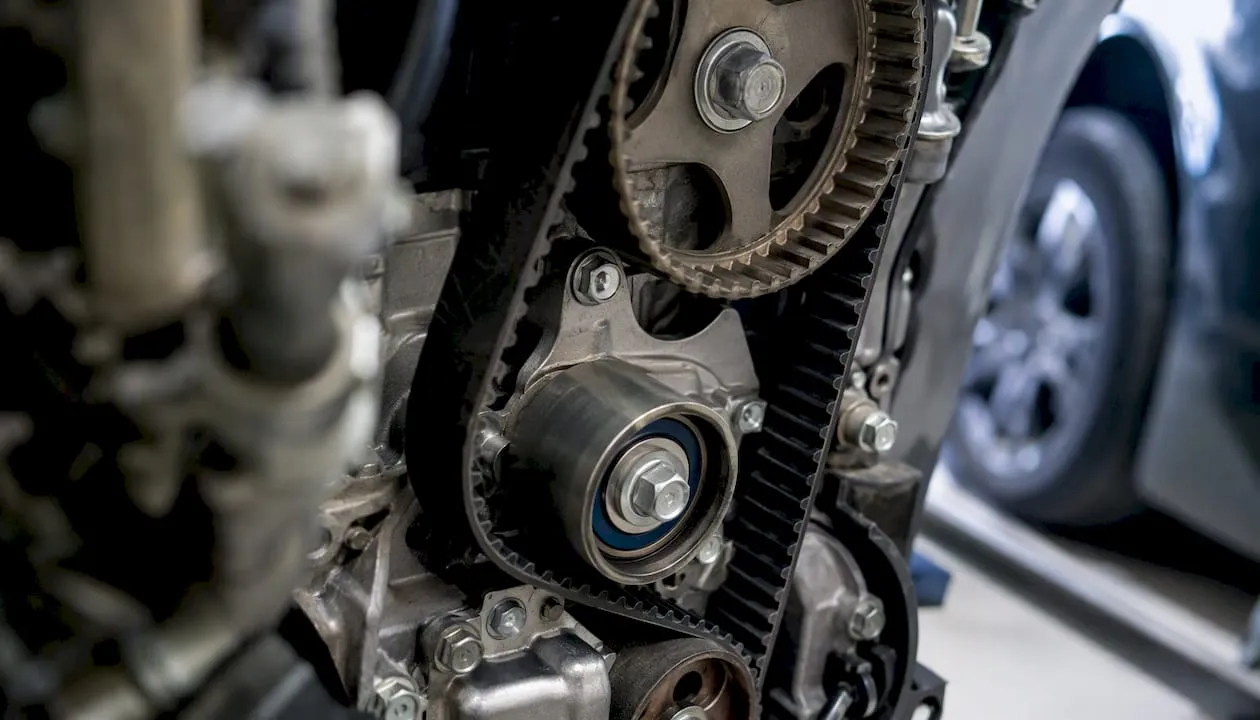
Timing belt vs. timing chain:
Some Toyota engines use a rubber timing belt that requires replacement at a manufacturer-specified interval, typically in the range of 60,000–90,000 miles depending on the engine. Others use a timing chain, which is designed to last the life of the engine under normal conditions. Confirming which your engine has is critical: a timing belt failure causes catastrophic engine damage, while an unnecessary timing belt replacement wastes several hundred dollars in labor.
When a timing belt replacement is required, it is a high-cost, high-labor item. Confirm it by VIN or engine code before booking, get a written estimate, and schedule it as a dedicated appointment if the shop recommends separating it from the standard 100k package.
Spark plug intervals:
Many Toyota engines use long-life iridium spark plugs, but replacement intervals vary by engine design. Some engines call for replacement at 60,000 miles; others extend to 120,000 miles. The Camry Warranty & Maintenance Guide lists model-specific plug intervals, and the Owner’s Manual is the authoritative source for your engine.
Hybrid-specific items:
Hybrid models carry additional service requirements: hybrid coolant circuits, inverter coolant, and high-voltage battery health checks. These are not part of a standard 100k checklist and require a technician with hybrid-specific training.
Severe operating conditions:
Frequent short trips, dusty environments, mountainous driving, and extended idling all accelerate wear on fluids and filters. Toyota’s official maintenance guidance advises adjusting service intervals for severe conditions rather than relying solely on odometer milestones. If your driving patterns fit this description, some 100k items may already be overdue.
Key reminders before you book the 100k service
- Check the Owner’s Manual maintenance schedule and confirm model-specific items, especially timing belt replacement and spark plug intervals, before calling any shop.
- Document every service with a dated, itemized invoice that includes mileage and part numbers; ask the shop to fill in the maintenance log in your Owner’s Manual.
- Verify there are no open recalls at toyota.com/recall before scheduling, so manufacturer-covered repairs can be addressed at the same visit.
- Use a qualified technician who documents work properly, whether that is a dealership or a trusted independent specialist like Integrityautoinc in Portland.
Integrityautoinc: Portland’s independent Toyota service specialist
For Portland-area Toyota owners, Integrityautoinc offers a direct alternative to dealership pricing without sacrificing technical competence or documentation quality.
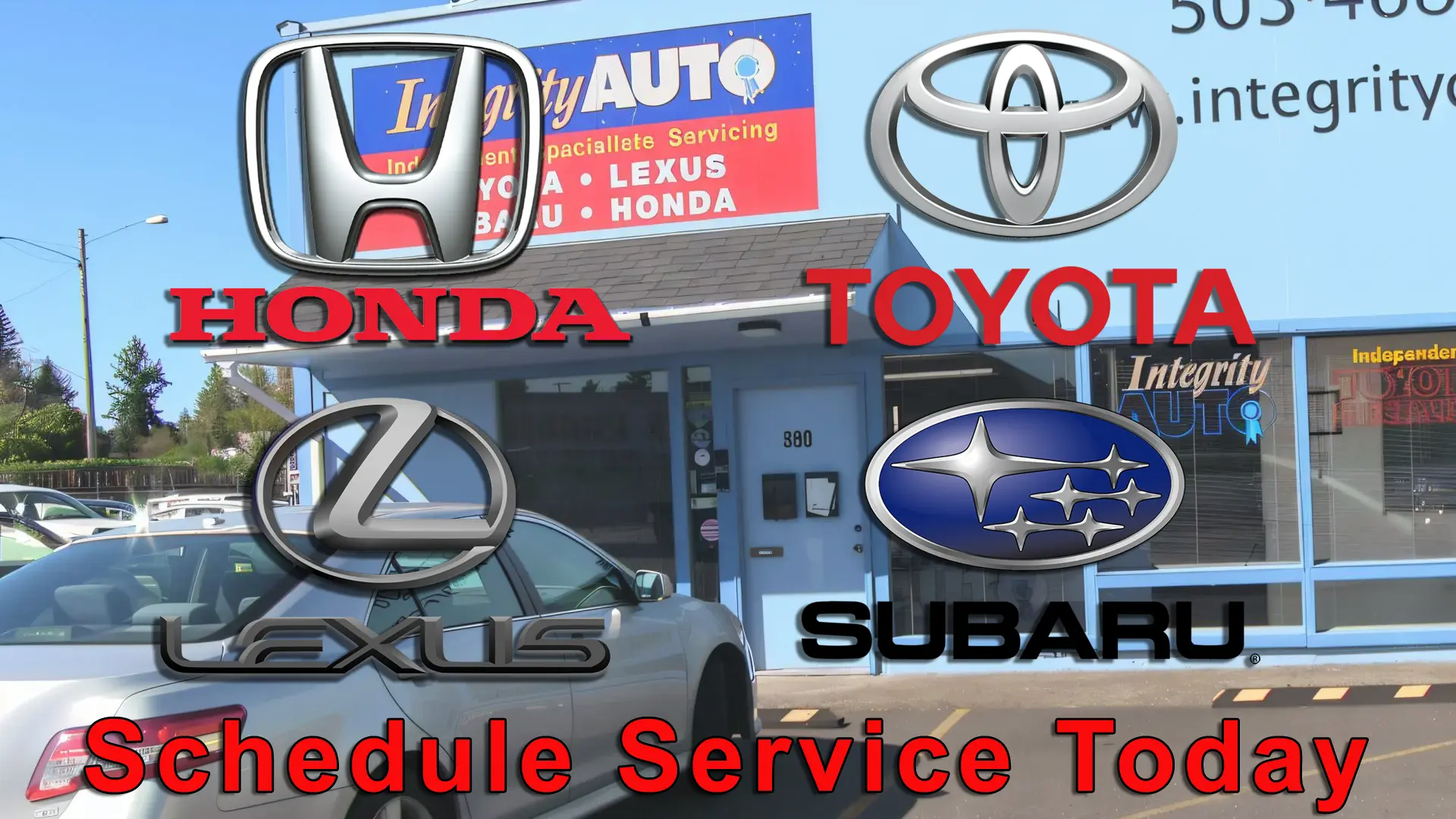
Integrityautoinc specializes in Toyota, Lexus, Subaru, and Honda vehicles, with technicians who understand factory maintenance schedules, model-specific service requirements, and the documentation practices that protect warranty and resale value. Every visit includes a complimentary multipoint inspection and a detailed service record. Owners get itemized invoices, transparent parts sourcing, and a technician who treats the vehicle as if it were their own.
The 100,000-mile service is one of the most consequential maintenance visits a Toyota owner will schedule. Getting it done right, with proper documentation, qualified technicians, and the correct parts for the specific engine, matters more at this interval than at any prior one. Schedule your Toyota service appointment with Integrityautoinc and bring your Owner’s Manual maintenance log.
Sources
FAQ
What is included in the 100k service for a Toyota?
The Toyota 100k service typically covers engine oil and filter, coolant inspection or flush, spark plug replacement, brake inspection, tire rotation, air and cabin filter replacement, belt and hose inspection, fluid checks, and a multipoint inspection. Model-specific items like timing belt replacement or hybrid coolant service may also apply.
How much does a Toyota 100,000-mile service cost?
A complete 100k service commonly ranges from $600 to $1,200 or more at a dealership, depending on the model and which items require replacement. Independent shops in markets like Portland often charge less for labor while using comparable parts.
Is the Toyota 100k service worth it?
Yes. Completing the 100,000-mile service preserves engine performance, supports warranty coverage, and protects resale value. Toyota’s warranty documentation states that damage caused by lack of proper maintenance is not covered, making this interval one of the most important in the vehicle’s life.
Can I get the 100k service done at an independent shop?
Toyota’s warranty documentation confirms that owners may use qualified facilities other than authorized dealerships, provided the work is properly documented. A qualified independent specialist like Integrityautoinc in Portland can perform the full 100k service with detailed records that satisfy warranty and resale requirements.