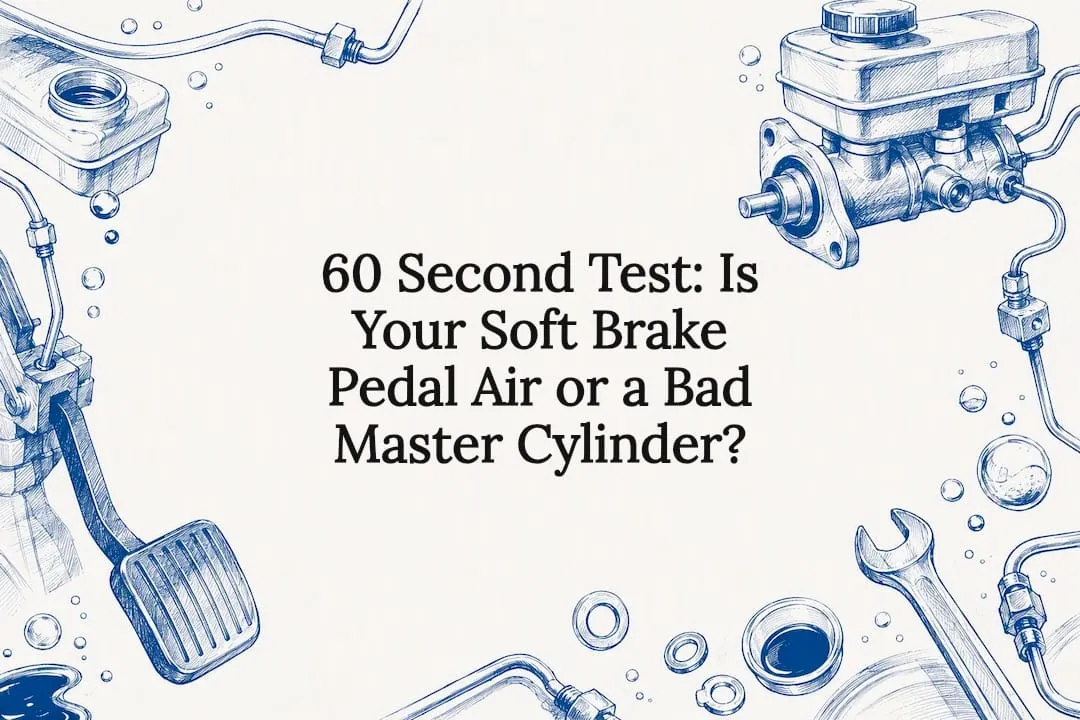
A soft or sinking brake pedal almost always signals air trapped in the hydraulic lines, low or contaminated brake fluid, or a failing master cylinder seal. If the pedal creeps toward the floor during a steady 60 second hold, or a red brake warning light comes on, stop driving and arrange service immediately. Before that, a quick pump of the pedal and a glance at the fluid reservoir will tell you a lot.
TL;DR:
- Air in the brake lines, fluid leaks, or master cylinder seal failures commonly cause a soft or sinking brake pedal, especially if it worsens over time.
- A fluid level below the “full” mark or dark, cloudy fluid signals possible leaks or overdue fluid service, requiring immediate inspection.
- Pumping the brake pedal can help diagnose whether trapped air or a faulty master cylinder is the issue, based on whether the pedal firm up or sinks again.
- A creeping pedal during a 60-second hold indicates a leak or internal bypass, and urgent professional repair is needed to avoid brake failure.
- Fixing a soft pedal typically involves brake fluid flushes, repairing or replacing leaking components, or replacing the master cylinder, depending on the diagnosis.
Table of Contents
- Common Causes of a Soft or Spongy Brake Pedal
- How Do You Check a Soft Brake Pedal Safely?
- What to Do If Your Brake Pedal Feels Soft While Driving
- Repair Options and What They Typically Cost
- Should You Fix It Yourself or Call a Professional?
- Preventing a Soft Pedal Before It Starts
- Why a Qualified Shop Matters for Brake Repairs
- Getting Your Soft Brake Pedal Fixed Right the First Time
- Sources
- FAQ
Common Causes of a Soft or Spongy Brake Pedal
A soft pedal is a hydraulic problem in most cases, not a mechanical one. The brake system relies on fluid to transfer force from your foot to the calipers, and anything that lets that force compress instead of transfer will produce a spongy, low, or sinking pedal.
The most frequent culprits, according to PowerStop’s brake diagnostic guide, include:
- Air in the brake lines. Air compresses under pressure while fluid does not, so trapped air after a repair, a fluid top-off, or a slow leak turns a firm pedal into a mushy one.
- External brake fluid leaks. A leaking line, fitting, or seal drops the reservoir level and lets air enter the system as fluid escapes.
- Master cylinder internal seal failure. Worn seals let fluid bypass internally, so the pedal builds pressure, then sinks under sustained load.
- Moisture-contaminated fluid. Brake fluid absorbs moisture over time, and contaminated fluid lowers the boiling point, which can trigger vapor lock during hard or repeated braking.
- Collapsed brake hoses or caliper and wheel cylinder leaks. A hose that has deteriorated internally can balloon under pressure, and a leaking caliper piston seal has the same effect as a line leak.
Not every stopping problem is hydraulic, though. Glazed pads or worn rotors can force you to press harder on a pedal that still feels firm, according to AutoZone’s brake diagnostics. That distinction matters when a technician starts narrowing down the fault.
How Do You Check a Soft Brake Pedal Safely?
Before anything else, look at the fluid reservoir under the hood. A level well below the “full” line, or fluid that looks dark or cloudy instead of clear to light amber, points toward either a leak or overdue fluid service.
Work through these checks in order:
- Scan for visible leaks and warning lights. Check under the calipers and along the brake lines for wet spots, and note whether a red brake warning light or amber ABS light is on.
- Run the pump-to-firm test. Pump the brake pedal several times. If it firms up and stays firm, air in the system is the likely cause; if it firms up and then sinks again, suspect the master cylinder.
- Run the static pressure hold test. Pump the pedal 3 to 5 times, then hold firm, steady pressure for 60 seconds. If the pedal creeps toward the floor during that hold, this confirms a system leak or an internal master cylinder bypass that needs professional attention.
- Consider whether your car has ABS. Some ABS-equipped vehicles trap air in the modulator during a standard bleed, and PowerStop notes that certain systems require a scan-tool-assisted bleed to fully clear it.
Pro Tip: Do the static hold test with the engine off and the car parked on level ground. It isolates hydraulic behavior from any assist system that might mask a slow leak.
If you see a visible leak, the pedal sinks during the hold, or any warning light is lit, stop the DIY diagnosis there and get the car inspected.
What to Do If Your Brake Pedal Feels Soft While Driving
A soft pedal on the road calls for calm, deliberate action, not panic braking.
- Pump the brake pedal rapidly to build temporary hydraulic pressure rather than pressing once and hoping.
- Downshift or ease off the accelerator early to let engine braking slow the car.
- Apply the parking brake gradually as a backup once your speed has dropped, never as a first response at speed.
- Pull over as soon as it is safe if the pedal sinks to the floor under steady pressure, a warning light appears, or you notice a sudden increase in stopping distance.
PowerStop’s guidance on spongy pedal causes is direct on this point: conditions like fluid boiling, caliper seal failure, and master cylinder bypass raise stopping distance and the risk of a full brake failure the longer they go unaddressed. Continuing to drive on a pedal that sinks under hold is not a wait-and-see situation.
Repair Options and What They Typically Cost
Once a shop confirms the cause, the fix usually falls into one of a few categories, and the cost tracks closely with which hydraulic component failed.
- Brake fluid bleed or flush. This clears trapped air and replaces old, moisture-laden fluid. It is the least expensive fix and often resolves sponginess caused by air alone.
- Brake hose, caliper, or wheel cylinder repair. Parts and labor scale with how many corners need attention and whether a hose has to be replaced along with a caliper.
- Master cylinder replacement. A cylinder with internal seal bypass generally needs full replacement, not a reseal, which puts this repair well above a simple flush in both parts and labor time.
- Full system flush or ABS module service. If contamination is widespread or the ABS unit itself trapped air, the shop needs to clear the entire hydraulic circuit, including the modulator, which takes longer and costs more than a basic bleed.
Shops diagnose these problems methodically: checking reservoir fluid color, testing for external leaks, running pump and hold tests, pressure checking each circuit, and replacing only the components that actually failed, per R1 Concepts’ repair breakdown. That sequence is also why a rushed guess at the cause, rather than a full inspection, tends to lead to repeat visits. A proper brake hydraulic fluid flush or master cylinder inspection addresses the root cause instead of masking the symptom.
Should You Fix It Yourself or Call a Professional?
Checking the reservoir level, inspecting hoses and calipers visually, and bleeding a simple non-ABS system are reasonable DIY tasks if you already have the right tools and the correct brake fluid type for your vehicle.
A few situations call for a professional instead:
- ABS-equipped vehicles that need a scan-tool-assisted bleed, since a standard manual bleed can leave air trapped in the modulator.
- Any internal master cylinder bypass, since a DIY reseal will not fix a worn internal seal.
- A leak you cannot visually locate, since guessing at a hidden leak risks a repeat failure.
Pro Tip: Note the fluid type on your reservoir cap (DOT 3, DOT 4, or DOT 5.1) before buying anything. Mixing incompatible fluids can damage seals throughout the system.
Bring the shop your notes: when the softness started, whether pumping helps, and what the fluid looked like.
Preventing a Soft Pedal Before It Starts
Brake fluid pulls in moisture gradually even in a sealed system, which is why scheduled flushes matter more than most owners realize.
- Follow your manufacturer’s recommended fluid flush interval to keep moisture content low and the boiling point stable.
- Check fluid color and reservoir level during every oil change, not just when the pedal feels off.
- Avoid relying on hard, prolonged braking on long descents; use engine braking instead to reduce fluid heat buildup.
- Keep a simple record of brake service dates and which components were replaced.
Why a Qualified Shop Matters for Brake Repairs
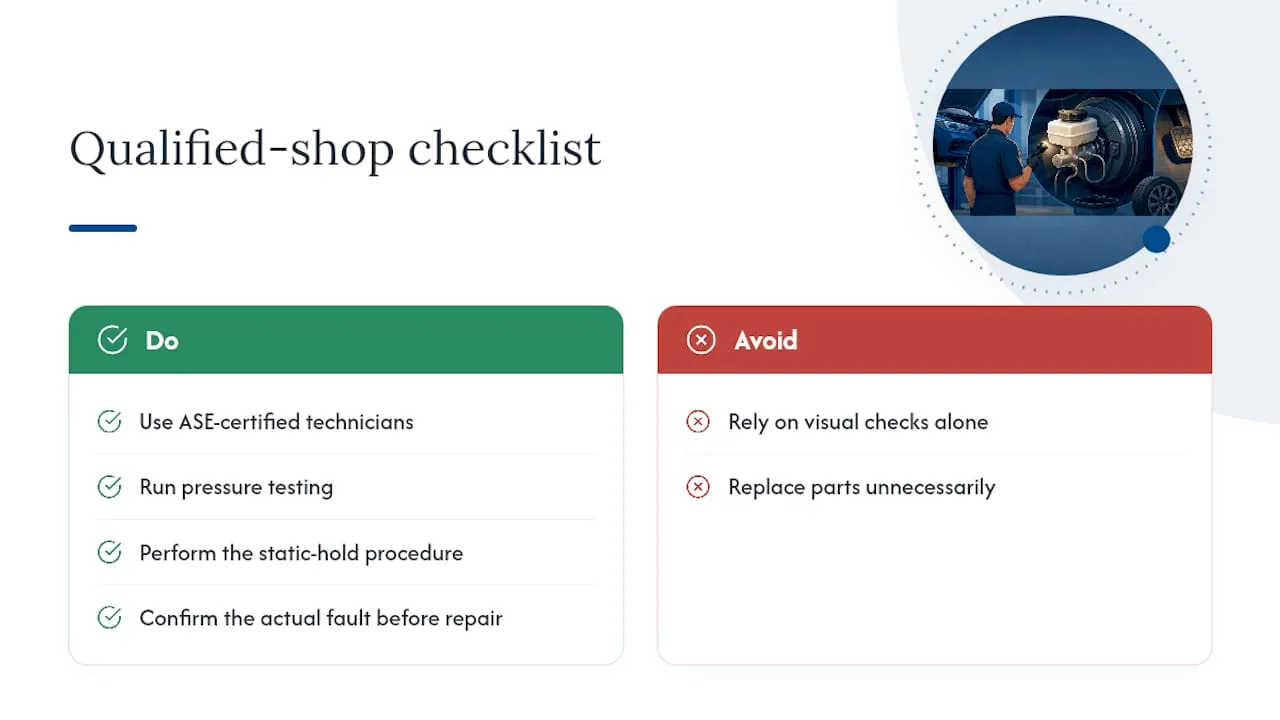
Diagnosing a soft pedal correctly requires more than a visual check. Integrityautoinc’s brake services cover the full range of causes discussed here, from hydraulic fluid flushes to master cylinder replacement and caliper inspection and repair. ASE certified technicians use pressure testing and the static hold procedure to confirm the actual fault before recommending a repair, which prevents unnecessary parts replacement.
Getting Your Soft Brake Pedal Fixed Right the First Time
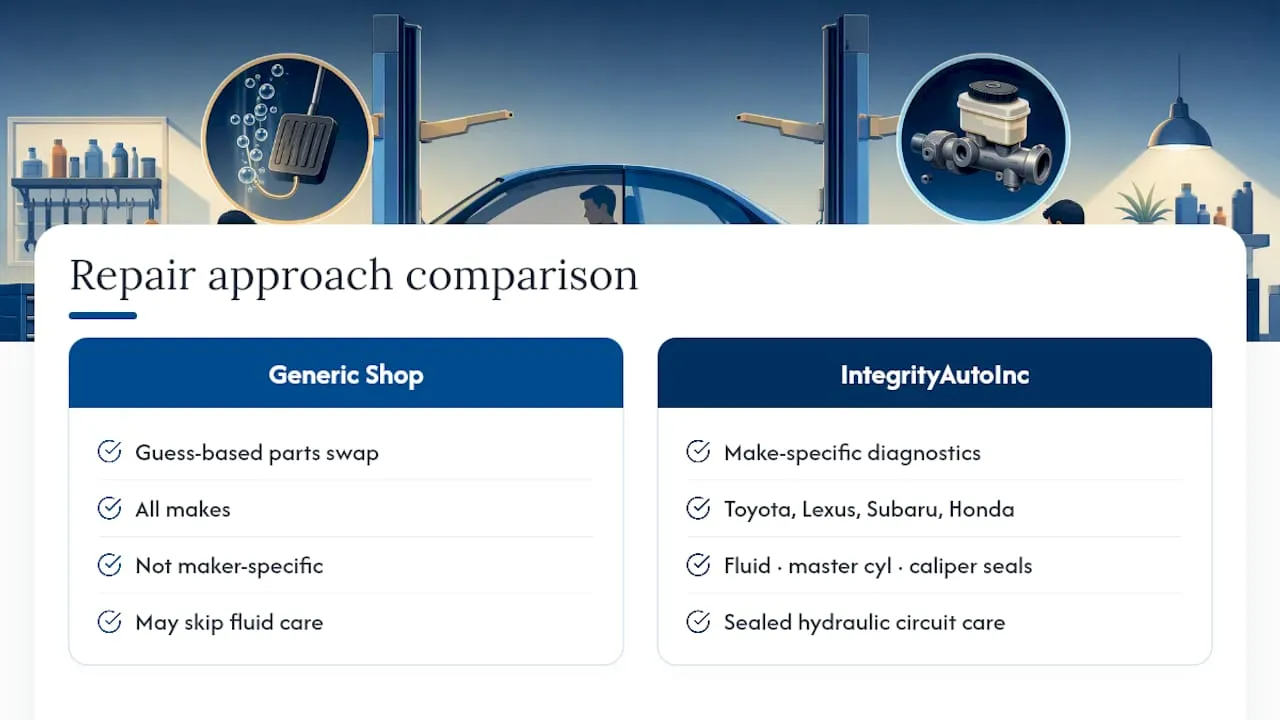
A generic repair shop might replace parts based on a guess. Integrityautoinc specializes in Toyota, Lexus, Subaru, and Honda vehicles specifically, which means the diagnostic process for a soft pedal, whether it traces back to a hydraulic fluid issue, a worn master cylinder, or caliper seal failure, is built around how these specific manufacturers engineer their brake systems, not a one-size-fits-all approach borrowed from a dealership flat rate manual.
Fluid contamination and moisture absorption are well documented properties of standard brake fluid, and the same principle applies to hydraulic clutch systems; Integrityautoinc’s experience with clutch hydraulic flushes reflects the same attention to sealed hydraulic circuits that brake work demands. Readers who want more general background on hydraulic fluid behavior can also see this technical overview of hydraulic fluid properties from an independent automotive resource.
If your pedal has been feeling soft, sinking under pressure, or requiring a pump before it firms up, schedule an inspection with Integrity Auto’s Toyota, Lexus, Subaru, and Honda service team in Portland, Oregon, and get a pressure test and visual leak check before the problem gets worse.
Sources
For vehicle-specific bleed procedures or open recalls, check NHTSA’s ratings and recall resource alongside your manufacturer’s service documentation.
- Brake fluid — Wikipedia
- Why Do My Brakes Feel Spongy? — Kelley Blue Book
- How To Diagnose a Spongy or Soft Brake Pedal — PowerStop
- Soft or spongy brake pedal: causes and fixes — R1 Concepts
FAQ
How Do You Fix a Soft Brake Pedal?
The fix depends on the cause. Air in the lines usually needs a bleed, moisture-contaminated fluid needs a flush, and a failing master cylinder needs replacement rather than a repair.
What Does It Mean If the Brake Pedal Is Soft?
A soft brake pedal usually means air has entered the hydraulic system, fluid has leaked or degraded, or the master cylinder’s internal seals are bypassing fluid instead of building pressure.
Is It Safe to Drive With a Soft Brake Pedal?
It is not safe to keep driving if the pedal sinks toward the floor during a steady hold, a brake warning light is on, or you notice a visible fluid leak; those signs call for immediate service rather than continued driving.
How Much Does It Cost to Fix a Soft Brake Pedal?
Costs vary by cause: a basic fluid bleed or flush is the least expensive option, hose or caliper repairs cost more depending on parts and labor, and master cylinder replacement runs highest since the part typically must be replaced rather than resealed.