


A Subaru 90,000-mile service typically repeats the core maintenance done at 30,000 and 60,000 miles (oil and filter, tire rotation, multi-point inspection) while adding deeper fluid work and a first look at long-interval wear parts. Expect to pay a moderate cost at an independent shop or a higher amount at a dealer if no major belt or transmission service is due. The single biggest cost swing is the timing belt: some Subaru engines use a chain that never needs replacement, others use a belt that does. Check the owner’s manual or run the VIN before authorizing anything beyond routine items.
- Routine 90k work: oil/filter, rotation, inspection, some fluid replacement
- Cost swings hardest on timing-belt-equipped engines
- Always confirm the schedule against your specific VIN
Key Takeaways
A Subaru 90,000-mile service combines routine maintenance with model-specific fluid and wear-part work, and the final cost depends heavily on whether a timing belt replacement is due.
| Point | Details |
|---|---|
| Confirm VIN-specific schedule | Timing belt, spark plug, and transmission fluid intervals vary by engine, so check the owner’s manual or VIN before authorizing major work. |
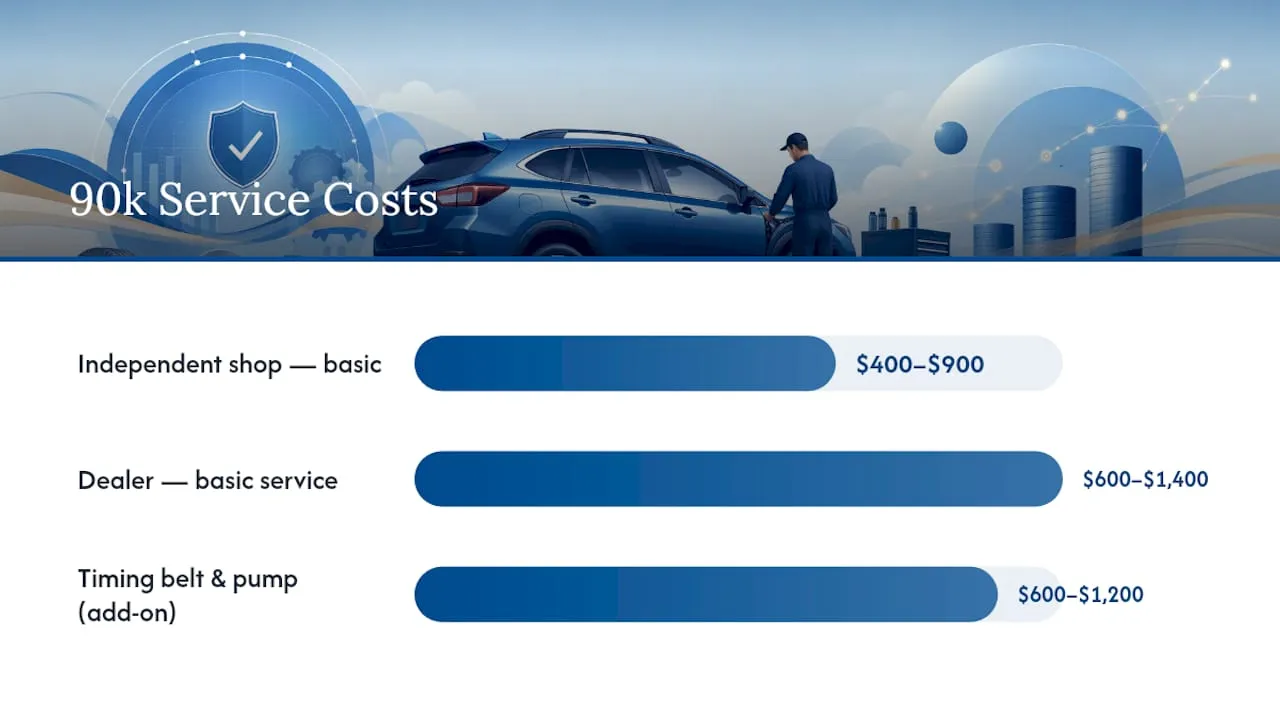
| Expect a moderate cost range | Basic 90k service runs $400 to $900 independent or $600 to $1,400+ at a dealer without belt replacement. |
| Prioritize safety first | Address worn brakes and active leaks immediately; schedule timing belt work before comfort items. |
| Budget extra time for major work | A basic visit takes two to three hours; timing belt or spark plug jobs can take a half day or more. |
| Consider an independent specialist | Integrityautoinc offers VIN-based Subaru estimates with transparent line items rather than bundled dealer pricing. |
Table of Contents
- What Does a Subaru 90,000-Mile Service Include?
- Which Parts Commonly Get Replaced at 90k?
- How Much Does a 90,000-Mile Service Cost?
- How Should You Prioritize Repairs at 90k?
- How Long Does a Subaru 90k Service Take?
- Why Choose an Independent Subaru Specialist for Your 90k Service?
- Sources
- FAQ
What Does a Subaru 90,000-Mile Service Include?
The 90,000-mile mark sits inside a repeating maintenance pattern, not a one-time special event. Subaru’s own maintenance schedule groups recurring jobs into service types often labeled A, B, C, and D, with heavier intervals stacking more tasks onto the basic oil-and-inspection visit. A 90k appointment usually falls into one of the more thorough groupings, since Subaru’s maintenance schedule lists brake fluid changes and expanded inspection items at these higher-mileage intervals rather than at every basic service.
Here’s what a shop-ready Subaru 90k checklist typically covers:
- Engine oil and filter change
- Tire rotation and tread depth check
- Full multi-point inspection (suspension, steering, exhaust, driveline)
- Brake inspection, including pad thickness and rotor condition
- Brake fluid flush and replacement
- Engine air filter and cabin air filter inspection, replaced if due
- Drive belt inspection for cracking or glazing
- Battery test and terminal check
- Fluid leak inspection under the vehicle
- Road test to confirm proper shifting, braking, and steering feel
Not every item applies to every Subaru. Timing belt intervals, spark plug replacement, and transmission or differential fluid service all vary by engine and model year, which is why Subaru itself directs owners back to the vehicle-specific maintenance guide rather than a single universal chart. A 2015 Outback with a 3.6R engine and a 2019 Forester with the 2.5-liter naturally aspirated engine can have genuinely different 90k requirements, even though both are “Subaru 90k service” jobs on paper.
The manufacturer’s own guidance is blunt about this: timing-belt, spark-plug, and transmission-fluid intervals differ by engine and year, and owners should confirm their exact schedule using the VIN or owner’s manual rather than a generic mileage chart.
Dealer service menus, forum threads, and independent shop checklists consistently point to the same core group of items at this mileage, which is why the list above holds steady across most makes and models even before VIN-specific adjustments come into play. For a deeper breakdown of how the 30k/60k/90k pattern builds on itself, Integrity Auto Inc’s guide on 30k, 60k, and 90k mileage services walks through why the intervals repeat and stack the way they do.
Which Parts Commonly Get Replaced at 90k?
Ninety thousand miles is where a handful of wear items cross from “monitor it” to “replace it” territory. Rubber, fluid, and friction components all have a service life, and this mileage band is where several of them converge.
- Timing belt (if your engine uses one, not a chain): a broken belt on an interference engine can bend valves and cause expensive internal damage.
- Drive belts: cracked or glazed belts risk sudden failure of the alternator, power steering, or air conditioning.
- Spark plugs: worn plugs cause misfires, rough idle, and reduced fuel economy.
- Brake pads and rotors: pad material thins with mileage, and rotors can warp or wear unevenly under heavy stop-and-go driving.
- Brake fluid: absorbs moisture over time, which lowers its boiling point and can soften pedal feel.
- Engine and cabin air filters: restricted airflow hurts engine performance and cabin air quality.
- Battery: internal capacity degrades with age regardless of how the vehicle looks or starts today.
- Tires: tread wear and uneven patterns by 90k often call for replacement or at least an alignment check.
Pro Tip: If your Subaru uses a timing belt, replacing the water pump at the same time the belt comes off is usually far cheaper than doing it separately later. Both parts sit behind the same covers, so the labor to access them is largely shared. Skipping the water pump now to save money often means paying for that same labor twice within a few years.
How Much Does a 90,000-Mile Service Cost?
Total cost depends heavily on which items are actually due, not just the mileage number on the odometer. A basic 90k visit with no belt or major transmission work tends to run a moderate amount at an independent shop and higher at a dealer, largely because dealer labor rates and parts markups run higher across the board. If a timing belt and water pump are due, expect additional costs depending on the engine and labor rate in your area.
Typical line-item ranges include:
- Oil and filter change: $60 to $120
- Brake fluid flush: $100 to $180
- Brake pad replacement (per axle): $150 to $350
- Spark plug replacement: $150 to $400 depending on engine access
- Timing belt and water pump combined: $600 to $1,200
Getting a line-item breakdown for pads, rotors, machining, and labor is the fastest way to compare a dealer quote against an independent estimate on equal footing, according to Integrity Auto Inc’s Subaru brake repair cost guide.
Dealers typically carry higher hourly labor rates and use only Subaru-branded parts, which can mean stronger warranty backing but a noticeably higher bill. Independent Subaru specialists often source comparable quality parts at lower markups and can offer more transparent, itemized estimates rather than bundled flat-rate packages.
How Should You Prioritize Repairs at 90k?
Not every item on the checklist carries the same urgency. A useful framework: address safety items immediately, schedule failure-prevention items on a firm timeline, and treat comfort items as flexible.
- Immediate safety items: worn brake pads near minimum thickness, active fluid leaks, loose or worn steering/suspension components.
- Scheduled prevention items: timing belt replacement if your engine uses one and mileage is approaching the manufacturer’s limit, since a failure here risks major engine damage.
- Comfort and convenience items: cabin air filter, minor alignment drift, cosmetic wear that doesn’t affect safety or reliability.
Before authorizing work, ask the service advisor these questions directly:
- Can you confirm this schedule against my specific VIN, not just the mileage?
- What are the part numbers and warranty terms for anything being replaced?
- What’s the labor time estimate, and is that separate from parts cost?
- Is this item necessary now, or is it a manufacturer recommendation I can defer?
- What’s the realistic risk or added cost if I wait three to six months on this?
Watch for red flags in any quote: vague justifications without a specific reason, no reference to your VIN or owner’s manual, or a large flat-percentage markup applied to the whole bill instead of itemized parts and labor.
How Long Does a Subaru 90k Service Take?
A basic 90k visit covering oil, rotation, inspection, and brake fluid usually takes a few hours. If the timing belt, water pump, or spark plugs also need replacement, plan for a longer appointment, since those jobs involve removing covers and accessory components that add significant labor time.
Some symptoms mean you shouldn’t wait for a scheduled appointment at all:
- Unusual ticking, knocking, or squealing from the engine bay
- Visible fluid puddles under the vehicle
- A spongy or sinking brake pedal
- Rough idle or noticeable engine misfire
- Temperature gauge climbing toward overheating
Any of these warrant immediate diagnosis rather than waiting for the next scheduled slot. Subaru’s own maintenance poster treats these inspection points as recurring checks precisely because early detection at a scheduled visit is what prevents them from becoming roadside emergencies.
Why Choose an Independent Subaru Specialist for Your 90k Service?
Integrityautoinc approaches every Subaru 90k service the same way this checklist does: confirm the VIN-specific schedule first, then quote only what your vehicle actually needs. That means transparent line items instead of bundled flat-rate packages, and technicians who work on Subaru scheduled intervals regularly enough to know where the 90k mark tends to differ from 60k or 120k on a given engine.
Independent shops typically apply lower parts and labor markups than a dealer service department, without sacrificing the accuracy that comes from checking your specific VIN against the manufacturer’s schedule rather than a generic mileage chart. Integrityautoinc’s Subaru service page covers how VIN-based estimates work for owners who want to know exactly what’s due before committing to a repair order. If your Subaru is approaching 90,000 miles, request a VIN-based estimate to find out which items on this checklist actually apply to your engine and model year before scheduling the work.
Sources
- MAINTENANCE SCHEDULE
FAQ
What Is Included in a Subaru 90,000-Mile Service?
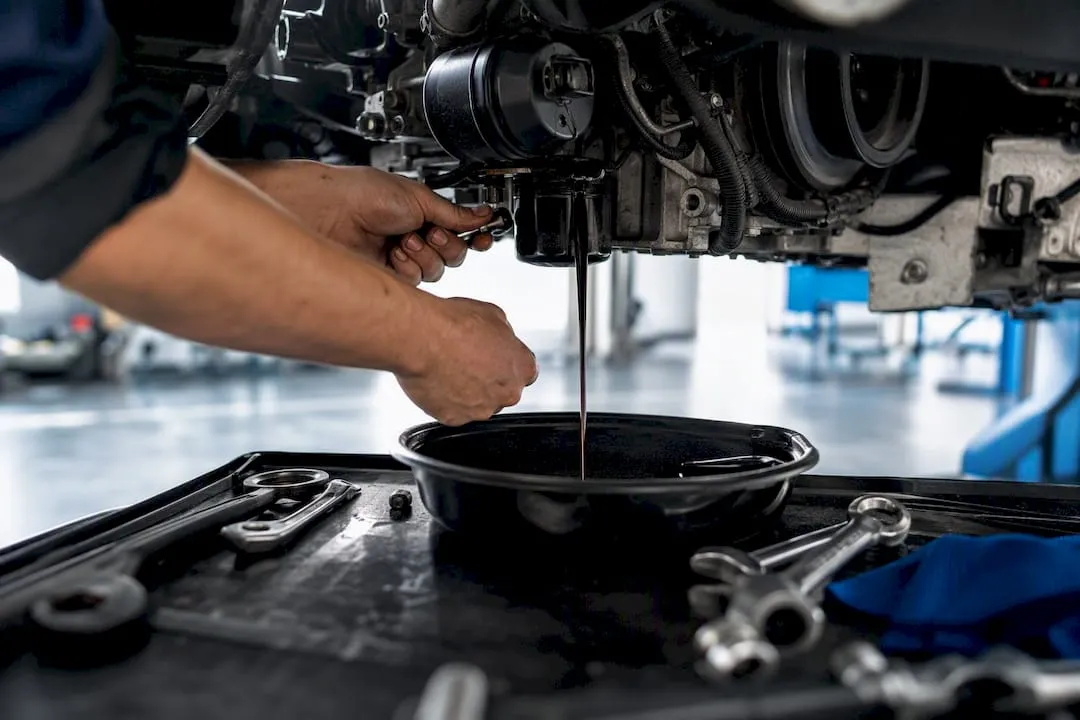
It typically includes an oil and filter change, tire rotation, multi-point inspection, brake fluid replacement, and inspection of belts, filters, and the battery, with exact items varying by VIN.
Is the 90k Service Worth It?
Yes. It catches wear items like brake pads and belts before they fail, and it’s often the point where a timing belt replacement becomes due on belt-equipped Subaru engines.
How Much Does a 90,000-Mile Service Cost?
Expect $400 to $900 at an independent shop or $600 to $1,400 or more at a dealer for basic service, with timing belt and water pump work adding roughly $600 to $1,200.
What Is Done in a 90,000-Mile Service?
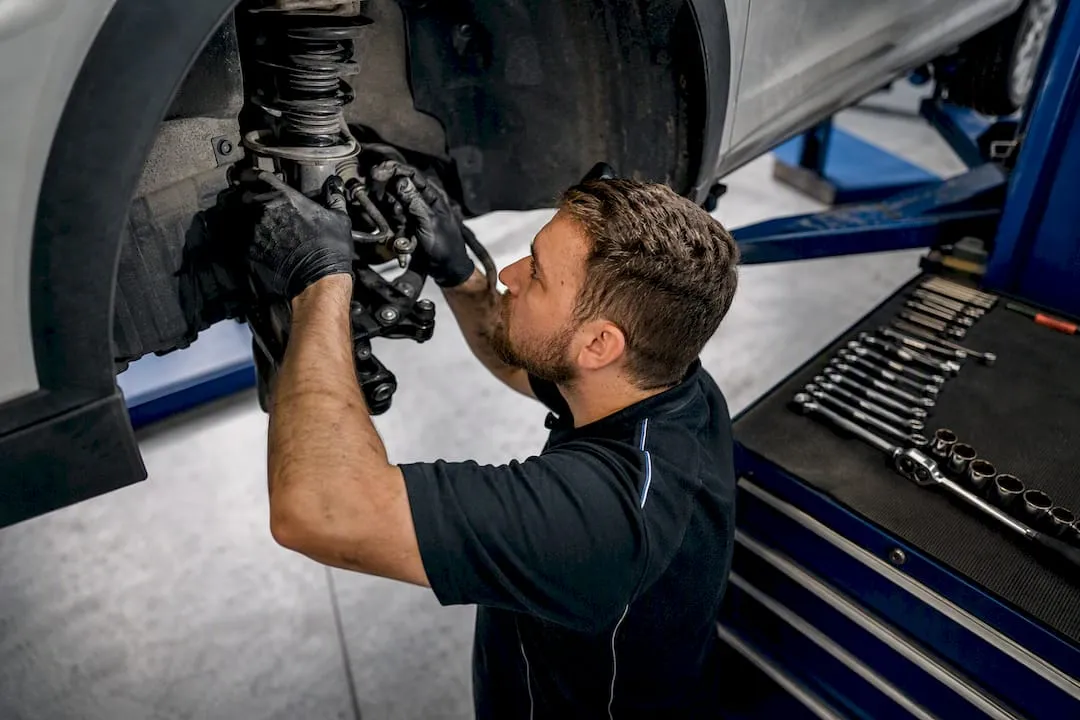
Beyond oil and filter service, technicians inspect brakes, suspension, and steering, flush brake fluid, check filters and belts, test the battery, and road test the vehicle to confirm proper operation.
Does Every Subaru Need a Timing Belt at 90k?
No. Some Subaru engines use a timing chain that doesn’t require scheduled replacement, while others use a belt with a defined replacement interval, so checking your VIN or owner’s manual is essential.


