A multipoint inspection checklist is a grouped list mechanics use to evaluate a vehicle’s safety systems and maintenance needs in one visit. It typically covers fluids, brakes, tires, battery, lighting, and suspension, with results sorted into urgent, schedule-soon, and monitor categories. Printable quick and extended versions appear below for immediate use.
TL;DR:
- The most common multipoint inspections include over 100 detailed checks, with simplified quick forms ideal for pre-trip or used-car assessments.
- Full inspections follow a sequence from under-hood to road test, emphasizing measurements like brake pad thickness and tread depth over simple visual checks.
- Most shops suggest getting an MPI at least once or twice annually, with results color-coded to prioritize urgent safety issues, upcoming repairs, or monitoring needs.
- The cost for a standard MPI ranges from $60 to $180, increasing with inspection detail and vehicle complexity, and some independent shops offer complimentary checks for specific brands.
- A comprehensive MPI complements routine maintenance, catching early problems before emissions failures and supporting informed repair decisions.
Table of Contents
- Where to Find Printable and Fillable Checklist Forms
- What Does a Full Multipoint Inspection Checklist Include?
- How Often Should You Get an MPI, and What Do the Results Mean?
- What Does a Multipoint Inspection Typically Cost?
- How Integrity Auto Documents a Multipoint Inspection
- Do Trucks and Motorcycles Get the Same Inspection?
- How Does an MPI Fit With Oil Changes and Emissions Testing?
- Where the Checklist Details in This Guide Come From
- Get a Complimentary Multipoint Inspection From a Toyota, Lexus, Subaru, and Honda Specialist
- Sources
- FAQ
Where to Find Printable and Fillable Checklist Forms
Two formats cover most needs. A quick-check form with 12 to 23 points works for a fast walkaround before a road trip or before buying a used car. An extended form with well over 100 points matches what a shop typically runs during a full service visit, and formats published online range from short 6-point lists up to 222-point templates built for fleet and used-car evaluation.
Choosing between the two depends on the purpose:
- Quick form (12 to 23 points): best for a five-minute pre-trip check or a used-car walkaround in a parking lot.
- Extended form (100+ points): best for a full-service visit, a pre-purchase inspection, or documenting a vehicle’s condition before a warranty claim.
- Fillable PDF: lets a technician type notes and measurements directly rather than handwriting them, which keeps records legible for future reference.
- Mobile-friendly checklist: useful for a phone-based walkaround where printing isn’t practical.
Hand the extended form to a technician before service starts and ask for it back completed. For a DIY walkaround, the quick form takes less than ten minutes and flags anything that needs a professional look.
What Does a Full Multipoint Inspection Checklist Include?
A thorough multipoint inspection checklist works through the vehicle in a fixed sequence: under-hood first, then undercarriage, tires and wheels, suspension and steering, electrical and lighting, interior and HVAC, and finally a road test. This order mirrors how most shops structure a real inspection, moving from stationary checks to a live drive.
1. Under-hood. Check engine oil level and condition (color, smell, consistency), coolant level and concentration, transmission fluid where the vehicle has a dipstick or check port, brake fluid, power steering fluid, and washer fluid. Inspect belts and hoses for cracking, glazing, or soft spots. Replace or note the air filter and cabin filter if visibly dirty. Test the battery under load and check terminals for corrosion.
2. Brakes and undercarriage. Measure brake pad thickness in millimeters rather than eyeballing it, since a specific number tells the owner exactly how much life remains. Inspect rotor condition for scoring or heat spots, check brake lines for corrosion or wear, look at exhaust components for rust-through, and scan the undercarriage for visible fluid leaks.
3. Tires and wheels. Measure tread depth in 32nds of an inch at multiple points across each tire, check pressure against the manufacturer’s spec on the door jamb sticker (not the tire sidewall), and look for uneven wear that points to alignment or suspension problems. Confirm the spare tire holds air and that the jack and lug wrench are present.
4. Suspension and steering. Check shocks and struts for oil leaks or bouncing, test ball joints and tie rods for play, inspect bushings for cracking, and check the steering wheel for excess free play before the tires respond.
5. Electrical and lighting. Verify headlight aim and operation on both high and low beam, test brake lights, turn signals, and backup lights, check interior lighting and the horn, and test the charging system’s output.
6. Interior and HVAC. Check wiper blades and washer spray pattern, test HVAC on both heating and cooling settings, note any dashboard warning lights currently illuminated, and inspect seat belts for fraying or a sticking latch.
7. Road test. A technician drives the vehicle to check for steering pull, brake feel and noise, unusual vibration, and smooth transmission shifting through the gears. This is the only step that catches problems that only show up under load and speed.

Pro Tip: Ask the technician to write down actual measurements, not just “OK” or “check.” A brake pad reading of 4mm tells you far more than a checkmark, and it lets you compare wear over time.
How Often Should You Get an MPI, and What Do the Results Mean?
Most guides recommend an MPI at least once or twice a year, or roughly every 6,000 miles, with more frequent checks for high-mileage vehicles or heavy commuting. Pairing it with an oil change appointment is the easiest way to keep the habit consistent since the vehicle is already up on a lift.
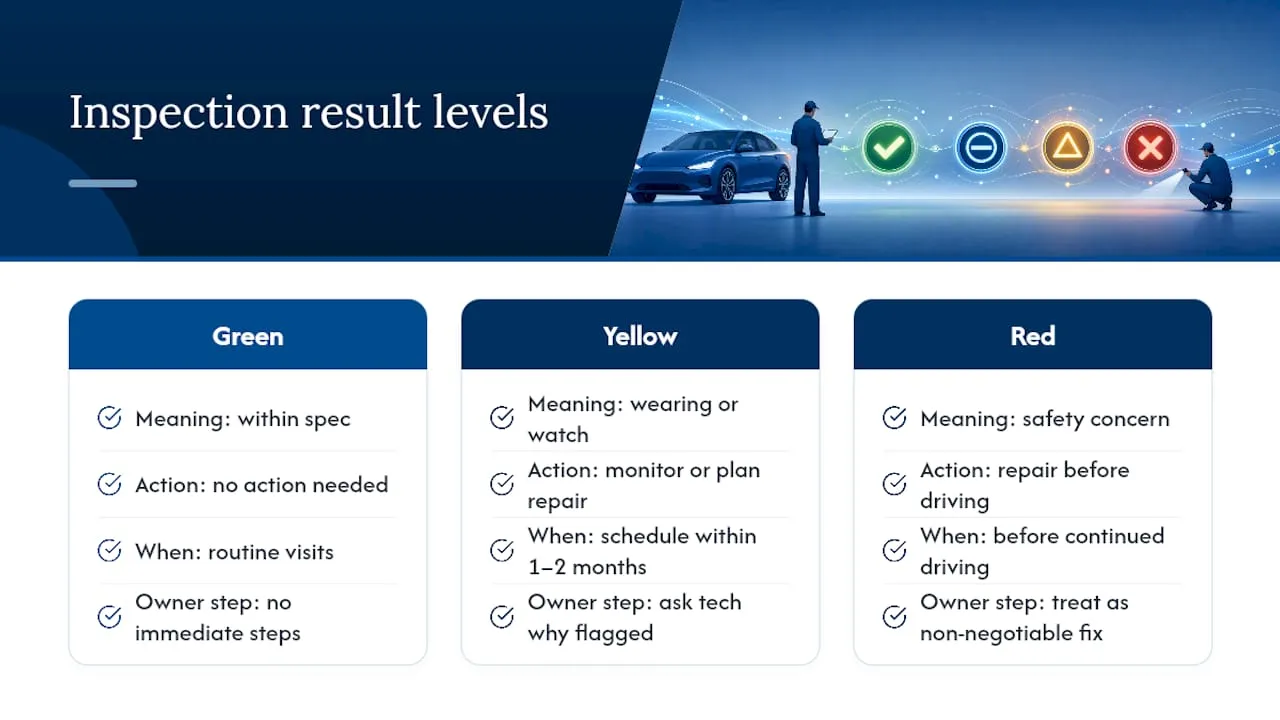
Shops commonly present results as a report card using a green, yellow, and red color code: green indicates the item is within spec and needs no action; yellow indicates the item is wearing down or worth watching at the next visit; red indicates the item is a safety concern requiring attention before continued driving.
This color system pairs with written technician notes that separate urgent issues from items that are nearing the end of their service life, which helps an owner plan repairs on a budget rather than reacting to a surprise breakdown. Treat red items as non-negotiable safety fixes. Yellow items get scheduled within the next month or two. Monitor items just need tracking at the next inspection to see if wear has progressed.
Always ask for an itemized estimate before authorizing any repair, and ask the technician to explain what specifically prompted a yellow or red flag rather than accepting the color alone.
What Does a Multipoint Inspection Typically Cost?
Pricing depends heavily on depth and vehicle type. A basic MPI usually runs on the lower end of the scale, a mid-range inspection with more thorough testing costs more, and premium inspections on luxury or complex vehicles push toward the top of the range.
These figures come from general MPI pricing data and vary by region and vehicle complexity. Watch for two red flags: a shop that won’t show you the checklist it used, and one that pushes an immediate repair without written documentation of what it found.
How Integrity Auto Documents a Multipoint Inspection
Integrityautoinc performs a complimentary vehicle inspection for Toyota, Lexus, Subaru, and Honda owners in the Portland, Oregon area, focused specifically on the systems these brands are known for. A reputable shop backs up its findings with prioritized, written recommendations rather than a verbal rundown at the counter.
That documentation should separate urgent safety items from wear items worth monitoring, similar to the systematic evaluation format used across the industry. Owners considering a pre-purchase check on a used Toyota, Lexus, Subaru, or Honda can request the same grouped format before finalizing a sale.
Do Trucks and Motorcycles Get the Same Inspection?
The core categories stay consistent across vehicle types, but the specific items and their weight shift depending on what the vehicle is built to do. A passenger car’s checklist emphasizes brake pad thickness, tire tread, and suspension bushings because those wear from daily commuting. A pickup truck or SUV used for towing adds items like transmission cooler condition, hitch and wiring inspection, and suspension components rated for heavier loads.
Motorcycles follow a different structure entirely. Chain tension and lubrication replace belt inspection, tire wear patterns matter more given the smaller contact patch, and fork seals get checked for leaks the way a car’s struts would be. Fluid checks still apply, but a bike has fewer systems overall, so a motorcycle-specific form typically runs shorter than a car’s extended checklist.
Commercial and heavy vehicles push the depth further still. A pre-trip inspection on a heavy truck follows a documented sequence similar to European heavy-vehicle departure checklists, which cover braking systems, lighting, and load securement in far more detail than a passenger-car form because the consequences of a missed item scale with vehicle size and cargo weight.
The takeaway for any owner: match the checklist to the vehicle’s actual use, not just its category. A truck used only for commuting doesn’t need towing-specific checks, but one used for regular hauling does.
How Does an MPI Fit With Oil Changes and Emissions Testing?
A multipoint inspection isn’t a replacement for scheduled maintenance. It’s a diagnostic layer that runs alongside it. Most shops perform the MPI while the vehicle is already on the lift for an oil change, since the under-hood and undercarriage access needed for both jobs overlaps almost completely.
This pairing catches problems before they show up on an emissions test. A failing oxygen sensor or a vacuum leak often gets flagged during the under-hood portion of an MPI weeks before it would trigger an emissions failure or a check-engine light. Catching it early means a smaller, planned repair instead of a failed test and a scramble to fix it before a registration deadline.
The air and cabin filter check that happens during a routine oil service also feeds directly into emissions performance, since a clogged air filter changes the air-fuel ratio the engine runs on. Battery testing during an MPI matters here too: a weak battery can throw false codes during an emissions test even when the actual emissions system is fine.
Think of the sequence as three layers working together: the oil change keeps the engine lubricated, the MPI catches wear before it becomes a failure, and emissions testing confirms the vehicle meets legal standards for the road. Skipping the MPI doesn’t save time in the long run. It just moves problems from a scheduled fix to an unscheduled one.
Where the Checklist Details in This Guide Come From
The point-count formats and grouped categories in this checklist draw on how AAA Club Alliance defines the standard multipoint inspection and its typical scope. The prioritization framework, urgent versus schedule-soon versus monitor, follows Allstate’s preventive-planning approach to vehicle maintenance budgeting.
The printable form structures, including the range from short 6-point lists to extended 200-plus point templates, reference publicly available inspection checklist templates. Pricing tiers reference general multipoint inspection cost data compiled across multiple shop types.
Get a Complimentary Multipoint Inspection From a Toyota, Lexus, Subaru, and Honda Specialist
A printable checklist tells you what to look for. Some independent shops put that checklist into practice with complimentary multipoint inspections built around Toyota, Lexus, Subaru, and Honda systems rather than a generic all-makes checklist that treats every vehicle the same.
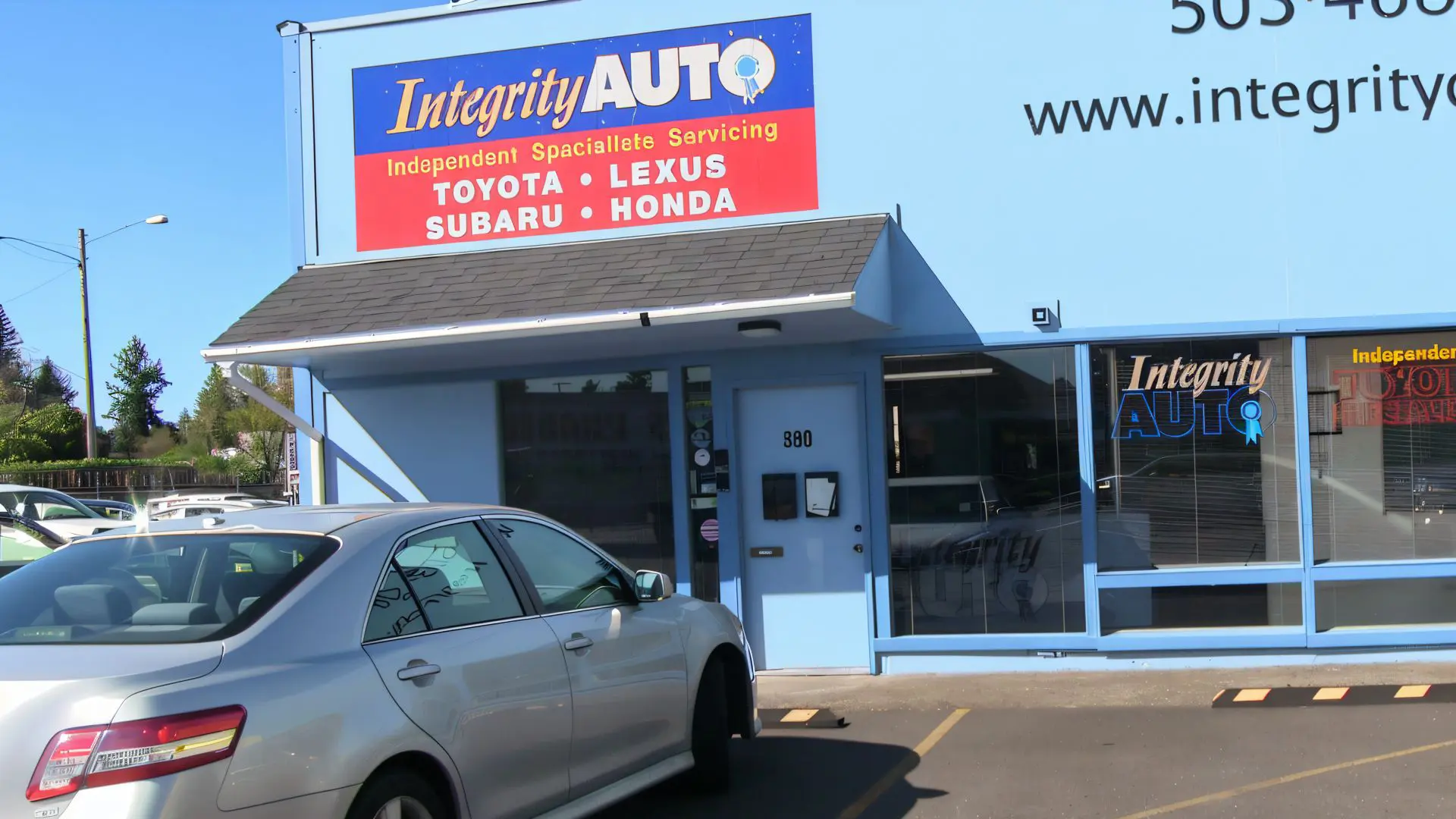
That brand focus matters because these manufacturers use specific transmission fluids, hybrid drive components, and maintenance intervals that a generalist shop may not track as closely. Where a dealership inspection often comes bundled with dealership pricing, some independent shops offer complimentary inspections without the markup, then provide a written, prioritized report so repair decisions get made with full information rather than pressure at the counter.
Owners in the Portland, Oregon area who want their MPI results tied to actual Toyota repair service expertise can schedule a complimentary vehicle inspection directly through Integrityautoinc’s booking page and get a documented, itemized look at their vehicle’s condition before committing to any repair.
Sources
- What Is a Multipoint Inspection for Vehicles? | AAA Club Alliance
- Allstate: multi-point inspection (preventive planning perspective)
- Vehicle Inspection Checklist (2026): Free 222-Point Guide + Printable PDF
- Multi Point Inspection Cost and Pricing Guide – Cost Insider
FAQ
What Does a Multipoint Inspection Include?
A standard multipoint inspection covers fluids, brakes, tires, battery condition, lighting, suspension, steering, and belts and hoses, typically organized into a checklist ranging from 23 to 32 points, though extended forms cover well over 100 items.
What Are the Five Things to Check During a Pre-Operational Vehicle Check?
A basic pre-operational check covers fluid levels, tire condition and pressure, lights and signals, brake function, and visible leaks or damage under the vehicle, which mirrors the quick-form version of a multipoint inspection checklist.
What Should Be Included in a Vehicle Inspection Checklist?
A complete checklist groups items by area (under-hood, undercarriage, tires and wheels, suspension, electrical, and interior) and records specific measurements like brake pad thickness and tread depth rather than simple pass or fail marks.
How Much Should a Multipoint Inspection Cost?
Basic inspections typically run $60 to $180, mid-range inspections with more thorough testing run $120 to $260, and premium inspections on complex or luxury vehicles cost more depending on the shop and vehicle. Some independent shops offer complimentary multipoint inspections for Toyota, Lexus, Subaru, and Honda vehicles.