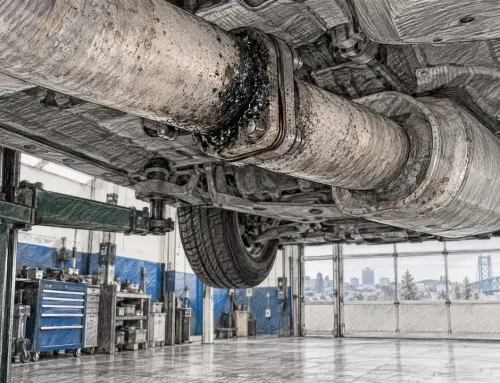

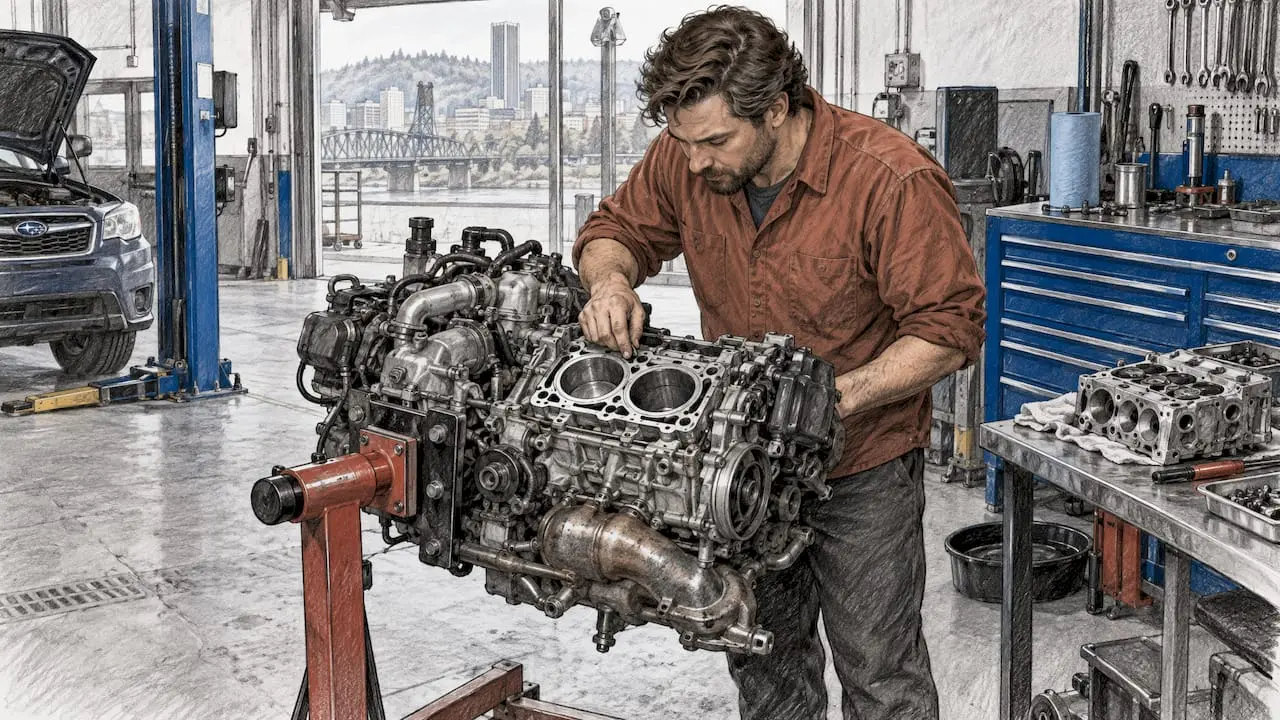
Subaru head gasket repair in Portland is a major engine job, and the outcome depends on three things: a confirmed diagnosis, a quote that covers both sides of the engine, and a shop that treats the cylinder heads properly. Independent Toyota, Lexus, Subaru and Honda specialists such as Integrity Auto handle Subaru service and repair in the Portland area, including head gasket work on the horizontally opposed engines that Subaru owners ask about most.
TL;DR
- The classic head gasket problem belongs mainly to the 2.5L EJ-series engines in pre-2010 Subarus, with failures often reported between roughly 100,000 and 150,000 miles.
- A leak should be confirmed by a test (combustion-gas, pressure or leak-down) before anyone approves a repair of several thousand dollars.
- Published independent-shop estimates for Outback and Impreza range from $2,800 to $4,200 in total, with labor making up most of the bill.
- A good estimate states whether it covers both heads, whether machining is included and how many labor hours are quoted.
- If the temperature gauge climbs, the engine should be shut off and the car towed, because overheating can turn a gasket job into an engine job.
Which Subarus are affected
Head gasket trouble is tied to specific engine generations, not to every Subaru. Jalopnik reports that the first internal failures hit 1996 to 1999 Outback, Legacy GT and LSi models, along with the 1998 Forester and Impreza. The problem then returned in the EJ251, EJ252 and EJ253 engines as external leaks, affecting 2000 to 2009 Legacy and Outback models, 1999 to 2010 Forester and 1999 to 2011 Impreza, with failures estimated at 120,000 to 150,000 miles.
Underhood Service puts most EJ25 failures around the 100,000-mile mark and notes that they typically begin as a slow oil or coolant leak, not a sudden breakdown. According to Outbaro, Subaru replaced the EJ engine with the FB-series 2.5 for the 2013 model year, and the classic external leak largely went away with it.
For a Portland owner, the practical point is age. Many of the affected cars are now 15 to 25 years old, so the question is often whether a leak is already present or developing.
Why these engines leak
Fel-Pro’s technical bulletin on Subaru 2.5L engines names three causes:
- Heat cycles. The aluminum block and heads expand and contract as the engine warms and cools, which scrubs the gasket’s sealing surface.
- Boxer layout. With the cylinders lying flat, oil stays in contact with the head gaskets when the engine is off, which can deteriorate lower-quality gaskets.
- Abnormal combustion. Detonation is more common in turbocharged or boosted engines and can stretch the original head bolts.
Symptoms to watch for
A failing gasket often announces itself gradually. Common signs include:
- Coolant level dropping with no puddle under the car.
- Oil or coolant seeping at the seam where the head meets the block.
- White exhaust smoke after warm-up, which points to coolant entering a cylinder.
- Milky residue on the oil cap or coolant in the oil.
- A temperature gauge that climbs or a warning light that comes on.
Several of these overlap with other faults, such as a worn radiator, a failing hose, a water pump leak or a bad thermostat. That overlap is the reason diagnosis comes before any repair decision. The cooling-system side of this is covered in Integrity Auto’s page on a cooling system leak, which uses a Toyota example but shows how coolant loss is traced.
How the failure is confirmed
The repair is expensive enough that the cause should be proven first. Real Repair Cost says a cooling-system pressure test, a combustion-gas (block) test and a compression or leak-down test together usually run $100 to $200, and recommends doing them before approving a $3,000 repair.
The three tests answer different questions:
- Pressure test: shows whether the cooling system holds pressure or loses it somewhere.
- Combustion-gas test: detects exhaust gases in the coolant, which indicates an internal gasket leak.
- Compression or leak-down test: shows where air escapes from a cylinder, which separates a gasket from worn rings or valves.
Owners can ask which test found the problem and request the result in writing, as Oilandmiles advises. Integrity Auto publishes information on its diagnosis and diagnostic charges page.
What the repair involves
The engine is partly disassembled, the heads are removed, and the surfaces are cleaned and inspected. What happens next depends on the heads, as Oilandmiles outlines:
- Flat head: clean surfaces, new gaskets and reassembly.
- Warped but sound head: sent to a machine shop for resurfacing, billed on top of the base job and limited to the manufacturer’s minimum thickness.
- Cracked head or block: a replacement head or a replacement engine.
Because the boxer engine has a head on each side, the quote should say whether both are being done. Related wear parts such as the timing belt, water pump and thermostat are often replaced during the same teardown, since the labor to reach them overlaps. Cartipsdaily’s cost guide lists timing belt replacement as adding $200 to $600.
What it costs
Published figures vary by source and by how much work the engine needs. The numbers below are reference points from 2025 and 2026 guides, not Portland quotes.
| Item | Published range | Source |
|---|---|---|
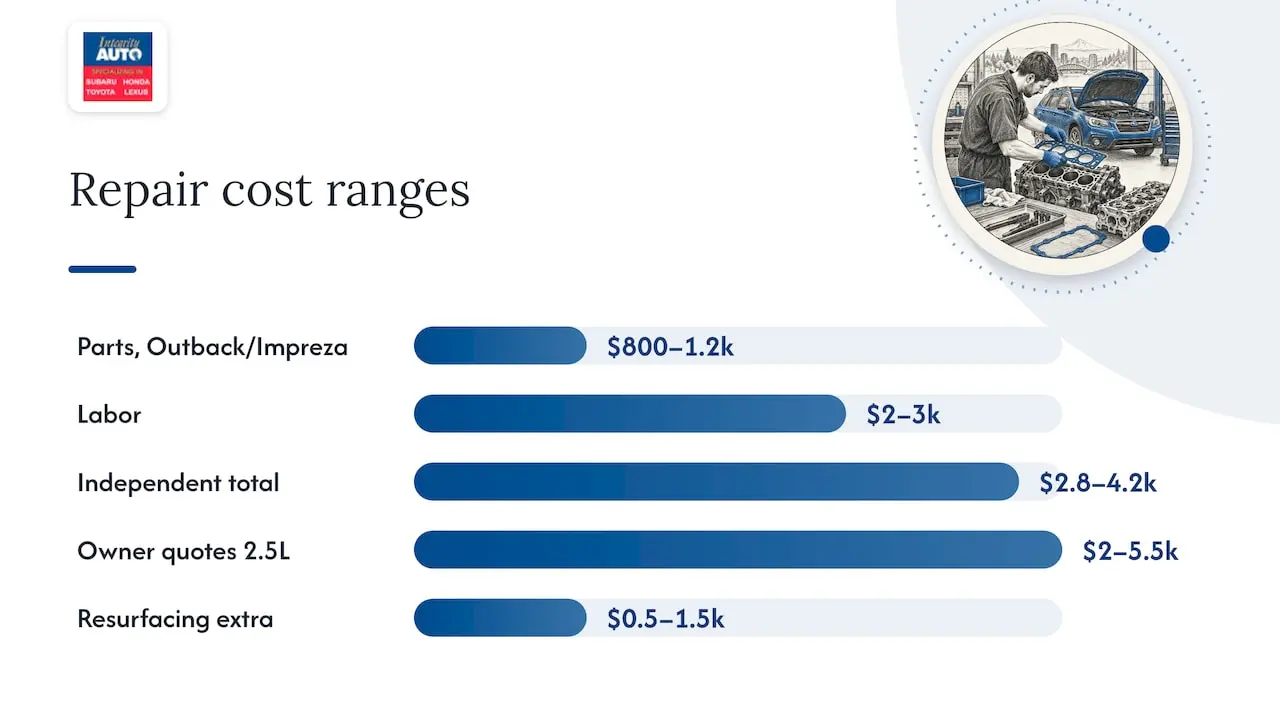
| Parts (Outback/Impreza) | $800 to $1,200 | Real Repair Cost, September 2026 |
| Labor | $2,000 to $3,000 | Real Repair Cost, September 2026 |
| Total at an independent shop, including typical resurfacing | $2,800 to $4,200 | Real Repair Cost, September 2026 |
| Owner-reported quotes, Outback/Forester 2.5L | $2,000 to $5,500 | Oilandmiles, September 2026 |
| Resurfacing after severe overheating | $500 to $1,500 added | Cartipsdaily, June 2025 |
Cartipsdaily also reports that labor accounts for 70 to 80 percent of the bill and that dealerships tend to charge 20 to 40 percent more than independent shops. Because hours multiplied by the shop rate drive the total, the labor figure matters more than the parts list.
Integrity Auto does not publish a price for this work, so an exact figure for a specific car comes from an inspection and written estimate.
Is it safe to keep driving
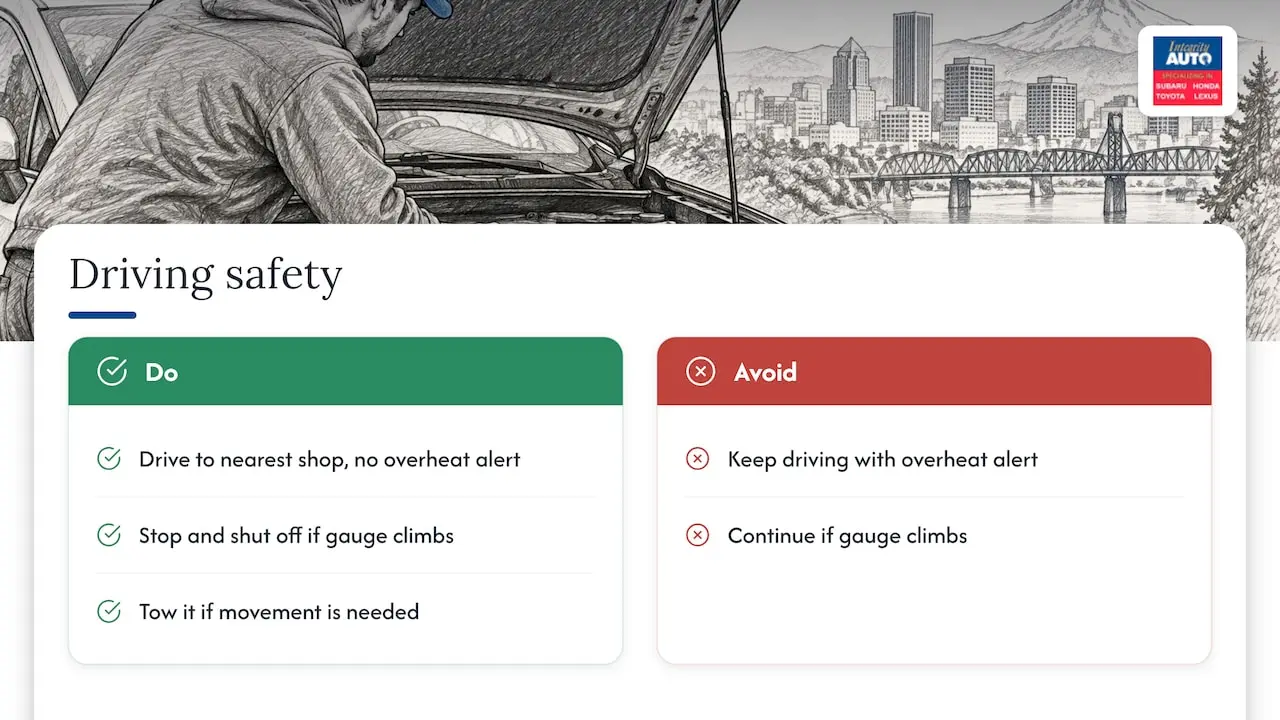
A suspected failure is a reason to act quickly. Oilandmiles says the car should be driven only as far as the nearest shop and only while no overheating warning shows. Real Repair Cost adds that if the gauge climbs, the driver should pull over and shut the engine off, since continued overheating can warp or crack the head, and coolant in the oil can destroy bearings and turn a gasket job into an engine replacement. When the car must be moved, trips should be very short with the gauge watched constantly, or the car towed.
What to check in an estimate
The Oilandmiles checklist works as a short list to take to any shop:
- Warranty: check the VIN for extended-warranty coverage. Oilandmiles notes one Subaru owner was offered a 50/50 split of a $3,636 bill, so it can be worth asking the dealer for help even outside warranty.
- Proof: ask which test confirmed the gasket and get the result in writing.
- Scope: ask whether the quote covers both heads.
- Machining: ask whether resurfacing is included and what changes if the head is cracked.
- Labor hours: get the hours, not only the total.
- Walk-away number: compare the quote with the car’s value before the engine is taken apart.
On warranty, Integrity Auto states that its repairs carry longer warranties than dealership repairs, that its technicians are ASE certified and that it uses OEM parts. Those are points to raise when comparing written estimates.
Head gasket work at Integrity Auto
Integrity Auto is an independent shop for Toyota, Lexus, Subaru and Honda vehicles in the Portland area. Its service list includes head gaskets, check engine light and DEQ diagnosis, coolant services, timing belts and complimentary multipoint inspections. Owners who suspect a leak can read the Subaru engine repair guide and then schedule through the Subaru service and repair page.
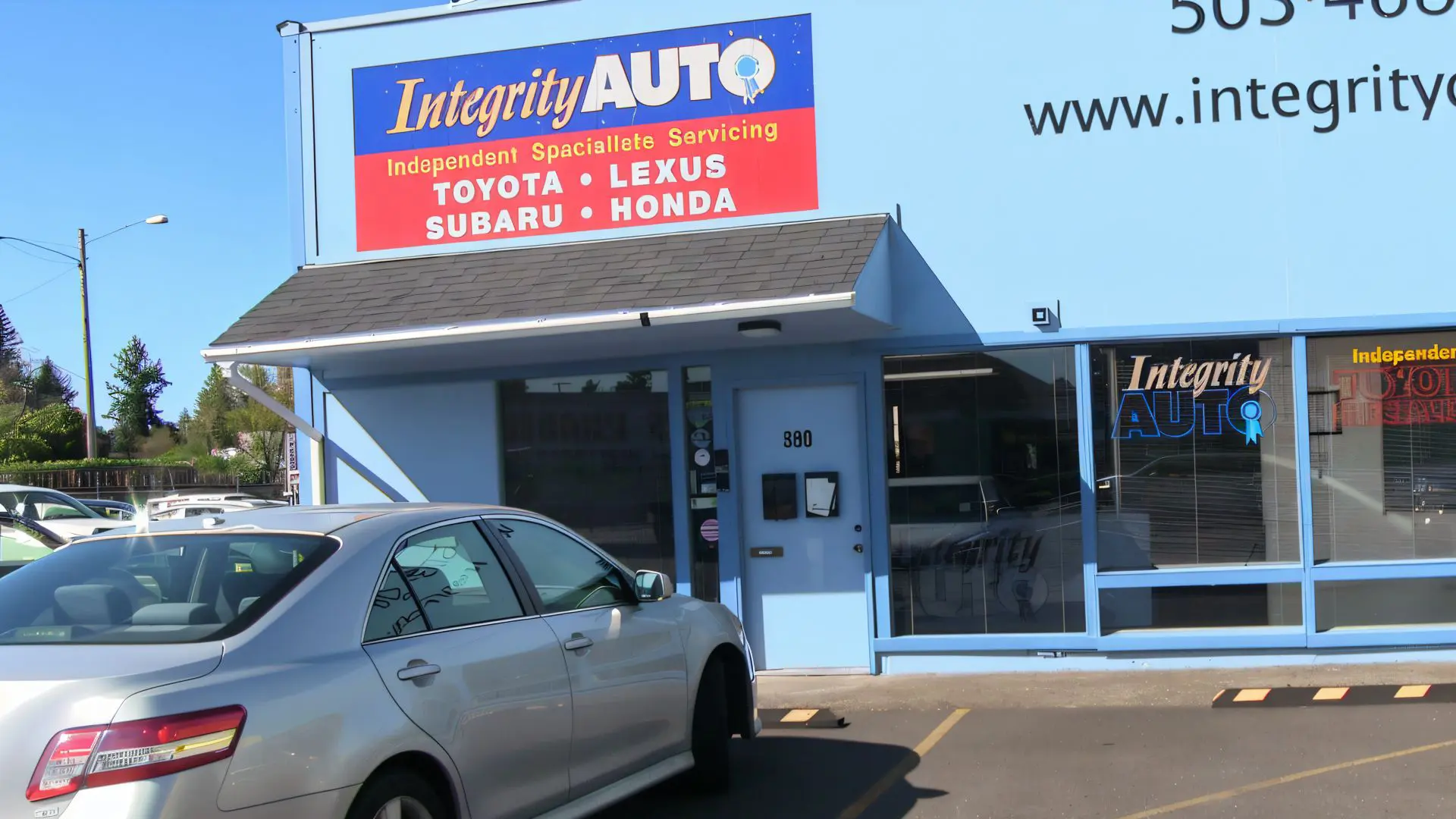
For Oregon owners, a leak that raises emissions can also affect a vehicle’s DEQ test, and the shop lists emission testing and repairs among its services at integrityautoinc.com.
FAQ
Can a Subaru head gasket be repaired without replacing the engine?
Yes, in most cases. A flat head needs only cleaning and new gaskets, and a warped head can be resurfaced. Replacement of the head or engine comes into play when the head or block is cracked, which is more likely after overheating.
How long do Subaru head gaskets last?
On the 2.5L EJ engines, failures are typically reported between about 100,000 and 150,000 miles, according to Underhood Service and Jalopnik. Later FB-series engines, introduced for the 2013 model year, largely avoid the classic external leak.
Is a head gasket repair worth it on an older Subaru?
It depends on the car’s value, condition and the written estimate. Comparing the quote with what the car is worth before it is apart, as Oilandmiles suggests, gives a clear walk-away number.
Does coolant loss always mean a bad head gasket?
No. Hoses, the radiator, the water pump and the thermostat can all leak coolant. A pressure test and a combustion-gas test separate those causes from a failed gasket.
Sources
- Subaru EJ25 Head Gasket Problems, Underhood Service
- Subaru model years with head gasket problems, Jalopnik
- Sealing Subaru 2.5L Engines, Fel-Pro technical bulletin
- Subaru Outback Common Problems by Year, Outbaro
- Head Gasket Replacement Cost (2026), Real Repair Cost
- Head Gasket Replacement Cost and Repair, Oilandmiles
- Subaru Head Gasket Replacement Cost, Cartipsdaily