
We Repeat: Honda Owners – Want to Save Money on Fuel costs? Identifying ways to reduce fuel expenses has grown increasingly important, to say the least. If you drive a Honda, you’re fortunate—these dependable cars are celebrated for their fuel efficiency. By making a few straightforward modifications and adopting careful driving practices, you can enhance your vehicle’s fuel economy even more. Whether you use your car for everyday commuting or a long journey, these tips will enable you to make the most of each gallon of fuel.
Understanding Fuel Consumption in Your Honda
Fuel consumption refers to how much fuel your car uses to travel a certain distance, typically measured in miles per gallon (MPG) or liters per 100 kilometers (L/100km). Various factors influence this number, including your driving habits, the condition of your vehicle, and even external elements like road conditions and weather.
It’s important to understand how your driving style and maintenance routine impact the amount of fuel your Honda uses. For example, aggressive acceleration and braking can significantly increase fuel usage, while maintaining steady speeds and anticipating traffic flow helps conserve fuel.
Routine Maintenance
Additionally, routine maintenance such as keeping your tires properly inflated, regularly changing air filters, and using the recommended grade of motor oil all contribute to better fuel economy. By gaining a clear understanding of how fuel consumption works in your Honda, you can make informed decisions that not only reduce your fuel expenses but also extend the life of your vehicle and reduce your environmental footprint.
 Regular Maintenance is Key for Optimal Performance
Regular maintenance is one of the most effective ways to ensure your Honda runs efficiently and uses fuel economically.
Keeping your vehicle in top condition not only extends its lifespan but also helps you save money at the pump.
Simple tasks like regularly changing the engine oil, replacing air filters, and checking tire pressure can have a significant impact on fuel consumption.
For instance, under-inflated tires create more rolling resistance, causing your engine to work harder and burn more fuel. Additionally, timely spark plug replacements and fuel system cleanings help your engine run smoother and more efficiently.
Following your Honda’s recommended maintenance schedule, as outlined in the owner’s manual, will keep all systems operating at their best and help you get the most miles out of every gallon. Don’t overlook regular inspections—addressing minor issues early can prevent costly repairs and avoid unnecessary fuel waste in the long run.
Eco-Driving Tips Specific to Honda Models
Honda vehicles are designed with efficiency in mind, and adopting eco-driving habits tailored to your specific model can help you maximize fuel savings and reduce your environmental impact. Here are some Honda-specific eco-driving tips to get the most out of your ride:
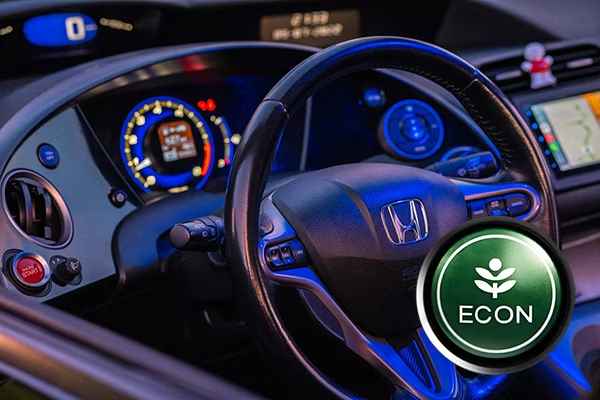
Utilize the ECON Mode:
Most modern Honda models come equipped with an ECON mode button. Activating this feature adjusts your engine and transmission settings to optimize fuel efficiency. It smooths out throttle response, moderates air conditioning use, and fine-tunes other systems to help you conserve fuel without sacrificing too much performance.
Leverage Regenerative Braking in Hybrids:
If you own a Honda hybrid, such as the Accord Hybrid or CR-V Hybrid, make the most of regenerative braking. By gently applying the brakes, you can recharge the battery and increase overall fuel economy. Avoid abrupt stops and instead anticipate traffic flow to maintain steady speeds.
Keep an Eye on Tire Pressure:
roperly inflated tires reduce rolling resistance and improve mileage. Honda’s Tire Pressure Monitoring System (TPMS) alerts you when your tires need attention, so be sure to check and maintain the recommended pressure levels specified in your owner’s manual.
**4. Use Honda’s Driver Assist Features:** Some Honda models feature adaptive cruise control and lane-keeping assist. Using adaptive cruise control on highways helps maintain a steady speed, reducing unnecessary acceleration and deceleration, which can save fuel over long distances.
**5. Limit Use of Heavy Accessories:** Accessories like roof racks and tow hitches increase aerodynamic drag and weight, leading to higher fuel consumption. Remove them when not in use to keep your Honda running efficiently.
By incorporating these Honda-specific eco-driving strategies into your daily routine, you’ll not only reduce fuel consumption but also extend the life of your vehicle and contribute to a greener planet. Remember, small changes behind the wheel can lead to significant savings at the pump!
 Importance of Proper Tire Inflation
Maintaining proper tire inflation is one of the simplest yet most effective ways to reduce fuel consumption in your Honda. When your tires are underinflated, they create more rolling resistance on the road, forcing your engine to work harder and consume more fuel. On the other hand, overinflated tires can lead to uneven tire wear and a less comfortable ride, so striking the right balance is essential.
Checking your tire pressure regularly—ideally once a month and before long trips—can help ensure your tires are inflated to the manufacturer’s recommended levels, which you can usually find on a sticker inside the driver’s door or in your owner’s manual. Using a reliable tire pressure gauge makes this task quick and easy.
Properly inflated tires not only improve your Honda’s fuel efficiency but also enhance safety, extend tire life, and contribute to better handling on the road. So, make it a habit to keep an eye on your tire pressure—it’s a small step that adds up to significant savings at the pump and a smoother driving experience overall.
Using the Recommended Fuel Type
Using the recommended fuel type for your Honda is one of the simplest yet most effective ways to optimize fuel efficiency and save money at the pump. Your vehicle’s manufacturer has carefully designed the engine to perform best with a specific grade of fuel, typically indicated in your owner’s manual or on the fuel filler cap. Using the right fuel ensures that the engine runs smoothly, maximizes combustion efficiency, and reduces the risk of knocking or engine damage. For most Honda models, regular unleaded gasoline is sufficient, but some high-performance variants may require premium fuel. Avoiding lower-grade or incorrect fuel types not only protects your engine but also helps maintain optimal mileage. By sticking to the recommended fuel type, you’re ensuring your Honda operates at its best, giving you more miles per gallon and saving you money in the long run.
Reducing Idle Time to Save Fuel
Reducing idle time is one of the simplest yet most effective ways to cut down on fuel consumption in your Honda. When your engine is running but your vehicle isn’t moving—whether you’re waiting at a long traffic light, stuck in a traffic jam, or parked with the engine on—you’re essentially wasting fuel without gaining any mileage. Even a few minutes of idling can burn a surprising amount of fuel over time, which adds up to unnecessary expenses and increased emissions.
To minimize idle time, try turning off your engine if you anticipate being stopped for more than 10 seconds. Modern Hondas are designed with fuel-efficient start-stop systems in many models, making it easy and safe to turn off and restart your engine without hassle. Additionally, planning your trips to avoid peak traffic hours or busy routes can help reduce the time you spend idling on the road.
By being mindful about reducing idle time, you not only save money at the pump but also contribute to lowering your carbon footprint—making it a win-win for your wallet and the environment.
Utilizing Cruise Control on Highways
Utilizing cruise control on highways is a simple yet effective way to reduce fuel consumption in your Honda. When driving on long stretches of road with consistent speed limits, engaging cruise control helps maintain a steady pace without the constant acceleration and deceleration that often occurs when manually controlling your speed. This steady speed reduces unnecessary fuel spikes, leading to better fuel efficiency.
Additionally, cruise control minimizes driver fatigue by allowing you to relax your foot, which can improve focus and promote safer driving habits. However, it’s important to use cruise control primarily on flat or gently rolling highways, as using it on steep inclines or in heavy traffic may not be as effective and could even increase fuel consumption.
By incorporating cruise control into your highway driving routine, you not only save money at the pump but also contribute to a smoother, more eco-friendly driving experience in your Honda.
The Role of Aerodynamics and Roof Racks
When it comes to improving fuel efficiency in your Honda, aerodynamics plays a crucial role that is often overlooked. Your vehicle’s shape and any additions on the exterior can significantly impact air resistance, which in turn affects how hard your engine has to work and how much fuel it consumes. One common culprit for increased drag is roof racks. While incredibly useful for carrying extra luggage, bikes, or sports equipment, roof racks disrupt the smooth flow of air over your car, creating turbulence that reduces aerodynamic efficiency.
If you frequently use roof racks, consider removing them when they’re not in use. This simple step can lead to noticeable fuel savings over time. Additionally, opting for aerodynamic roof boxes designed to minimize drag can help if you need extra storage regularly. Remember, even small changes in airflow can translate to better mileage, especially on highways where higher speeds amplify the effects of aerodynamic drag.
By being mindful of how roof racks and other external accessories affect your Honda’s aerodynamics, you not only improve fuel economy but also reduce emissions—making your driving both more cost-effective and environmentally friendly.
 When to Avoid Air Conditioning to Save Fuel
Air conditioning can be a significant drain on your Honda’s fuel efficiency, especially during city driving or in stop-and-go traffic. While it’s tempting to crank up the AC on hot days, knowing when to avoid using it can help you save money at the pump.
For instance, at lower speeds—typically under 40 mph—rolling down your windows instead of turning on the air conditioning can keep you cooler without putting extra load on your engine. However, once you hit higher speeds on the highway, it’s actually more fuel-efficient to use the AC rather than open the windows, which creates aerodynamic drag and forces your engine to work harder.
Additionally, consider using your car’s ventilation system set to recirculate air, which cools the cabin more efficiently and reduces the need for continuous AC use. By being mindful of when and how you use your air conditioning, you can strike a balance between comfort and fuel savings in your Honda.
By implementing these tips for reducing fuel consumption in your Honda, you can not only save money at the pump. From simple maintenance routines to mindful driving habits, every small change adds up to significant fuel savings over time. Taking care of your vehicle and being conscious of how you drive ensures your Honda performs efficiently while keeping your expenses in check. Start applying these strategies today, and enjoy the benefits of a more economical and environmentally friendly ride!