
Replace your brakes immediately if you hear continuous metal-on-metal grinding or if pad friction material measures about 2 millimeters or less. Replace them soon, before the next long drive, if you notice persistent squealing, a soft or sinking pedal, longer stopping distances, pulsing through the wheel, or the car pulling to one side. Rotors follow their own minimum-thickness spec stamped into the metal, and depending on their condition, they may need only resurfacing rather than full replacement.
TL;DR:
- Brake pads should be replaced when friction material measures 2 millimeters or less, or if there is ongoing squealing, pulsing, or the pedal feels soft.
- Grinding noises indicate immediate pad failure, requiring urgent inspection to prevent rotor damage and safety risks.
- Measuring pad thickness through the wheel and replacing full sets helps ensure even braking and prevents uneven wear.
- Rotors can be resurfaced only if they are above the minimum thickness and within acceptable runout, otherwise they must be replaced.
- Regular inspections should include checking for dash warnings, vibrations, and pedal feel, especially after noticing any abnormal brake behavior.
Table of Contents
- Warning Signs Your Brakes Need Replacement
- How to Check Brake Pads and Measure Thickness
- How Long Do Brake Pads and Rotors Actually Last?
- When Should Rotors Be Resurfaced Instead of Replaced?
- What Should You Do Next?
- What a Professional Brake Inspection Looks Like
- Get Your Brakes Inspected Before Small Signs Become Big Repairs
- Sources
- FAQ
Warning Signs Your Brakes Need Replacement
Brakes rarely fail without warning. They almost always tell you first, through sound, feel, or behavior behind the wheel.
A high-pitched squeal is often the built-in wear indicator doing its job. A small metal tab contacts the rotor once the pad wears down, producing that sound on purpose. If the squeal only shows up after rain or on a cold morning and disappears after a few stops, it is likely moisture or light surface rust, not a wear issue. If it is constant, treat it as a signal to check pad thickness soon.
Grinding or growling is a different problem entirely. That sound means the friction material is gone and metal backing is scraping directly against the rotor, which causes rapid rotor damage and demands immediate mechanical inspection.
Beyond noise, pay attention to how the car actually stops:
- A soft or spongy pedal, or one that sinks lower before engaging, often points to air in the lines or a fluid problem.
- Vibration in the pedal or steering wheel usually comes from uneven rotor thickness rather than a true “warp.”
- Pulling to one side during braking suggests uneven pad wear or a sticking caliper.
- A dashboard brake warning light or a dropping fluid reservoir level should never be ignored, even without noise or pulling.
Pro Tip: Test your brakes at low speed in an empty parking lot after any new noise appears. Pulling, grinding, or pulsing shows up clearly at 15 to 20 mph without putting you at risk.
How to Check Brake Pads and Measure Thickness
You do not need a lift to get a useful read on pad life. Park on level ground, set the parking brake, and use wheel chocks. If you are comfortable removing the wheel, do it with the car properly supported, never on a jack alone.
- Look through the wheel spokes or around the back of the caliper to spot the pad pressed against the rotor.
- Compare what you see to a new pad, which typically measures 10 to 12 millimeters thick, according to Direct Brakes’ inspection guide.
- Use a ruler or a depth gauge to measure the remaining friction material on both the inner and outer pad.
- Write down the measurement for each wheel, since front and rear (or left and right) pads often wear at different rates.
Plan to schedule replacement around 3 millimeters remaining. Wear indicators on many vehicles are engineered to start making noise around 2 millimeters of pad material left, which makes that figure a reasonable urgent threshold across most pad materials. Ceramic and semi-metallic pads wear at different rates than organic pads, so treat these numbers as guidance, not an exact countdown. Pads should always be replaced as a full axle set. Mixing old and new friction material, or different compounds side to side, causes uneven braking.
How Long Do Brake Pads and Rotors Actually Last?
Mileage ranges for brake components are wide for a reason. Pads typically last between 25,000 and 80,000 miles, and rotors often run 30,000 to 70,000 miles or more, depending heavily on how and where you drive.
- Stop-and-go city driving wears pads far faster than steady highway miles. Urban commuting often lands pad life around 30,000 to 35,000 miles, while light highway use can stretch pads past 80,000 miles.
- Steep terrain, frequent towing, and aggressive braking habits shorten lifespan regardless of pad quality.
- Pad material matters too. Organic pads wear faster but run quieter; semi-metallic and ceramic compounds last longer under heat but cost more.
- Vehicle weight and brake system design also shift these ranges, which is why the owner’s manual and a physical inspection matter more than mileage alone.
Treat mileage as a rough planning tool, not a replacement trigger. The measurement on the pad itself is the real answer.
When Should Rotors Be Resurfaced Instead of Replaced?
Every rotor has a minimum thickness stamped directly into the metal, usually near the hub or on the edge of the rotor hat. That number is the hard limit, not a suggestion.
- If the rotor measures above that minimum and runout (wobble) falls within acceptable limits, machining or “turning” the rotor is a legitimate, OEM-supported option that restores a smooth braking surface at lower cost.
- If the rotor is at or below the stamped minimum thickness, it must be replaced. Machining it further risks the rotor cracking or overheating under braking.
- Deep grooves, blue or discolored heat spotting, and vibration that persists even after a pad change are all signs the rotors need attention, not just the pads.
A shop that measures rotor thickness before recommending machining or replacement is following the same standard OEM service bulletins require, rather than defaulting to the more expensive fix every time.
What Should You Do Next?
Some symptoms mean stop driving now. Continuous grinding, a brake pedal that sinks to the floor, or a visible fluid leak under the car are reasons to call for a tow rather than drive to a shop, even a nearby one. Grinding means the friction material is already gone, and every mile driven on it cuts deeper into the rotor.
If the symptoms are milder, squealing, mild pulsing, or a slightly softer pedal, it is generally safe to drive carefully to a scheduled inspection. Before you go, note when the symptom shows up: only on the first cold stop of the day, only at highway speeds, or only on wet roads. That detail helps a technician diagnose faster.
- Record any pad thickness measurements you took and which axle they came from.
- Note dashboard warning lights, unusual noises, and recent maintenance history.
- Ask the shop to inspect both pads and rotors, not just the side that is making noise.
- Confirm whether rotors will be machined or replaced, and get the parts and labor warranty in writing.
A typical brake service includes measuring rotor thickness, replacing pads as a full axle set, machining or replacing rotors as needed, inspecting calipers and hardware, and checking brake fluid condition. Fluid absorbs moisture over time, which lowers its boiling point and can cause a spongy pedal even when pads are fine, which is why a full inspection matters more than a pad swap alone.
Pro Tip: Ask the shop for your rotor’s exact minimum-thickness spec before agreeing to any work. A shop that shares that number with you is being straightforward about whether resurfacing is even possible.
What a Professional Brake Inspection Looks Like
Independent specialists that focus on a small number of makes tend to build real depth on those platforms, which means brake inspections can be based on wear patterns and thresholds specific to those models rather than generic guesswork.
A thorough inspection covers more than the noisy wheel. Technicians measure pad thickness across all four corners, check rotor thickness against the manufacturer’s stamped minimum, and inspect calipers, slides, and hardware for sticking or corrosion. Skipping the hardware check is a common reason brakes squeal again shortly after new pads go in, since a caliper that does not release fully creates uneven wear and noise on the very next set of pads.
Before any visit, it helps to have specific answers ready:
- What noise did you hear, and under what conditions (cold start, wet road, highway speed)?
- Did you feel vibration in the pedal, the steering wheel, or both?
- What pad thickness did you measure, if any, and on which wheel?
- Are there dashboard warnings, and when did they first appear?
Replacing pads as a complete axle set and confirming rotor measurements against spec before deciding between machining and replacement are standard practice, not upsells. Readers dealing with steering-wheel shake specifically may find it useful to review common causes of brake-related vibration before their appointment.
Get Your Brakes Inspected Before Small Signs Become Big Repairs
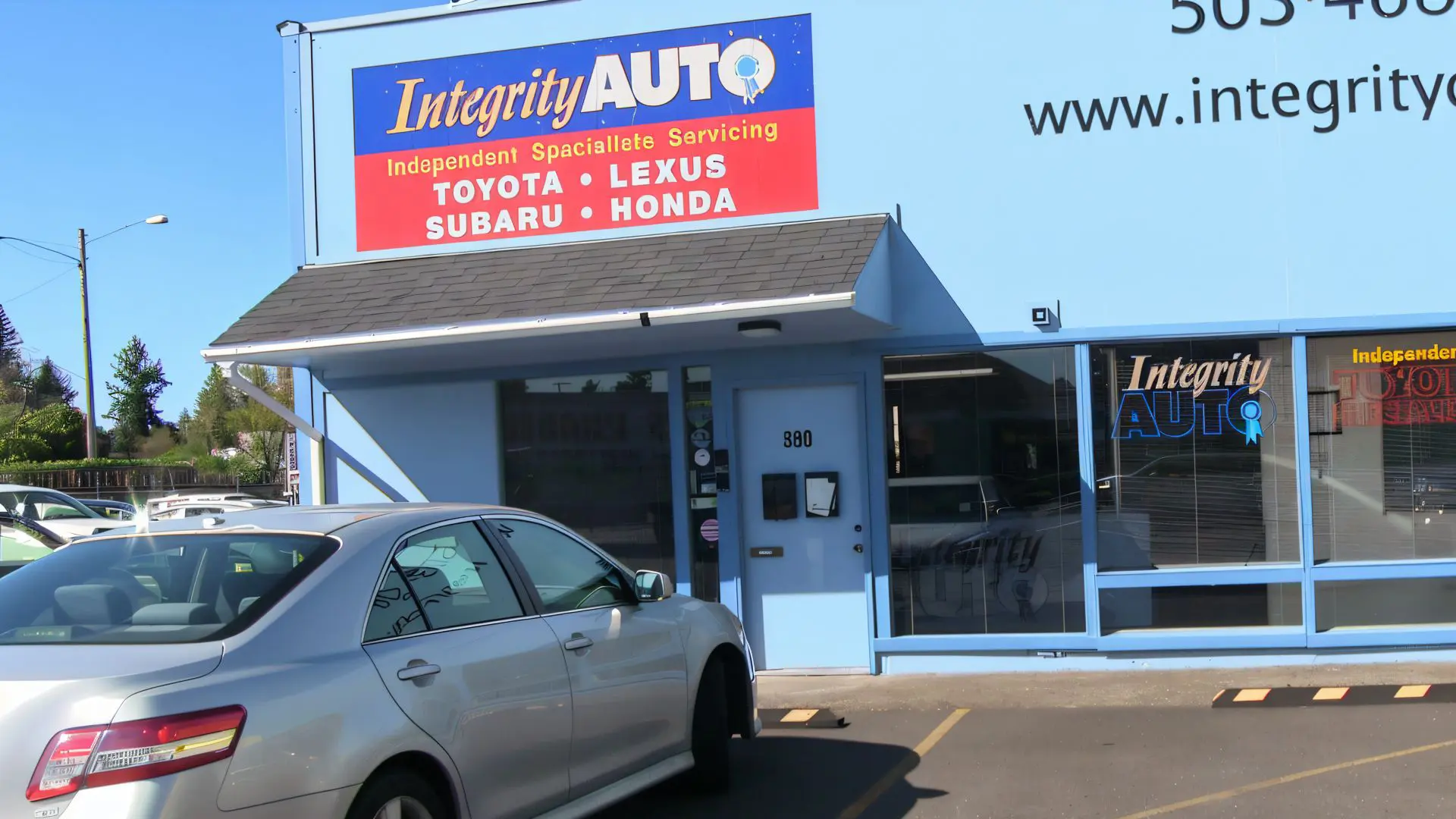
Some independent shops provide a straightforward alternative to dealer service pricing with manufacturer-specific expertise for Toyota, Lexus, Subaru, and Honda vehicles. Specializing in a limited number of makes allows some repair shops to focus inspections on wear patterns and known issues specific to those vehicles rather than using a generic checklist.
That focus matters most at the exact moment covered in this guide: deciding whether a rotor needs machining or full replacement, and whether a pedal issue is fluid, air, or a failing component. If you are dealing with a soft or sinking pedal, Integrityautoinc’s guide on diagnosing a soft brake pedal in under a minute walks through the same kind of measurement-first approach used in the shop. For brake dust buildup between services, safe removal techniques can keep wheels cleaner without damaging the finish.
If any of the warning signs in this guide sound familiar, grinding, pulsing, a warning light, or a pedal that feels different than it used to, schedule an inspection through Integrityautoinc’s Toyota repair service page and get a measured answer instead of a guess.
Sources
- Signs you need a brake job — Wagner Brake
- Nissan brake service & replacement guidance — Nissan USA
- When to replace brake pads — Bridgestone
- 5 signs you need new brake pads — GEICO
FAQ
How Do I Know if My Brakes Need to Be Replaced?
Continuous metal-on-metal grinding, pad friction material at 2 to 3 millimeters or less, a soft or sinking pedal, or persistent pulsing while braking all mean replacement is due now or very soon.
How Long Do Brake Pads Typically Last?
Most pads last between 25,000 and 80,000 miles, with urban stop-and-go driving averaging closer to 30,000 to 35,000 miles and light highway driving stretching well past that.
Is It Safe to Drive With Squeaking Brakes?
Occasional squeal, especially after rain or overnight parking, is usually normal, but continuous squealing or any grinding means you should get pads inspected promptly rather than wait.
Can Rotors Be Resurfaced Instead of Replaced?
Yes, if the rotor measures above its stamped minimum thickness and runout is within limits; below that minimum, the rotor must be replaced rather than machined.
Why Do Mechanics Replace Brake Pads in Pairs?
Pads are replaced as a full axle set to avoid mismatched friction materials and uneven wear between wheels, which is standard manufacturer service guidance across most vehicle brands.


