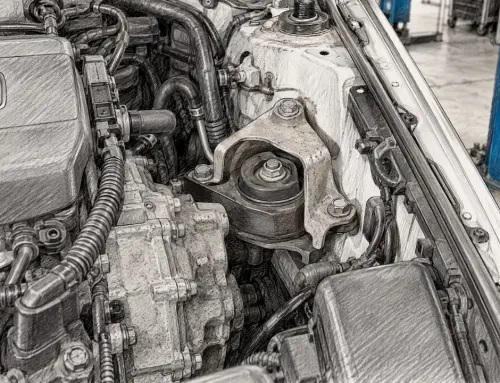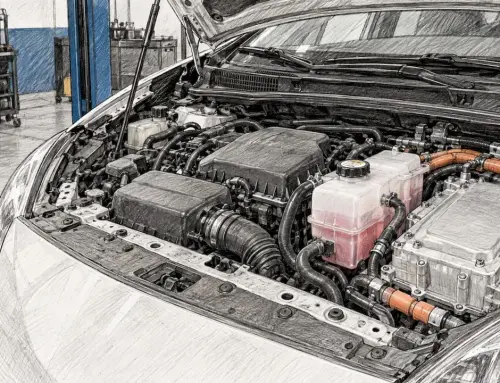


Honda does not publish one fixed mileage for every model. On vehicles with a rear differential, the Maintenance Minder tells the driver when to replace the fluid by showing sub-item 6. Under severe conditions, Honda’s guidance is to change it at 7,500 miles first, then every 15,000 miles. Many shops and owner guides quote 30,000 to 60,000 miles for normal use on AWD models, but the car’s own display and the owner’s manual are the authority for a specific vehicle.
TL;DR
- Maintenance Minder sub-item 6 means it is time to replace the rear differential fluid.
- Severe use (mountain driving at low speeds, trailer towing) calls for a first change at 7,500 miles, then every 15,000 miles.
- Normal-use estimates of 30,000 to 60,000 miles are common, but the Maintenance Minder on the dash decides the actual timing for each car.
- Honda’s Pilot specifies Honda DPSF-II fluid. Generic gear oil is not a substitute.
- Whining, grinding or leaks near the rear axle are reasons to get the car inspected before the next scheduled service.
Which Hhondas have a rear differential to service
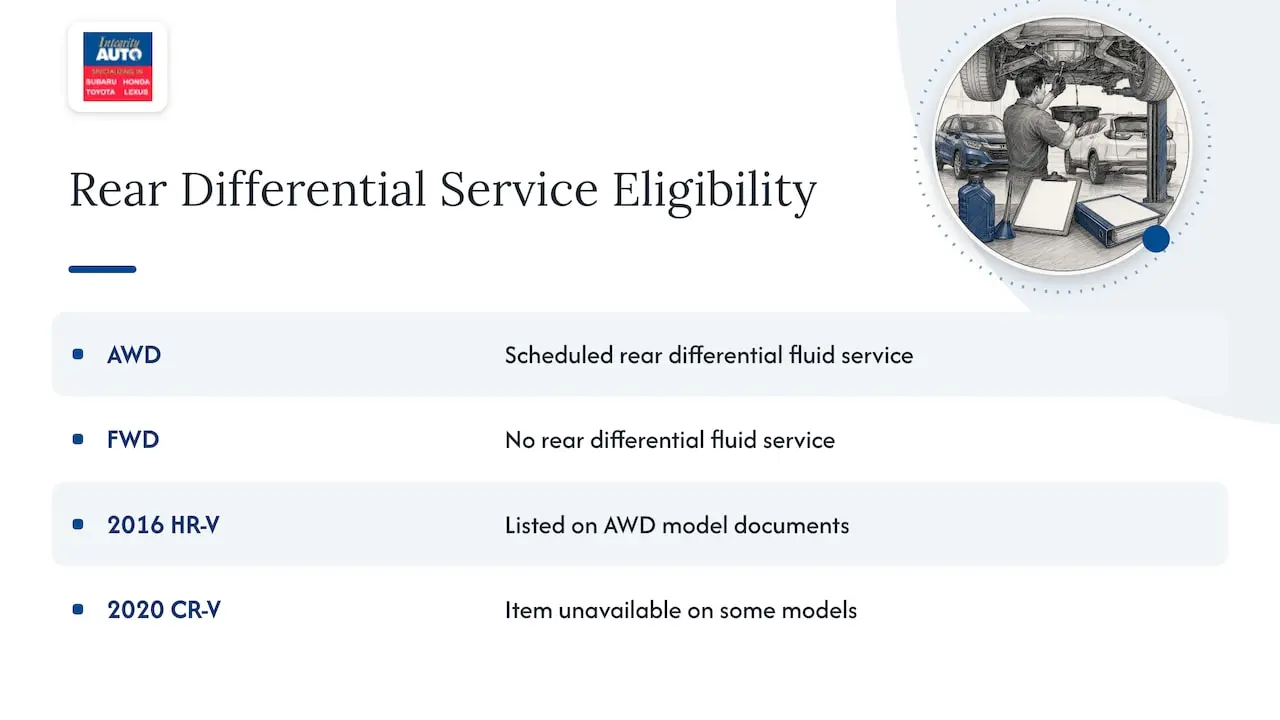
Only Hondas with all-wheel drive have a rear differential that needs scheduled fluid service. Front-wheel-drive versions of the same models do not. Honda’s maintenance documents list “Replace rear differential fluid” as a numbered sub-item on several AWD models, including the 2016 HR-V and the 2020 CR-V. The CR-V document marks the item as not available on all models, which matches the AWD-only logic.
The Pilot and Passport follow the same pattern. If the car has AWD, the rear differential is part of the service plan. If the drivetrain is uncertain, the owner’s manual or a VIN lookup at a Honda-experienced shop settles it quickly.
How Maintenance Minder code 6 works
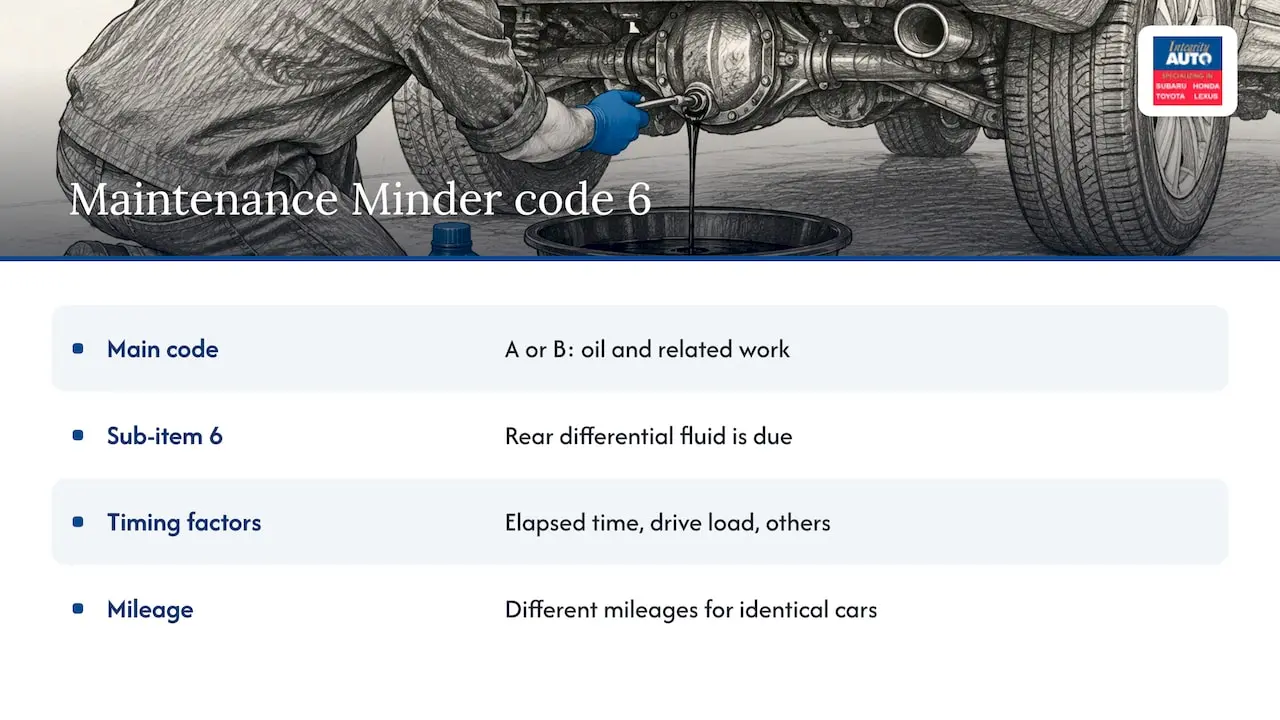
Honda moved away from fixed mileage tables for most services. The Maintenance Minder shows a main code (A or B) for oil and related work, plus numbered sub-items. Sub-item 6 is the one that notifies the driver that the rear differential fluid is due. The items appear on the engine oil life screen of the driver information interface, and the system message indicator comes on with the message.
Honda’s own wording is that services should be performed at the intervals indicated by the multi-information display. The system works from elapsed time, drive load and other factors, as Kelley Blue Book’s Honda schedule page describes it. Two identical cars can therefore reach code 6 at quite different mileages.
The practical rule: write down the codes when they appear, and do not wait for the oil change to be the only trigger. A code 6 that shows up alongside a B service is easy to bundle. A code 6 that shows up alone is still a real service request.
Normal-use interval versus severe-use interval
The two schedules differ a lot.
| Driving pattern | Rear differential fluid timing | Source basis |
|---|---|---|
| Normal use | When Maintenance Minder shows sub-item 6; owner guides commonly cite 30,000 to 60,000 miles | Honda display, general guidance |
| Severe conditions | First change at 7,500 miles, then every 15,000 miles | Honda Maintenance Minder documents |
Honda’s 2020 Passport document gives the 7,500-mile then 15,000-mile figures for identified severe driving. The 2026 Pilot document names the conditions: driving in mountainous areas at low vehicle speeds, and trailer towing. Both raise the mechanical stress on the fluid.
Does Portland driving count as severe?
It can. Owners who commute up into the West Hills or the Cascade foothills, tow a camper or boat to the coast or Central Oregon, or carry roof boxes and heavy loads on weekend trips are closer to the severe category than the normal one. Short trips in city traffic do not fit Honda’s two named conditions, but a shop can review how the car is really used and suggest the shorter schedule when it fits.
Is a rear differential change at 5,000 miles necessary?
This question fills owner forums, usually after a dealer flags the service on a nearly new Pilot. The answer depends on the dash and the use. If code 6 has appeared at 5,000 miles on a new AWD Honda, the system is calling for it, and a vehicle that tows or climbs grades often could be on the severe schedule with a first change at 7,500 miles. If the code has not appeared and the car is driven normally, there is no need to pay for the service on a calendar guess. Ask what triggered the recommendation: a displayed code, or a generic dealer menu.
Which fluid Honda calls for
The rear differential in the Pilot and similar AWD systems is not filled with ordinary gear oil. Honda’s 2025 Pilot specifications list Honda DPSF-II. Other models can use different fluids, so the correct specification comes from the owner’s manual for that model and year, not from a general rule.
Two habits keep the service from backfiring:
- Confirm the exact fluid before the drain plug comes out. Honda AWD systems have clutch packs and electronically controlled parts that depend on the correct friction properties.
- Use the correct fill amount and inspect the drain and fill plugs and seals while the fluid is out.
OEM fluid and a proper procedure cost little compared with a damaged differential.
Warning signs before the scheduled service
A code is not the only signal. These symptoms around the rear axle justify an inspection soon, whatever the mileage:
- Whining that changes with road speed. Often points to gear or bearing wear, and low or degraded fluid makes it worse.
- Grinding or clunking on turns or acceleration. Treat it as urgent. A technician should look at it before the car goes further.
- Fluid spots or wet residue near the rear axle. A leaking seal or housing can lower the fluid level.
- Shudder or binding in tight turns. On AWD systems, this can relate to the fluid or the coupling.
A loud grinding noise or a visible leak is not a wait-and-see problem. The car should be inspected before more miles are added. A quiet whine is still a reason to book a diagnostic visit instead of waiting for the next code.
Why the rear differential service gets skipped
The differential does its work out of sight, and the fluid sits in a small sealed housing, so there is no dipstick check and no warning noise until wear is advanced. That is how a $0 oversight turns into a repair of the carrier assembly. The service is a drain and refill, and doing it on schedule is the cheapest protection the AWD system has.
It also belongs to a wider pattern of fluids with their own timing. Transmission fluid has its own code and rules, covered in the guide to Honda transmission fluid intervals and code 3. The bigger picture of mileage-based work is laid out in the 30k, 60k and 90k service guide.
Honda AWD service in Portland
Integrity Auto Inc. is an independent shop in Portland, Oregon, working on Toyota, Lexus, Subaru and Honda vehicles. Honda owners can book manufacturer-recommended scheduled maintenance, transmission and CVT services, coolant service, brakes, inspections and diagnosis through the Honda service and repair page. Technicians are ASE certified, and the shop uses OEM parts and offers complimentary multipoint inspections. Pricing for a rear differential service is not published, so a quote comes after the shop confirms the model, the year and the code on the dash.
FAQ
How often should Honda rear differential fluid be changed?
When the Maintenance Minder shows sub-item 6. Under severe conditions Honda’s guidance is 7,500 miles first, then every 15,000 miles. Normal-use estimates commonly fall between 30,000 and 60,000 miles.
What does code 6 mean on a Honda?
Code 6 is a sub-item that tells the driver it is time to replace the rear differential fluid. It appears on the engine oil life screen alongside the main service code.
Do front-wheel-drive Hondas need this service?
No. The rear differential exists only on AWD versions. Honda’s CR-V document marks the item as not available on all models, so check whether the car has AWD.
What fluid goes in a Honda rear differential?
The 2025 Pilot calls for Honda DPSF-II. Other models may differ, so the owner’s manual for the specific model and year decides it.
Sources
- To Use Maintenance Minder, 2026 Pilot (Honda)
- Maintenance Minder, 2020 Passport (Honda)
- Maintenance Minder, 2020 CR-V (Honda)
- Maintenance Minder, 2016 HR-V (Honda)
- Maintenance Minder, 2017 Pilot (Honda)
- Specifications, 2025 Pilot (Honda)
- Honda Service Schedules and Maintenance Pricing (Kelley Blue Book)