
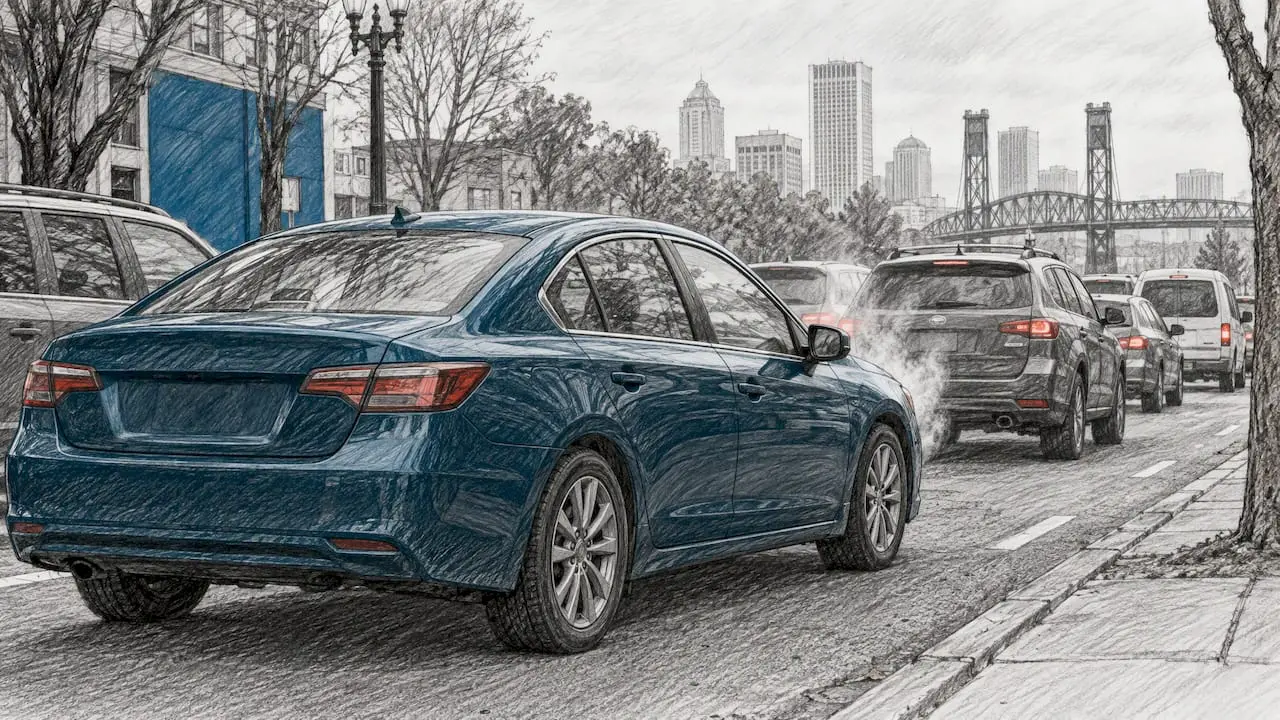
A car that runs normally at highway speed but climbs toward HOT in stop-and-go traffic usually has a problem moving air or coolant through the radiator at low speed. The most common culprits are a weak or failed cooling fan, a partially clogged radiator, a thermostat that sticks, or low or aged coolant. The engine keeps making heat at a standstill, and nothing is pushing enough air through the radiator to carry it away.
TL;DR
- At low speed, the cooling fan does the work that road speed does on the highway. A failing fan, relay, sensor or fan wiring is a leading cause of traffic-only overheating.
- A partially clogged radiator can cope at highway speed but fall behind in hot-weather traffic.
- If the gauge reads HOT, pull over, turn off the A/C and let the engine idle or shut it off. Never open the pressure cap on a hot system.
- A full coolant reservoir does not rule out a problem. Water pumps, thermostats, hoses and belts can all cause overheating.
- Repeated overheating calls for a proper inspection, because continued driving can damage the engine.
Why a car overheats in traffic but not on the highway
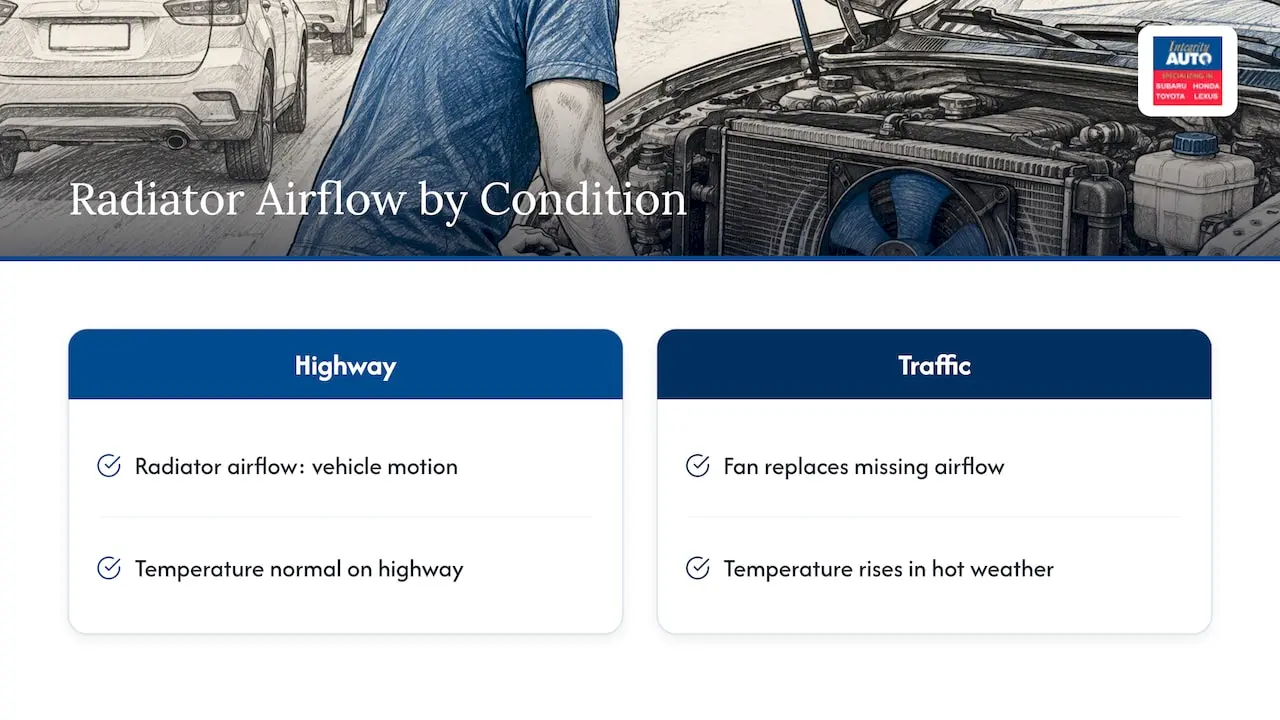
At highway speed, air is forced through the radiator by the car’s own motion. In traffic that airflow disappears, and the radiator fan has to replace it. Guidance from AutoZone notes that overheating at idle or low speed that improves once the vehicle moves points to insufficient fan operation, since momentum is no longer pushing air through the radiator.
Hagerty’s technical coverage makes a similar point: when temperature is normal on the highway but rises in hot-weather traffic, the cause is almost always a partially clogged radiator, a fan that is too small or slow, or both. That is why a car can seem healthy for weeks and then show a problem only in a summer commute or a long line at a light.
The same condition appears in manufacturer documentation. A Toyota service bulletin addresses rising engine temperature while stopped in certain Camry and Venza models and directs technicians to inspect the radiator fan blades and motors.
Common causes of overheating at idle
Cooling fan problems
A fan that does not run, or runs too slowly, is the first thing to check. AutoZone lists the possible faults as a fan motor, temperature sensor, relay or wiring problem. Signs can include a check-engine light, unusual fan noise, or visible damage to the blades or motor. The American Motor Association also associates traffic-only overheating with radiator fan failure.
Restricted or leaking radiator
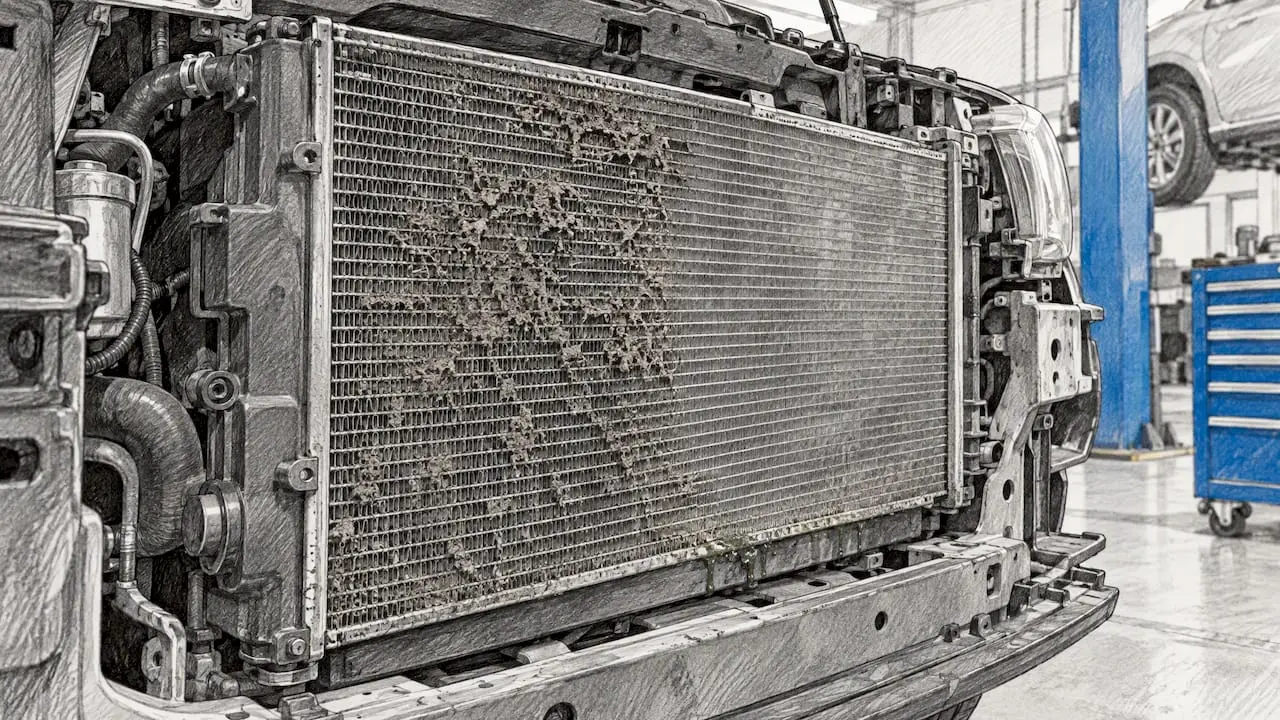
Internal scale and debris narrow the radiator passages, and outside fins can pack with dirt. The result is a radiator that sheds enough heat when air is rushing through it but not when the car is stopped. Leaks, even small ones that appear only under pressure, lower coolant level and system pressure. Owners of Toyotas can read more on cooling system leaks and on radiator service.
Thermostat, water pump and belts
A car can overheat even with a full reservoir. The American Motor Association lists a failing water pump, faulty thermostat, clogged radiator, malfunctioning fan, low oil, and worn belts or hoses among the contributors. A water pump that is weak at low rpm may move too little coolant at idle while keeping up at highway rpm.
Old coolant and air in the system
Coolant that has outlived its service interval protects less against heat and corrosion. Air trapped after a poorly done refill can also create hot spots and erratic readings. Following the manufacturer’s coolant interval for your Toyota, Lexus, Subaru or Honda is the simplest preventive step.
Extra heat load
A/C adds heat at the front of the car and works the engine harder. In stopped traffic on a hot day, a marginal cooling system that handles everything else may no longer keep up once the A/C is running.
How to tell the engine is overheating
Do not rely on the gauge alone. The 2022 Ram owner’s manual lists the signs as a gauge at HOT, a strong coolant smell, white smoke from the engine or exhaust, or bubbles in the coolant bottle. The general warning signs apply to most vehicles. For how Toyota’s gauge behaves normally, see this page on the Toyota coolant temperature gauge.
What to do when the temperature rises in traffic
The same Ram manual describes the steps, and they are broadly applicable. Check your own owner’s manual for model-specific instructions.
- Turn the A/C off. In stopped traffic, the manual advises that switching off the air conditioner and, in city traffic, placing the transmission in Neutral while stopped can reduce heat load.
- Use the heater. Maximum heat with the blower on high can supplement radiator cooling, though it makes the cabin uncomfortable. Other short-term steps that reduce heat load are worth knowing before a hot-weather trip.
- Pull over when it is safe. If the gauge reads HOT, stop and idle with the A/C off until it returns to normal. If it stays HOT and continuous chimes sound, shut the engine off and call for service.
- Let it cool before opening anything. The manual is explicit: never open the pressure cap while the radiator or coolant bottle is hot. Escaping steam and coolant can cause serious burns.
- Do not keep driving. The manual warns that driving with an overheated cooling system could damage the vehicle. Warped heads and failed head gaskets are far costlier than a tow.
AAA guidance reported by FOX61 adds that when overheating starts while running the A/C in stopped traffic, the driver should shut it off and let the engine cool with the hood open, while staying alert to traffic and personal safety.
How technicians diagnose it
Good diagnosis starts by reproducing the problem. MOTOR’s cooling system guidance recommends duplicating the overheating condition and checking whether higher speed or lower rpm changes the temperature, while also looking into coolant loss, system pressure, circulation and heat transfer. In practice that means a pressure test for leaks, a check of fan command and operation, a thermostat and temperature check, and a look at flow through the radiator.
Swapping parts by guesswork tends to fail. Hagerty’s article on misdiagnosing cooling problems is a reminder that a new radiator or thermostat does not help if the fan is the real fault. At Integrity Auto, diagnosis is meant to find the cause before parts are replaced. If a water pump turns out to be involved, the page on Lexus water pump cost gives pricing context.
Preventing overheating in traffic
- Follow the coolant interval. Fresh coolant at the manufacturer’s schedule is part of scheduled maintenance.
- Inspect hoses, belts and the radiator cap at regular service visits.
- Investigate small leaks early. A dried coolant residue or a faint sweet smell is an early sign.
- Watch the gauge in summer. A needle sitting higher than usual in traffic is a warning even before it reaches HOT.
- Plan around heat and congestion. NHTSA’s summer driving guidance recommends checking weather, road conditions and traffic before traveling and allowing enough time.
Cooling system service for Toyota, Lexus, Subaru and Honda in Portland
Integrity Auto is an independent shop for Toyota, Lexus, Subaru and Honda owners in Portland, Oregon. Services include diagnosis, coolant service, radiator work, head gasket repair and scheduled maintenance, and the shop describes its technicians as ASE certified and its approach as an alternative to the dealership.
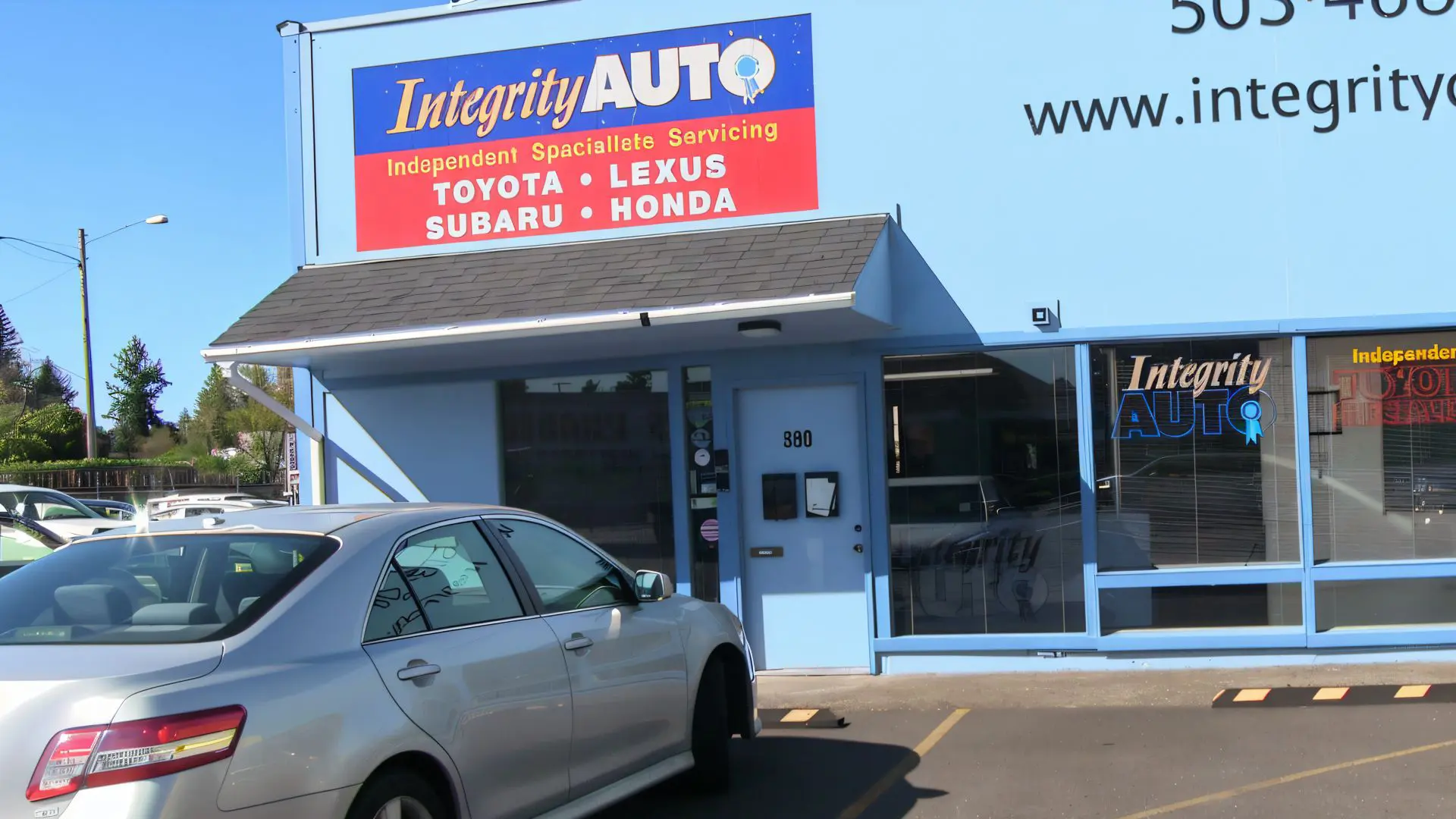
If your car runs hot in traffic, book a cooling system inspection before the next heat wave. Start with the page for your make: Toyota, Lexus, Honda or Subaru.
FAQ
Is it safe to drive an overheated car?
No. Driving with an overheated cooling system can damage the engine. If the gauge reads HOT, pull over safely, shut the engine off if the gauge stays high, and call for service rather than continuing.
Why is my car overheating when it is not leaking coolant?
A full reservoir does not guarantee proper cooling. A failing water pump, faulty thermostat, clogged radiator, weak fan, low engine oil, or worn belts and hoses can all cause overheating without a visible leak.
Why does my car overheat at idle but cool down when I drive?
Moving air through the radiator compensates for a weak fan or restricted radiator. At idle that airflow stops, so the fan has to do all the work. A fan, relay, sensor or radiator problem is the usual explanation.
Should I turn the heater on if my car is overheating?
It can help in an emergency. The Ram manual says maximum heat with the blower on high can supplement radiator cooling. It is a stopgap, and the car should still be pulled over and checked.
Sources
- Getting it wrong: Misdiagnosing a cooling system problem (Hagerty)
- Toyota service bulletin on engine temperature while stopped (NHTSA)
- Cooling System Diagnosis (MOTOR)
- What to Do If Your Radiator Fan Is Not Working (AutoZone)
- Why Is My Car Overheating? (American Motor Association)
- If Your Engine Overheats (2022 Ram owner’s manual)
- AAA: Tips If You Get Stuck In Traffic (FOX61)
- Summer Driving & Road Trip Tips (NHTSA)