
A humming, growling or droning noise that rises and falls with vehicle speed usually points to a worn wheel bearing, and the part should be inspected and replaced by a qualified technician rather than driven on. Integrity Auto, an independent Toyota, Lexus, Subaru and Honda shop in Portland, Oregon, handles diagnosis and repair of these bearings for owners who want the job done correctly the first time.
TL;DR
- A wheel bearing lets the wheel spin with little friction. When it wears, the typical sign is a hum, rumble or growl that follows vehicle speed and often changes when steering.
- Noise alone is not a reliable diagnosis. Tires, alignment, worn suspension parts and drivetrain components can sound similar, so a road test and a hands-on check matter.
- A failed bearing can affect braking and steering and, in extreme cases, allow the wheel to separate from the vehicle. A suspected bad bearing should be addressed promptly.
- One published estimate puts replacement of a single bearing at $346 to $504 in the U.S., with labor making up most of that range.
- For Toyota, Lexus, Subaru and Honda vehicles in the Portland area, a diagnosis comes first, then the repair.
What a wheel bearing does
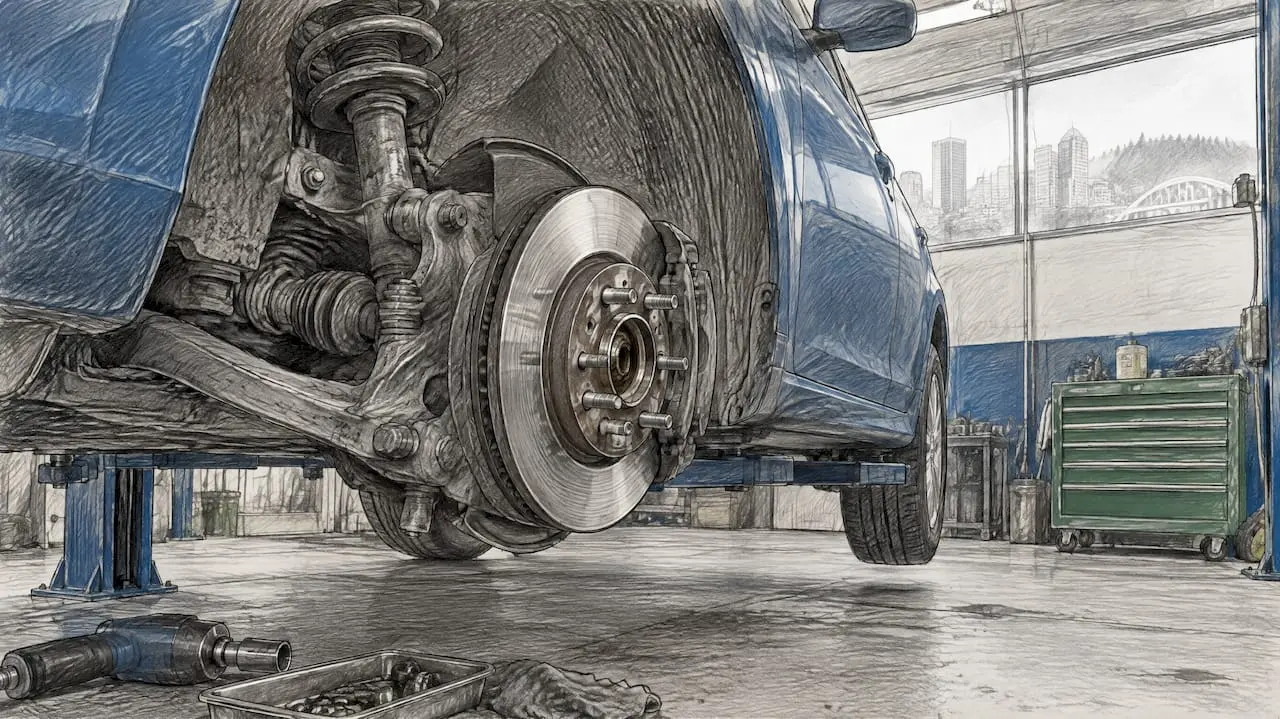
Every wheel turns on a set of steel balls or rollers held in a ring, called a bearing. On most modern cars the bearing is built into a hub assembly, the unit the wheel bolts to. The bearing carries the vehicle’s weight while allowing the wheel to rotate smoothly. Because it sits beside the brake and the axle, a damaged bearing can disturb the parts around it.
Wheel bearing noise: what it sounds like
The most common complaint is a low hum, rumble or growl. Timken, a bearing manufacturer, describes bearing noise as present when driving straight but getting louder when the steering wheel is turned slightly. It also notes that the side opposite the rumble is usually the defective one, because turning shifts load onto the failing bearing.
Some patterns help separate bearing noise from other sounds:
- Speed-related: A manufacturer service guide from Nissan says a droning bearing noise may be audible only at 35 mph or more in the early stage, and it grows so gradually that drivers often do not notice it.
- Steering-related: The same guide says noise that changes when the car swerves side to side usually indicates a bearing, while tire noise changes with the road surface and bearing noise does not.
- Acceleration-related: If pitch and volume change substantially when accelerating or coasting, the transaxle is the more likely suspect.
Sound alone can mislead. Brake & Front End reports that bearing noise can travel through the drivetrain and exit through a mount far from the source, and that it may fade at certain speeds. That is why a noise heard in the cabin does not reliably identify the corner of the car it comes from.
Other signs of a bad wheel bearing
The Porsche Club of America lists several symptoms beyond noise: grinding or groaning that grows with speed, a soft brake pedal with extra travel, very uneven tire wear, black grease around the wheel and an ABS warning light. Grease spatter from a failing seal is different from ordinary dust, which is covered in this guide to removing brake dust from wheels.
Some of these overlap with other problems. A shaking steering wheel, for instance, often has a different cause, explained in this page on steering wheel vibration. Clicking when turning is more often a CV axle issue, covered in the CV axle noise checks and the Honda CV axle noise test.
Can you drive with a bad wheel bearing?
The safe answer is to avoid it. The Porsche Club of America warns that a completely failed bearing can cause dangerous handling problems, and the wheel can even fall off while driving. A worn bearing can also let the brake rotor wobble, which affects pedal feel and braking. Damage tends to spread to the hub, the knuckle and the ABS sensor wiring the longer the car stays in use.
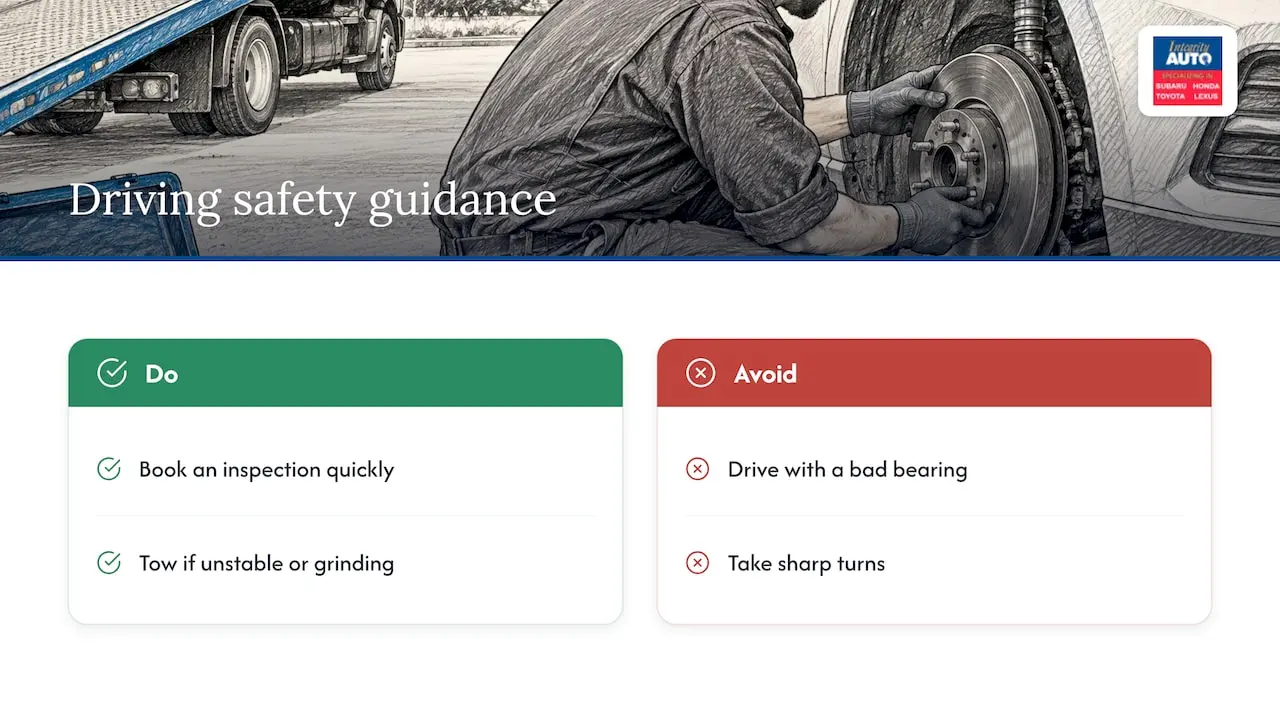
There is no reliable mileage limit for a failing bearing. Severity, road conditions and load all play a part, so any figure circulating online is a guess. If a bearing noise appears, the practical steps are to reduce speed smoothly, avoid sharp turns and book an inspection quickly. Where the car feels unstable or the noise is grinding, towing is the safer choice.
How a technician confirms the cause
Because tires, alignment and suspension wear can mimic bearing noise, a proper diagnosis combines several checks. Timken’s service guidance tells technicians to verify other noise sources first, including road surface, tread design, wear patterns, poor alignment and worn suspension parts, before blaming the hub bearing.
A typical diagnostic sequence looks like this:
- Road test. The Nissan guide calls this critical, since it is the only way to load the bearing and drivetrain under real conditions.
- Isolating the corner. A technician writing for Vehicle Service Pros recommends an electronic stethoscope on each hub or knuckle during the road test to find the failing wheel.
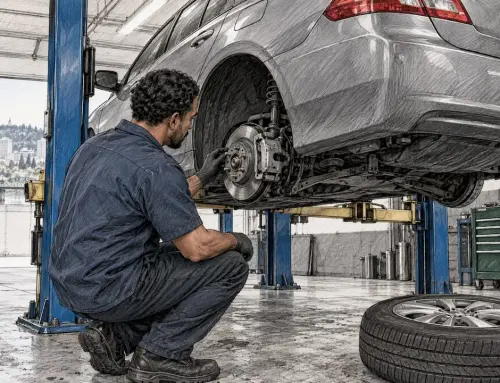
- Play check. With the vehicle raised, the tire is rocked by hand. Brake & Front End says sealed hub assemblies should show no play.
- Measurement. Timken’s procedure calls for a dial indicator and replacement of the hub assembly if total movement exceeds 0.004 inch.
One detail often surprises owners: a bearing can be noisy with no measurable play. According to Nissan’s guide, a noisy bearing with zero play is not fine, because pitted surfaces can make noise while other areas hold their preload. This is the reason a hands-on check alone can miss a failing bearing.
Integrity Auto offers diagnosis for Toyota, Lexus, Subaru and Honda vehicles, and complimentary multipoint inspections are part of its service. Its pages on axle and wheel bearings explain why this part matters for safety.
What wheel bearing replacement involves
The job is more than swapping one part. Tomorrow’s Technician describes several points where quality shows:
- The wheel speed sensor comes off first, before the CV axle is pushed from the knuckle, to avoid damaging it.
- On most front-wheel-drive cars, a ball joint is separated or a control arm unbolted to free the axle.
- Corroded hubs in aluminum knuckles can be stubborn, and heat is often used to free them.
- A torque wrench, not an impact wrench, is used for installation, per OEM and bearing-maker recommendations, and a new axle nut is used in nearly all cases.
- ABS codes are cleared and the car is test-driven afterward.
Timken rates bearing replacement as an intermediate-skill job that needs special tools, such as a cup driver and a dial indicator, with exact end play and torque targets. Hub assemblies on Toyota, Lexus, Subaru and Honda models are often pressed in or torqued to specific values, so the job rewards experience with the platform.
Integrity Auto’s technicians are ASE certified, and the shop states it uses OEM parts and offers longer warranties than dealership repairs. Details on related components are on its pages for Toyota, Lexus and Scion wheel bearings and front axles and CV joints.
Wheel bearing replacement cost
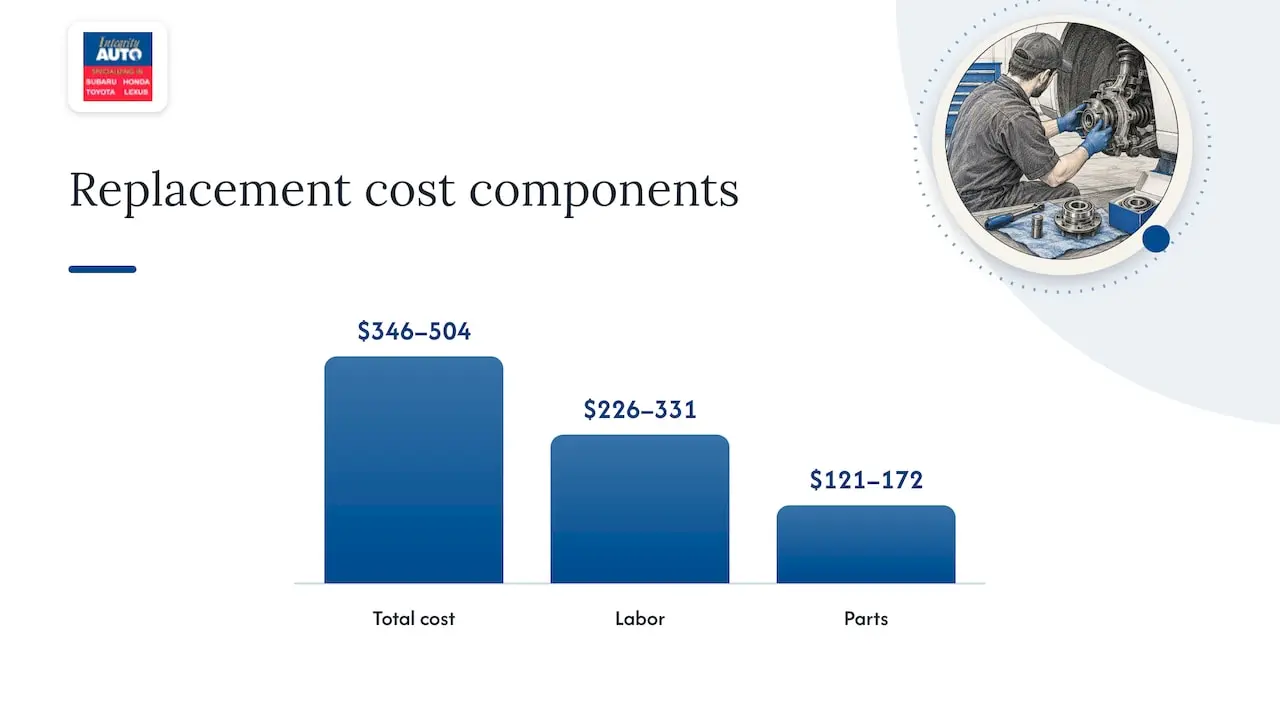
Cost depends on the vehicle, the bearing type and local labor rates. ConsumerAffairs, citing RepairPal, put the typical cost of replacing a single wheel bearing at $346 to $504 in its October 2026 update, with labor at $226 to $331 and parts at $121 to $172. The same page notes bearings do not have to be replaced in pairs. These are national figures that move with parts prices and labor rates, so a written estimate for the specific vehicle is the reliable number.
The Porsche Club of America makes a useful point on cost: the bearing itself is not a major expense, but leaving it can damage other components. Early diagnosis is usually the cheaper path.
Having it done in Portland
Integrity Auto is an independent shop serving Toyota, Lexus, Subaru and Honda owners in the Portland, Oregon area. The process starts with diagnosis, so the repair addresses the actual source of the noise. Owners can start from the page for their brand: Toyota, Lexus, Honda or Subaru.
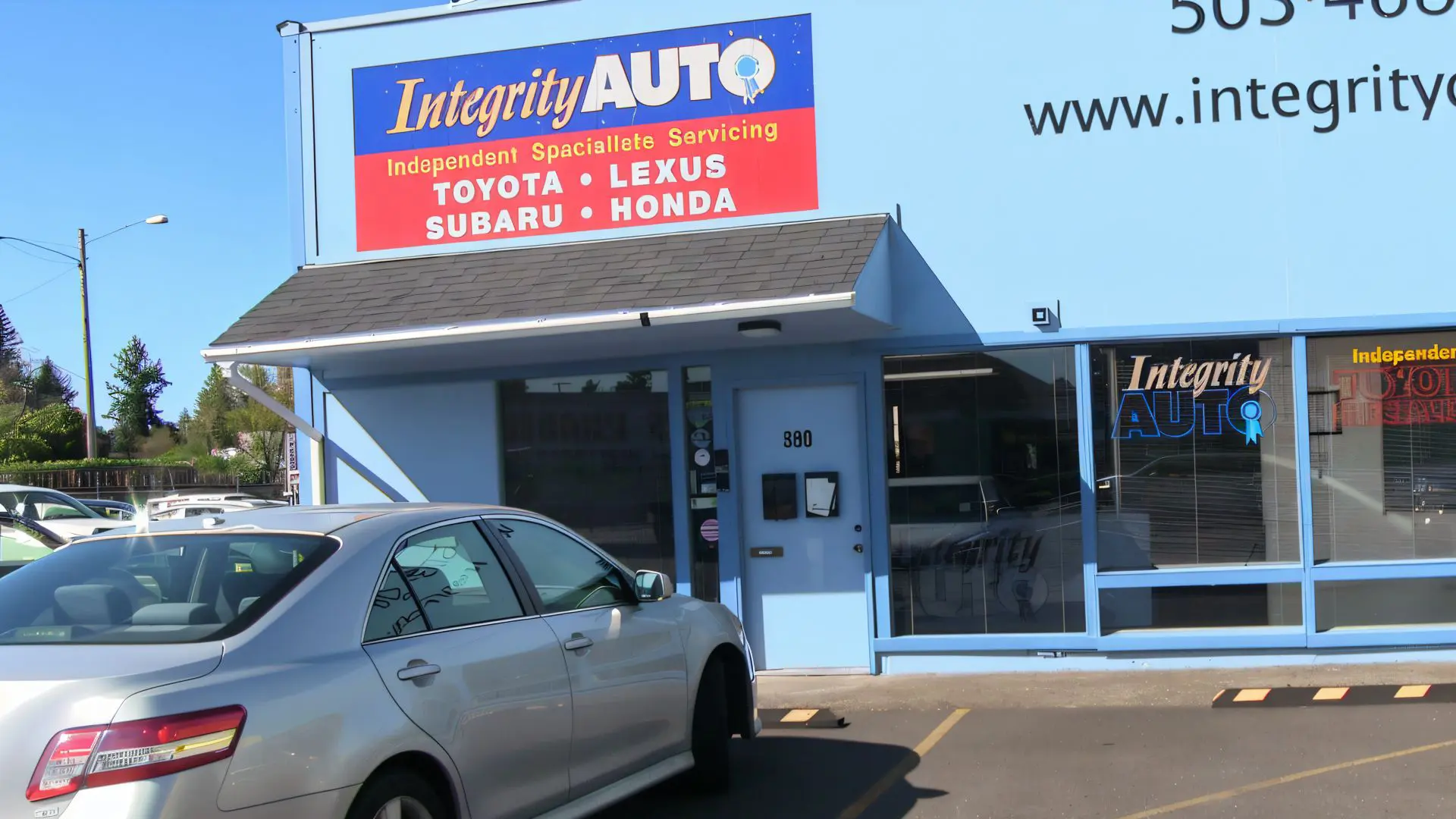
For a hum, growl or grinding noise from a wheel, Integrity Auto can road test the vehicle, inspect the bearings and explain the findings before any work begins. Appointments can be requested through the Integrity Auto website.
FAQ
How much does it cost to replace a wheel bearing?
One published estimate puts a single bearing at $346 to $504 in the U.S., including parts and labor. Luxury and all-wheel-drive models can cost more. A written estimate after diagnosis gives the actual figure for a given vehicle.
What are the signs of a bad wheel bearing?
The usual signs are a hum, growl or grinding that follows speed and changes when steering, a soft brake pedal, uneven tire wear, grease around the wheel and an ABS light. Several of these can also come from tires or suspension, so confirmation requires an inspection.
Is replacing a wheel bearing a big job?
It is a moderate repair that involves the brake, axle and sometimes suspension parts, plus precise torque values. Timken classes it as an intermediate-skill task needing special tools, which is why it is typically handled in a shop.
Do wheel bearings need to be replaced in pairs?
Not always. ConsumerAffairs notes that bearings do not have to be replaced in pairs. A technician checks the opposite side and advises based on its condition.
Sources
- Timken: Symptoms of a Worn Wheel Hub Bearing
- Nissan: Wheel Bearing Diagnosis and Service
- Brake & Front End: Wheel Bearing Noise Diagnostics
- Porsche Club of America: Wheel Bearings Tech Tips
- Timken: Checking a Hub Bearing Assembly
- Vehicle Service Pros: Wheel Bearing Tech
- Tomorrow’s Technician: Wheel Bearing Service Tips
- Timken: Wheel Bearing Replacement Tech Tips
- ConsumerAffairs: Are Wheel Bearings Covered Under Warranty?
- Diamondbrite: Remove Brake Dust Safely