
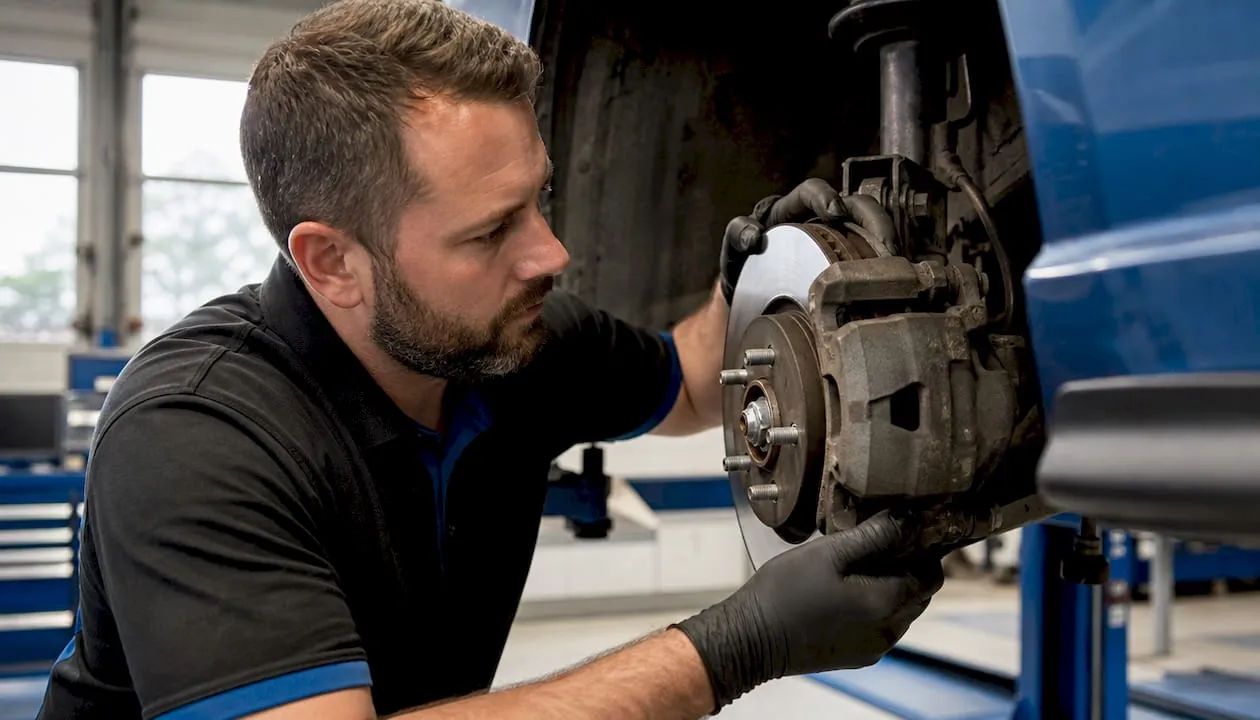
Subaru brake repair is defined as the maintenance and replacement of brake system components specifically engineered for Subaru vehicles, including pads, rotors, calipers, and hydraulic fluid. These components must work in precise coordination with Subaru’s symmetrical all-wheel-drive system and EyeSight driver assist technology. A brake system that performs inconsistently can disrupt EyeSight’s pre-collision braking calibration, creating safety risks beyond simple stopping distance. Integrityautoinc specializes in this type of service, treating every Subaru brake job as a system-level repair rather than a simple parts swap.
When should Subaru brakes be inspected and repaired?
Subaru brake pads require replacement every 30,000–60,000 miles, with a full brake inspection recommended every 2 years or 24,000 miles. That wide mileage range reflects how dramatically driving conditions affect wear rate. A Subaru driven mostly on Portland highways will wear pads far more slowly than one navigating stop-and-go city traffic every day.
Several warning signs indicate your brakes need attention before the next scheduled interval:
- Squealing or grinding when applying the brakes, which signals worn pad material contacting the rotor
- Vibration through the steering wheel or brake pedal, often caused by warped rotors
- A soft or spongy pedal feel, which points to moisture contamination in the brake fluid
- Pulling to one side during braking, suggesting uneven caliper pressure or a stuck caliper
- Longer stopping distances, a clear sign that friction material is depleted
Subaru owners in regions with heavy road salt exposure face an additional risk. Salt accelerates corrosion on rotors and caliper slide pins, which can cause uneven pad wear and premature rotor damage. Seasonal maintenance checks are not optional in those climates. They are a direct safety measure.
Pro Tip: If you drive a Subaru Outback or Forester in frequent stop-and-go traffic, plan for pad replacement closer to the 30,000-mile mark. EyeSight’s pre-charge braking activations in heavy traffic accelerate rear pad wear faster than most owners expect.
What does Subaru brake service typically include?
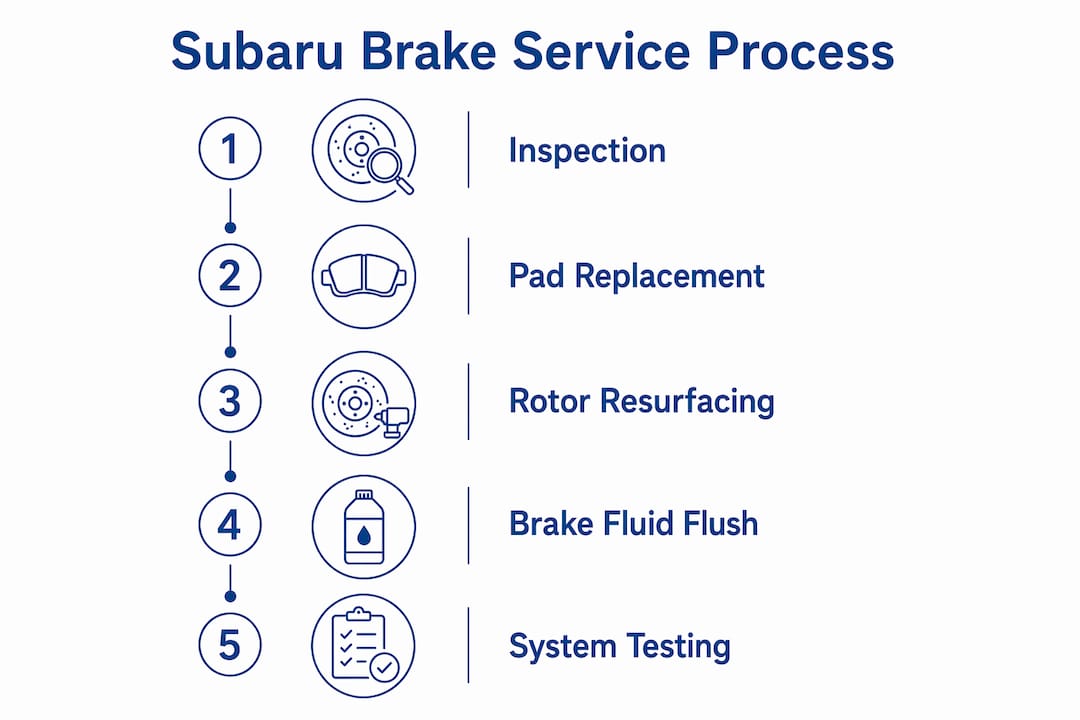
A standard Subaru brake service covers more than swapping out worn pads. The full scope of work depends on the condition of each component, but a typical appointment follows this sequence:
- Visual inspection of all four wheels, including pad thickness, rotor surface condition, caliper function, and brake lines
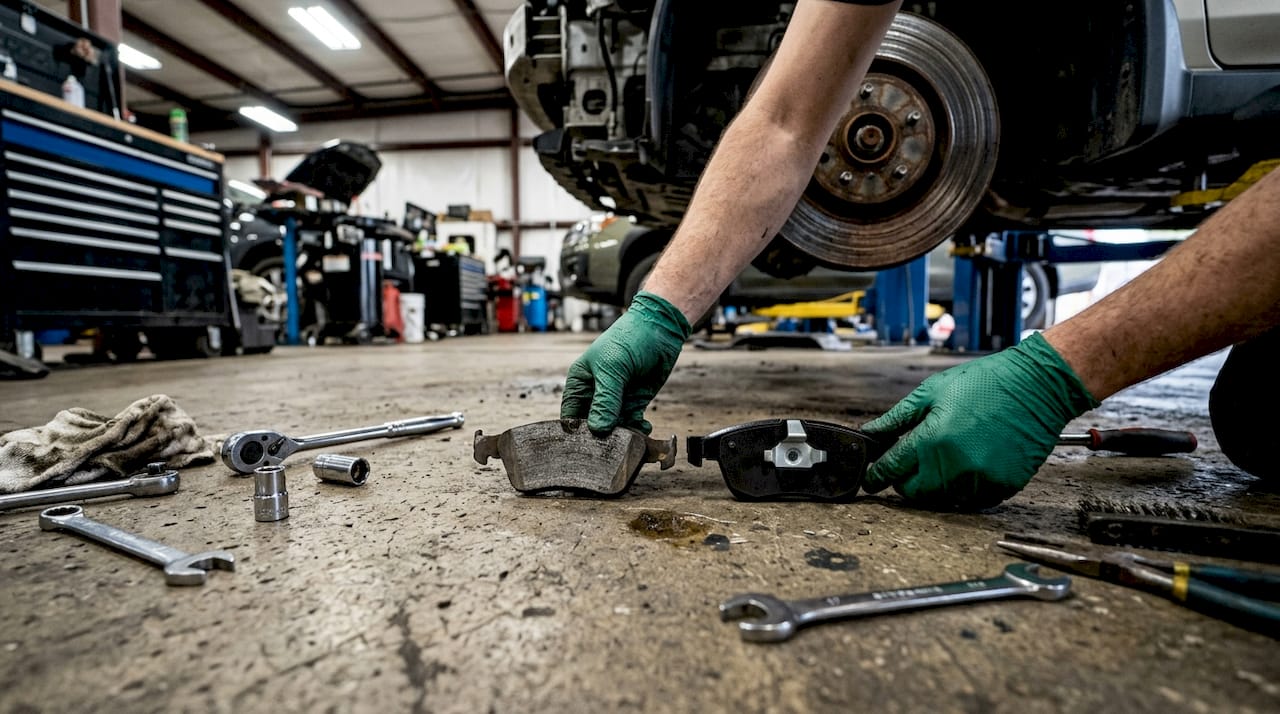
- Brake pad replacement on the affected axle or all four wheels, using pads matched to Subaru’s friction specifications
- Rotor evaluation to determine whether resurfacing or full replacement is needed based on minimum thickness measurements
- Caliper service, including cleaning and lubricating slide pins to prevent binding and uneven wear
- Brake fluid check, with a flush recommended if moisture content exceeds safe levels or the fluid has not been changed in two years
- System test drive to confirm pedal feel, stopping performance, and absence of noise or vibration
Brake service appointments for Subaru vehicles typically require between 1.5 and 2.5 hours. A pad-only replacement runs closer to 1–1.5 hours. A full job involving rotor replacement and a fluid flush takes 2–3 hours. Subaru models equipped with EyeSight may require additional time if the technician needs to verify that braking calibration remains accurate after the repair.
The EyeSight system uses stereo cameras and pre-collision braking logic that depends on consistent brake response. A technician unfamiliar with Subaru systems may complete the mechanical work correctly but miss the calibration verification step entirely. That oversight can result in false pre-collision alerts or delayed braking response.
How much does Subaru brake repair cost in 2026?
Subaru brake repair cost varies by the scope of work, the parts used, and whether you go to a dealership or an independent specialist. The table below outlines typical price ranges for each service level.
| Service Type | Independent Shop | Dealership |
|---|---|---|
| Brake pad replacement (per axle) | $150–$300 | $200–$400 |
| Rotor resurfacing (per axle) | $80–$120 | $120–$180 |
| Rotor replacement (per axle) | $200–$400 | $300–$550 |
| Full brake job, four wheels | $600–$1,200 | $900–$1,800 |
| Brake fluid flush | $80–$130 | $120–$180 |
Dealer labor rates for brake service typically run $150–$200 per hour, which is 30–50% higher than independent shops charging $80–$120 per hour. That difference adds up quickly on a full four-wheel brake job. An independent Subaru specialist can deliver the same quality of work at a meaningfully lower total cost.
Several factors push the final bill higher or lower:
- Rotor condition: Resurfacing rotors instead of replacing them saves $100–$200 per axle, but only when rotor thickness meets the minimum safety specification
- Model and trim: Performance-oriented trims like the WRX use larger rotors and higher-friction pads, which cost more to replace
- Parts selection: OEM Subaru parts carry a higher upfront cost than aftermarket alternatives, but they avoid the calibration and wear problems that aftermarket pads can cause
- Labor complexity: Rear brake jobs on Subaru models with integrated parking brake mechanisms take longer and cost more in labor
Pro Tip: Ask your technician to measure rotor thickness before authorizing replacement. Subaru rotors often last through multiple pad replacements if the surface is not warped or heavily scored. Replacing them unnecessarily is one of the most common ways brake repair costs inflate.
OEM versus aftermarket parts: what Subaru owners need to know
OEM Subaru brake parts are engineered to match the friction coefficient, heat tolerance, and dimensional specifications of the original components. That precision matters more on a Subaru than on many other vehicles because of how tightly the braking system integrates with AWD torque distribution and EyeSight pre-collision logic.
Generic aftermarket pads can cause premature rotor wear and ABS activation issues that do not occur with OEM components. The friction inconsistency is the core problem. When pad friction deviates from the calibrated range, EyeSight’s braking algorithms receive inaccurate input, which can trigger false pre-collision alerts or delay the system’s response in a genuine emergency.
“Brake repair quality directly affects Subaru’s EyeSight Driver Assist system. Inconsistent friction from aftermarket pads can trigger false pre-collision braking or generate sensor errors that require a full system reset to correct.”
The warranty implications are also real. Installing non-OEM brake components can void coverage on related systems if a failure is traced back to incompatible parts. The upfront savings on aftermarket pads rarely offset the potential cost of a warranty claim denial or a repeat repair caused by accelerated rotor wear.
Long-term cost-effectiveness favors OEM parts. A set of OEM pads that lasts 50,000 miles and preserves rotor life costs less over time than a cheaper set that wears out at 25,000 miles and scores the rotors in the process.
Practical tips for maintaining Subaru brakes
Consistent maintenance habits extend brake life and prevent the kind of deferred damage that turns a $250 pad replacement into a $900 rotor and caliper job.
- Replace brake fluid every two years. Brake fluid absorbs moisture over time, and when moisture content exceeds 3%, the fluid’s boiling point drops enough to cause a spongy pedal under hard braking. This is especially critical in humid climates.
- Schedule a brake system inspection annually, even when no symptoms are present. Technicians can catch caliper binding, uneven pad wear, and early rotor scoring before they become expensive problems.
- Avoid aggressive braking habits on highway drives. Repeated hard stops from high speeds generate significant heat that accelerates pad and rotor wear.
- Address salt corrosion proactively. Subaru owners in northern states should winterize their braking system each fall, including cleaning caliper slide pins and inspecting rotor surfaces for rust buildup.
- Do not ignore the brake warning light. On EyeSight-equipped models, a brake system fault can disable the pre-collision assist feature entirely, leaving the vehicle without an important safety layer.
Key Takeaways
Subaru brake repair requires system-level attention, not just parts replacement, because the braking system directly affects AWD performance and EyeSight calibration accuracy.
| Point | Details |
|---|---|
| Inspection intervals | Schedule a full brake inspection every 2 years or 24,000 miles, whichever comes first. |
| Pad replacement range | Brake pads typically last 30,000–60,000 miles; stop-and-go driving shortens that range significantly. |
| Cost by service level | Pad replacement runs $150–$300 per axle at independent shops; full four-wheel jobs reach $600–$1,200. |
| OEM parts matter | Aftermarket pads can disrupt EyeSight calibration and accelerate rotor wear, costing more long-term. |
| Rotor resurfacing saves money | Resurfacing instead of replacing rotors saves $100–$200 per axle when thickness specifications allow it. |
What I’ve learned about Subaru brakes that most guides skip
Most brake repair articles treat the job as a commodity service. Swap the pads, check the rotors, done. Subaru ownership changes that equation in ways that are easy to underestimate until something goes wrong.
The EyeSight calibration issue is the one I see cause the most repeat visits. A technician installs a set of budget aftermarket pads, the mechanical work looks fine, and the owner drives away satisfied. Then the pre-collision alert starts firing at intersections where it should not. The owner returns, the shop blames the sensor, and nobody connects it to the brake job. The friction coefficient mismatch was the cause the whole time.
The other pattern I see regularly is owners waiting too long because the brakes “feel fine.” Subaru’s AWD system can partially mask the handling symptoms of uneven brake wear. The vehicle stays composed even when one caliper is dragging or one rotor is significantly thinner than its pair. That composure is reassuring, but it is not the same as the brakes being healthy.
My advice is straightforward. Find a technician who knows Subaru systems specifically, not just brakes in general. Ask whether they verify EyeSight calibration after brake work. If they look puzzled by the question, that tells you what you need to know.
Subaru brake service at Integrityautoinc
Integrityautoinc provides Subaru brake repair services using OEM-grade parts and technicians who understand how Subaru’s braking system connects to AWD performance and EyeSight driver assist. Every brake job includes a thorough inspection, honest assessment of what actually needs replacement, and transparent pricing before any work begins.
Integrityautoinc operates as an independent Subaru specialist, which means dealer-level expertise without dealer-level labor rates. Scheduling is straightforward, and the team takes the time to explain what was found and why each repair matters. If you are looking for Subaru brake repair near you and want a shop that treats your vehicle’s safety as seriously as you do, Integrityautoinc is the place to start.
FAQ
How often do Subaru brake pads need to be replaced?
Subaru brake pads generally require replacement every 30,000–60,000 miles, depending on driving conditions. Stop-and-go traffic and EyeSight pre-charge activations accelerate rear pad wear faster than highway driving.
What does a full Subaru brake job cost?
A complete four-wheel brake service including rotors and calipers ranges from $600 to $1,200 at an independent shop. Dealership pricing runs 30–50% higher due to elevated labor rates.
Can aftermarket brake pads damage Subaru’s EyeSight system?
Yes. Aftermarket pads with inconsistent friction coefficients can disrupt EyeSight’s pre-collision braking calibration, triggering false alerts or sensor errors that require a system reset to correct.
How long does a Subaru brake service appointment take?
A pad-only replacement takes approximately 1–1.5 hours. A full brake job involving rotor replacement and a fluid flush typically requires 2–3 hours at a qualified shop.
Should Subaru rotors be resurfaced or replaced?
Resurfacing is the better choice when rotors meet minimum thickness specifications and show no warping or heavy scoring. Resurfacing saves $100–$200 per axle compared to full replacement and delivers equivalent performance when done correctly.


