

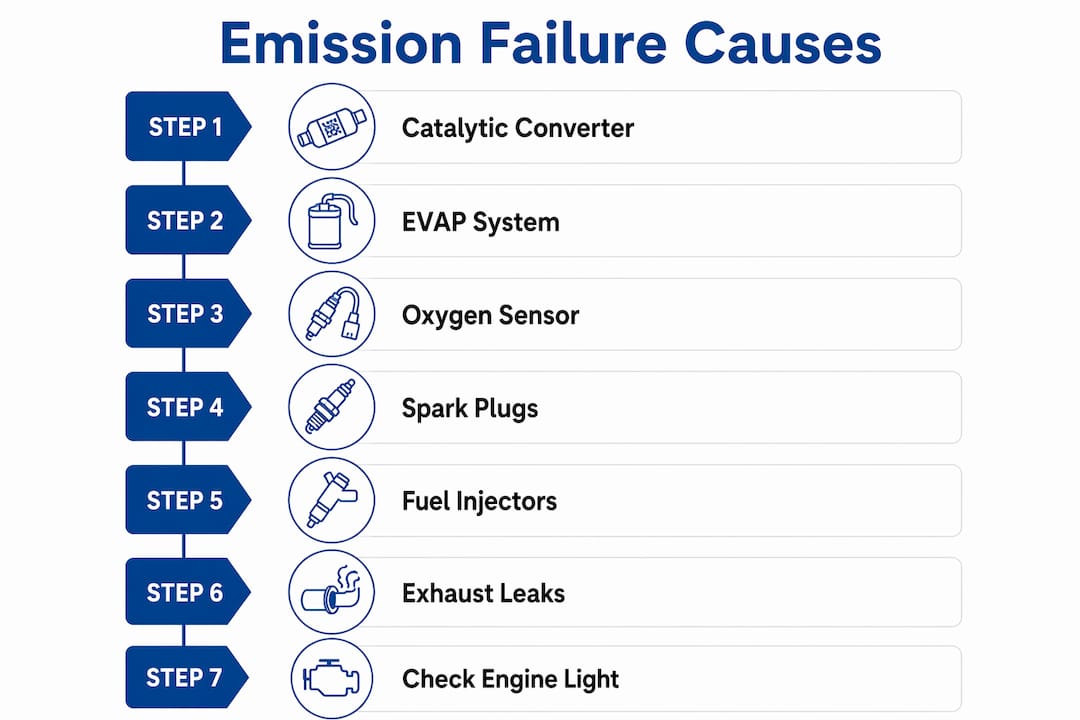
A car fails an emissions test for one or more identifiable mechanical or system faults, not random chance. The most common causes include a loose or damaged gas cap, a malfunctioning catalytic converter, worn spark plugs, a clogged air filter, EVAP system leaks, faulty oxygen sensors, and an illuminated check engine light. On 1996 and newer vehicles, the OBD-II system monitors each of these systems continuously, and any detected fault or unready monitor can trigger a test failure before the inspector even looks at tailpipe output.
Here is a quick reference of the most frequent failure triggers:
- Loose, missing, or cracked gas cap — causes EVAP system faults and sets a check engine light
- Catalytic converter damage or inefficiency — triggers diagnostic codes like P0420 or P0430
- Worn or fouled spark plugs — leads to misfires, incomplete combustion, and elevated hydrocarbon output
- Clogged air filter — disrupts the air-to-fuel ratio, raising carbon monoxide levels
- EVAP system leaks — purge or vent valve failures allow fuel vapor to escape unburned
- Faulty oxygen sensors — cause the engine to run too rich or too lean, spiking exhaust pollutants
- Illuminated check engine light — any vehicle with the Malfunction Indicator Light on will fail an OBD test outright
- OBD monitors set to “not ready” — incomplete diagnostic cycles cause test rejection even without a fault code
Understanding which system failed and why is the first step toward a repair that actually sticks.
Table of Contents
- How emissions tests work and what systems they check
- Detailed causes behind a failed emissions test
- OBD readiness, diagnostics, and what “not ready” actually means
- Practical steps to avoid emissions test failure
- Integrityautoinc offers emissions diagnostics and repair in Portland
- Key Takeaways
- FAQ
How emissions tests work and what systems they check
Emissions testing in the United States follows two primary methods depending on the vehicle’s model year. Vehicles from 1996 onward are tested through the OBD-II protocol, where a technician plugs a scan tool into the diagnostic link connector, typically located under the driver’s side dash, and reads the vehicle’s onboard computer directly. Older vehicles receive a tailpipe test, where exhaust gases are measured for hydrocarbons (HC) and carbon monoxide (CO).
The OBD-II test checks several key areas:
- Readiness monitors — self-tests the vehicle runs on systems like the catalyst, EVAP, oxygen sensors, and fuel system
- Stored diagnostic trouble codes (DTCs) — fault codes logged when a monitored component fails
- Malfunction Indicator Light (MIL) status — whether the check engine light is commanded on by the vehicle’s computer
- Diagnostic link connector integrity — whether the port communicates properly with test equipment
The Nevada DMV draws a clear distinction between a failed test and a rejected test. A rejection means the vehicle’s monitors have not completed enough diagnostic cycles to produce a valid result. A failure means the vehicle ran its monitors, found a problem, and reported it. Both outcomes prevent registration renewal, but they require different responses.
Visual inspections still apply in some states for the catalytic converter. Vehicles will fail if the catalyst is missing or has been tampered with, regardless of what the OBD system reports.
Detailed causes behind a failed emissions test
Catalytic converter inefficiency
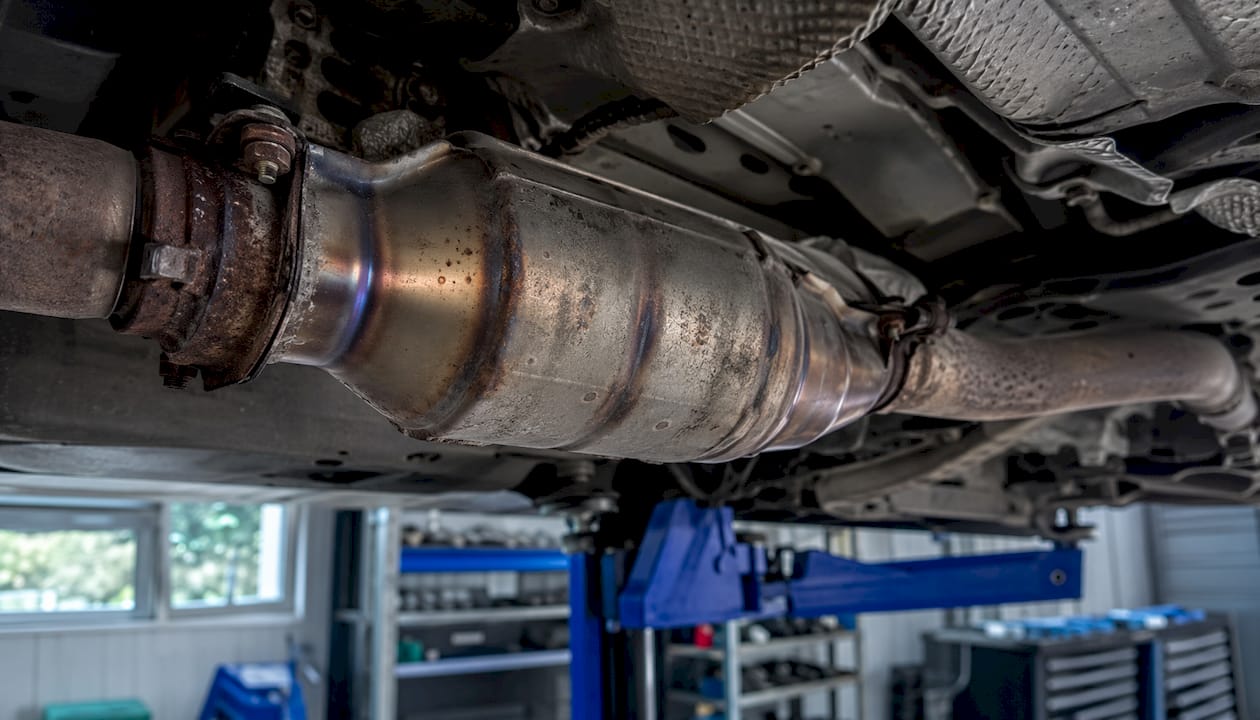
The catalytic converter chemically converts harmful exhaust gases into less toxic compounds. When it degrades or becomes clogged, the OBD-II system detects reduced efficiency through downstream oxygen sensor readings and stores codes P0420 or P0430. However, APEX Tech Nation notes that these codes are monitor results, not standalone proof that the converter itself is the problem. Upstream issues like a misfiring engine, a leaking exhaust manifold, or a failing oxygen sensor can all produce the same code. Replacing the converter without diagnosing root causes often leads to repeat failures.
EVAP system leaks and gas cap problems
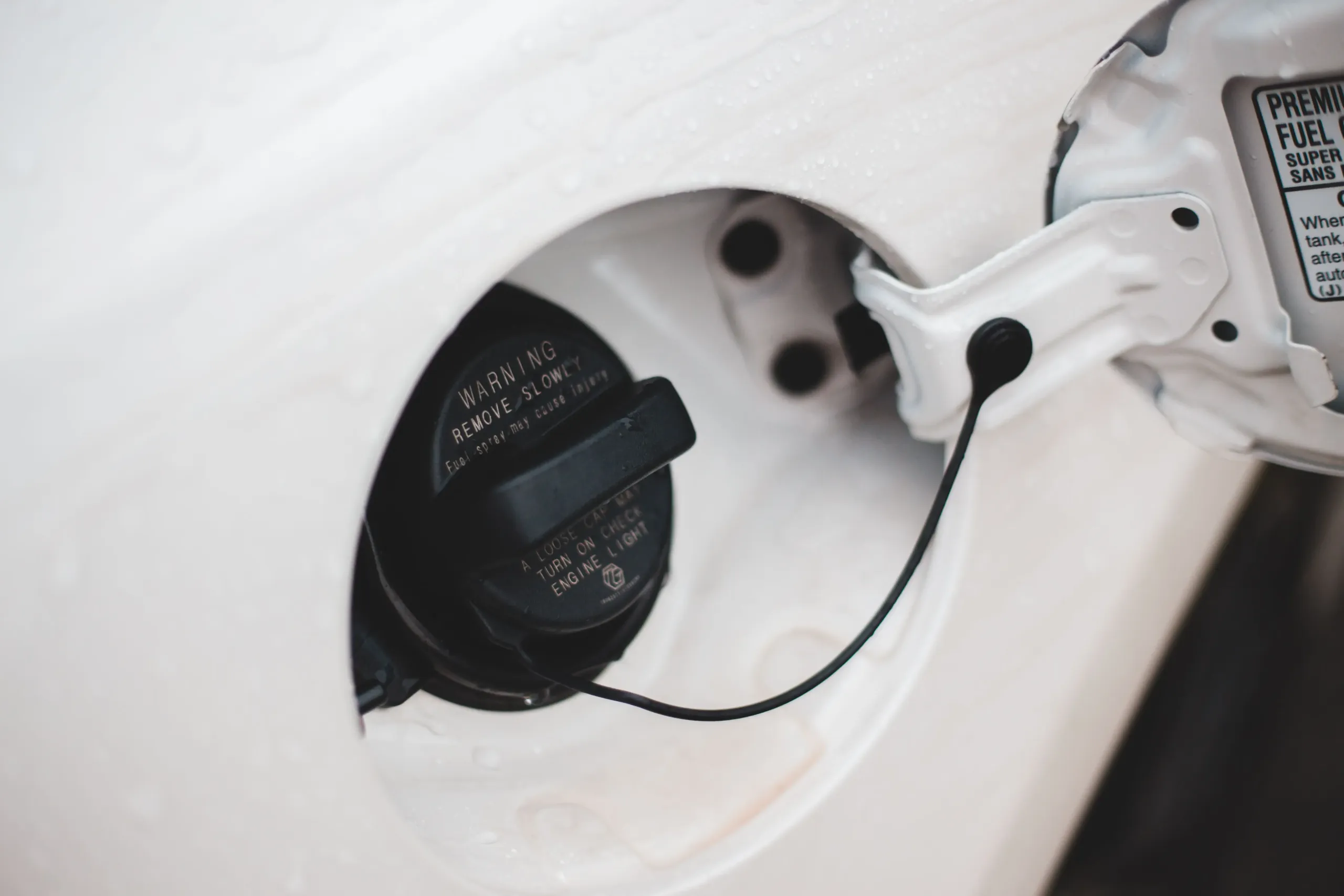
The evaporative emission control (EVAP) system captures fuel vapors from the gas tank and routes them into the engine to be burned rather than released into the atmosphere. A loose, cracked, or missing gas cap is the simplest EVAP fault, and DC DMV confirms it is a direct cause of functional test failure. More complex EVAP faults involve the purge valve, which opens to draw vapors into the intake, and the vent valve, which controls airflow into the charcoal canister. A blocked or contaminated vent valve can disrupt pressure testing during the EVAP monitor cycle, triggering a fault even when the rest of the system looks normal. Small leaks are notoriously difficult to find visually and typically require smoke machine testing to locate.
Oxygen sensor malfunction
Oxygen sensors measure the concentration of oxygen in the exhaust stream and feed that data to the engine control module (ECM). A failing sensor sends inaccurate readings, causing the ECM to miscalculate the fuel mixture. The result is either a rich condition, where too much fuel enters the combustion chamber, or a lean condition, where too little does. Both states increase regulated pollutants. A malfunctioning oxygen sensor also directly affects catalytic converter efficiency, since the converter depends on accurate fuel control to function within its designed parameters.
Worn spark plugs and ignition timing issues
Spark plugs that are worn, fouled, or damaged cause incomplete combustion. Unburned fuel passes into the exhaust stream, sharply raising hydrocarbon output. Incorrect ignition timing compounds the problem by altering when combustion occurs relative to piston position, which affects both power output and exhaust composition. Vacuum leaks, which allow unmetered air into the intake manifold, and a malfunctioning Positive Crankcase Ventilation (PCV) valve, which recirculates blow-by gases, both disrupt the air-to-fuel ratio in ways that elevate HC and CO readings.
Rich fuel mixture and faulty fuel injectors
A rich-running engine burns more fuel than the combustion process can fully oxidize. Faulty fuel injectors that leak or meter incorrectly are a common cause, flooding cylinders with excess fuel. The unburned hydrocarbons exit through the exhaust and push HC readings above test thresholds. A clogged air filter restricts incoming air, which has the same net effect: the mixture becomes disproportionately fuel-heavy, and CO levels climb. Dirty or contaminated engine oil contributes as well, since oil vapor drawn through the PCV system adds hydrocarbons to the combustion charge.
Exhaust system troubles
Leaks in the exhaust system, particularly between the engine and the catalytic converter, allow raw exhaust gases to escape before they are treated. This dilutes the exhaust sample during tailpipe testing, producing misleading CO and CO2 readings. Maryland’s MVA guidance identifies sample dilution as a distinct failure category, noting that a CO + CO2 measurement below 6% indicates an invalid exhaust sample, often caused by exhaust system leaks or improper engine adjustments.
Check engine light as a failure trigger
Any vehicle arriving at an inspection station with the check engine light illuminated will fail an OBD test immediately. The light signals that the vehicle’s computer has detected an emissions-related malfunction and stored at least one diagnostic trouble code. Oregon DEQ advises that continued operation with the light on risks additional damage to the emissions control system and potentially higher repair costs. Clearing the codes without fixing the underlying problem does not solve the issue. The light will return once the fault condition reoccurs, and the vehicle will fail again.
OBD readiness, diagnostics, and what “not ready” actually means
The OBD-II system runs a series of self-tests called monitors, each assigned to a specific emissions subsystem such as the catalyst, EVAP, fuel system, or oxygen sensors. A monitor is “ready” when it has completed its diagnostic cycle. A monitor is “not ready” when the vehicle has not yet run the conditions required to complete that cycle.
Oregon DEQ explains that a “not ready” status is more a test validity issue than proof of component failure. The vehicle simply has not driven enough under the right conditions to finish its self-evaluation. Per Texas DPS guidance, vehicles from model years 1996–2000 fail if more than two OBD monitors are set to “not ready,” while 2001 and newer vehicles fail if more than one monitor is unset.
Pro Tip: Never clear diagnostic codes or disconnect the battery immediately before an emissions test. Doing so resets all readiness monitors to “not ready,” and the vehicle will require multiple drive cycles before monitors reinitialize. Oregon DEQ specifically flags this as a common reason for repeated test failures.
Beyond monitor readiness, the OBD test can be rejected for physical or electrical reasons: a missing or damaged diagnostic link connector, a VIN mismatch between the vehicle and the test system, or low battery voltage at the connector. These are not emissions failures in the traditional sense, but they prevent the test from completing and require correction before retesting.
The check engine light itself carries a secondary failure condition. If the bulb has burned out and the light cannot illuminate when the ignition is turned to “on,” the vehicle fails because the warning system is not functional, even if no fault codes are stored. Vermont DMV identifies this as a distinct OBD failure reason, separate from an active fault code.
Practical steps to avoid emissions test failure
Preventing a failed emissions test is largely a matter of consistent maintenance and prompt attention to warning signs. The following practices address the most common causes of emission issues before they become test failures.
- Address the check engine light immediately. Have the vehicle scanned for diagnostic trouble codes rather than waiting. Ignoring the light risks escalating damage to the catalytic converter and oxygen sensors.
- Check the gas cap after every fill-up. Tighten it until it clicks. A loose cap is one of the simplest EVAP faults to prevent and one of the most common reasons for an unexpected check engine light.
- Replace spark plugs on schedule. Worn plugs cause misfires that raise hydrocarbon output and can damage the catalytic converter over time. Consult the vehicle’s owner manual for the manufacturer’s recommended interval.
- Change the air filter regularly. A clogged filter restricts airflow, enriches the fuel mixture, and raises CO emissions. Most manufacturers recommend inspection at every oil change.
- Keep up with oil changes. Dirty or contaminated engine oil contributes hydrocarbons to the combustion process through the PCV system. Fresh oil reduces that load on the emissions system.
- Complete a proper drive cycle before testing. If the battery has been disconnected or codes were recently cleared, drive the vehicle through varied conditions, including highway speeds and stop-and-go traffic, to allow monitors to reinitialize before the test.
- Schedule regular engine tune-ups. Addressing ignition timing, fuel injector condition, and PCV valve function as part of scheduled maintenance keeps combustion efficient and emissions within acceptable limits.
- Do not ignore EVAP system warning codes. Even a small fuel vapor leak can trigger a monitor failure. Smoke testing by a qualified technician is the most reliable way to locate leaks that are not visible during a standard inspection.
Integrityautoinc offers emissions diagnostics and repair in Portland
For Toyota, Lexus, Subaru, and Honda owners in the Portland area, Integrityautoinc provides a direct alternative to dealership pricing for emissions-related diagnostics and repairs. When a vehicle fails Oregon DEQ testing, the path forward requires accurate diagnosis, not guesswork. Integrityautoinc’s technicians read OBD-II fault codes, assess monitor readiness, and identify whether a P0420 code points to the catalytic converter itself or an upstream oxygen sensor or fuel control issue before any parts are ordered.
The shop handles the full range of emissions-related repairs: catalytic converter service, EVAP system diagnosis including smoke testing for small leaks, oxygen sensor replacement, spark plug and ignition service, air filter replacement, and oil changes. All of this falls under one roof, with the same team that handles tune-ups and emission testing repairs for scheduled maintenance intervals. Owners who want their vehicle diagnosed and repaired correctly the first time can contact Integrityautoinc directly to schedule a service appointment.
Key Takeaways
A car fails an emissions test when the OBD-II system detects a fault in an emissions-related component, the check engine light is on, or one or more readiness monitors have not completed their diagnostic cycles.
| Point | Details |
|---|---|
| Check engine light means automatic failure | Any vehicle with the Malfunction Indicator Light on will fail an OBD test immediately, per DC DMV guidance. |
| “Not ready” is a test validity issue | Uninitialized monitors require additional driving to complete diagnostic cycles before the vehicle can pass. |
| P0420 does not always mean a bad converter | Catalyst efficiency codes can result from oxygen sensor faults or fuel control issues upstream of the converter. |
| Gas cap and EVAP faults are preventable | Tightening the gas cap after every fill-up eliminates one of the most common EVAP system failure triggers. |
| Integrityautoinc for Portland-area repairs | Integrityautoinc diagnoses and repairs emissions failures for Toyota, Lexus, Subaru, and Honda owners in Portland, OR. |
FAQ
Why would a car fail its emissions test?
A car fails when the OBD-II system detects a malfunction in an emissions-related component, the check engine light is on, or one or more readiness monitors are set to “not ready.” Common mechanical causes include a damaged catalytic converter, faulty oxygen sensors, worn spark plugs, EVAP system leaks, and a loose or cracked gas cap.
How do you fix an emissions test failure?
The first step is obtaining the diagnostic trouble codes stored in the vehicle’s OBD-II system, then repairing the specific component or system that triggered the fault. After repairs, the vehicle must complete the appropriate drive cycles to reset readiness monitors before returning for a retest.
What does “rejected” mean versus “failed” on an emissions test?
A rejected test means the vehicle’s monitors did not complete enough diagnostic cycles to produce a valid result, so no pass or fail determination could be made. A failed test means the monitors ran, detected a problem, and reported it. The Nevada DMV notes that a rejected test is not a failed test and may not require repairs, but it is not eligible for a waiver.
Can clearing codes help a car pass emissions?
No. Clearing codes or disconnecting the battery resets all OBD readiness monitors to “not ready,” which causes the vehicle to be rejected at the test station. Oregon DEQ advises against clearing codes before testing, as the vehicle will require multiple drive cycles to reinitialize monitors before it can be properly evaluated.
How does a clogged air filter cause an emissions failure?
A clogged air filter restricts the airflow entering the engine, which makes the fuel mixture disproportionately rich. The excess unburned fuel exits through the exhaust, raising carbon monoxide and hydrocarbon levels above the thresholds required to pass a tailpipe emissions test.


