

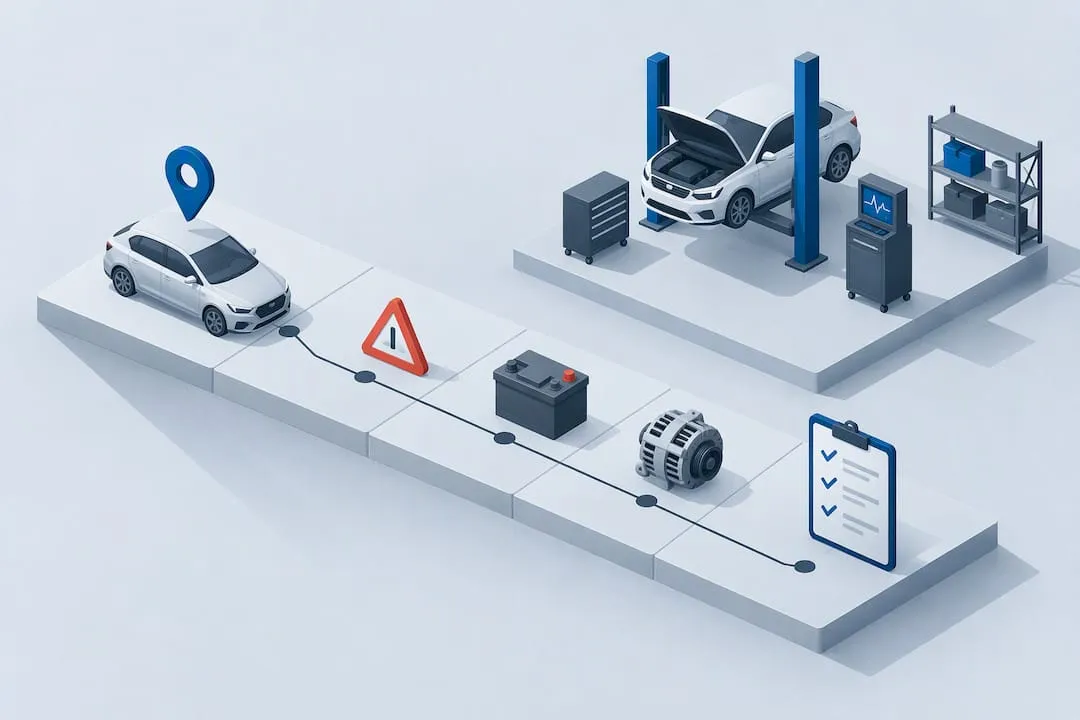
When the battery light comes on while driving, the charging system is likely failing and the vehicle is running on stored battery power alone. This is not a minor dashboard glitch. The car can stall without warning, so the immediate priority is cutting unnecessary electrical use and getting to a safe location before the battery runs out of reserve.
TL;DR:
- Stop as soon as it is safe if headlights dim, electrical assist fails, the engine misfires, or a restarted engine dies again.
- A short trip to a nearby repair shop may be reasonable only when the warning stays steady, lights remain bright, and electrical loads are minimized.
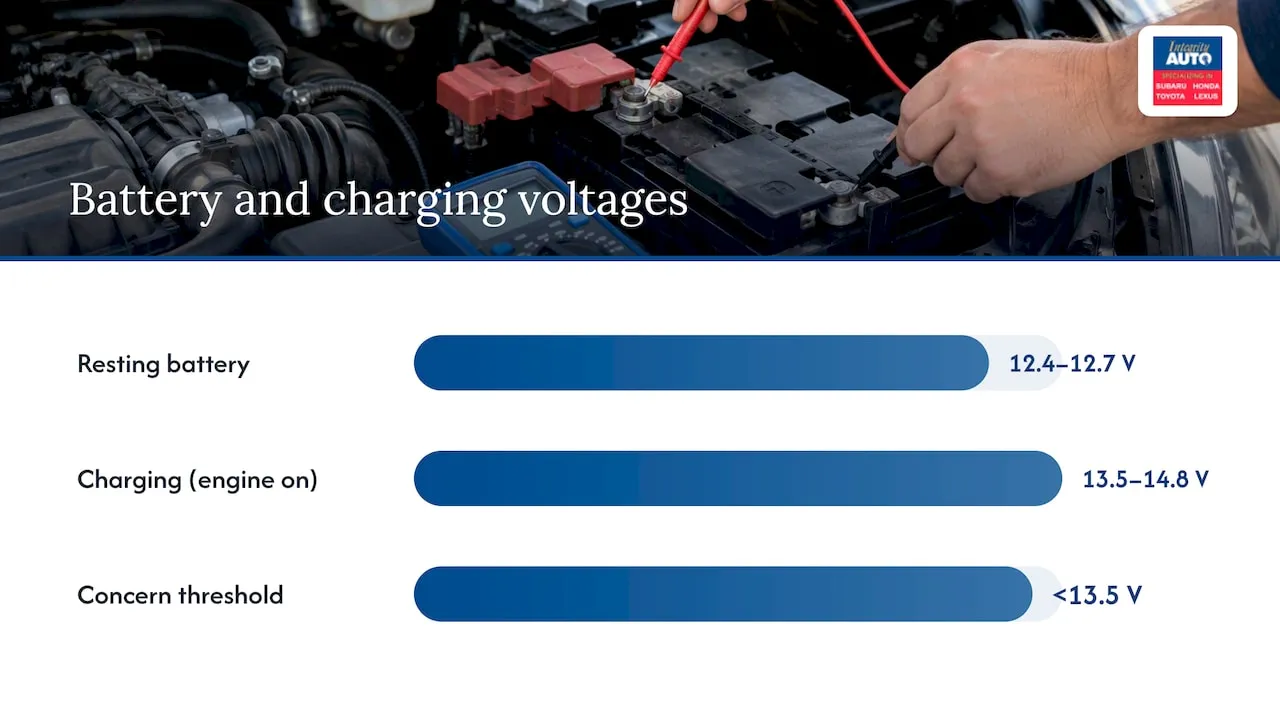
- A resting battery should read about 12.4–12.7 volts; with the engine running, 13.5–14.8 volts is expected, and lower readings suggest charging trouble.
- AutoZone and O’Reilly offer free tests of the charging system in the vehicle; confirm the battery, alternator, and wiring before replacing parts.
What the Battery Light Means and What Usually Causes It
The battery light does not simply mean the battery is old or dying. It monitors voltage across the entire charging system, so when it illuminates while driving, it is almost always a signal that the alternator has stopped sending power to the battery and electrical components. The car then draws on whatever charge remains in the battery, which depletes faster than most drivers expect.
Several problems can trigger this warning, and the exact combination of symptoms often points to the culprit:
- Alternator failure: the most frequent cause, often paired with dimming headlights or a flickering dashboard.
- Worn or slipping drive belt: can cause a squealing noise and inconsistent charging.
- Voltage regulator fault: produces overcharging or undercharging, sometimes with flickering lights.
- Loose or corroded battery cables: interrupt the connection even when the alternator works fine.
- Wiring or fuse problems: a blown fuse in the charging circuit can mimic alternator failure.
- Parasitic drain: an accessory or module pulling power even when the car is off.
- Failing battery: can no longer hold a charge, even if the alternator is working correctly.
Slow cranking at startup tends to point toward the battery itself, while dimming or flickering during driving usually points to the charging system.
What to Do Right Now if the Light Comes On
Treat the light as an early warning, not a final verdict, but act quickly to protect both the battery and your safety on the road.
- Cut nonessential electrical load: turn off the air conditioning, heated seats, radio, and any lights not required for safe driving.
- Watch the headlights and dashboard: if they dim noticeably, the battery is losing reserve fast and stopping becomes urgent.
- Decide between pulling over and driving on: a steady light with no dimming may allow a short trip to a safe repair location; visible dimming means stop as soon as it is safe to do so.
- If the engine stalls: switch on hazard lights immediately, steer to the shoulder or a parking area, and call for roadside assistance or a tow.
Pro Tip: Keep your phone charged before a long trip. If the charging system fails, your phone may become your only way to call for help once the car’s electronics go dark.
AAA advises shutting down unnecessary electrical loads and heading toward a repair facility rather than continuing to drive normally, since prolonged driving on a failing charging system risks both a stall and permanent battery damage.
How to Tell an Alternator Problem From a Battery Problem
The symptoms overlap, but a few clues separate the two. A failing alternator typically shows up while the engine is running: headlights dim at idle, the dashboard flickers, or electrical accessories behave erratically as you drive. A weak battery more often shows up at startup, with slow cranking or a complete no-start, while the car otherwise runs fine once it gets going.
A few quick visual checks help narrow things down before any testing:
- Look for a missing, cracked, or loose drive belt.
- Check the battery terminals for white or greenish corrosion buildup.
- Note whether the light flickers intermittently or stays on steadily.
Major parts retailers offer a practical shortcut here. AutoZone and O’Reilly Auto Parts both provide free in-vehicle charging-system testing that can distinguish an alternator fault from a battery fault, usually without an appointment.
A resting battery typically reads around 12.4 to 12.7 volts with the engine off, and a healthy charging system should read roughly 13.5 to 14.8 volts with the engine running. A reading below that range with the engine running usually points to a charging problem rather than just a weak battery.
When to Stop Immediately Versus When It’s Safe to Keep Driving
Not every battery light demands an immediate roadside stop, but certain signs mean the margin for error has already run out.
- Stop and call for a tow: rapidly dimming lights, loss of power steering or other electrical assist systems, engine misfire, or a stall that restarts and then dies again.
- A short drive may be acceptable: the light stays on steadily with no dimming and a repair shop is close by, provided electrical load stays minimal and the distance is short.
- Avoid pushing your luck: continuing to drive on a failing charging system drains the battery further and can leave it too depleted to hold a charge even after the alternator is repaired.
When in doubt, the safer choice is always the shorter drive and the earlier stop.
Preventing Battery Light Problems Before They Start
Most charging-system failures give warning signs long before they strand a driver on the road. A car battery generally performs reliably for three to five years, and testing it proactively as it approaches that age catches weak cells before they fail unexpectedly.
A few habits go a long way toward avoiding a dashboard surprise:
- Inspect terminals periodically for corrosion and tighten any loose connections.
- Check the drive belt for cracking, glazing, or looseness during routine service.
- Watch for a swollen or bulging battery case, which signals internal damage.
- Unplug dash cams, phone chargers, and other accessories that can drain the battery when the car sits.
- Take regular longer drives rather than frequent short trips, since short trips don’t give the alternator enough time to fully recharge the battery.
Pro Tip: Ask for a free charging-system check at a parts store during routine errands, especially before winter or during periods of extreme heat, both of which accelerate battery wear.
What a Proper Charging-System Diagnostic Looks Like
A credible shop diagnostic goes beyond swapping the battery and hoping the problem goes away. A thorough check typically includes:
- Visual inspection of the drive belt, battery cables, and terminal connections.
- An alternator output test under load, measuring actual charging voltage and amperage.
- A battery load test to confirm the battery can hold and deliver a charge.
- A scan for stored diagnostic trouble codes related to the charging circuit.
- Inspection of fuses and fusible links tied to the charging system.
- Verification that the voltage regulator is cycling correctly.
Replacing a battery without confirming the alternator and wiring are sound often leads to a repeat failure and added expense. A complete diagnostic report should identify which component is actually at fault before any part gets replaced, which is the approach we follow when a Toyota, Lexus, Subaru, or Honda owner brings in a charging-system concern.
Get Your Charging System Checked the Right Way
Battery, alternator, belt, and wiring are tested together rather than guessing which part to replace first, and repairs are backed with warranties. When a Toyota, Lexus, Subaru, or Honda is brought in for a battery light concern, the diagnostic process can include a multipoint inspection so the full picture of the vehicle’s condition is visible, not just the one symptom that prompted the visit.
If your battery light has come on while driving, schedule a battery testing and replacement appointment with us and get a clear answer instead of a guess.
FAQ
How long can I drive with the battery light on while driving?
There is no reliable distance or time limit once the battery light comes on, since it depends on battery health, electrical load, and driving conditions. The safest approach is to reduce electrical use and get to a repair facility as soon as possible rather than assume the car will keep running.
How do I tell if it’s my battery or alternator?
A failing alternator usually causes dimming headlights or a flickering dashboard while the engine is running, while a weak battery more often shows up as slow cranking or a no-start at startup. Free in-vehicle testing at AutoZone or O’Reilly Auto Parts can confirm which component is at fault.
Is it safe to drive a car with the battery warning light on?
Driving with the battery light on carries real risk, since the vehicle may be running solely on stored battery power and can stall unexpectedly. If headlights or the dashboard begin dimming, treat it as an immediate signal to stop rather than continue driving.
Can AutoZone check battery light?
AutoZone offers free battery and alternator testing, including charging the battery when needed to get an accurate load test result. This testing helps determine whether the battery, the alternator, or another component is causing the battery light to stay on.
Sources
- Signs Your Alternator May Need to Be Replaced | Via
- Free Auto Parts Testing Services | O’Reilly Auto Parts
- Free parts testing | AutoZone


