
An exhaust leak is a breach anywhere in the exhaust system that lets gas escape before it reaches the tailpipe. The usual signs are a ticking, hissing or puffing sound, a louder exhaust, a fuel smell or vibration. Because the gas contains carbon monoxide, a leak is a safety matter as well as a noise problem. For Toyota, Lexus, Subaru and Honda owners in the Portland area, the practical answer is a proper inspection by a technician who works on these makes every day, such as the team at Integrity Auto.
TL;DR
- Common signs include ticking or hissing that is loudest on a cold start, a suddenly louder exhaust, vibration under acceleration, exhaust odor, soot around joints and a Check Engine Light.
- Even a small leak can let odorless carbon monoxide (CO) reach the cabin, so a suspected leak should be inspected promptly.
- Shops locate leaks with smoke or soapy-water pressure testing, then replace the failed gasket, pipe or component.
- A leak near the engine can disturb sensor readings and may affect fuel economy and emissions results.
- Noise that appears only when the air conditioning is on usually points to a different system and needs its own diagnosis.
What an exhaust leak is and where it happens
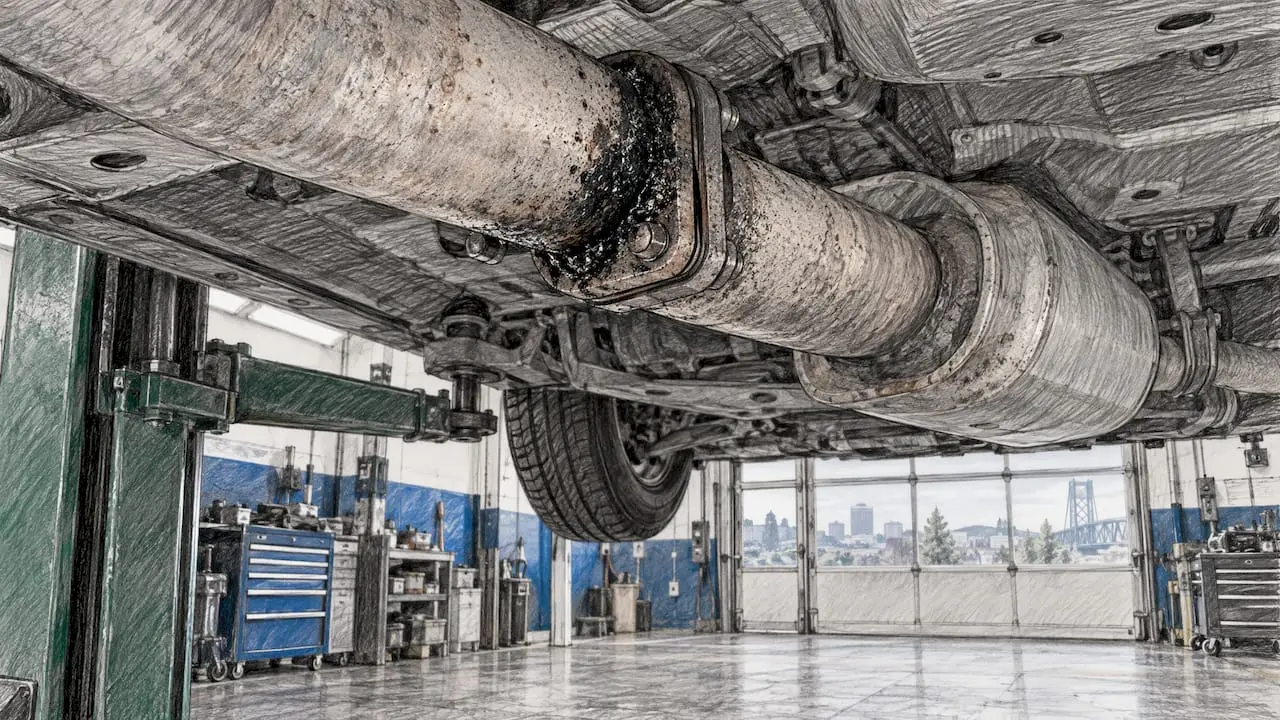
Exhaust gas leaves the engine through the exhaust manifold, passes the oxygen sensors and catalytic converter, travels through pipes and the muffler, and exits at the tailpipe. A leak can open at any joint or section along that path. Typical failure points are:
- the exhaust manifold gasket, where the manifold bolts to the engine
- flange gaskets and clamped joints between pipes
- flex pipes, which bend with engine movement
- rusted or cracked pipes and mufflers
Leaks close to the engine tend to make a rhythmic tick that matches engine speed. Leaks farther back tend to sound like a deeper rumble or roar.
Exhaust leak symptoms and what the noise sounds like
The noise is usually the first clue. Typical descriptions include:
- Ticking or puffing: often loudest on a cold start, then fading as metal expands and partly seals the gap.
- Hissing: a thin escape of gas at a cracked pipe or a failing gasket.
- Rumble or roar: a louder note than normal, especially while accelerating.
- Popping: intermittent pops during acceleration or deceleration.
Other signs are vibration felt in the pedal or floor, a smell of exhaust, black soot streaks around a joint, reduced fuel economy and a lit Check Engine Light. A rattle from underneath the car is a different problem, since it often means a loose heat shield or a pipe touching another part.
Why a small leak still matters to the engine
The engine computer relies on oxygen sensors to balance fuel and air. Walker Exhaust’s diagnostic guidance explains that small exhaust or intake leaks can disturb mass-airflow, oxygen-sensor and air-fuel-ratio readings. That is why a leak can bring a warning light, change fuel economy and complicate emissions diagnosis, even when the noise seems minor.
Is it safe to drive with an exhaust leak?
The main concern is carbon monoxide. The CDC states that even a small exhaust leak can allow CO, which has no odor, to build up inside a vehicle. Symptoms of CO poisoning include headache, dizziness, weakness, upset stomach, vomiting, chest pain and confusion.
Practical safety points:
- A leak that is audible, smelled in the cabin, or paired with headache or dizziness while driving should be treated as urgent. Get fresh air, stop driving and have the car inspected before further use.
- Anyone with CO-poisoning symptoms should seek medical care or call emergency services.
- The CDC advises against running a vehicle in an attached garage, even with the door open, because exhaust gas can collect there.
- The CDC also recommends having a mechanic check the exhaust system every year, which catches rust and worn gaskets before they become leaks.
How a leak is found and repaired
Guessing by ear is unreliable, because exhaust noise travels along the pipes and can seem to come from somewhere else. Technicians use methods that show the exact location:
- Visual check. Soot trails, cracks, rust holes and loose hangers show where gas has been escaping.
- Smoke testing. Smoke is fed into the exhaust and escapes at the breach. A General Motors service bulletin filed with NHTSA describes smoke testing and soapy-water pressure testing as ways to find exhaust leaks. It also notes that smoke can be hard to see at small leaks, while soap bubbles can reveal them.
- Cold and hot inspection. Walker Exhaust recommends checking both cold and at normal operating temperature, since some leaks seal as metal heats up and show only on a cold start.
- Repair. The fix depends on the location: a new manifold or flange gasket, a replacement flex pipe, a section of pipe or a muffler. For a manifold gasket, the work involves removing the manifold hardware, cleaning the mating surfaces, fitting the new gasket and tightening fasteners to factory specifications.
The last point is where model knowledge counts. Torque values, fastener replacement and sensor locations differ between a Camry, a Lexus RX, a Subaru Outback and a Honda CR-V, and a correct repair follows the manufacturer’s procedure for the specific car.
What affects the cost of repair
Prices vary widely because the repair can range from a clamp or gasket to a full manifold or converter-back section. The main factors are:
- Location: a rusted muffler is a simpler job than a manifold that sits behind other components.
- Part type: a gasket costs far less than a manifold, flex pipe or catalytic converter.
- Corrosion: seized or rusted bolts add labor.
- Related damage: a long-running leak can affect oxygen sensors, which then need attention too.
A written estimate after diagnosis is the reliable way to see the actual number for a specific car. Integrity Auto lists its diagnosis and estimate details on its site.
When to have the exhaust system inspected
An inspection makes sense in any of these cases:
- the exhaust sound changed suddenly or has become louder over a few weeks
- a ticking sound is present on cold starts
- there is an exhaust smell in or around the car
- the Check Engine Light is on, or fuel economy has dropped
- an emissions test is coming up
Getting the location right before parts are replaced is what keeps repairs from being repeated. Shops that document findings with photos and customer approvals tend to be clearer about it; more on diagnostic accuracy in independent shops explains why.
Oregon drivers in the Portland area also face DEQ emissions testing. A leak ahead of the oxygen sensors can affect the readings the car’s computer uses, so exhaust repair and emissions readiness are linked. Integrity Auto covers DEQ emissions help and a guide on why cars fail emissions tests.
Noise when the AC is on
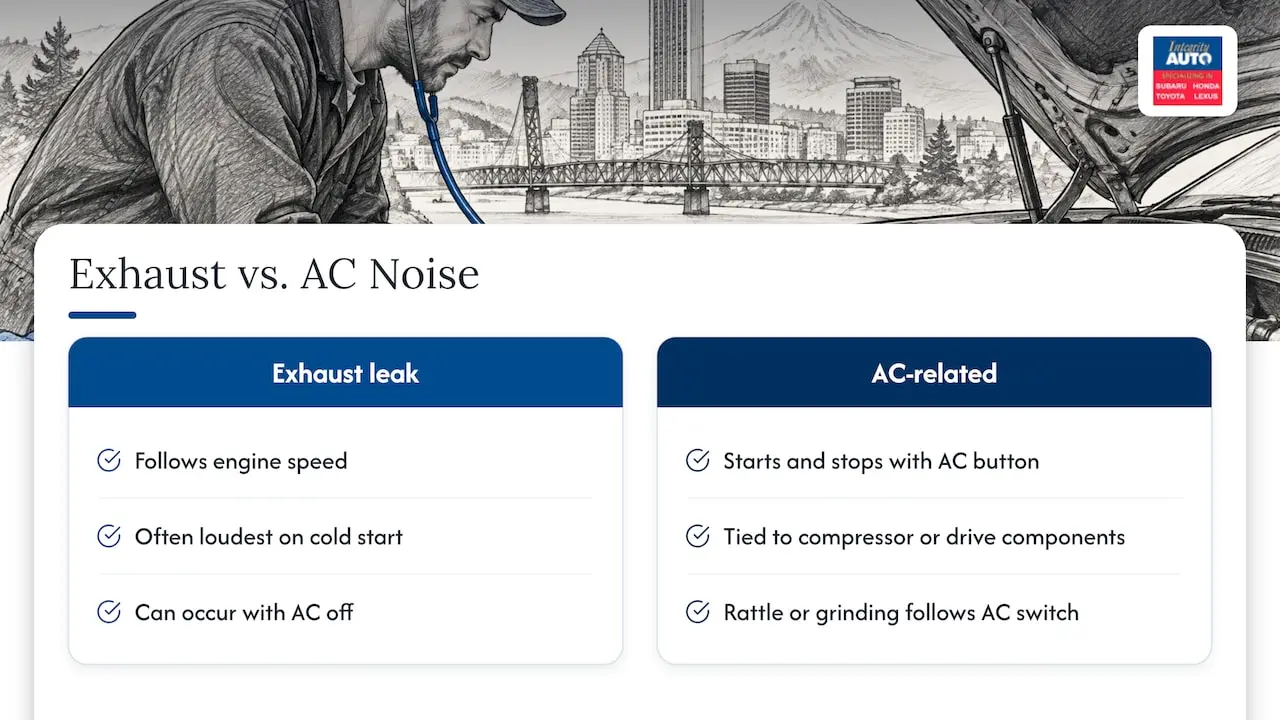
A sound that begins only when the air conditioning is switched on is not an exhaust leak by default. It is more likely tied to the AC compressor or its drive components, which run only when the AC is active. A simple distinction: exhaust leaks follow engine speed and are often loudest on a cold start whether or not the AC is on, while AC-related noise starts and stops with the AC button. A rattle or grinding that follows the AC switch should be diagnosed rather than ignored, since the compressor is driven by the engine belt system.
Exhaust leak diagnosis for Toyota, Lexus, Subaru and Honda
Integrity Auto is an independent shop in the Portland area specializing in Toyota, Lexus, Subaru and Honda vehicles. It describes its technicians as ASE certified and offers exhaust system leak service, diagnosis, emission testing and repairs, and complimentary multipoint inspections. Owners can see how the complimentary vehicle inspection works and then book a visit through the service page for their make: Toyota, Lexus, Honda or Subaru.
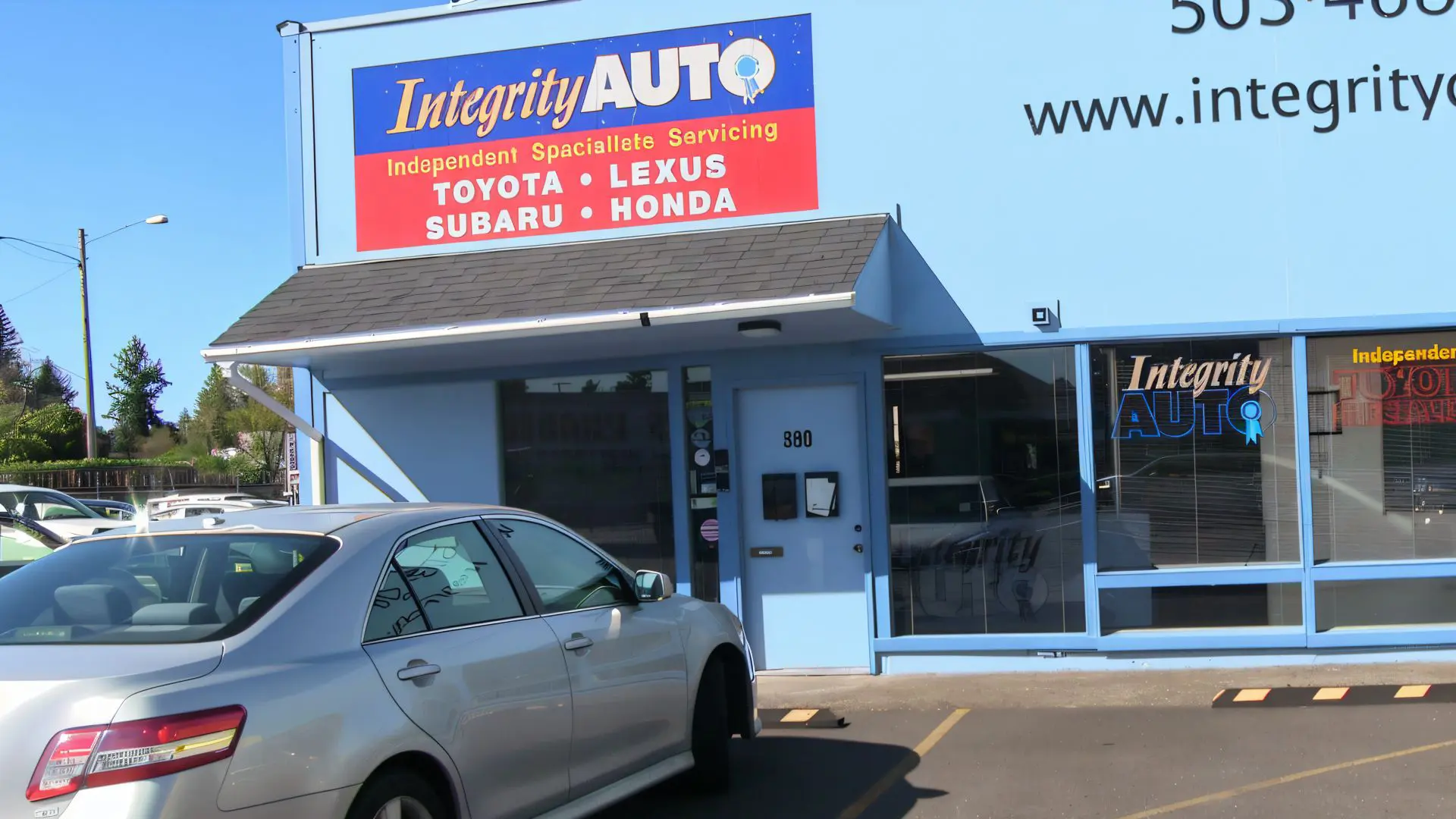
For a car with a Check Engine Light, a louder exhaust or a ticking cold start, the sensible next step is a diagnosis that pinpoints the leak before any part is replaced.
FAQ
Can I drive with an exhaust leak?
A leak can let carbon monoxide into the cabin, and the CDC notes that even a small one can do so. A car with an audible leak, exhaust smell or symptoms such as headache or dizziness should be inspected before it is driven further.
What does an exhaust leak sound like?
Typical sounds are ticking or puffing that is loudest on a cold start, a hiss, a louder rumble under acceleration or occasional popping. Ticking that follows engine speed often points to a leak near the manifold.
How do mechanics find an exhaust leak?
They inspect for soot and cracks, then use smoke or soapy-water pressure testing to show the exact location. Checking cold and at operating temperature helps reveal leaks that close up as the metal heats.
Can an exhaust leak affect emissions or the Check Engine Light?
Yes. A leak can disturb oxygen-sensor and air-fuel readings used for fuel control, which can set a warning light and complicate an emissions test. Having it repaired before a DEQ test avoids a repeat visit.
Sources
- CDC: Carbon Monoxide (CO) Poisoning Basics
- NHTSA: GM service bulletin 23-NA-061
- Walker Exhaust: Exhaust Leak Symptoms and Repair