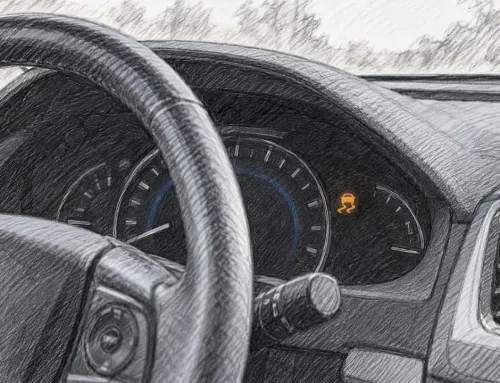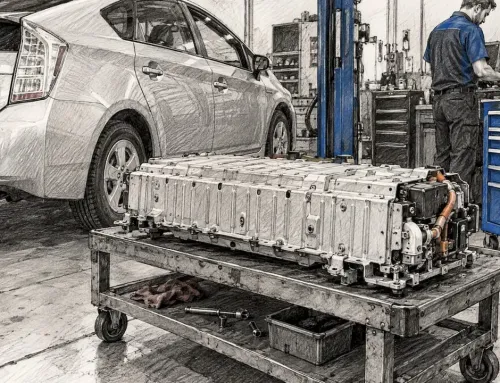

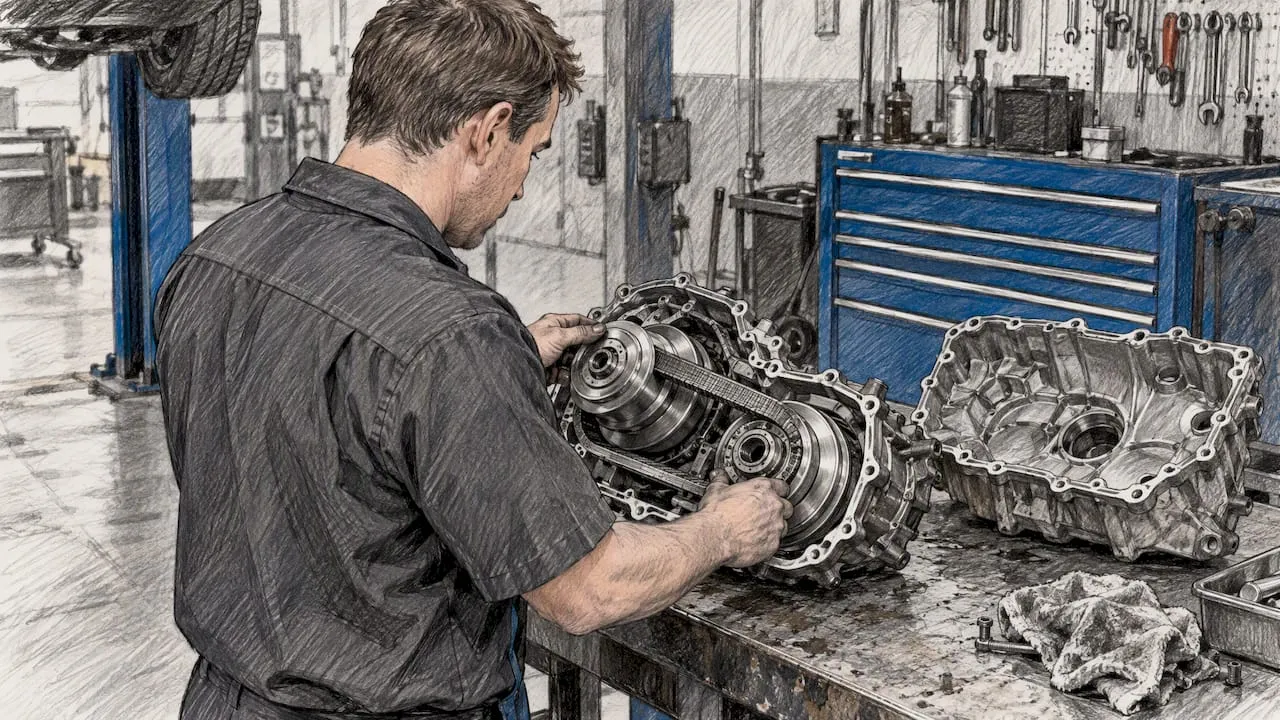
A shudder in a continuously variable transmission (CVT) most often comes from degraded or incorrect fluid, outdated control software, a torque converter that grips unevenly, or wear inside the belt or chain and pulley assembly. Fluid is the cheapest cause to check and the most common one to rule out first. Because the symptom feels similar across causes, a proper diagnosis matters more than a guess, especially on Subaru, Honda, Toyota and Lexus vehicles that rely on a CVT.
TL;DR
- CVT shudder is a vibration or judder, usually felt under light throttle at low to moderate speeds, and it is a warning rather than a quirk.
- The usual suspects are worn or wrong CVT fluid, a low fluid level, software calibration, torque converter lockup, and internal wear.
- Fluid condition and level are the first checks, followed by a scan for stored codes and a test drive.
- Subaru Lineartronic and Honda CVTs have both had shudder complaints addressed with fluid service and control software updates.
- Driving on a shuddering CVT for months can turn a small fix into a major repair, so early diagnosis is worth it.
What CVT shudder feels like
A conventional automatic moves through fixed gears. A CVT instead varies its ratio continuously, using a belt or chain running between two pulleys. That design is smooth when it works, so any roughness stands out.
Shudder is typically described as a rumble strip sensation, a shake when pulling away from a stop, or a vibration while holding steady light throttle between roughly 20 and 40 mph. Some drivers notice it when decelerating or climbing a hill. Related signs include a whine that rises with speed, delayed engagement when shifting into Drive or Reverse, and the engine revving without matching acceleration, which is the usual pattern behind searches for CVT slipping symptoms.
A flashing “D” indicator is a separate and more urgent signal. Honda’s owner’s manual states that a flashing D indicator while driving points to a possible transmission problem and advises avoiding rapid acceleration until it is checked.
The main causes of CVT shudder
Degraded or incorrect fluid
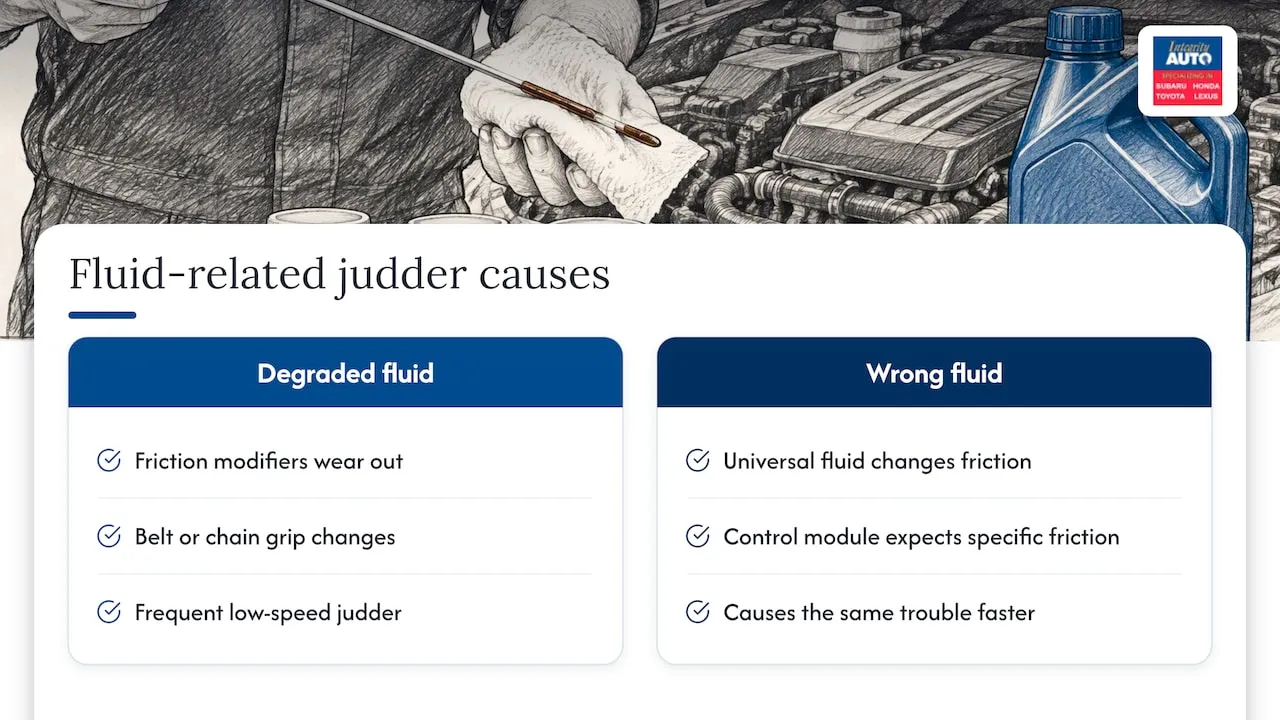
CVT fluid does more than lubricate. It has to provide a specific friction level so the belt or chain grips the pulleys without slipping, and so the torque converter clutch engages smoothly. As the friction-modifier additives wear out, that grip changes and vibration follows. One technical guide describes degraded Honda HCF-2 fluid losing its friction modifiers as the most frequent source of low-speed judder on Civic, CR-V and Accord models.
Using the wrong fluid causes the same trouble faster. CVTs are not interchangeable with conventional automatic transmissions, and a universal fluid can change the friction behavior the control module expects. Each manufacturer specifies its own fluid, and that specification should be followed exactly.
Low or overfilled fluid level
Too little fluid starves the pulleys and clutch, while too much can foam. Both can create shudder. Honda’s manual explains the proper method: the transmission must be at normal operating temperature, meaning a drive of at least 10 miles, with the car on level ground and the engine off for 60 to 90 seconds before the dipstick reading. A cold or rushed reading can mislead. Many newer CVTs have no dipstick at all, which is one reason level checks belong in a shop with the correct procedure.
A low level also implies a leak somewhere, and that leak needs to be found rather than topped off repeatedly. The signs of low transmission fluid are worth knowing before a shudder develops.
Software calibration
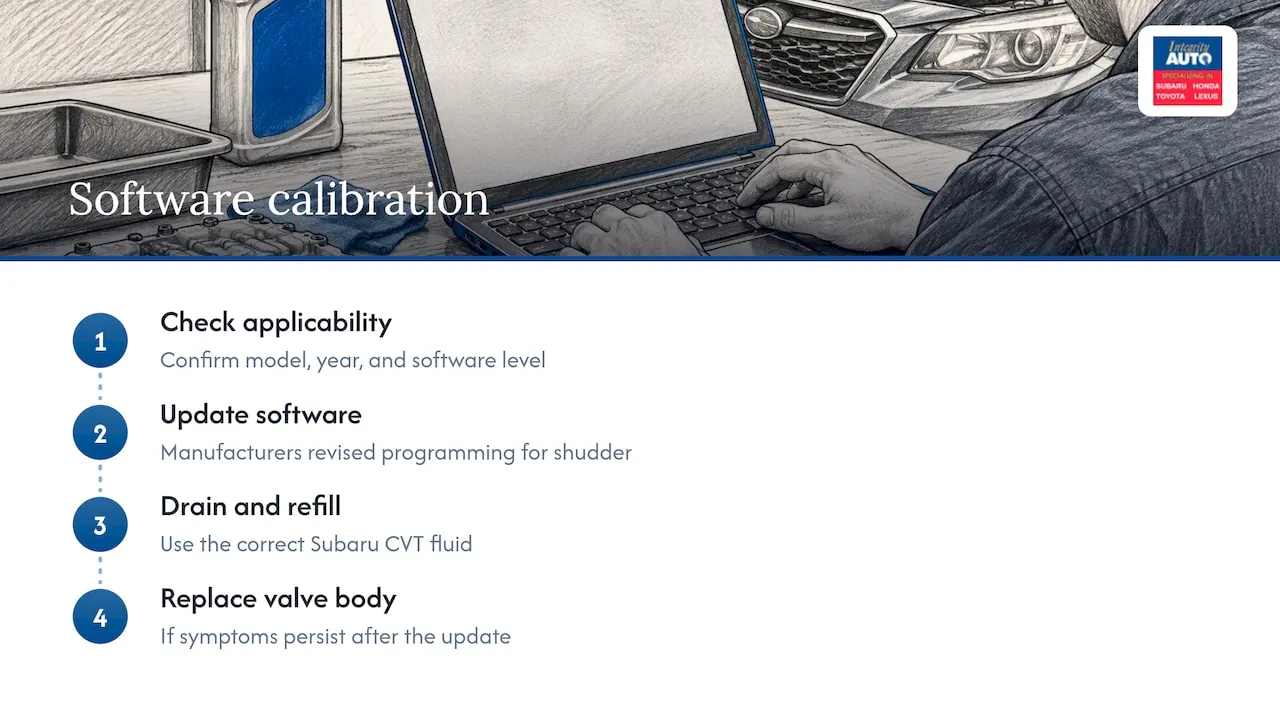
The transmission control module decides how the torque converter locks up and how the belt or chain clamping pressure is managed. Manufacturers have revised this programming for shudder complaints. A published Subaru reference notes that the Lineartronic CVT can develop shudder or hesitation at light throttle, and that Subaru has issued several software updates. The same source lists a fluid drain and refill with the correct Subaru CVT fluid as part of the fix, and valve body replacement if symptoms persist after the update.
Software updates are a reason a scan tool and the service history matter. Whether an update applies depends on the exact model, year and software level, which a technician can confirm.
Torque converter lockup
Many CVTs lock the torque converter early to save fuel. If the clutch inside it engages unevenly, the result is a shake that feels like driving over a rumble strip at steady speed. Contaminated fluid, worn clutch material and software strategy all feed into this. Shudder that appears only in a narrow speed range, and fades when the throttle is varied, often points here.
Worn belt, chain, pulleys or valve body
When fluid and software are ruled out, internal wear is the remaining explanation. Grooved pulley faces, a stretched chain, a sticking valve body or clogged internal passages can all cause shudder, slipping or whining. These repairs are larger, and they are the reason early symptoms should not be ignored. The longer a CVT runs with poor lubrication, the more metal debris circulates and the more parts are affected.
Mounts and driveline parts that mimic the problem
Not every shudder starts in the transmission. A worn engine or transmission mount, a failing CV axle or an engine misfire can create vibration that feels like CVT judder. Axle problems, for example, often show up on turns or under load, which is why a lift inspection is useful. The guide to the lift and rotate test for Honda CV axle noise explains how to separate the two.
Subaru and Honda specifics
Subaru owners searching for Subaru CVT shudder usually describe hesitation from a stop, a surge at low speeds, or a vibration under light acceleration, including on Forester models. Subaru specifies different CVT fluids for different Lineartronic generations, so the label on the fluid matters as much as the service itself. On higher-torque units, the same reference points out that the fluid specification differs from the standard Lineartronic fluid.
Honda drivers most often report a shudder at low speed under light throttle. The manufacturer’s guidance for the CVT is also practical about driving habits: the owner’s manual notes that quickly pressing the accelerator uphill can drop the transmission to a lower ratio and unexpectedly raise speed, so smooth throttle input is advised. For a deeper look at the fluid-first approach, see Integrity Auto’s article on Honda CVT judder and why to start with fluid and its guide to the Honda transmission fluid interval.
Toyota and Lexus owners face a similar question about fluid that is described as “lifetime.” The article on what lifetime transmission fluid means for Toyota owners covers it.
What to check, in order
- Note the pattern. Record the speed range, throttle position, whether the engine is warm or cold, and whether it happens accelerating, decelerating or both.
- Check the fluid condition and level using the manufacturer’s procedure. Dark, burnt-smelling or gritty fluid is a clear sign. For dipstick models, follow the hot-check steps above.
- Scan for codes. A stored transmission code or pending software update changes the diagnosis.
- Service with the correct fluid. Use the exact specification for the vehicle, and avoid universal products.
- Inspect mounts, axles and engine performance. Rule out parts outside the transmission.
- Reassess after a test drive. If shudder remains, the next steps are torque converter and valve body testing, then internal inspection.
Drivers should stop driving and have the vehicle inspected promptly if shudder comes with a flashing D indicator, a burning smell, limp mode or a dashboard warning. More warning patterns are listed in the guide to signs of transmission failure, and the article on fixing transmission problems without replacing the unit explains when a repair short of replacement is realistic.
Getting a CVT shudder diagnosed in Portland
Integrity Auto is an independent shop in Portland, Oregon, specializing in Toyota, Lexus, Subaru and Honda vehicles, with transmission and CVT services listed among its offerings. Owners of these makes can start with the Honda service and repair page or the Subaru service and repair page. For a shudder that needs testing before any repair is chosen, the diagnosis page explains how diagnostic charges and estimates work. For long-term planning, the comparison of CVT and conventional automatic maintenance shows what service helps these transmissions last.
FAQ
Why does my CVT shudder when accelerating?
The most common reasons are worn or incorrect CVT fluid, a low fluid level, torque converter lockup that engages unevenly, or outdated control software. Internal wear is less common but more serious. A fluid check and a code scan are the usual starting points.
What is a CVT judder?
Judder is another word for shudder: a rhythmic vibration felt through the seat or floor, typically under light throttle at low to moderate speeds. It often comes from the torque converter clutch or from fluid that no longer provides the right friction.
Why does a Subaru Forester shudder when it accelerates?
On Subaru Lineartronic transmissions, shudder has been linked to fluid condition, the control software calibration and the valve body. A technician should confirm the correct fluid specification for the model and check for available updates before recommending a larger repair.
Is it safe to keep driving with a CVT shudder?
Short trips to a shop are generally reasonable, but prolonged driving is not. Continued shudder can accelerate wear. A flashing D indicator, limp mode or slipping calls for stopping and having the vehicle inspected promptly.
Sources
- Honda owner’s manual: Windshield washers and transmission fluid
- Honda owner’s manual: Automatic transmission (CVT) shift indicator
- Honda CR-V 2025 owner’s manual: Continuously variable transmission
- Subaru P0700 diagnosis and known CVT issues
- Honda CVT transmission problems and fixes