A recall is a legally required safety fix that manufacturers must provide free of charge. A technical service bulletin, or TSB, is guidance manufacturers send to dealer technicians about known issues, and it usually does not come with free repairs. If your vehicle has an open recall, schedule the repair now. If a TSB matches symptoms you’re seeing, mention it at your next service visit.
TL;DR:
- Owners should verify their vehicle’s recall status regularly using VIN checks, as remedies may be available before official notification arrives.
- Recall repairs are always free and must be provided promptly once the manufacturer confirms a safety defect, regardless of vehicle age or mileage.
- Technical Service Bulletins inform technicians about common issues but do not require free repairs unless under warranty or goodwill coverage.
- A TSB can evolve into a recall if data or investigations reveal a genuine safety risk needing mandatory action.
- Dealers cannot refuse safety recall repairs, and owners should document interactions and contact authorities if necessary.
Table of Contents
- What Is a Vehicle Safety Recall?
- What Is a Technical Service Bulletin, and How Do Technicians Use It?
- Recall vs Service Bulletin: Key Differences at a Glance
- Can a TSB Turn Into a Recall?
- Who Pays: Recall vs Service Bulletin Repair Costs
- How to Check Your VIN for Recalls and Service Bulletins
- What to Do if a Dealer Refuses a Recall Repair
- How an Independent Specialist Shop Helps With TSB and Recall Issues
- Get Diagnostics or Recall/TSB Help From Integrityautoinc
- Sources
- FAQ
What Is a Vehicle Safety Recall?
A safety recall happens when a manufacturer or the National Highway Traffic Safety Administration determines a vehicle has a safety defect or fails to meet federal motor vehicle safety standards. Once that determination is made, the manufacturer has legal obligations it cannot sidestep.
Under federal recall rules, manufacturers must notify registered owners by first-class mail within 60 days of the recall decision, and they must provide a free remedy: repair, replacement, or refund. NHTSA also tracks these campaigns and posts VIN-searchable data so owners can verify status independently of whatever letter shows up in the mailbox.
A few things every owner should know about recalls:
- The repair is free, regardless of the vehicle’s age or mileage.
- Notification must reach you by mail within 60 days of the decision, per 49 CFR 577.5.
- Repairs can be phased if parts are limited, with higher-risk vehicles prioritized first.
- You can check status by VIN even before a letter arrives.
Pro Tip: Don’t wait for the notification letter. Recall remedies often become available before the mailer does, and checking your VIN directly can save weeks of driving with an unresolved defect.
What Is a Technical Service Bulletin, and How Do Technicians Use It?
A TSB is guidance a manufacturer sends to its dealer network, not to individual owners. It addresses recurring performance, reliability, or quality issues that technicians run into across a model line, and it exists to make diagnosis faster and more consistent.
TSBs carry no legal weight the way recalls do. Manufacturers are not required to notify owners about them, and there’s no automatic free repair tied to one unless your vehicle is still under warranty or the manufacturer offers goodwill coverage on a case by case basis.
What a TSB actually does for you as an owner:
- It tells technicians the likely cause and fix for a known symptom pattern.
- It shortens diagnostic time, since the technician isn’t troubleshooting blind.
- It does not mean your specific vehicle has or will develop the issue.
- It’s worth mentioning by name if you’ve researched your symptom and found a matching bulletin.
If your model has a TSB on file but you haven’t noticed the symptom, there’s no reason for alarm. Bring your VIN and a clear description of what you’re experiencing to your next appointment, and let the technician check whether a bulletin applies.
Recall vs Service Bulletin: Key Differences at a Glance
The core distinction comes down to legal status and who pays. A recall is a safety and legal matter with mandatory free repairs. A TSB is a service tool, and payment depends on warranty status.
- Legal status: Recalls are legally mandated; TSBs are optional guidance with no notification requirement.
- Cost to owner: Recall repairs are always free; TSB repairs depend on warranty or manufacturer goodwill.
- Urgency: Recalls require prompt action regardless of symptoms; TSBs only matter if you’re experiencing the described issue.
- Where to find them: Recalls appear in the NHTSA VIN lookup tool; TSBs live in the NHTSA manufacturer communications database and dealer service systems.
| Factor | Safety Recall | Technical Service Bulletin |
|---|---|---|
| Legal requirement | Yes, mandatory | No, informational |
| Owner notification | Required by mail | Not required |
| Repair cost | Always free | Depends on warranty/goodwill |
| Trigger | Safety defect or standards violation | Recurring performance/quality issue |
Can a TSB Turn Into a Recall?
Yes, and it happens more often than most owners expect. A TSB documents a known condition, but it takes a formal safety defect determination to escalate that condition into a recall. That determination usually follows an investigation, a pattern of complaints, or data showing the issue creates a genuine safety risk rather than just an inconvenience.
Manufacturers are required to report certain defect information to NHTSA under 49 CFR parts 573 and 577, which is one path by which a service bulletin issue gets regulatory attention. Owners should watch for:
- Official recall notices in the mail
- Updated VIN status on NHTSA’s recall lookup
- Public announcements from NHTSA or the manufacturer
Who Pays: Recall vs Service Bulletin Repair Costs
Recall repairs are free by law, with no expiration date on that obligation for safety recalls, whether your car is five years old or fifteen. TSB repairs work differently, and the cost depends entirely on your coverage situation.
- If your vehicle is still under factory warranty, a TSB repair is typically covered at no cost.
- If the warranty has expired, some manufacturers offer goodwill coverage for widely reported issues, though this isn’t guaranteed.
- Outside of warranty or goodwill, you’ll pay out of pocket for a TSB-related repair like any other service.
Pro Tip: When you call to book service for a suspected TSB issue, ask the shop to check the bulletin number against your VIN and document your warranty status before the visit. That conversation alone can save you from paying for a repair the manufacturer would have covered.
How to Check Your VIN for Recalls and Service Bulletins
Checking your vehicle’s status takes a few minutes and requires nothing more than your VIN.
- Find your VIN. It’s on the lower-left corner of the windshield, on a sticker inside the driver’s doorjamb, or on your registration and insurance paperwork.
- Search NHTSA’s recall database. Enter the VIN at Nhtsa or use the SaferCar app; results show campaign numbers and remedy availability.
- Check manufacturer communications for TSBs. NHTSA’s manufacturer communications page publishes bulletins submitted by automakers, and your dealer’s service department can pull up model-specific bulletins as well.
- Repeat the check regularly. NHTSA recommends verifying your VIN at least twice a year, since many vehicle safety recalls affected a large number of vehicles in 2025 alone.
What to Do if a Dealer Refuses a Recall Repair
Document everything first. Note dates, names, the recall campaign number, and take a screenshot of your VIN lookup result showing the open recall.
- Contact the manufacturer’s customer service line directly and reference the specific recall campaign and its obligations under 49 CFR 577.5.
- File a complaint through NHTSA’s online complaint form or call the Vehicle Safety Hotline at 888-327-4236, including the dealer name and campaign number.
- Ask about reimbursement rules if you already paid for an independent repair before the recall remedy became available.
How an Independent Specialist Shop Helps With TSB and Recall Issues
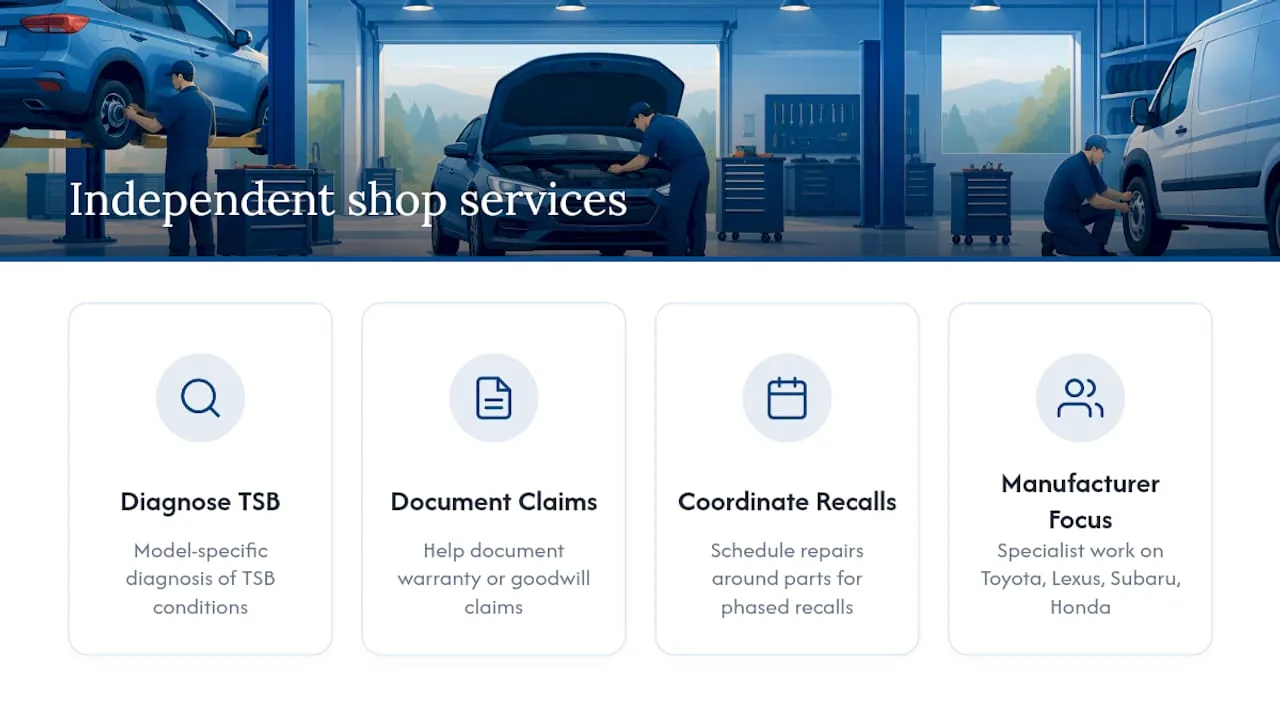
An independent shop with model-specific experience can diagnose the conditions described in a TSB, help you document warranty or goodwill claims, and coordinate scheduling around parts availability for phased recalls. Bring your VIN, any recall notice you’ve received, your service history, and a written description of symptoms to the appointment. Integrityautoinc’s automotive repair tips blog covers additional maintenance context for owners preparing for a visit, and its specialist focus on Toyota, Lexus, Subaru, and Honda vehicles means technicians see the same manufacturer bulletins repeatedly across similar models.
Get Diagnostics or Recall/TSB Help From Integrityautoinc
An independent auto repair shop can serve as an alternative to a dealership visit for Toyota, Lexus, Subaru, and Honda owners seeking straightforward answers on recalls or TSBs without the wait times typically experienced at factory service departments. Such shops typically handle diagnostics, manufacturer recommended scheduled maintenance, and follow-up repairs associated with TSB diagnoses, often employing technicians certified by ASE and using OEM parts.
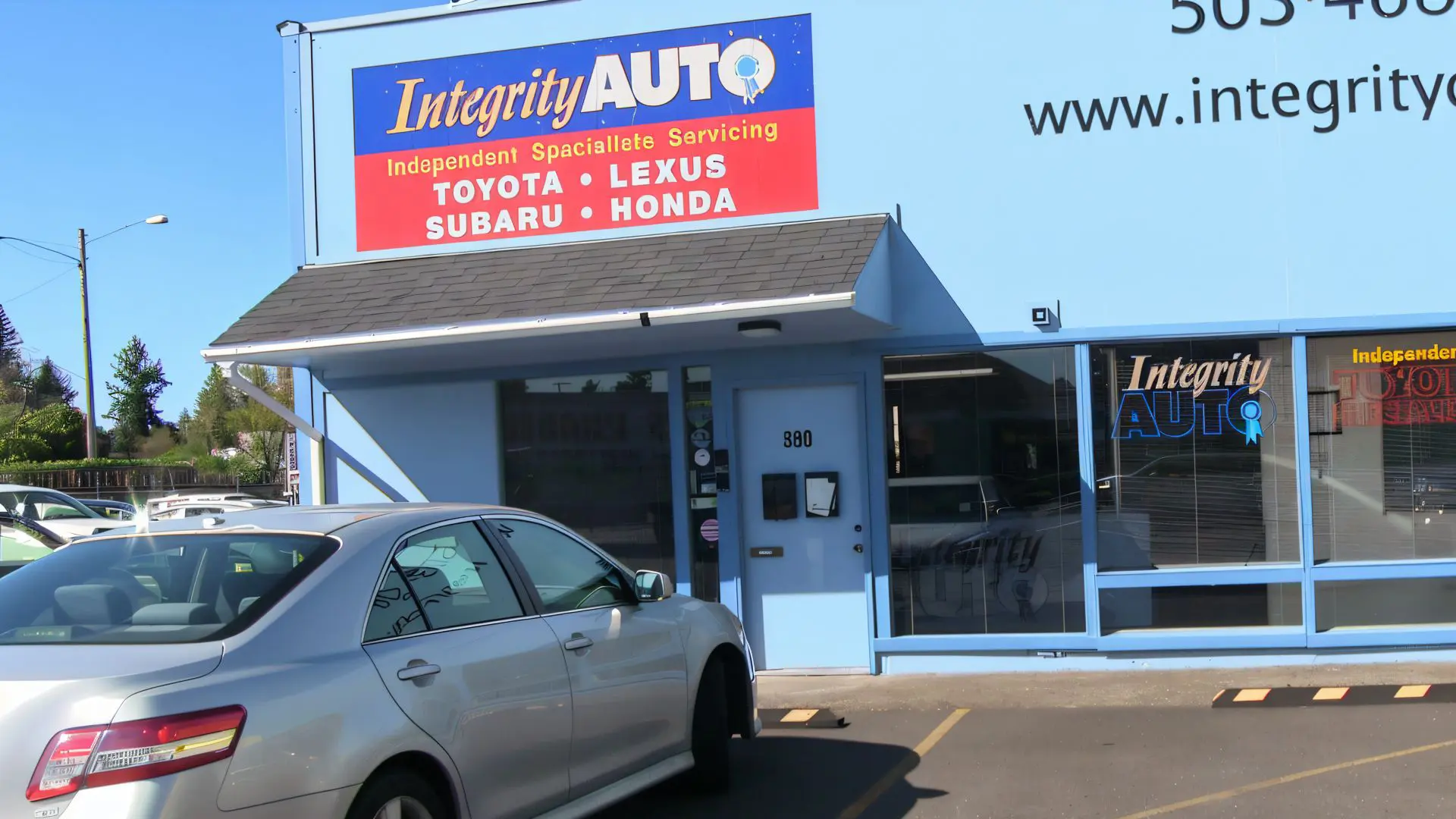
Bring your VIN, any recall notice you’ve received, and a description of the symptoms you’re seeing. If you drive a Toyota, the Independent Toyota Service and Repair page is the fastest way to see what’s involved and request an appointment. Owners of other supported makes can review services on the Honda Services & Repair page or the Subaru Service and Repair page to schedule diagnostics or a full inspection.
Sources
- Check for Recalls: Vehicle, Car Seat, Tire, Equipment | NHTSA
- eCFR :: 49 CFR 577.5 – Notification pursuant to a manufacturer’s decision.
- Manufacturer Communications | NHTSA
- Consumer Alert: Repair your safety recalls now | NHTSA
These are primary government sources, not secondary summaries, so they’re the most reliable place to confirm your vehicle’s exact status.
FAQ
What Are the Three Types of Recalls?
Recalls generally fall into safety defect recalls, noncompliance recalls (where a vehicle fails to meet a federal safety standard), and equipment recalls covering parts like tires or child car seats. All three require the same free remedy: repair, replacement, or refund, under federal rules.
Do Dealerships Fix Service Bulletins for Free?
Not automatically. A TSB repair is free only if your vehicle is still under factory warranty or the manufacturer approves goodwill coverage; otherwise, you pay for the repair like any standard service.
Does a TSB Turn Into a Recall?
Yes, when a safety defect determination is made, often triggered by complaint patterns, investigations, or data showing real safety risk. Manufacturers must then report the defect and notify owners under 49 CFR 577.5, converting what was informational guidance into a mandatory free repair.
Can a Dealership Refuse to Fix a Recall?
A dealership generally cannot refuse to perform an open safety recall repair on an eligible vehicle. If one does, document the interaction and file a complaint with NHTSA or call the Vehicle Safety Hotline at 888-327-4236 for enforcement help.


