A vibrating steering wheel most often points to a tire or wheel problem, such as imbalance, a bent rim, or an out-of-round tire. If the shaking happens only while braking, warped rotors or a sticking caliper are the likely cause. Continuous vibration paired with humming usually means a worn wheel bearing or a suspension component that needs inspection.
- Check now: tire pressure, visible sidewall bulges, and whether lug nuts feel loose (only while the car is parked).
- Note the pattern: what speed it starts at, whether it happens under braking, and any recent pothole hits or tire work.
- Get it inspected soon even if it seems minor. Most causes are routine repairs, but a few (bearing failure, loose lug nuts, a failing tie rod) can turn into safety hazards fast.
Key Takeaways
Steering wheel vibration almost always traces back to one of five systems: tires and wheels, brakes, suspension and steering, wheel bearings, or drivetrain components, and the timing of the shake tells you which one.
| Point | Details |
|---|---|
| Speed-sensitive shake | Vibration that builds between 45 and 65 mph and fades usually means tire imbalance or a bent wheel. |
| Braking-only vibration | Shaking that appears only while slowing down, with a pulsing brake pedal, points to warped rotors. |
| Continuous vibration plus humming | This pattern usually means a worn wheel bearing and should not wait for a routine appointment. |
| Road-force balancing catches more | Standard balancing misses some out-of-round tires; road-force balancing adds about $20 to $30 per wheel and finds them. |
| Integrityautoinc’s inspection approach | A road test plus complimentary multipoint inspection documents findings on tires, brakes, and suspension before repairs begin. |
Table of Contents
- Steering Wheel Vibration at Highway Speed: Tires and Wheels
- Vibration When Braking: Warped Rotors and Sticking Calipers
- Worn Suspension and Steering Parts: Tie Rods, Ball Joints, and Bushings
- Wheel Bearings, CV Axles, and Drivetrain Vibration
- Matching the Timing of Steering Wheel Vibration to Its Cause
- What a Professional Vibration Inspection Involves and What It Costs
- Driver Checklist Before Your Shop Visit
- Why an Independent Specialist’s Diagnostic Process Matters
- The Role of Engine and Transmission Mounts
- How Road Surface Conditions Affect Steering Wheel Vibration
- Why Regular Inspections Prevent Steering Wheel Vibration Problems
- How Tire Type and Tread Wear Patterns Affect Vibration
- How Alignment Problems Contribute to Steering Wheel Vibration
- Driveshaft and CV Joint Damage as a Vibration Source
- Get Your Steering Wheel Vibration Diagnosed the Right Way
- Sources
- FAQ
Steering Wheel Vibration at Highway Speed: Tires and Wheels
Tire and wheel problems cause the majority of steering wheel vibration complaints, and they almost always show up in a specific speed range. An imbalanced tire typically starts shaking the wheel at highway speeds, then eases off or changes character as speed climbs higher. Tire imbalance is the single most common cause of highway-speed vibration, and it happens when weight is unevenly distributed around the tire and wheel assembly, sometimes because a wheel weight fell off, sometimes from normal tread wear.
An out-of-round tire or a bent rim feels different. Instead of a smooth, building shake, drivers often describe a thump or pulse that repeats with every wheel rotation, and it tends to persist across a wider speed range rather than peaking at one point. This distinction matters for diagnosis:
- Smooth, speed-sensitive shake that builds and fades: classic imbalance.
- Rhythmic thump at all speeds: suspect a bent rim or flat-spotted tire.
- Vibration that started right after a pothole or curb strike: check for a bent wheel or sidewall bubble immediately.
- Vibration that appeared after a tire rotation or new tire install: often a balance or torque issue that a quick shop visit resolves.
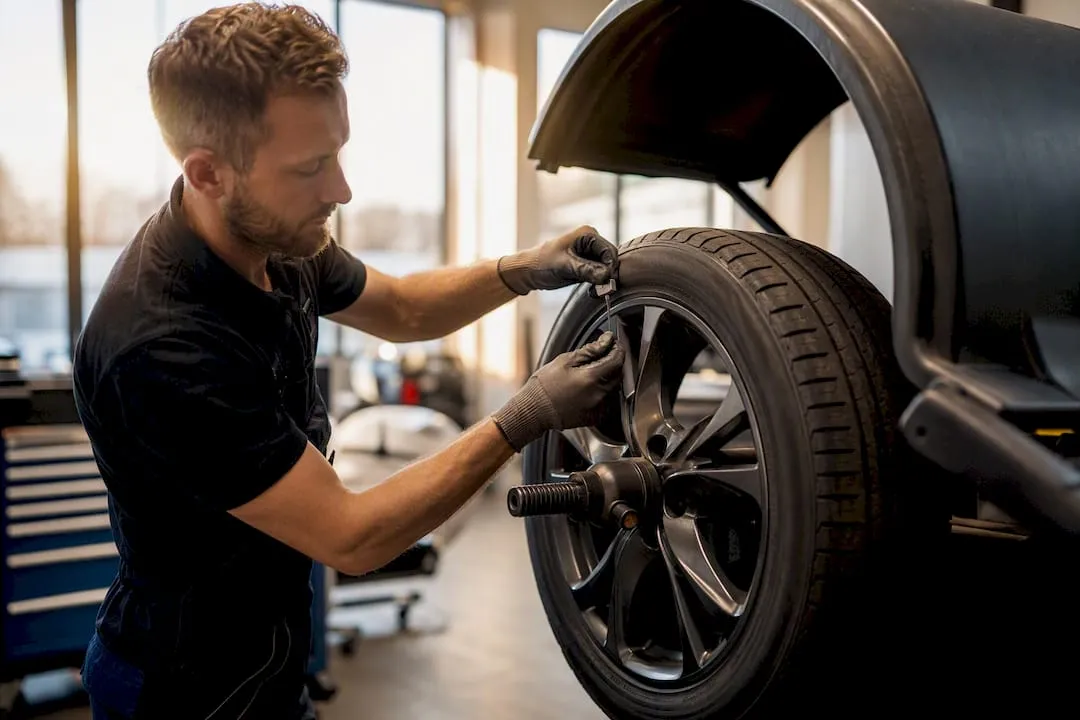
A standard spin balance corrects most imbalance problems, but it spins the tire in isolation and can’t catch every defect. Road-force balancing presses a loaded roller against the tire to simulate driving weight, which reveals out-of-round tires that a spin balance simply cannot detect. It costs a moderate additional amount per wheel more than standard balancing.
Pro Tip: If your shop balances the tires and the vibration comes right back within a week or two, ask specifically for a road-force balance before anyone starts talking about suspension parts. It catches problems standard balancing misses.
Vibration When Braking: Warped Rotors and Sticking Calipers
Vibration that appears only when you press the brake pedal, and disappears when you let off, points almost every time to the braking system rather than the tires. Uneven rotor thickness or heat spots from deposits create a pulsing sensation felt through both the steering wheel and the brake pedal simultaneously, which is the telltale sign separating this from a tire issue.
Watch for these clues:
- Vibration shows up only while slowing down, not while cruising or accelerating.
- The brake pedal pulses in your foot at the same time the wheel shakes.
- The shaking gets worse the harder you brake or the longer you’ve been braking.
- A grinding or squealing noise accompanies the pulsing, suggesting worn pads on top of the rotor issue.
Repair options depend on how much material the rotor has left. Resurfacing can restore a flat, even braking surface, but thinner rotors often need full replacement instead, and leaving the problem alone can accelerate wear on suspension components and tires. A closer look at why cars shake when braking covers the caliper side of this problem in more depth.
Worn Suspension and Steering Parts: Tie Rods, Ball Joints, and Bushings
Suspension and steering wear tends to announce itself at low speeds first, often as a shimmy that shows up around parking lot speeds or during slow turns, well before it becomes a highway problem. Play or looseness in the steering feel typically appears before the vibration turns severe, which is why catching it early matters.
Signs worth flagging to a technician:
- A shimmy or wander at low speed that wasn’t there a few months ago.
- Clunking noises over bumps or when turning the wheel.
- Uneven tread wear on one or both front tires.
- Looseness you can feel when the front end is jacked up and the wheel is grabbed at 12 and 6 o’clock positions.
Shops confirm these issues with hands-on checks: grabbing and rocking the wheel to feel for play in the tie rod ends, prying against ball joints and control arm bushings to look for movement, and watching the wheel while a second technician turns the steering wheel back and forth. Replacing any of these parts almost always requires a follow-up wheel alignment to keep the new components from wearing unevenly.
Wheel Bearings, CV Axles, and Drivetrain Vibration
A failing wheel bearing produces vibration that doesn’t fade with speed the way tire imbalance does, and it usually comes with a humming or growling noise that gets louder as speed increases. The noise and vibration change when you shift weight side to side, which is why technicians use a gentle swerve test on an empty road to confirm bearing wear versus a balance problem.
CV axle trouble shows up differently, usually as vibration that gets worse under acceleration rather than at a steady cruising speed. A cracked or torn CV boot, visible as grease flung around the inside of the wheel well, is often the first physical clue before the vibration even starts.
- Wheel bearing replacement typically runs $200 to $400 per wheel.
- CV axle issues often trace back to a torn boot letting grease escape and dirt in.
- Both problems call for lifting the vehicle and checking for play and roughness by hand.
Matching the Timing of Steering Wheel Vibration to Its Cause
Pinning down when the vibration happens narrows the list of likely causes faster than almost any other clue. Technicians rely on these timing patterns to prioritize their inspection before they even put the car on a lift.
- Vibration only during braking: brake rotors or calipers. Schedule an inspection soon.
- Vibration that builds and fades in a specific speed band, especially 45 to 65 mph: tire imbalance, out-of-round tire, or bent rim.
- Continuous vibration plus a humming or growling noise: wheel bearing. Don’t delay this one.
- Shimmy or looseness at low speed or in parking lots: suspension or steering wear.
Three clues do most of the diagnostic work: whether the vibration is speed-sensitive, whether it only happens during braking, and whether a noise or pull accompanies it. A vibration combined with a pull to one side or grinding noise means you should stop driving and arrange an inspection right away rather than waiting for a routine appointment.
What a Professional Vibration Inspection Involves and What It Costs
A proper shop visit for steering wheel vibration follows a fairly consistent sequence, and asking what’s included before you drop off the car sets the right expectations.
- Road test to reproduce the vibration and confirm the speed, braking, or turning conditions where it occurs.
- Lift inspection of tires, wheels, and visible suspension and steering components.
- Wheel balance check, moving to road-force balancing if a standard balance doesn’t resolve it.
- Rotor runout measurement if braking triggers the vibration.
- Wheel bearing play check and a swerve test if the shaking is constant and accompanied by noise.
- Suspension and steering joint check for looseness in tie rods, ball joints, and bushings.
Costs vary by cause, but representative ranges run from $80 to $120 for a standard tire balance, $100 to $400 for bent wheel repair or replacement, $150 to $400 for tire replacement when a tire is out-of-round, $200 to $400 for wheel bearing replacement, and $250 to $500 for brake rotor work. Delaying repairs often turns a single fix into two, since a warped rotor left too long can accelerate uneven tire wear, and a worn bearing left unchecked can damage the hub. Ask the shop to put its measurements and findings in writing, including before-and-after numbers on runout or balance readings.
Driver Checklist Before Your Shop Visit
A few minutes of observation before you call a shop speeds up an accurate diagnosis considerably.
- Check tire pressure in all four tires and look for visible bulges, cuts, or uneven wear.
- Note the exact speed range where the vibration starts and whether it changes with braking, acceleration, or turning.
- Listen for humming, grinding, or clunking that accompanies the shake.
- Recall any recent pothole hits, curb strikes, or tire/wheel service in the past month.
Pro Tip: Never try to “test” a vibration by driving faster or braking harder to see how bad it gets. If the shaking is severe, pull over safely and call for a tow instead of continuing to drive on it.
Why an Independent Specialist’s Diagnostic Process Matters
Integrityautoinc specializes in Toyota, Lexus, Subaru, and Honda diagnostics, including brake service, wheel alignment, and wheel bearing work. Vibration complaints go through a road test to confirm the exact conditions, followed by a complimentary multipoint inspection covering tires, brakes, and suspension, with findings documented for the customer.
- Road test to reproduce and confirm the vibration pattern.
- Complimentary multipoint inspection across tires, brakes, and suspension.
- Documented findings so repair decisions are based on measurements, not guesswork.
The Role of Engine and Transmission Mounts
Engine and transmission mounts don’t usually cause vibration that shows up specifically through the steering wheel, but a badly worn mount can produce a vibration that feels similar enough to confuse the diagnosis. Mounts hold the engine and transmission in place and absorb the natural vibration an engine produces while running, and when rubber mounts crack or separate, that vibration transfers into the chassis instead of being absorbed.
The key difference is when the vibration shows up. Mount-related shaking tends to appear or intensify at idle, when shifting gears, or under hard acceleration, rather than at a specific highway speed the way tire imbalance does. It’s also often felt more in the floor, seat, or shifter than sharply concentrated in the steering wheel itself. A driver might notice a knocking or clunking sensation when putting the car in drive or reverse, which is a strong hint the mount, not the wheel or tire, deserves a look.
Because the symptoms can overlap with drivetrain and suspension issues, a technician usually rules out tires, brakes, and bearings first, then checks mount condition by watching for excessive engine movement during a controlled rev test with the vehicle in park. Visually cracked, oil-soaked, or separated mounts are usually straightforward to spot on a lift. Replacing a worn mount is a contained repair, but ignoring one for too long can put extra strain on nearby components, including exhaust connections and the transmission linkage, so it’s worth ruling out early if the vibration pattern doesn’t match a tire or brake cause.
How Road Surface Conditions Affect Steering Wheel Vibration
Not every vibration is a sign something is broken. Rough pavement, expansion joints, and rutted highway lanes can all transmit a shake through the steering wheel that has nothing to do with a mechanical fault, and separating road noise from an actual defect is one of the trickier parts of diagnosis for drivers.
The clearest test is consistency. A vibration caused by road texture typically appears on the same stretches of road every time and disappears on smooth pavement, while a mechanical vibration, whether from an unbalanced tire or a worn bearing, follows the car regardless of surface. Concrete highways with regular expansion joints often produce a rhythmic thump that can be mistaken for a bent wheel, especially at higher speeds where the joints come up faster.
Potholes and rough patches also do real damage over time even when they don’t cause an immediate problem. Repeated impacts can knock a wheel weight loose, push a rim slightly out of round, or accelerate wear in tie rod ends and bushings that were already marginal. If a vibration started right after driving through a particularly bad stretch of road, that’s worth mentioning to a technician, since it points toward wheel or suspension damage rather than a gradual wear issue.
Tire construction plays a role here too. Larger, lower-profile tires transmit more road texture directly into the steering wheel than taller sidewalls do, simply because there’s less rubber to absorb small imperfections before they reach the wheel and axle. That’s a normal tradeoff of certain tire sizes, not a defect, but it’s useful context when comparing notes with a technician about what feels normal for a given vehicle.
Why Regular Inspections Prevent Steering Wheel Vibration Problems
Most of the causes behind steering wheel vibration develop gradually. Tire wear evens out or worsens over thousands of miles, wheel bearings lose grease and develop play slowly, and suspension bushings harden and crack over years rather than overnight. That gradual timeline is exactly why routine inspection catches problems before they turn into a vibration a driver can feel.
A complimentary multipoint inspection performed during a routine oil change or scheduled maintenance visit checks tire wear patterns, tread depth, and visible suspension component condition, often flagging early signs of trouble well before they produce a noticeable shake. Catching a tie rod end with slight play, for example, means a straightforward replacement instead of a wheel alignment being thrown off and eating into new tires.
Manufacturer-recommended service intervals for Toyota, Lexus, Subaru, and Honda vehicles typically build in tire rotation and brake inspection at regular mileage checkpoints, and sticking to that schedule does double duty: it maintains warranty compliance and gives a technician recurring opportunities to catch a bearing starting to wear or a rotor developing uneven thickness. Skipping these visits doesn’t just risk vibration; it risks the secondary damage that comes from driving on a worn component for months without anyone checking it.
For drivers who’ve already had one vibration issue resolved, a follow-up inspection at the next service interval is worth requesting specifically to confirm the repair held and nothing nearby was affected. Suspension and steering components work as a system, and a repair to one part occasionally reveals wear in an adjacent part that wasn’t obvious during the first inspection.
How Tire Type and Tread Wear Patterns Affect Vibration
Not all tires respond to imbalance or wear the same way, and the type of tire on a vehicle changes both how vibration feels and how quickly it develops. Performance tires with stiffer sidewalls and lower profiles tend to transmit vibration more directly and noticeably than touring tires built with more flex, which means the same minor imbalance can feel far more pronounced on one tire type than another.
Tread wear patterns also tell a diagnostic story of their own. Cupping, which shows up as scalloped, uneven dips around the tread, usually points to worn shocks or struts rather than a simple balance issue, since it develops when the tire bounces slightly with each rotation instead of maintaining even contact with the road. Wear concentrated on one edge of the tire usually signals an alignment problem, while wear centered down the middle typically means the tire has been overinflated.
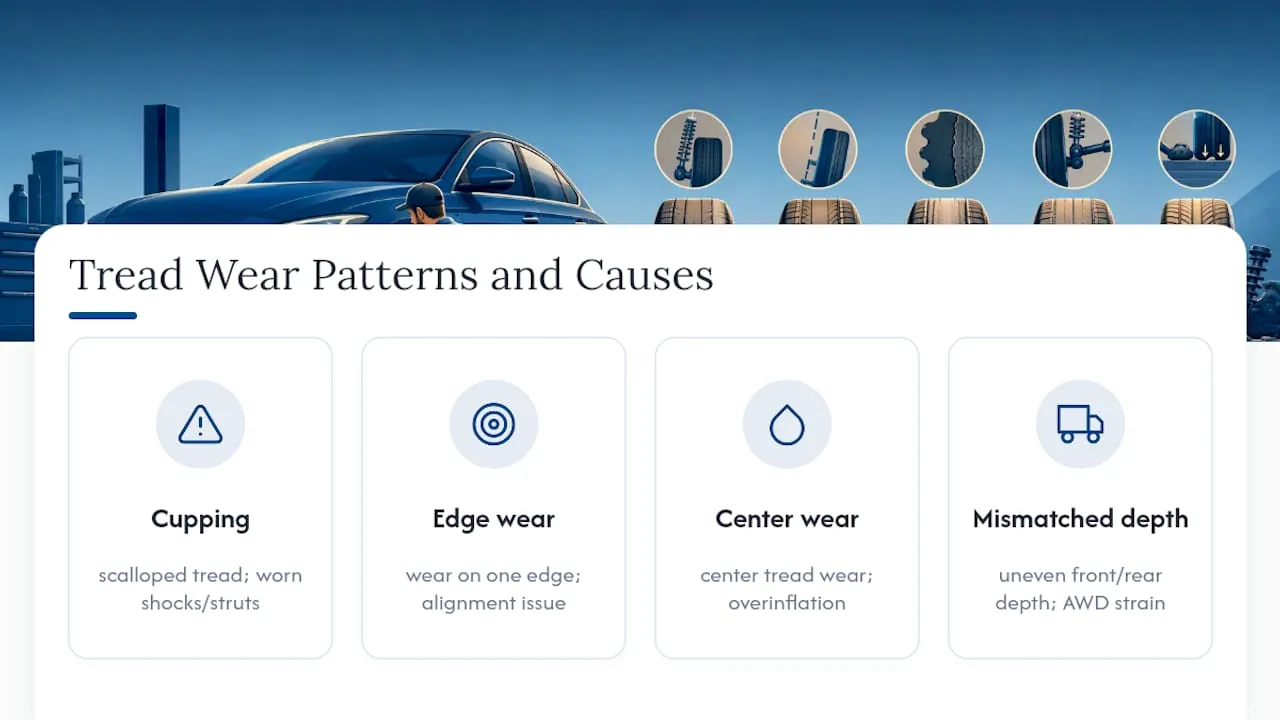
Mismatched tread depth across the four tires, especially between front and rear on all-wheel-drive vehicles like many Subaru models, can also introduce a subtle vibration or drivetrain strain that has nothing to do with balance at all. This is one reason rotating tires on a consistent schedule matters: it evens out wear before it becomes uneven enough to cause a noticeable shake, and it gives a technician a routine opportunity to spot cupping or edge wear before it progresses.
Checking tread wear patterns during a routine inspection catches these problems early, and matching tire type to the vehicle’s intended use, rather than prioritizing appearance alone, reduces how often vibration issues show up in the first place.
How Alignment Problems Contribute to Steering Wheel Vibration
Alignment issues rarely cause vibration directly, but they accelerate almost every other cause on this list, which is why alignment checks show up repeatedly across the diagnostic process. When a vehicle’s wheels aren’t angled correctly relative to each other and the road, tires wear unevenly, and uneven tire wear is one of the more common contributors to a vibration that develops slowly rather than appearing all at once.
A vehicle pulling to one side, combined with a vibration, often means the alignment issue and a wheel or tire problem are compounding each other. Misalignment concentrates wear on specific parts of the tread, which can turn a tire that started out perfectly round into one with an uneven wear pattern that mimics the feel of an imbalance, except that rebalancing it won’t fix the underlying cause.
Alignment problems also stem from the same worn components covered earlier. A bad tie rod end or a sagging control arm bushing changes the geometry of the suspension, throwing off the alignment even if the parts themselves aren’t producing noticeable play yet. That’s the main reason wheel alignment is recommended as a follow-up any time a suspension or steering component gets replaced. Skipping it after a repair risks the new part wearing unevenly, and the vibration returning within a few months.
Driveshaft and CV Joint Damage as a Vibration Source
Driveshaft and CV joint problems produce some of the more distinctive vibration patterns because they’re tied so closely to how hard the drivetrain is working, rather than to speed alone. A damaged or unbalanced driveshaft, more common in rear-wheel and all-wheel-drive vehicles, typically produces vibration that intensifies as the vehicle accelerates and can shift in character depending on load, sometimes felt more in the floor and seat than the steering wheel itself.
CV joints, found on the axles of front-wheel-drive and all-wheel-drive vehicles, tend to announce themselves differently. A worn or damaged CV joint often produces a clicking or popping noise during turns, especially at low speed, before vibration becomes noticeable under acceleration. The torn CV boot that usually precedes joint failure lets grease escape and dirt work its way in, and catching that boot damage during a routine inspection is far cheaper than waiting for the joint itself to fail.
Both problems require a hands-on check that tire and brake diagnostics won’t catch. A technician typically inspects the driveshaft for visible damage or looseness at its mounting points and checks each CV boot for cracks, tears, or grease flung around the inside of the wheel well. Left unaddressed, a failing CV joint can eventually separate entirely, which turns a moderate repair into a more serious and more expensive one, and in rare cases can affect the vehicle’s ability to move under power at all.
Get Your Steering Wheel Vibration Diagnosed the Right Way
Chasing a steering wheel vibration on your own often means guessing between a balance issue, a bad bearing, and a suspension part, then paying for parts that don’t fix the problem. Integrityautoinc’s road test and complimentary multipoint inspection identify the actual cause on Toyota, Lexus, Subaru, and Honda vehicles before any repair is recommended, so the fix matches the diagnosis the first time.
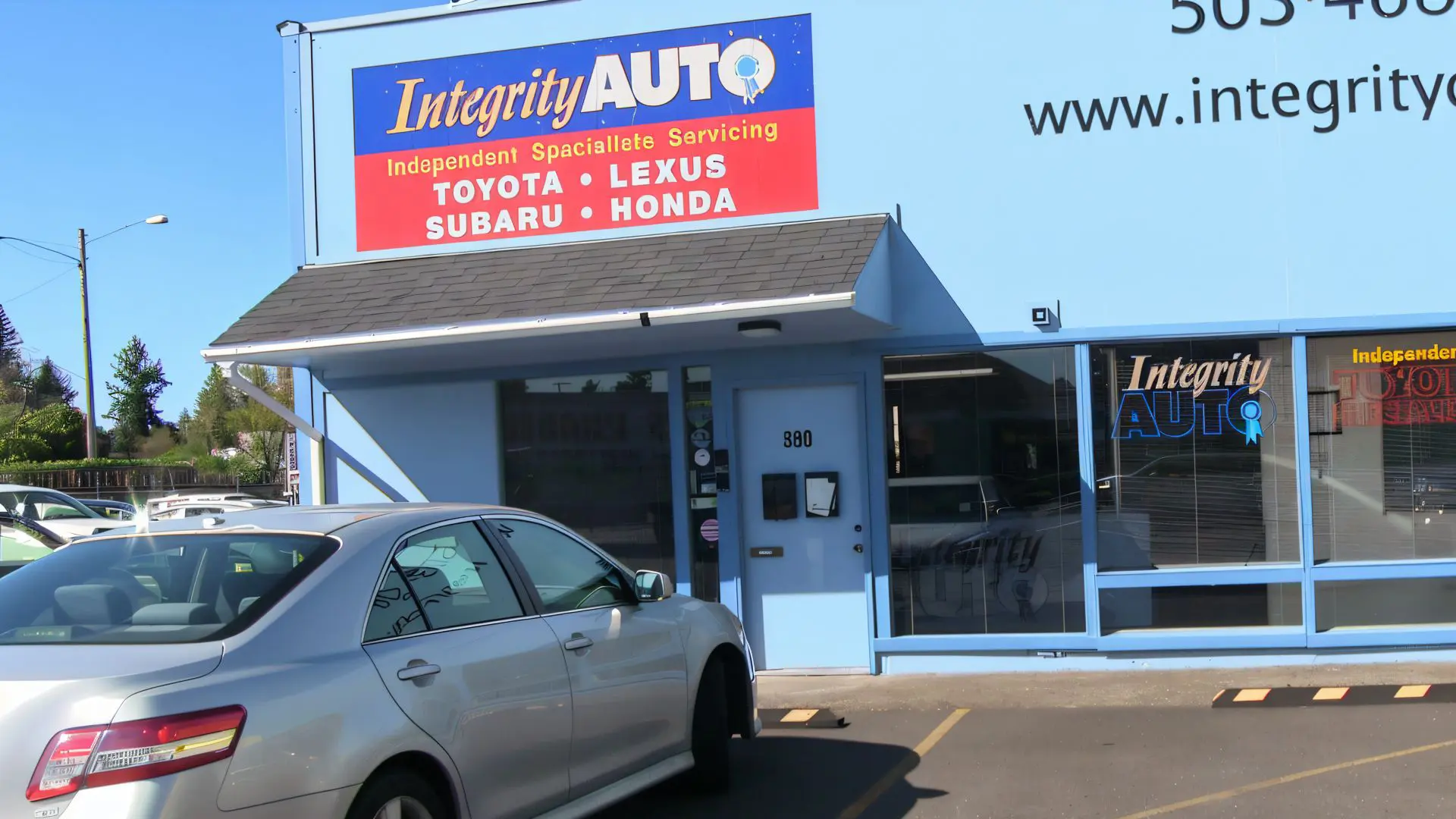
As independent specialists in these four brands, technicians at Integrityautoinc work with the same diagnostic depth as a dealership without the dealership overhead, covering everything from wheel alignment and brake service to manual transmission work and full Toyota repair service. If your steering wheel has been shaking at highway speed or pulsing under braking, schedule a diagnostic inspection to get a documented answer instead of a guess.
Sources
- Diagnosing steering wheel shake and vibration – FCP Euro
- Steering wheel vibrates at highway speed: causes, fixes, costs | The Motor Guy
- Why your steering wheel shakes: 6 possible causes – AAA
- Why is my car’s steering wheel shaking? – Yahoo Autos
FAQ
What would cause a steering wheel to vibrate?
Tire imbalance, a bent rim, warped brake rotors, worn suspension components, or a failing wheel bearing are the most common causes, and the exact timing of the vibration helps narrow down which one.
Why does my steering wheel vibrate at 70 mph?
Vibration at highway speed most often points to tire imbalance or an out-of-round tire, since these problems typically build in intensity as speed increases through the 45 to 65 mph range and beyond.
Is it okay to drive if my steering wheel is shaking?
Mild shaking that appears only at certain speeds is usually safe to drive short distances to a shop, but you should stop driving immediately if the vibration is severe, accompanied by grinding or pulling, or gets noticeably worse.
How can I fix a vibrating steering wheel?
The fix depends on the cause. Tire imbalance requires balancing or road-force balancing, warped rotors need resurfacing or replacement, and worn suspension parts or bearings require replacement followed by a wheel alignment. A road test and inspection, like the one Integrityautoinc performs, pinpoints which repair actually applies.