
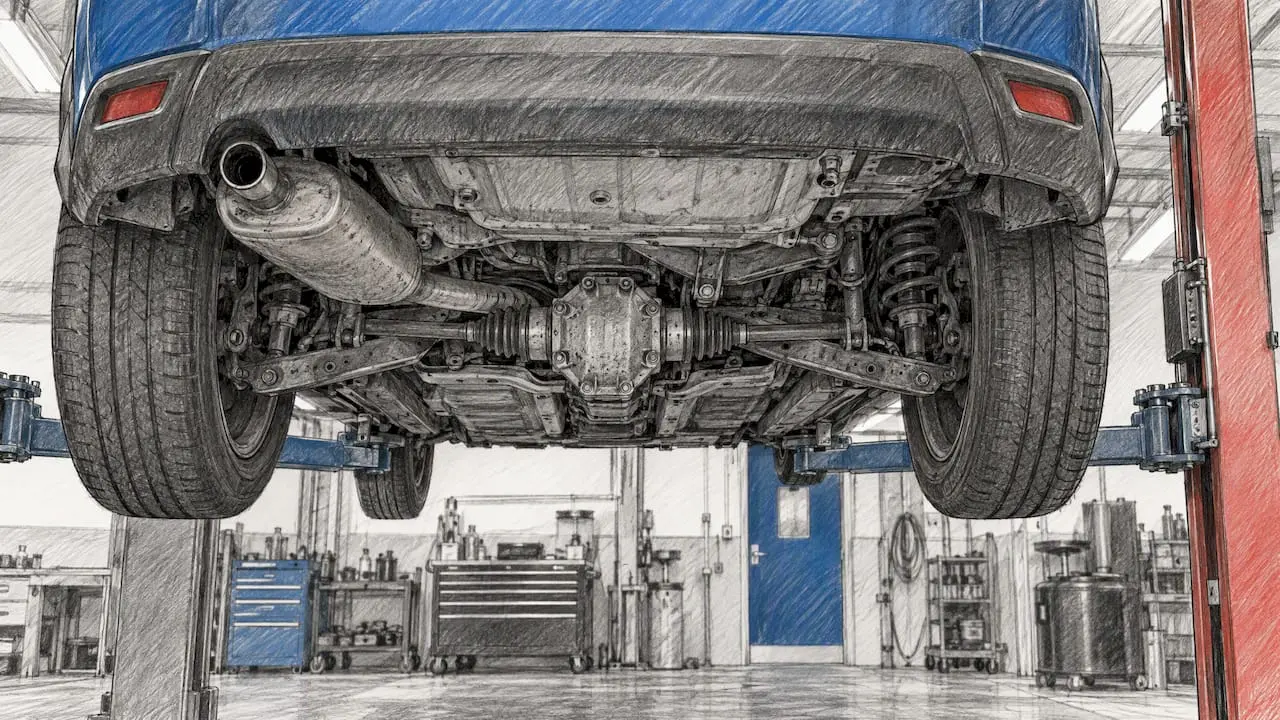
Subaru differential service is the inspection and replacement of the gear oil inside the front and rear differentials. Under Subaru’s current US schedule, the oil is inspected every 30,000 miles or 30 months and replaced every 60,000 miles or 60 months. Towing, mountain driving and other demanding use call for shorter intervals. The sections below cover what the service includes, how the schedule works by model year, what a worn fluid does to the drivetrain, and what to ask a shop before approving the work.
TL;DR
- Subaru’s 2024 and 2025 US schedules call for inspecting front and rear differential gear oil every 30,000 miles or 30 months, and replacing it every 60,000 miles or 60 months.
- The BRZ differs: its rear differential oil is replaced every 60,000 miles or 48 months.
- Subaru states that its schedule is a minimum. Towing, steep terrain, extreme temperatures and hard use justify earlier service.
- Whining, humming, clunking or fluid on the differential housing are reasons to have the oil checked immediately.
- The correct gear oil depends on model and year, so the owner’s manual or the factory service information should decide the fluid, not a generic bottle.
What Subaru differential service includes
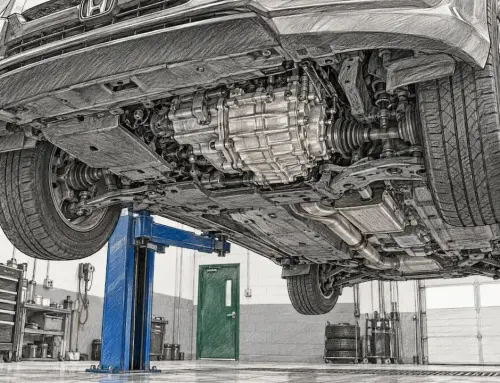
A Subaru with symmetrical all-wheel drive sends power through a front differential and a rear differential. Each is a sealed housing of gears and bearings running in heavy gear oil. That oil keeps metal surfaces apart and carries heat away. Subaru’s maintenance booklet lists inspection of the front and rear differential gear oil as a scheduled item for exactly this reason.
A complete service normally follows this order:
- Inspect the oil level and condition, and look for seepage at the seals and gaskets.
- Drain the old oil from each housing.
- Clean and inspect the magnetic drain plug for metal debris.
- Fit a new gasket or washer.
- Refill with the specified gear oil to the correct level, using one brand and grade only. Mixing gear oils from different manufacturers is discouraged because base oils and additives differ.
The drained fluid is useful evidence. Dark, burnt-smelling oil, a milky look that suggests water, or a fine metallic paste on the magnet each point to a different problem, and a technician can flag it before it becomes a repair bill.
How often Subaru differential fluid should be changed
The factory schedule has changed over the years, which is why owners get different answers from different sources. The figures below come from Subaru’s own documents.
| Model year | Front and rear differential gear oil | BRZ rear differential |
|---|---|---|
| 2017 | Replace every 72 months or 72,000 miles | Every 48 months or 48,000 miles |
| 2020 | Replace every 48 months or 60,000 miles | Every 48 months or 60,000 miles |
| 2024 and 2025 | Inspect every 30,000 miles or 30 months; replace every 60,000 miles or 60 months | Replace every 60,000 miles or 48 months |
Sources: Subaru’s 2017 and 2020 maintenance schedule pages, and the 2024 and 2025 Warranty & Maintenance Booklets.
The booklet for a given car is the reference. Owners who see “inspect” at 30,000 miles are not being told the oil is fine until 60,000. An inspection that finds dark, contaminated or low oil is the trigger for replacement.
Why the schedule is a minimum
Subaru’s own booklets say the listed intervals are minimal and that road conditions, weather, vehicle usage and individual driving habits may require more frequent service. The 2022 booklet specifically names heavy towing and extreme temperatures. For Portland-area drivers, that translates into a few practical cases:
- Regular trips up to Mount Hood or over the Coast Range with a loaded car or roof box.
- Towing a small trailer, boat or camper.
- Frequent gravel and forest-road driving, where heat and water exposure are higher.
- Short, stop-and-go commuting with little time to bring the oil up to temperature.
Owners in these groups often do better with a replacement near the 30,000-mile mark rather than waiting for 60,000. A shop that knows the car and its history can recommend a figure based on what the drained oil looks like.
Choosing the right fluid
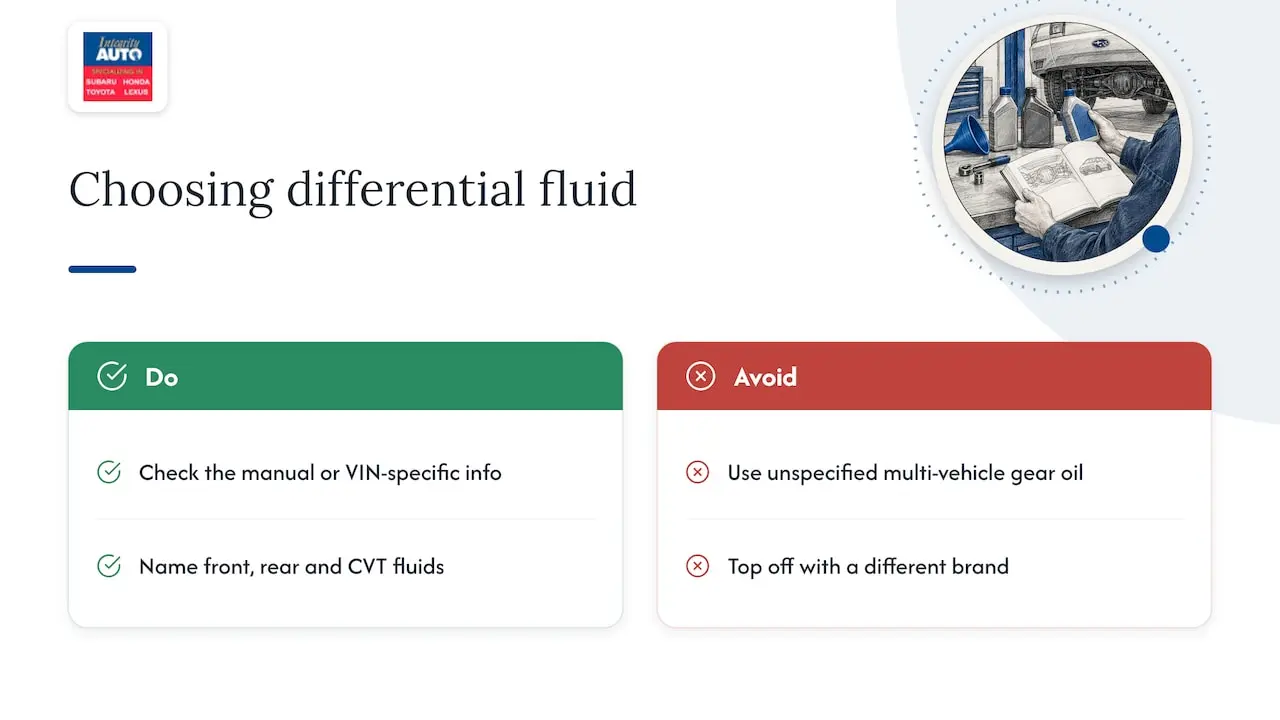
Gear oil for Subaru differentials is generally an API GL-5 grade, but the viscosity and the exact specification vary by model, engine and whether the axle has a limited-slip unit. The front and rear housings do not always take the same oil, and performance models such as the STI have their own requirements. The owner’s manual or Subaru’s service information for the specific VIN settles the question.
Two mistakes are common. One is using a universal “multi-vehicle” gear oil that is close but not specified. The other is topping off with a different brand than the one already in the housing. Either can change how the differential behaves, particularly in the center and limited-slip components.
Note also that the continuously variable transmission (CVT) fluid is a separate service from the differential oil on many Subarus. A shop quote that says “differential service” should name each fluid being replaced, front, rear and CVT, so the owner knows exactly what is covered.
What happens when the service is put off
Gear oil breaks down slowly through heat, shear and moisture. As it ages it lubricates less well, and the gears and bearings take the difference as friction and wear. Mechanical references describe the failure path in similar terms: low or contaminated gear oil can cause a whine, growl or chatter from the axle, and if it continues, pinion and carrier bearings and the ring and pinion gears can be damaged. At that point a fluid change no longer solves the problem, and the repair becomes a bearing or gear replacement.
Signs that the oil should be checked without waiting for the next scheduled visit:
- A whine or hum from the front or rear that rises and falls with road speed.
- Clunking or shuddering during tight, slow turns.
- Oil drips or a wet film around the differential housing, pinion seal or axle seals.
- A burnt, sulfur-like smell after a long drive or tow.
- A rear or front axle that sounds different when accelerating than when coasting.
Noise from the axle area can also come from tires, wheel bearings or driveline components, so a diagnosis should separate these causes before any parts are replaced. Uneven tire wear in particular can strain an all-wheel-drive system, which is why matching tread depth and rotating tires belongs in the same maintenance conversation as differential oil.
Where differential service sits in a Subaru maintenance plan
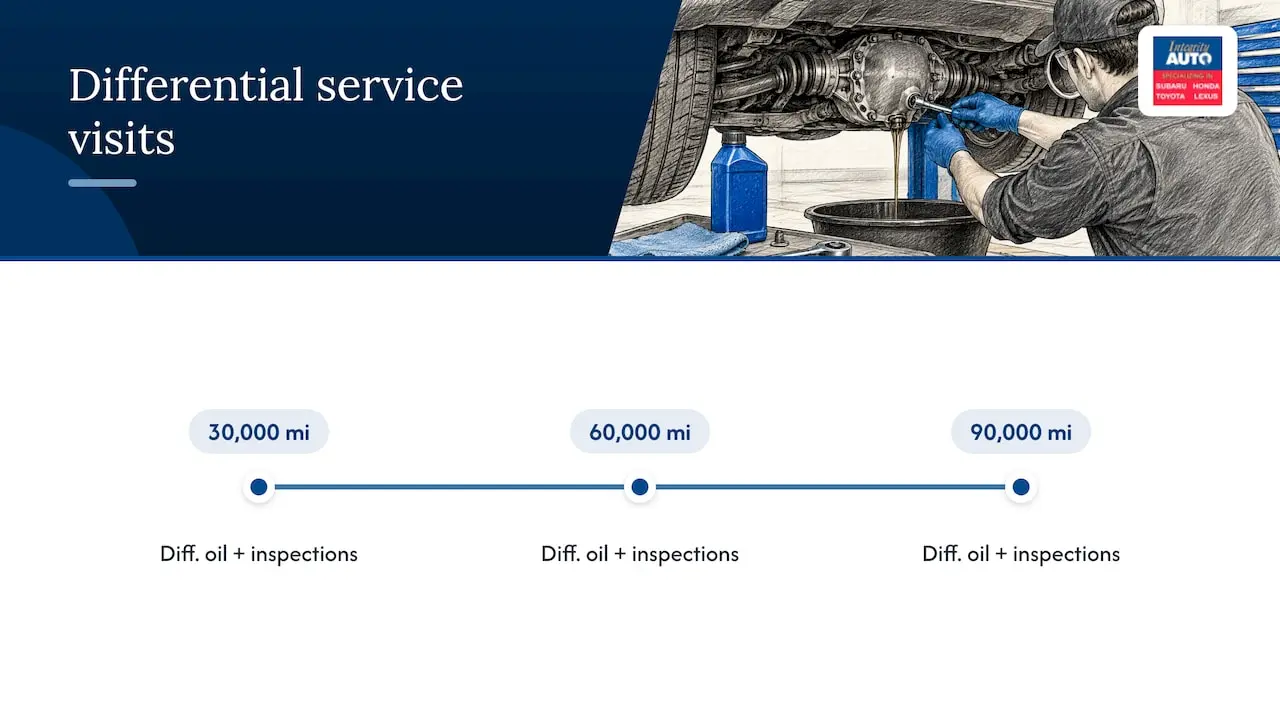
Differential oil is rarely a stand-alone event. It lines up with the 30,000, 60,000 and 90,000-mile service visits, when brakes, fluids, belts and suspension are inspected together. A breakdown of what typically falls into the larger intervals is in this guide to what a Subaru 90k service covers. Combining the differential work with those visits saves a separate trip and gives the technician a full picture of the drivetrain.
Car Talk has noted that Subaru owners should expect fluid changes more often than with a conventional vehicle, a consequence of the all-wheel-drive layout having more gear housings to maintain.
Independent differential service in Portland
Integrity Auto is an independent shop specializing in Toyota, Lexus, Subaru and Honda vehicles in Portland, Oregon. Its Subaru work covers scheduled maintenance at factory intervals, diagnosis, and repairs, with a complimentary multipoint inspection that gives owners a look at fluid condition and leaks before they approve anything. The shop describes its technicians as ASE certified and says it uses OEM parts and backs its work with warranties longer than dealerships typically offer. Owners can see the full range of Subaru work on the Subaru service and repair page.
Anyone unsure whether the differential oil is due can bring the car in for an inspection and ask for the front and rear fluid condition to be reported separately. The shop publishes no fixed price for this service, so a quote based on the specific model is the way to get an exact figure. For a noise that has already started, the diagnosis page explains how estimates and diagnostic charges are handled.
FAQ
Is Subaru differential service necessary?
Yes. Subaru lists front and rear differential gear oil as a scheduled maintenance item, and the housings are sealed, so the oil is never topped up by routine checks. Replacing it protects the gears and bearings from wear, and the cost of the service is small compared with replacing a differential.
How often should differential fluid be changed on a Subaru?
The 2024 and 2025 US schedules call for inspection every 30,000 miles or 30 months and replacement every 60,000 miles or 60 months, with the BRZ rear differential at 60,000 miles or 48 months. Towing, mountain driving or extreme temperatures justify shorter intervals, and older model years follow their own schedules in the booklet for that year.
Is differential fluid the same as CVT fluid?
No. On Subarus with a CVT, the transmission fluid and the differential gear oil are separate fluids with separate intervals and specifications. A quote should list each one by name so nothing is assumed to be included.
What are the signs a Subaru differential needs attention?
Whining or humming that follows vehicle speed, clunking in tight turns, burnt-smelling oil and visible leaks around the housing are the usual signs. Any of them warrants a prompt inspection, because continued driving on low or contaminated oil can damage bearings and gears.
Sources
- Subaru 2024 and 2025 Warranty & Maintenance Booklet
- Subaru 2022 Warranty & Maintenance Booklet
- Subaru 2017 maintenance schedule
- Subaru 2020 maintenance schedule
- Car Talk: Subaru maintenance cost, repairs and schedule
- Rear differential noise causes and checks