Toyota does not publish one universal transmission fluid change interval. The correct schedule depends on your model, transmission type, and driving conditions, so the owner’s manual is the first place to check. Absent a specific manual figure, most independent technicians recommend a drain-and-fill every 30,000 to 60,000 miles, and Toyota itself advises inspection or replacement under special operating conditions as the mileage or time approaches typical medium-term use periods.
TL;DR:
- Most independent technicians recommend changing transmission fluid between 30,000 and 60,000 miles, especially if the vehicle is driven under severe conditions.
- Toyota advises inspecting or replacing transmission fluid based on model specifics and operating conditions like towing or stop-and-go driving, not a fixed mileage.
- CVT fluids typically degrade faster and may need servicing closer to 30,000 to 50,000 miles, while manual transmissions usually require less frequent fluid changes.
- Warning signs like shuddering, delayed engagement, or dark, burnt-smelling fluid indicate the need for immediate inspection and potential fluid change.
- “Lifetime” transmission fluid is a marketing term; real-world driving, especially with severe conditions, warrants proactive maintenance before symptoms appear.
Table of Contents
- What Does Toyota’s Official Transmission Fluid Guidance Say?
- How Often Should Automatic, CVT, and Manual Transmissions Be Serviced?
- When Should You Shorten Your Transmission Service Interval?
- How Do You Check Transmission Fluid and What Does Service Involve?
- What Symptoms Mean Your Transmission Fluid Needs Attention Now?
- What Does “Lifetime” Transmission Fluid Actually Mean?
- Toyota Transmission Service at Integrity Auto
- Sources
- FAQ
What Does Toyota’s Official Transmission Fluid Guidance Say?
Toyota’s position is straightforward: service depends on the transmission installed and how the vehicle gets driven. There is no single mileage figure that applies across the lineup, which is why the factory guidance points owners toward model-specific maintenance schedules rather than a blanket rule.
Where Toyota does get specific is around what it terms special operating conditions. These include frequent towing, heavy hauling, and repeated stop-and-go driving, and Toyota flags a medium-term ownership timeframe as a point to inspect the fluid and consider replacement under special conditions. Model service brochures back this up. The 2025 Camry service brochure, for example, lists automatic transmission fluid inspection tied to specific service intervals rather than a fixed universal number.
To confirm what applies to your vehicle, check:
- The owner’s manual maintenance schedule section for your exact model year
- The model-specific service brochure, which often lists severe-condition items separately
- A dealership or independent shop’s printed maintenance guide for your VIN
How Often Should Automatic, CVT, and Manual Transmissions Be Serviced?
Interval expectations shift meaningfully depending on what kind of transmission sits under the vehicle. A one-size answer does not hold up across a lineup that spans conventional automatics, CVTs, and manual gearboxes.
- Automatic transmissions: Most technicians recommend a proactive drain-and-fill service at intervals commonly considered appropriate for longer-term reliability, particularly for owners planning to keep the vehicle past 100,000 miles.
- CVT-equipped models: CVT fluid tends to degrade sooner under some driving conditions, and community practice among specialists leans toward a tighter 30,000 to 50,000 mile window rather than stretching to the higher end of the automatic range.
- Manual transmissions: Gear oil uses different chemistry than automatic transmission fluid, and change intervals are typically longer, though still model-specific rather than universal.
Volume matters here too. A pan drain and fill on an automatic typically replaces a minority portion of the total fluid, since torque converter fluid and some passages stay untouched. A full flush replaces nearly all of the fluid using dedicated equipment. Owners of manual-equipped vehicles should review manual transmission service details specific to their model rather than assume automatic-transmission intervals apply.
When Should You Shorten Your Transmission Service Interval?
Certain driving patterns push a transmission harder than normal daily commuting, and Toyota accounts for this directly in its severe-condition language. Recognizing these patterns lets you catch fluid breakdown before it becomes a repair bill.
- Frequent towing or hauling heavy loads raises transmission temperature well above normal operating ranges, accelerating fluid oxidation.
- Extended stop-and-go traffic, common in dense urban commutes, keeps the transmission working through repeated shift cycles without the cooling benefit of steady highway speeds.
- Short trips in cold climates prevent the fluid from reaching a stable operating temperature, which can leave moisture and combustion byproducts uncleared.
- Sustained hot-climate driving compounds heat stress on the fluid’s detergent and friction-modifier additives.
Owners who fall into any of these categories should lean toward the shorter end of typical service intervals rather than the more relaxed end, and should have the fluid inspected for discoloration or metallic particles at each service rather than waiting for symptoms to appear.
How Do You Check Transmission Fluid and What Does Service Involve?
Checking fluid condition starts with the vehicle warm and level, since temperature and angle both affect the reading. On models with a dipstick, the process is similar to checking engine oil: pull it, wipe it, reinsert, and read the level and color. Healthy automatic transmission fluid runs a translucent red. Fluid that has turned dark brown, smells burnt, or carries visible metal flecks signals it has already broken down.
Professional service comes in two forms, and the difference matters for both cost and outcome.
- Drain-and-fill: Removes the pan, drains roughly 30% to 40% of the system’s fluid, replaces the filter, and refills with fresh fluid. Toyota outlines this as the standard change procedure, and it carries low risk since it doesn’t disturb pressure in a system that has never been serviced.
- Full flush: Uses dedicated equipment to cycle fluid through the entire system, replacing close to 100% of it. This is typically reserved for cases involving contamination or shudder symptoms, since flushing a transmission with existing internal wear can sometimes dislodge debris that a drain-and-fill leaves undisturbed. A shop weighing this option will often walk through the tradeoffs of a transmission flush before recommending one.
During either service, a technician should inspect the pan for metal debris, check the magnet for shavings that indicate wear, examine the filter, look over cooler lines for restriction, and confirm the pan gasket seats correctly to prevent future leaks.
Pro Tip: Ask the shop to show you the drained fluid before it’s discarded. Comparing its color and smell against fresh fluid is one of the clearest ways to understand exactly how much wear your transmission has accumulated.

What Symptoms Mean Your Transmission Fluid Needs Attention Now?
Certain warning signs point to fluid that has already degraded past routine maintenance and needs prompt inspection.
- A shudder or vibration felt during gear changes, especially around 30 to 45 mph
- Delayed engagement when shifting from park into drive or reverse
- Slipping, where the engine revs without a matching increase in road speed
- Grinding or whining noises during shifts
- A burnt smell coming from the fluid itself
- Fluid that has turned dark brown or black instead of translucent red
- Visible fluid spots or puddles under the vehicle
These symptoms trace back to a specific mechanical chain. As fluid ages, its detergents deplete and varnish begins forming on solenoids and valve-body components. That varnish buildup interferes with solenoid movement and clutch friction, which is why shudder and delayed shifting so often appear together rather than in isolation. If you notice any of these signs, stop towing immediately, avoid heavy loads, and schedule an inspection before continuing normal driving.
What Does “Lifetime” Transmission Fluid Actually Mean?
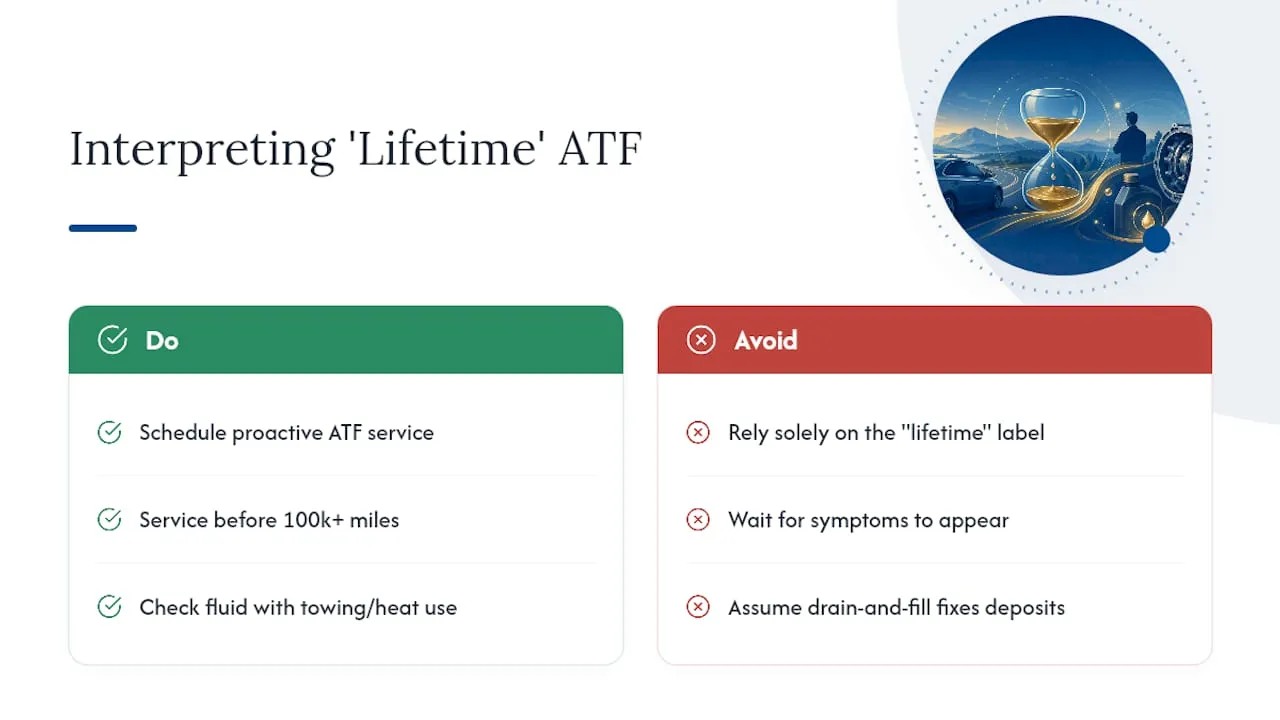
“Lifetime” fluid claims generally describe the expected ownership window or warranty period Toyota designed the fluid to cover under typical conditions, not a literal promise that the fluid never breaks down. Toyota markets ATF WS as a long-interval fluid in many applications, but the wording leaves considerable room for interpretation once real-world heat, towing, and stop-and-go driving enter the picture.
Independent specialists tend to treat that label with caution. Their reasoning centers on prevention: waiting for symptoms to appear often means varnish and solenoid deposits have already formed, at which point a simple drain-and-fill may no longer fully resolve the issue. Scheduled service before symptoms start is what most shops recommend for owners planning to keep a vehicle well past 100,000 miles.
Toyota Transmission Service at Integrity Auto
An alternative to guessing at a “lifetime fluid” label is to have a drain-and-fill, transmission flush when contamination or shudder symptoms warrant it, filter inspection, and pan gasket replacement performed by technicians who specialize in Toyota, Lexus, Subaru, and Honda vehicles.
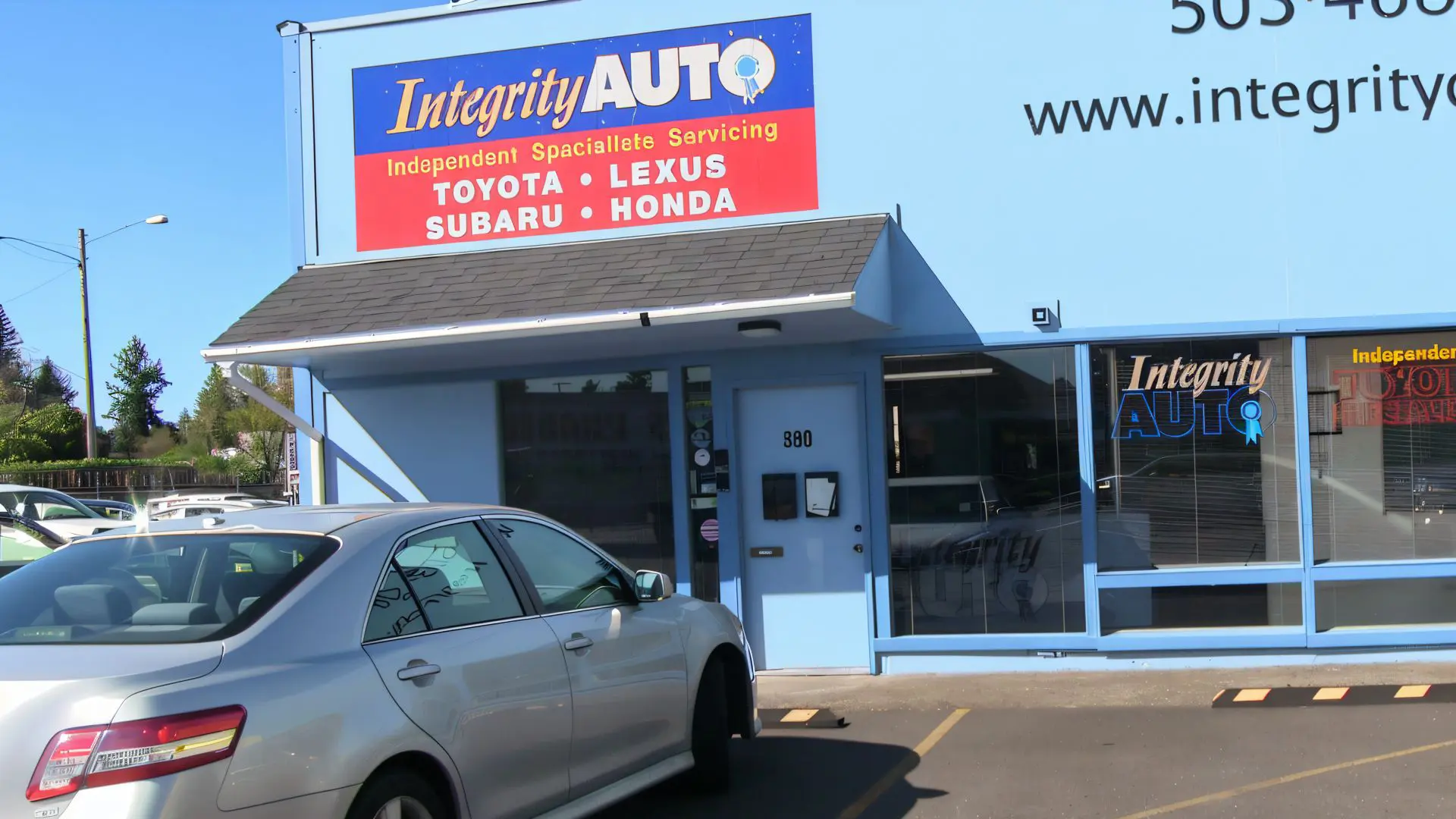
When you schedule a visit, expect a checklist that covers fluid color and condition, confirmation of the correct fluid specification for your exact model, a pan inspection for metal debris, and diagnostic checks if you’ve noticed slipping, shudder, or delayed shifts. Owners with manual transmissions can request gear oil service through the same visit rather than scheduling separately. Review the Toyota repair and maintenance services Integrity Auto offers, then reach out to schedule an inspection before symptoms turn into a larger repair.
Sources
- How Often Should You Change Your Transmission Fluid? | Toyota.com
- Toyota Camry 2025 model service brochure
FAQ
Is 120,000 miles too late to change the transmission fluid?
No, but it increases risk. Fluid that has never been changed after extended use has likely accumulated more varnish and wear debris, so a shop should inspect the pan and fluid condition before deciding between a drain-and-fill and a full flush.
Why do some mechanics say not to change old transmission fluid?
The concern is that flushing very old, degraded fluid in a high-mileage transmission can dislodge built-up debris that was otherwise helping seal worn components, occasionally triggering symptoms that weren’t present before service. This is why many technicians choose a conservative drain-and-fill over a full flush on higher-mileage vehicles with no prior service history.
How long is Toyota transmission fluid good for?
Toyota does not set one universal lifespan. Toyota’s own guidance points to inspection or replacement around 60,000 miles or 72 months under special operating conditions, while many independent technicians recommend a proactive drain-and-fill every 30,000 to 60,000 miles regardless of “lifetime” fluid claims.
My Toyota has 200,000 miles and I’ve never changed the transmission fluid. Should I be concerned?
Yes, that warrants an inspection. At that mileage without any prior service, a shop should check fluid color, smell, and pan debris before recommending whether a drain-and-fill or a more cautious approach is appropriate given the transmission’s condition.