P0420 on a Toyota means the ECM has flagged “Catalyst system efficiency below threshold” for Bank 1. Most cases trace back to a failing oxygen sensor, a small exhaust leak, or an upstream engine problem, not a ruined catalytic converter. The first move is to pull every stored code, not just P0420, and compare live upstream and downstream sensor data before anyone recommends replacing parts.
TL;DR:
- Most P0420 cases are caused by exhaust leaks or failing downstream oxygen sensors, not a damaged catalytic converter.
- Confirming the fault requires simultaneous waveform capture of upstream and downstream O2 sensors at multiple RPMs, not just a code read.
- Replacing sensors or fixing exhaust leaks usually costs less than a catalytic converter, which can range from hundreds to over a thousand dollars.
- Long-term engine issues like misfires or coolant leaks can damage the catalyst and trigger the code repeatedly if not addressed beforehand.
- Proper diagnosis involves checking wiring, testing for leaks, reviewing fuel trims, and verifying ECM updates, not just swapping parts.
Table of Contents
- What P0420 Toyota Diagnostics Actually Measure
- Common Causes Behind a Toyota P0420 Code
- A Step-by-Step Diagnostic Checklist for P0420
- P0420 Repair Options and What They Typically Cost
- Is It Safe to Drive With a P0420 Code?
- What a Qualified Toyota Diagnostic Visit Looks Like
- Getting a P0420 Toyota Diagnosis Done Right
- Sources
- FAQ
What P0420 Toyota Diagnostics Actually Measure
The P0420 code doesn’t come from a single bad reading. It comes from a pattern the ECM tracks over time between two sensors positioned before and after the catalytic converter.
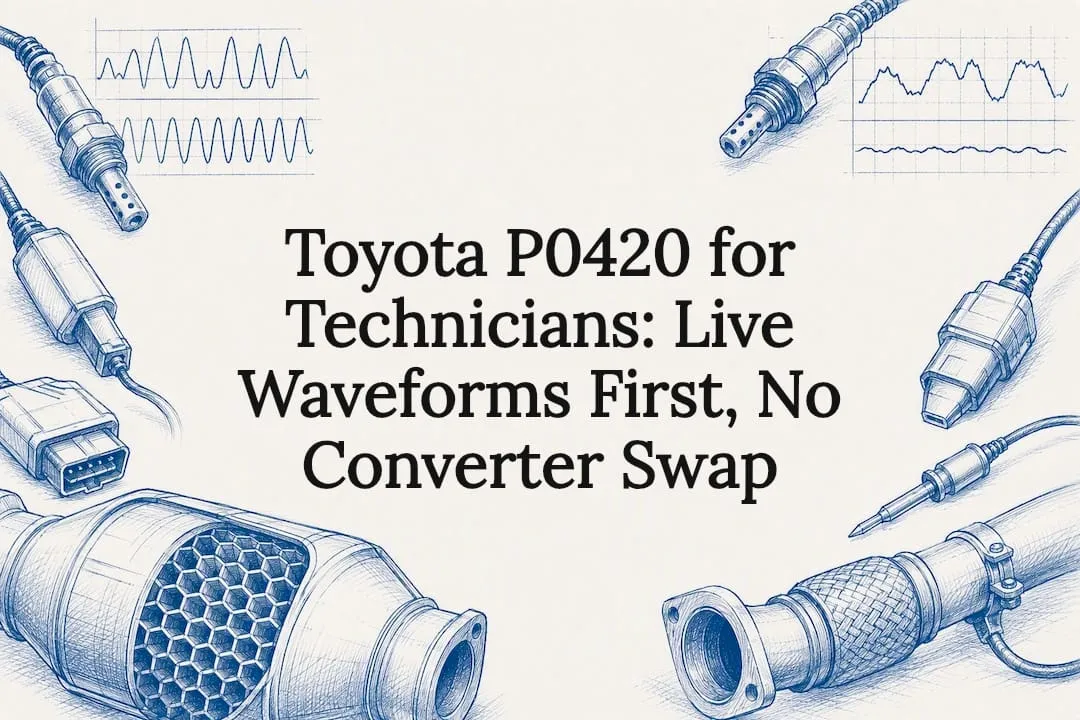
The upstream air/fuel sensor (Bank 1 Sensor 1) reads exhaust gas right as it leaves the engine and switches rapidly, often several times per second, as the fuel mixture cycles between rich and lean. The downstream oxygen sensor (Bank 1 Sensor 2) sits after the catalytic converter and should show a much slower, flatter signal if the converter is doing its job, since a healthy catalyst absorbs and releases oxygen and smooths out those swings.
When the downstream signal starts mirroring the upstream signal’s switching pattern, the ECM interprets that as lost oxygen-storage capacity in the catalytic converter and sets the code. A few things affect when you’ll actually see it:
- The ECM needs a completed drive cycle with the catalyst monitor marked “ready” before it will confirm the fault.
- A single failed test usually sets a pending code; a second confirms and triggers the check-engine light.
- Because the check spans multiple drive cycles, a persistent P0420 typically reflects a recurring underlying condition rather than a one-time glitch.
Common Causes Behind a Toyota P0420 Code
Working through causes in order of likelihood and repair cost saves time and money. Here’s the priority order most independent shops use:
- Exhaust leaks between the upstream sensor and the converter. A pinhole leak, a cracked manifold, or a blown flange gasket lets outside air skew the downstream reading, mimicking catalyst failure.
- A failing downstream O2 sensor (Bank 1 Sensor 2). Sensors degrade with age and heat cycling, and a slow or lazy response reads exactly like a dying converter.
- Upstream A/F sensor drift. A sensor that’s slow to respond throws off the entire fuel-trim calculation the ECM relies on.
- Genuine catalytic converter degradation. Age, sustained overheating, or contamination from oil or coolant can permanently damage the substrate.
- Engine faults that damage the converter over time. Misfires, oil consumption, coolant leaks into the combustion chamber, and extreme fuel trims all attack the catalyst from the inside.
- Wiring, connector corrosion, or a failing heater circuit on either sensor, which can produce a false reading even when the sensor itself is fine.
Toyota V6 engines using the 2GR-FE, common in the Camry and RAV4, have a known issue where the downstream sensor’s heat shield chafes its wiring harness, causing a P0420 that a sensor swap alone won’t fix.
A Step-by-Step Diagnostic Checklist for P0420
Skipping steps is how good catalytic converters get replaced unnecessarily. A methodical sequence keeps that from happening.
- Scan for every code, not just P0420. Companion codes like P030x (misfire), P0171/P0174 (system too lean), or P0135 (O2 heater circuit) point straight at the real cause and should be recorded along with freeze-frame data.
- Confirm readiness monitor status. Know the drive-cycle conditions your scan tool requires before clearing anything, or you’ll chase a code that never gets a fair retest.
- Graph upstream and downstream O2/A-F signals at the same time, both at a steady 2,500 RPM and during a steady highway cruise, watching for the mirroring pattern that confirms lost catalyst buffering.
- Inspect Bank 1 Sensor 2 wiring and connectors for chafing or corrosion, especially on V6 Camry and RAV4 models with known heat-shield wear points.
- Smoke-test or soap-test the exhaust joints between the upstream sensor and the converter to rule out leaks that dilute the downstream reading.
- Check short-term and long-term fuel trims (STFT/LTFT). Trims outside a normal range point to an upstream vacuum or fuel-delivery problem that needs fixing before any sensor or converter gets replaced.
- Look up model-specific TSBs or ECM software updates before buying parts. Some Toyota P0420 complaints trace back to ECM calibration sensitivity rather than hardware failure.
Pro Tip: A single snapshot reading rarely tells the full story. Capturing the upstream and downstream waveforms together, and reviewing STFT/LTFT at both idle and 2,500 RPM, is what separates a confirmed catalyst failure from a wiring or fuel-trim problem wearing a catalyst-failure costume. A skilled technician using a professional-grade scan tool applies this same logic when reading ECU data for performance tuning.
P0420 Repair Options and What They Typically Cost
Repair cost depends entirely on which cause the diagnostic checklist actually confirms. Guessing first is the single most expensive mistake owners make with this code.
- O2 or A/F sensor replacement resolves the code when the sensor itself has drifted or failed. Downstream oxygen sensors fail more often than catalytic converters do, and OEM sensors generally run higher than aftermarket equivalents, though aftermarket quality varies widely by brand.
- Exhaust leak repairs, including gasket and flange replacement, are often the cheapest fix on the list and resolve a surprising share of P0420 cases without touching a sensor or the converter at all.
- Engine repairs that protect a new catalyst matter more than most owners expect. Fixing ignition coils, worn spark plugs, or dirty injectors before replacing hardware prevents a brand-new converter from failing again within months.
- Catalytic converter replacement costs the most, and prices vary widely between OEM direct-fit units and quality aftermarket converters, with the total landing anywhere from the high hundreds to over a thousand dollars depending on the vehicle and part choice.
Replacing only the downstream sensor without ruling out an upstream leak or engine fault is a common shortcut that leads to repeat codes within weeks. A meaningful share of Toyota P0420 cases resolve with sensor replacement alone, which is exactly why the diagnostic order above starts cheap and works upward, rather than jumping straight to the converter.
Is It Safe to Drive With a P0420 Code?
A P0420 alone rarely causes sudden power loss or stalling. Most Toyotas keep driving normally with the code active, though the underlying cause can still be urgent in some cases.
- Severe, sustained misfires or a heavily clogged catalytic converter can restrict exhaust flow and cause real drivability problems, not just a warning light.
- An active or pending P0420 commonly causes a failed emissions test once the catalyst monitor is checked, since the test specifically evaluates the readiness status the code affects.
- Long highway trips are usually fine with a routine P0420, but a rotten-egg smell, visible smoke, or a rough idle alongside the code point to a more urgent issue that deserves a same-week diagnostic visit rather than a wait-and-see approach.
What a Qualified Toyota Diagnostic Visit Looks Like
Confirming a P0420 root cause takes equipment most driveways don’t have. A qualified shop captures upstream and downstream waveforms simultaneously, checks fuel trims at multiple RPM ranges, smoke-tests the exhaust path, and physically inspects wiring at Bank 1 Sensor 2, the spot most prone to chafing on certain V6 models.
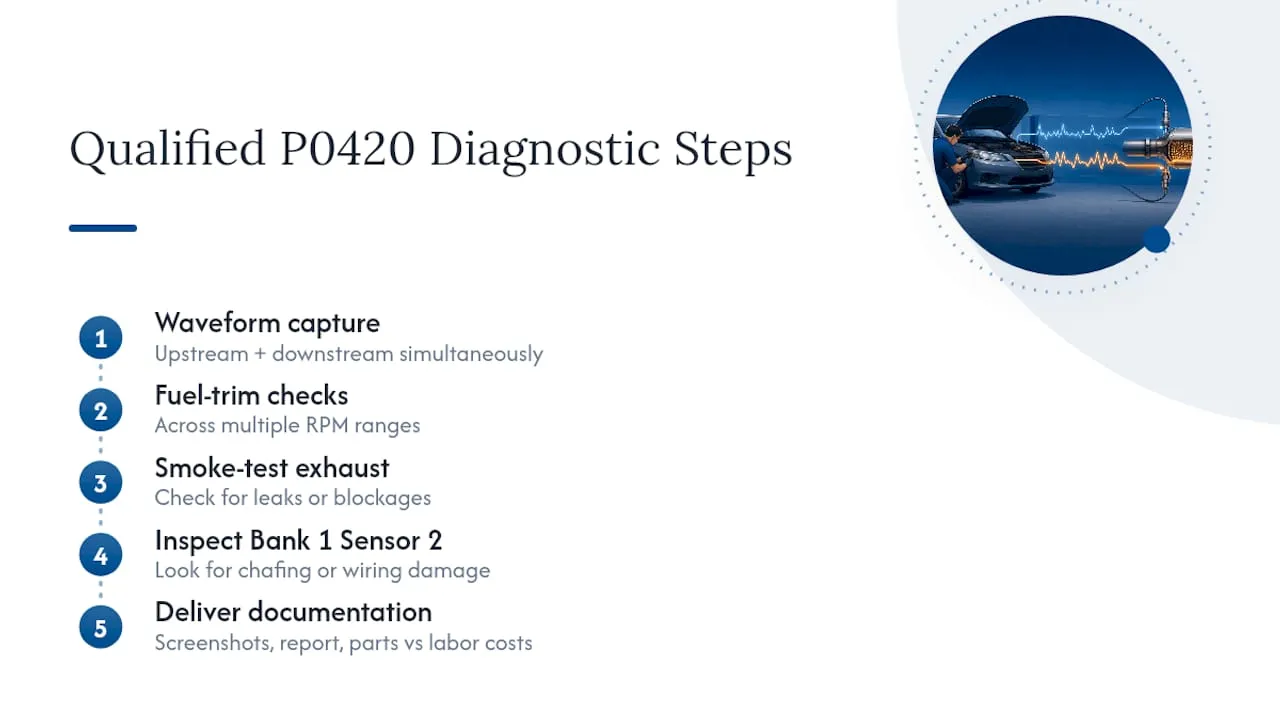
That inspection regularly turns up wiring damage that a code reader alone would never catch, along with ECM calibration issues that a software update resolves without replacing a single part. When you bring a Toyota in for a P0420 code, ask for the waveform screenshots, a written diagnostic report, and a cost breakdown that separates parts from labor. That level of documentation is the difference between a shop that’s confirming the fault and one that’s guessing.
Getting a P0420 Toyota Diagnosis Done Right
Guesswork on a P0420 wastes money in both directions: a sensor swap that doesn’t fix a wiring fault, or a converter replacement on a car that only needed an exhaust gasket. A full diagnostic sequence, live waveform capture, fuel-trim analysis, smoke testing, and wiring inspection should be run before recommending any parts, which is the difference between a confirmed fix and a costly guess repeated twice.
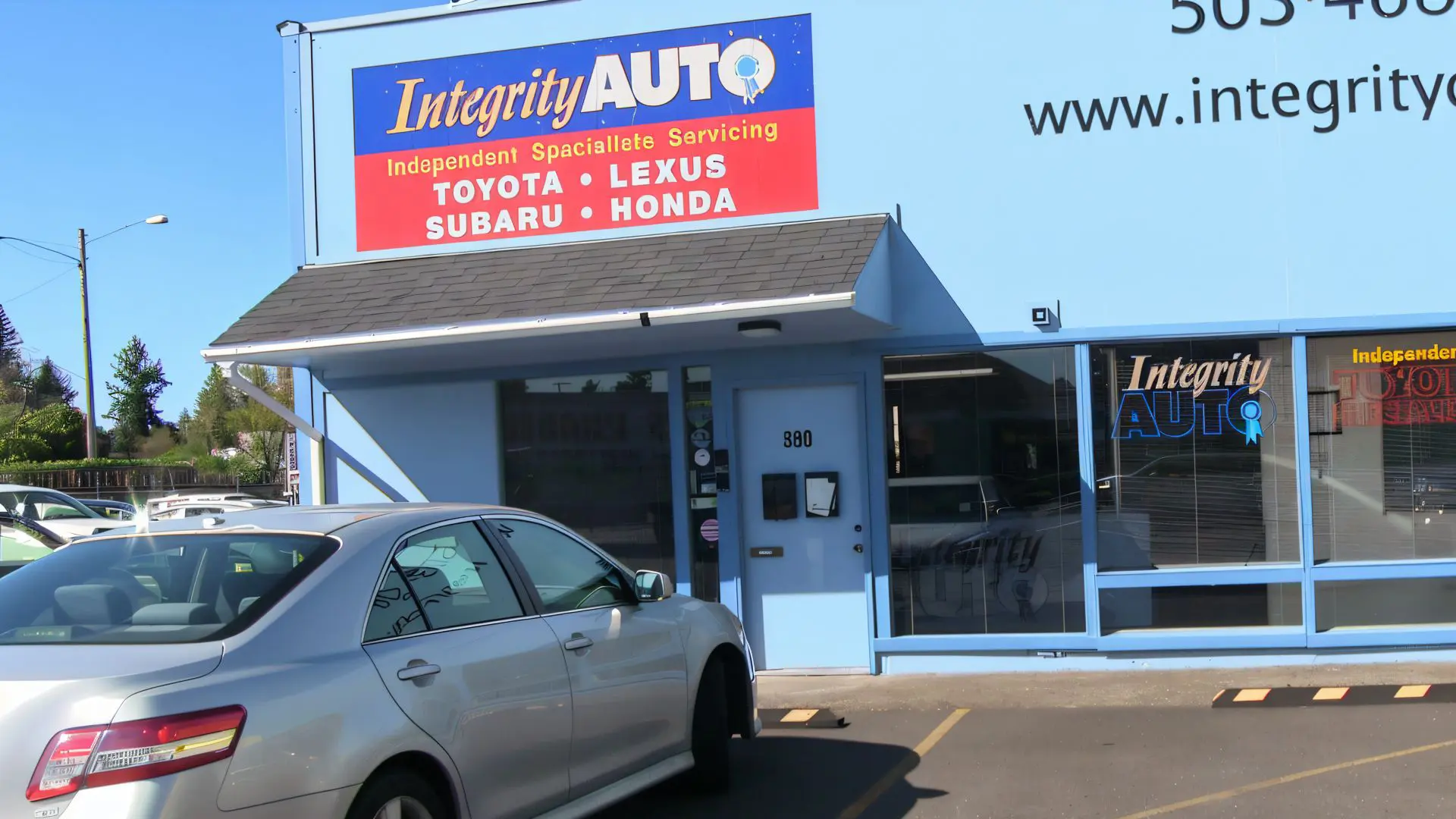
Independent Toyota, Lexus, Subaru, and Honda specialists treat every P0420 visit as a diagnosis first, not a parts sale. Bring your VIN and any prior scan data if you have it; a full scan, waveform printouts, and a written estimate that separates sensor, exhaust, and converter costs can help you understand what you are paying for and why. If the code points to sensor failure, the Toyota oxygen sensor page covers what that repair involves. If a leak or converter issue is confirmed, the exhaust system leaks and catalytic converter pages outline the repair paths and what OEM versus aftermarket parts mean for cost and warranty. Start with a Toyota repair service appointment to get the diagnostic scan scheduled and find out exactly what your P0420 code is telling you.
Sources
For deeper technical detail, see the GearFixes catalyst diagnostic protocol and ToyotaSpace’s model-specific P0420 repair guide.
- Gearfixes
- P0420 Code Toyota: Meaning, Causes, Symptoms & How to Fix It – MotorAudit
- P0420 code: What does P0420 mean on a Toyota and is it safe to drive? | OBD2 Code Decoder
FAQ
How do I fix a P0420 code on my Toyota?
Scan for companion codes, confirm readiness monitor status, then graph upstream and downstream O2 signals together to see whether they mirror each other. Fix the cheapest confirmed cause first, usually wiring, an exhaust leak, or a sensor, before considering converter replacement.
How do you fix a P0420 catalyst efficiency code on Bank 1?
Bank 1 issues are diagnosed by comparing the Bank 1 Sensor 1 (upstream) and Bank 1 Sensor 2 (downstream) waveforms during a steady cruise and at around 2,500 RPM. Matching switching patterns confirm reduced catalyst buffering, but wiring damage and exhaust leaks on that bank must be ruled out first.
Which O2 sensor throws a P0420 code?
The downstream oxygen sensor, Bank 1 Sensor 2, is most often responsible, since it fails more frequently than the catalytic converter itself. The upstream A/F sensor can also cause the code if its readings drift.
How much does a P0420 fix cost?
Costs vary sharply by cause. An exhaust leak repair or gasket replacement is typically the cheapest fix, an O2 sensor replacement costs more than a gasket but far less than a converter, and catalytic converter replacement is the most expensive option, ranging from the high hundreds to over a thousand dollars depending on OEM versus aftermarket parts.