A sticking brake caliper fails to release the brake pad after the pedal is lifted, so the pad keeps rubbing on the rotor. The usual signs are a car that pulls to one side, a burning smell, one wheel that is much hotter than the others, and pads that wear out unevenly. The cause is most often corrosion or a seized slide pin or piston. Because the brake keeps generating heat, the problem needs attention quickly.
TL;DR
- Common symptoms: pulling to one side, a burning smell, a very hot wheel, higher fuel use and fast pad wear.
- Typical causes: corrosion on the piston or slide pins, old brake fluid, a collapsed rubber brake hose and a hanging parking brake mechanism.
- A badly binding brake can overheat enough to damage the rotor and wheel hub components and even start a fire. A hot, smoking or burning-smelling wheel means stop driving.
- Repairs range from servicing slide pins to replacing calipers in pairs, plus pads and rotors when they were overheated.
- Penetrating sprays are not a repair. Brake surfaces must stay free of lubricant.
What a sticking brake caliper does
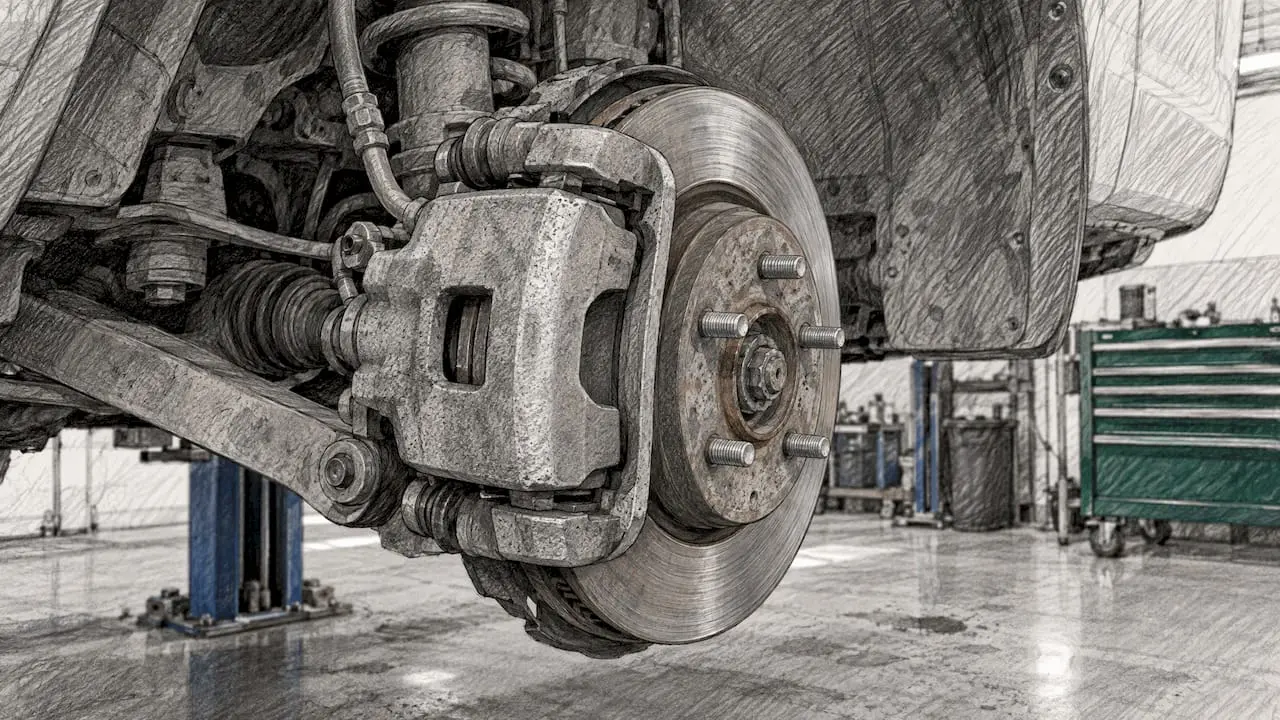
The caliper squeezes the brake pads against the rotor when the pedal is pressed. When the pedal is released, the piston and the sliding hardware should let the pads back off so the rotor spins freely. In a sticking caliper, that release is incomplete or absent. The pad stays in light or heavy contact with the rotor while the vehicle moves, which is why the symptoms look like a parking brake left partly on.
A caliper can stick on one corner or, less often, on several. The condition usually develops gradually, so many drivers notice it only after pads or rotors have already been damaged.
Symptoms of a sticking or seized caliper
The signs below are the ones Haynes lists for a seized brake caliper: pulling to one side, a burning smell, increased fuel consumption, reduced power, faster brake pad wear, and a brake that gets very hot and may smoke.
Pulling and handling changes
If the vehicle drifts toward one side during driving or braking, one front brake may be dragging or may not be releasing evenly. The car can also feel sluggish, as if something is holding it back, because the engine is working against a brake that never fully lets go.
Smell, heat and smoke
A sharp, acrid smell after a drive points to overheated pad material. After a short trip, one wheel may be too hot to hold a hand near while the others are only warm. Smoke from a wheel is an emergency sign. The related guide on what to do about a burning brake smell covers the steps to take before driving again.
Uneven pad wear
A dragging caliper wears one pad faster than its partner, or one side of the car faster than the other. Pad thickness differences between the inside and outside pad on the same wheel are a classic clue. The guide to brake pad wear patterns shows what different patterns mean, and the pad replacement checklist explains how thin is too thin.
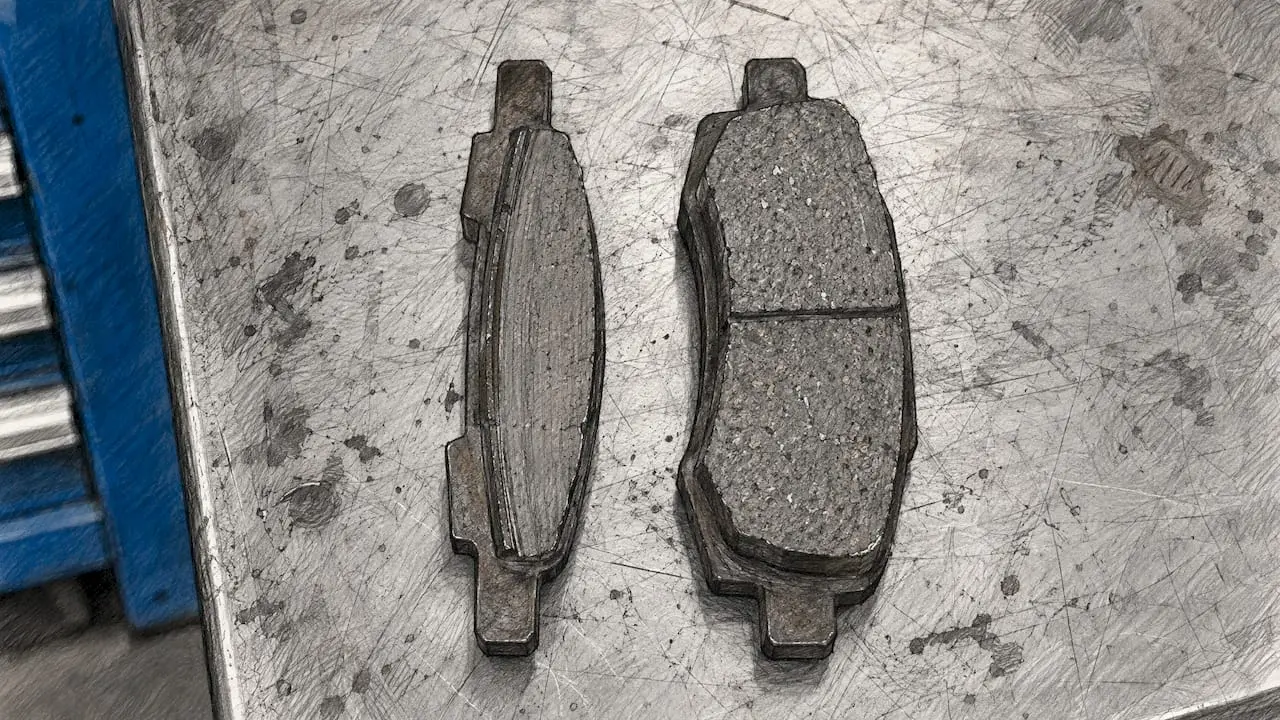
Noise and vibration
A constant light squeal or a grinding rumble from one wheel that does not change with pedal pressure can indicate pad contact that never stops. Heat can also warp a rotor, which then shows up as vibration under braking.
What causes a brake caliper to stick
Corrosion and inactivity
Brake parts sit in road spray, salt and moisture and are rarely looked at between pad changes. Haynes notes that corrosion can build up on the piston or slider pin, particularly in a vehicle that sits unused, and damp conditions can make pads stick to the disc. In the Portland area, wet weather for much of the year makes this a realistic concern for vehicles that are driven only occasionally.
Old brake fluid
Brake fluid absorbs moisture over time. That moisture can corrode the inside of the caliper and the piston bore. Following the fluid-change interval in the owner’s manual helps keep the hydraulic parts clean.
Hoses, lines and hydraulic problems
Not every dragging brake is a bad caliper. A manufacturer technical bulletin on sticking pistons lists residual hydraulic pressure causes: twisted or restricted rubber brake hoses, damaged brake lines, a defective proportioning valve or master cylinder, and other adjustment problems. A hose that has collapsed internally can act like a one-way valve, trapping pressure at one wheel. This is why replacing a caliper sometimes fixes the problem for a day or two before the dragging returns.
Rear parking brake hardware
On rear brakes, the parking brake cable or mechanism can hang up and mimic a seized caliper. The cable is inspected along with the caliper during a proper diagnosis.
Can you drive with a sticking brake caliper?
Short answer: only to get off the road safely or to a repair shop when symptoms are mild, and never with heat, smoke or a strong burning smell. Haynes warns that a badly binding brake can generate enough heat to start a fire and damage the discs and parts connected to the wheel hub.
The safety side is not only about heat. In a 2019 recall notice for school buses, the National Highway Traffic Safety Administration stated that a dragging brake could reduce the ability to stop or slow the vehicle, increasing crash risk, and that thermal damage could trigger the ABS warning light. The vehicle type differs, but the mechanism is the same.
Pull over and arrange a tow when:
- A wheel is very hot or smells of overheating.
- Smoke comes from behind a wheel.
- The car pulls hard enough that steering takes effort.
- The brake pedal feels different from usual, or the ABS light comes on after a long drive.
Allow the brakes to cool before anyone touches the wheel or rotor.
How a shop diagnoses and fixes a sticking caliper
A technician lifts the vehicle, spins each wheel by hand, and compares drag between corners. Then the caliper, slide pins, boots, pads, rotor, hose and parking brake linkage are checked in turn. This sequence matters because a stuck pin, a swollen hose and a failed piston need different repairs.
Typical outcomes, based on what Haynes describes:
- Seized slide pins or piston: a special tool or C-clamp can retract the piston, and the caliper can be disassembled and rebuilt or replaced.
- Pads stuck to the disc: the pads are freed, then the rotor is resurfaced or replaced and new pads installed.
- Faulty hose or hydraulic part: the hose, line, master cylinder or valve is replaced, with the brake system bled afterward.
Calipers are normally replaced in pairs, both front or both rear, so braking stays even across the axle. Whether a rotor can be machined depends on its remaining thickness, as explained in the article on repairing or replacing drums and rotors.
Penetrating oil and WD-40
Spraying a stuck caliper is not a fix, and lubricant on friction surfaces is dangerous. The maker states in its FAQ that its multi-use product should not be applied to braking surfaces or friction components because it may impair braking. It may be used in limited situations to loosen seized components during maintenance, but pads, discs and drums must be avoided and all brake components thoroughly cleaned before the system goes back into service.
After any brake work, wheels and calipers carry dust and residue. Guidance on removing brake dust safely helps keep cleaning products away from the friction surfaces.
What does it cost to fix a sticking caliper?
The price depends on what failed. ConsumerAffairs reports that replacing a single brake caliper in the United States typically costs $500 to $1,500, depending on the make and model, which calipers need replacing and location. Its 2024 Tulsa estimates for front calipers ran from $486 to $526 for a Honda Civic to $1,241 to $1,292 for a BMW Z4.
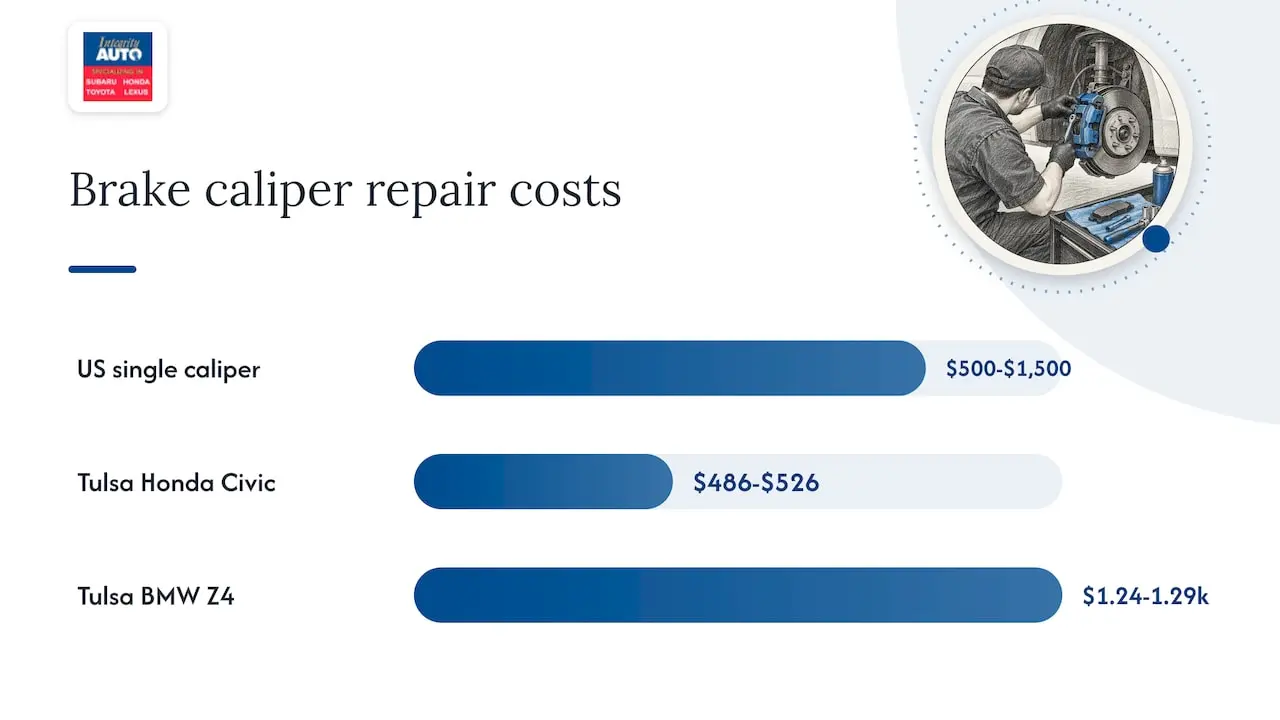
Three things push a bill higher: overheated pads and rotors that must be replaced with the caliper, a second caliper replaced for balance, and a brake fluid flush. Catching the problem when it first pulls or smells shortly after it begins usually keeps the repair smaller. Integrity Auto does not publish fixed prices for brake work, so a written estimate follows the diagnosis.
Preventing sticking calipers
- Have the brakes inspected at every oil change or at regular intervals, with slide pins and boots checked and cleaned.
- Replace brake fluid on the schedule in the owner’s manual, since moisture is a main driver of internal corrosion.
- Drive vehicles regularly. A car that sits for weeks is more likely to have seized pins or rusted pistons.
- Treat uneven pad wear as a warning to inspect the caliper, not just to replace the pads.
Brake diagnosis for Toyota, Lexus, Subaru and Honda in Portland
Integrity Auto is an independent shop in Portland, Oregon, serving Toyota, Lexus, Subaru and Honda vehicles. Its services include brake repair, diagnosis with an estimate, scheduled maintenance and complimentary multipoint inspections. The shop states that its technicians are ASE certified and that it uses OEM parts.
Owners can book through the page for their brand: Toyota, Lexus, Honda or Subaru. Subaru owners can also review the Subaru brake repair cost and service guide.
Anyone whose car pulls, smells hot or wears pads unevenly can start with a brake inspection at Integrity Auto.
FAQ
Can WD-40 fix a stuck brake caliper?
No. The manufacturer says its multi-use product should not go on braking surfaces because it may impair braking. Limited use to loosen seized parts during maintenance is possible, but pads and rotors must be avoided and everything cleaned afterward. A seized caliper still needs a proper repair.
Can you drive a car with a sticking brake caliper?
Only a short distance and only when there is no smoke, strong burning smell or extreme wheel heat. A dragging brake can overheat, damage the rotor and wheel hub parts and reduce stopping ability. A tow is the safer choice when any of those signs appear.
Is it expensive to fix a stuck brake caliper?
It varies by repair. Replacing one caliper typically runs $500 to $1,500 in the United States, according to ConsumerAffairs. Costs rise when pads, rotors or a second caliper also need replacing, so early diagnosis helps.
Why is my caliper not releasing?
Common reasons are corrosion on the piston or slide pins, a collapsed rubber brake hose that traps pressure, a hydraulic fault such as a failing master cylinder, or a hanging parking brake cable at the rear. A technician checks each of these to find the real cause.
Sources
- How To Diagnose and Fix a Seized Brake Caliper (Haynes)
- Sticking Caliper Piston Cause and Solution (Cardone)
- NHTSA recall notice, 2019 Blue Bird vehicles
- WD-40 FAQs
- Brake Caliper Replacement Cost (ConsumerAffairs)
- Remove Brake Dust Safely (Diamondbrite)