
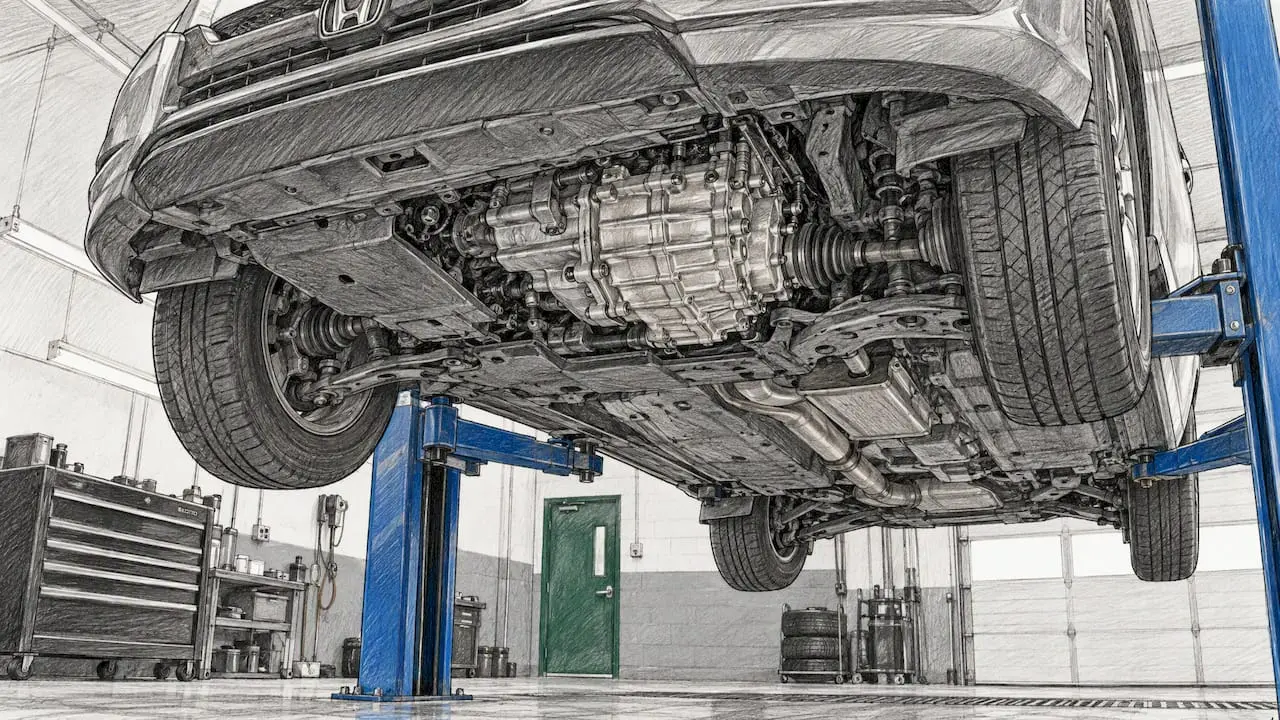
A Honda transmission that slips lets engine speed rise without the car accelerating to match. Drivers usually notice the revs climbing while the car responds slowly, or a jerk when the transmission finally grabs a gear. The most common causes are low, degraded or incorrect fluid, worn internal parts and, on CVT models, known software or hardware issues. Slipping rarely fixes itself, so the first step is a fluid check and a proper diagnosis, not a guess at a repair.
TL;DR
- Slipping feels like revving without matching acceleration, delayed engagement, jerking or a burning smell.
- Fluid problems are among the most common causes, and the wrong fluid can make things worse.
- A flashing “D” indicator on some CVT models signals a possible transmission problem, and Honda advises gentle driving and a prompt inspection.
- Diagnosis should begin with fluid condition, battery voltage and stored codes, before any parts are replaced.
- Severe slipping, failure to engage a gear or warning lights mean the car should stop being driven until it is inspected.
What a slipping Honda transmission feels like
The symptoms vary by transmission type, but the pattern is consistent. According to a Honda transmission problems guide, a slipping transmission may rev without the car moving normally, respond poorly, jerk during acceleration, or make grinding, whining, clunking or humming noises. A burning smell can also appear.
The same source lists related signs that often show up first:
- Lack of response when pressing the accelerator
- Jerking or surging under acceleration
- Delayed engagement when shifting from Park into Drive or Reverse
- Engine revving before the car starts to move
- Failure to engage a gear at all
A single momentary slip, such as one rev flare during a hard pull, is still worth noting. A pattern, such as slipping every cold morning or whenever climbing a hill, points to a developing problem. More on early symptoms is covered in signs of transmission failure.
Common causes of Honda transmission slipping
Low, old or incorrect fluid
Fluid does three jobs in an automatic or CVT: it lubricates, cools and transmits hydraulic pressure. When it runs low, pressure drops and clutch packs or belts cannot grip properly. Transmission fluid can also break down early after repeated high heat, such as towing, mountain driving or heavy stop-and-go traffic.
Fluid type matters as much as level. Using the wrong fluid can cause shudder or premature transmission failure, and Honda transmissions have different fluid specifications depending on the unit. Universal fluids and guesswork are a poor match for a CVT in particular.
Worn clutch packs and failing solenoids
Conventional automatics use clutch packs to change gears and solenoids to direct fluid. When friction material wears down, the clutches cannot hold, and the engine speeds up without matching drive. Solenoids that stick or fail cause late, harsh or missed shifts. These are internal wear items, so they typically develop over many miles and are accelerated by neglected fluid service.
CVT-specific problems
Continuously variable transmissions use a belt or chain and pulleys instead of fixed gears, so their symptoms differ. CVT shudder, a vibration or judder under light acceleration, may sometimes be addressed by software updates or proper fluid service. The same guide notes a recall for 2014 to 2015 Civic CVTs involving a drive pulley shaft that could break, and a software update for some 2016 to 2018 Civic 1.5T CVTs that set code P2817 with a flashing “D.” Owners of those years should confirm recall status with a Honda dealer using the VIN.
For a deeper look at judder and shudder, see Honda CVT judder and CVT shudder causes.
The flashing “D” indicator
On Honda CVT models, the “D” in the gear display can flash while driving. Honda’s own owner’s manual for a Civic CVT states that this indicates a possible transmission problem and advises avoiding rapid acceleration and having the car checked as soon as possible. A flashing “D” is a stored-fault situation, not a cosmetic glitch, so reading the codes is the logical next step.
Is it safe to keep driving?
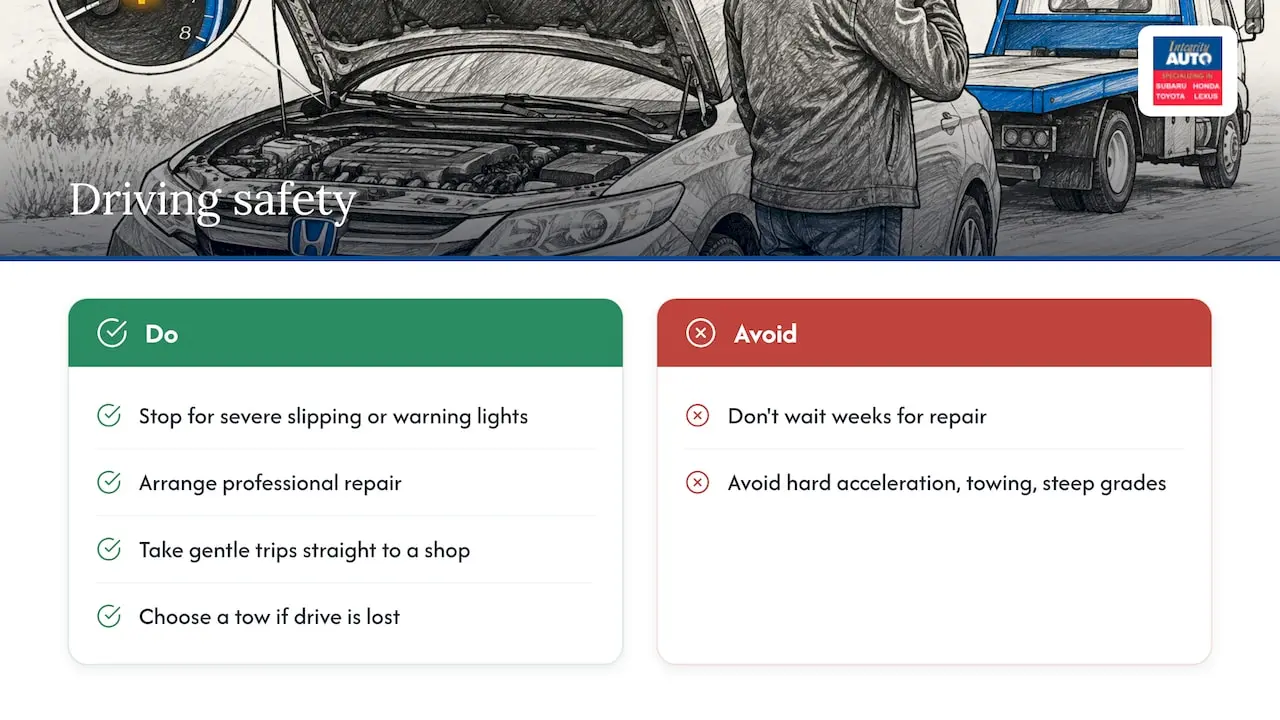
Continued driving is generally a bad idea. Ignored symptoms can escalate from a maintenance-level issue into complete transmission failure. If the transmission slips severely, fails to engage a gear, or the car shows warning lights, stop driving and arrange professional repair.
A lighter case, such as an occasional delay when shifting, is not an emergency. Even so, short, gentle trips directly to a shop are safer than weeks of waiting, and avoiding hard acceleration, towing and steep grades limits further wear. A car that suddenly loses drive in traffic is a hazard, so safety should outweigh the inconvenience of a tow.
Checking the fluid at home
On models with a dipstick, a fluid check takes a few minutes and gives useful information. According to Honda’s owner’s manual for the transmissions it covers, the check is done at normal operating temperature, on level ground, with the engine off and 60 to 90 seconds after shutdown. The level should sit between the marks, or between the hot-side marks on a CVT dipstick.
What to look for beyond level:
- Color: fresh fluid is typically translucent and light. Dark brown or black fluid suggests heat damage.
- Smell: a burnt odor points to overheated fluid or worn friction material.
- Debris: metallic glitter or fine sludge on the dipstick indicates internal wear.
Some transmissions have no dipstick, and the level must be set at a specific fluid temperature. In that case, the procedure belongs with a qualified technician. Topping off blindly can overfill the unit or add the wrong fluid.
How slipping is diagnosed
A sound diagnosis follows a sequence. The recommended starting points are fluid level and condition, battery voltage and transmission codes, followed by a check for relevant recalls or software updates through a Honda dealer. Low battery voltage can cause odd electronic behavior, so it is worth ruling out early.
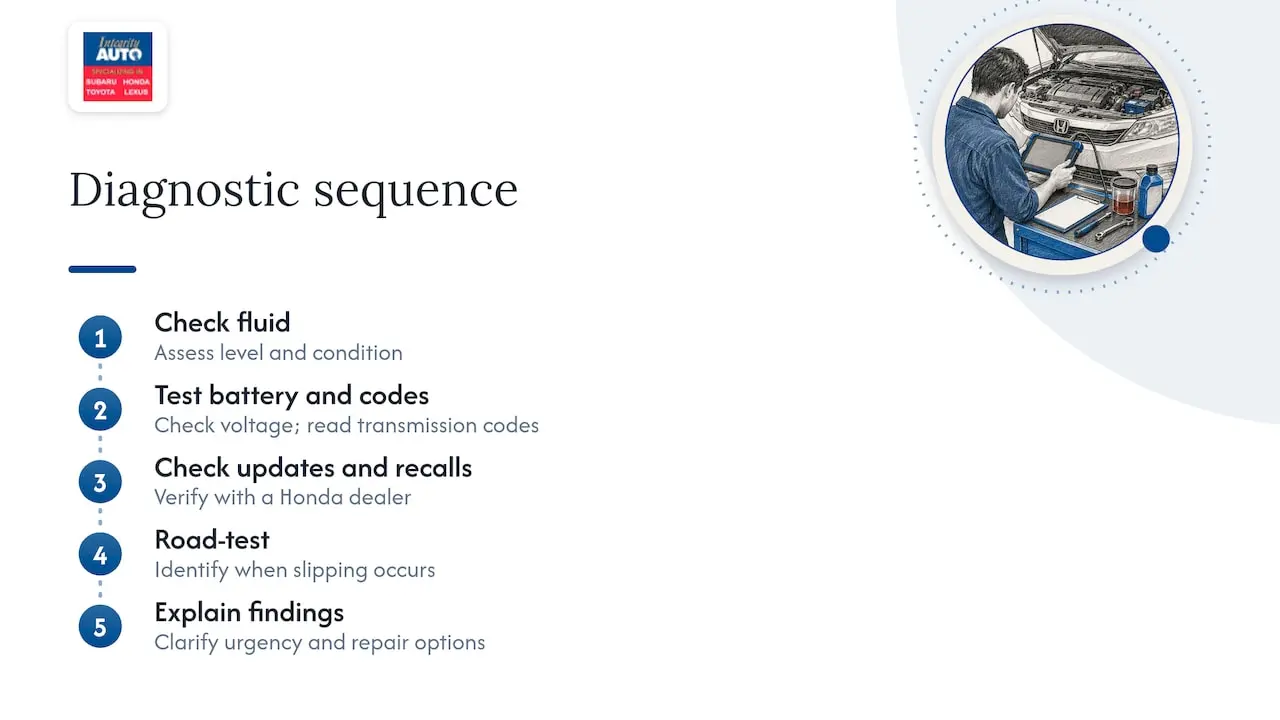
After that, a technician typically road-tests the car to see when the slip occurs: cold or hot, in which gear, under what load. Those details separate a fluid and software issue from internal wear. Roadside guesswork carries a cost, since guessing through a transmission repair can make things worse and more expensive.
The result should be a plain explanation: what was found, what is urgent, and what can wait. Options range from a fluid service or software update to repair or replacement of internal components. Fluid timing is covered in Honda transmission fluid interval.
Differences by model and transmission type
Honda has used conventional automatics (4AT, 5AT, 6AT, 9AT and 10AT) and CVTs, and each has different maintenance needs and known failure patterns. Fluid specifications also differ, so the owner’s manual for the exact vehicle is the reference for the correct fluid. Older conventional automatics tend to slip because of worn clutches and neglected fluid. Newer CVTs more often present with shudder, codes or software-related behavior. A comparison of both designs and the upkeep that supports long life is in CVT vs automatic reliability.
Honda transmission diagnosis in Portland
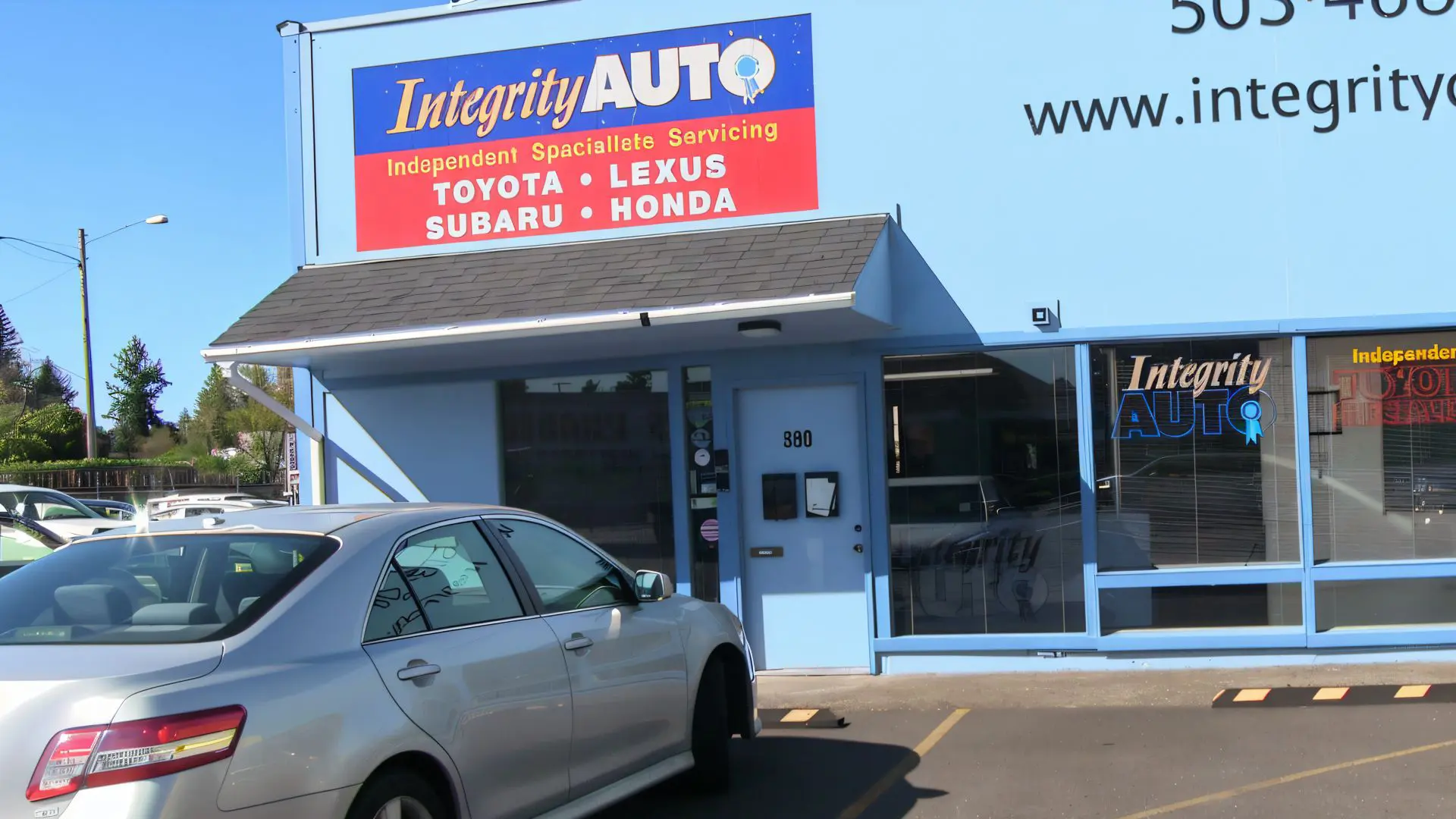
Integrity Auto is an independent shop in Portland, Oregon, that specializes in Toyota, Lexus, Subaru and Honda vehicles. The Honda service offering covers manufacturer recommended scheduled maintenance, transmission and CVT services, coolant services, clutches, check engine light and DEQ diagnosis, and related repairs, with a consultative approach that explains findings before work begins. Owners who notice slipping, delayed engagement or a flashing “D” can review the Honda service and repair options and schedule an inspection.
Prices are not published for these services, so an estimate follows the diagnosis. Bringing notes on when the slip happens, along with the model year and any recent fluid service, speeds up the process.
How to reduce the risk of slipping
- Follow the fluid service interval in the owner’s manual, and shorten it for towing, hilly routes or heavy city traffic.
- Use only the fluid specified for the exact transmission.
- Address shudder, delayed engagement or warning lights early rather than waiting for a worse symptom.
- Ask about open recalls and software updates at service visits.
FAQ
Can low transmission fluid make a Honda slip?
Yes. Low fluid reduces hydraulic pressure, so clutches or belts cannot grip well. Fluid that has overheated or is the wrong type can produce the same symptoms. Checking level and condition is the first diagnostic step.
Is a flashing “D” on a Honda serious?
It indicates a possible transmission problem, according to Honda’s owner’s manual. The guidance is to avoid rapid acceleration and have the car checked as soon as possible. Stored codes help identify the cause.
Can a slipping transmission be fixed with a fluid change?
Sometimes, when the cause is old or low fluid, and CVT shudder can occasionally be handled with fluid service or software. Worn clutch packs or damaged internal parts need mechanical repair. A diagnosis shows which case applies.
Does the slipping differ between a CVT and a conventional automatic?
The core feeling of revs without matching speed is similar, but the causes differ. CVTs are more associated with shudder, codes and software or fluid issues, while older automatics more often suffer clutch wear. The owner’s manual gives the correct fluid for each.
Sources
- Honda Transmission Problems: Symptoms, Recalls And Fixes
- Honda Transmission Identification: Find Your Exact Unit
- Honda owner’s manual: Automatic Transmission (CVT)
- Honda owner’s manual: Transmission Fluid
- How to Catch Transmission Problems Before They Get Expensive