A burning smell from brakes most often points to overheated pads and rotors, a dragging caliper, an engaged parking brake, fresh pads still burnishing, or a fluid leak. Brand-new pads can smell briefly, but visible smoke, a soft pedal, or fluid under the car means stop driving and get a professional inspection. If the odor is strong, pull over safely and let everything cool.
TL;DR:
- Smoke, a soft or sinking pedal, brake fluid near a wheel, grinding, or sudden weak stopping means stop driving and arrange a tow.
- New pads may produce a mild odor or light smoke that fades with use, but worsening smells, pulling, noise, or pedal changes require inspection.
- A hot smell concentrated at one wheel can indicate a sticking caliper, while rear wheel odor may point to a partly engaged parking brake.
- After cooling, check for fluid stains, heat discoloration, and falling reservoir levels; do not touch hot parts or pour water on the brakes.
What should you do right away when you smell burning brakes?
Speed matters less than order here. The goal is to get the car out of traffic, stop heat from building, and decide whether it can be driven at all.
- Find a safe spot to pull over and park well away from traffic, using a parking lot or wide shoulder if one is close.
- Turn off the engine if you see heavy smoke or flames, then move everyone away from the vehicle and call emergency services.
- If you only notice an odor, park and let the brakes cool without riding the pedal. Release the parking brake after parking on level ground, if the car is held safely in place by the transmission.
- Do not pour water on hot brakes. Abrupt temperature change can warp the metal, which turns a cooling problem into a rotor replacement.
- Call for a tow and a shop inspection if you see smoke, feel a soft pedal, or notice brake fluid on the ground.
- If the smell showed up after long, heavy braking on a downhill grade, give the brakes ample time to cool, then drive cautiously to a repair shop rather than continuing the trip.
Pro Tip: Note which wheel the smell seems strongest near and when it began (after a hill, after a service visit, or out of nowhere). That detail shortens diagnosis considerably.
What causes brakes to smell like something is burning?
Several different faults produce a similar acrid odor, and the accompanying signs usually point to the right one. Burning smells can be precursors to serious repairs, and the likely sources include leaking fluid, stuck calipers, heavy braking, and worn brake pads.
Here is how each cause creates the smell:
- Overheated pads and rotors. Repeated hard stops or long downhill descents build heat faster than the brakes can shed it. The friction material cooks and gives off a sharp, acrid odor. Prolonged overheating can lead to brake fade, where stopping power drops, and to glazed pads and rotors with a shiny, hardened surface that grips poorly.
- Stuck or seized caliper. A caliper that fails to release keeps the pad pressed against the rotor. That constant contact creates localized heat and an odor that lingers long after you stop. A frozen caliper needs a shop inspection, and the affected wheel often runs noticeably hotter than the others.
- Dragging parking brake. A parking brake left partly engaged, or an emergency brake cable that is misadjusted or sticking, causes steady friction at the rear wheels. The smell tends to appear after a drive and is strongest near the back of the car.
- Worn or contaminated pads. Pads worn down to the backing plate can overheat quickly. Pads contaminated with oil, grease, or brake fluid burn off the residue when they contact hot rotors. Worn pads also tend to announce themselves with a high-pitched screech from the wear indicator, and our guide to brake pad wear patterns shows what different patterns reveal about the underlying problem.
- Fluid leaking onto hot parts. A smoky or burning smell can indicate overheating, a brake fluid leak, or a buildup of brake dust. Fluid that reaches a hot rotor or caliper gives off a chemical odor and can produce visible smoke.
- New pads or rotors still burnishing. Fresh friction material cures with heat, which can create temporary odor and light smoke. The next section covers how to tell this apart from a fault.
Not every burning smell comes from the brakes. Engine oil dripping onto a hot exhaust component can produce a similar odor, and motor oil on hot exhaust parts can smell like burning rubber. A few quick clues help separate the two. Brake odor is usually strongest at a wheel and worsens after braking, while an oil or exhaust smell tends to come from the engine bay and appears even when you have barely touched the pedal.
Brake dust is another contributor. Heavy buildup on wheels and calipers can add to the odor when hot, and washing it off with a safe brake dust removal method lets you see the actual condition of the parts underneath.
When rotors show glazing, grooves, or heat damage, the repair choice is usually machining or replacement. We explain how that decision works in our article on machining drums and rotors.
When does a burning brake smell mean you should stop driving?
Some signs turn an annoying odor into a safety problem. If any of these appear, stop driving and arrange professional help or a tow.
- Visible smoke. Pale white or gray smoke rising from a wheel well or the undercarriage signals severe overheating or burning fluid.
- A soft, spongy, or sinking pedal. This suggests lost hydraulic pressure or brakes overheated to the point of fade.
- Fluid at the wheel or under the car. Low brake fluid may indicate a leak or worn pads, and a puddle near a wheel is a strong sign of a leak.
- A sharp chemical or electrical odor. If it smells different from the dry, resinous scent of new pads, treat it as a fault.
- Grinding, violent vibration, or sudden weak stopping. Any of these means the brakes can no longer be trusted.
A burning smell paired with smoke, puddles, or other warning signs calls for prompt professional attention. AAA guidance lists an acrid burning-chemical odor as a possible sign of overheating brakes, a worn or loose part, or a sticking caliper, and advises getting to a repair shop promptly when other symptoms accompany it.
Driving on with any of these symptoms risks more than a bigger repair bill. Overheated fluid can boil and leave the pedal with no resistance, and a seized caliper can score a rotor beyond saving. Timely inspection is the cheaper and safer route.
How can you tell normal pad burnishing from a brake problem?
Burnishing, also called bedding-in, is the break-in period for new pads and rotors. The friction material transfers a thin, even layer onto the rotor surface, and the resins in the pad cure under heat. That curing is what produces the smell and sometimes light smoke. Manufacturers publish procedures for it. One example is the burnishing guidance in a 2026 Dodge Durango supplement, which notes that new brake systems have a break-in period that can produce smoke and odor, and describes repeated high-heat stops followed by cool-down stops. Your own owner’s manual has the procedure that applies to your vehicle.
A normal burnish looks like this:
- A mild odor that appears in the first drives after new pads or rotors are installed
- A light smell that gradually fades after the new brakes are used
- A firm pedal and quiet, even stopping the whole time
- No fluid, no heavy smoke, and no pull to one side
A fault looks different. Installation problems can cause a persistent burning smell, including dragging hardware, missing clips or shims, a caliper that was not freed up properly, or a parking brake adjusted too tight. If the smell continues well past the expected bedding period, gets stronger instead of weaker, or arrives with a soft pedal, noise, smoke, or pulling, schedule an inspection and tell the shop the work was recent. Brake jobs done right should settle quickly, and a returning odor is a reason to look again rather than wait.
What can you safely check yourself once the brakes cool?
A few simple checks can narrow down the cause before you reach a shop. All of them require cool brakes. Inspect brakes only when cool, because rotors and calipers can cause serious burns long after the drive ends.
- Wait until the wheels are cool enough to hold a hand near without discomfort, which can take a while after heavy braking.
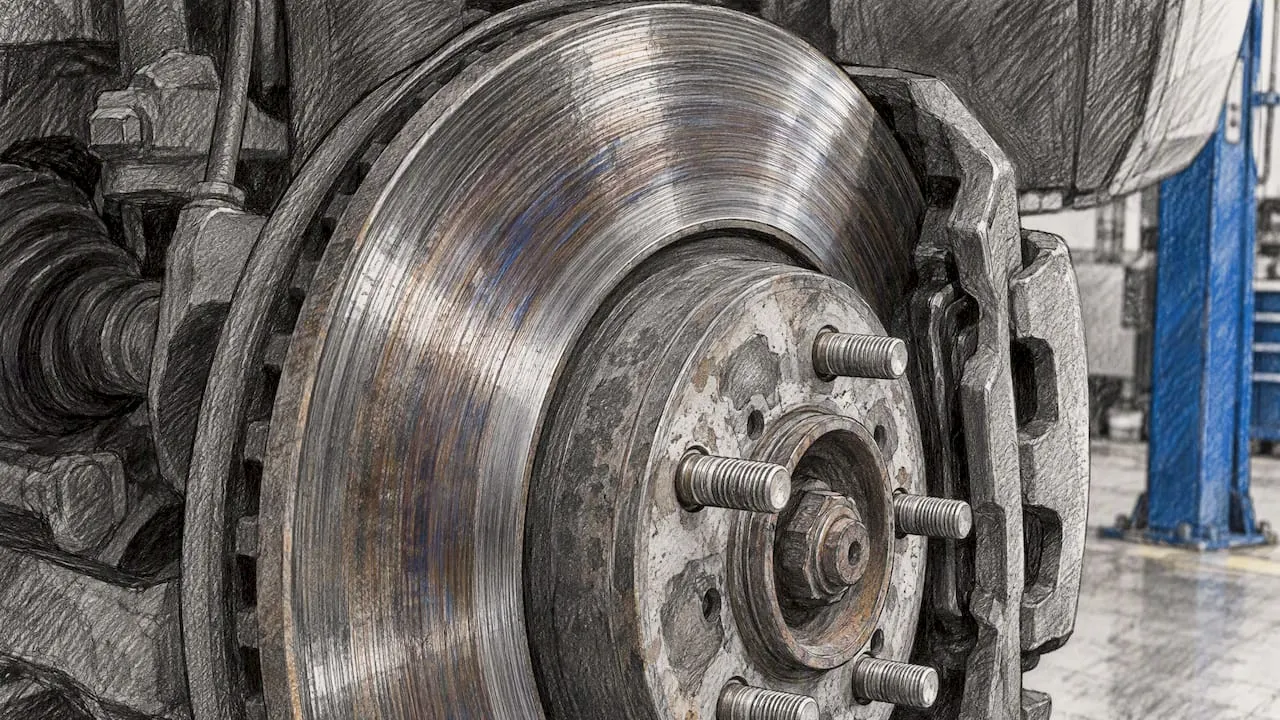
- Walk around the car and look at each wheel area for discoloration, blue or dark heat marks on the rotor, shiny glazed surfaces, or fluid stains.
- Check the brake fluid reservoir level under the hood. A level that keeps dropping points to a leak or very worn pads.
- Note which wheel carries the strongest smell or the most heat staining. That identifies the corner the shop should check first.
- Only if there is no smoke, no fluid, and the pedal feels normal, do not test-drive the car; arrange a professional inspection or tow.
- Look at how much pad material remains where it is visible through the wheel spokes. For reference points on replacement timing, see our guide to replacing brake pads.
Pro Tip: Take a few photos of any stains, discoloration, or the reservoir level. Showing the shop what you saw saves time and helps with accurate diagnosis.
Know where DIY stops. Do not touch hot rotors, do not push a caliper piston back unless you are trained, and do not attempt to bleed the system without proper tools and procedure. Brakes are a safety system, and a half-finished repair is worse than none.
What does a professional brake inspection involve?
Knowing what happens at a shop makes the visit less intimidating, and it shows why guessing at home rarely beats a proper inspection. Here is how a thorough diagnosis typically runs at our shop.
Intake. We start by asking when the smell began, what driving conditions preceded it (downhill, towing, stop-and-go), whether any parts were recently replaced, and which wheel seemed worse. These details point the technician toward the right corner and the likely fault.
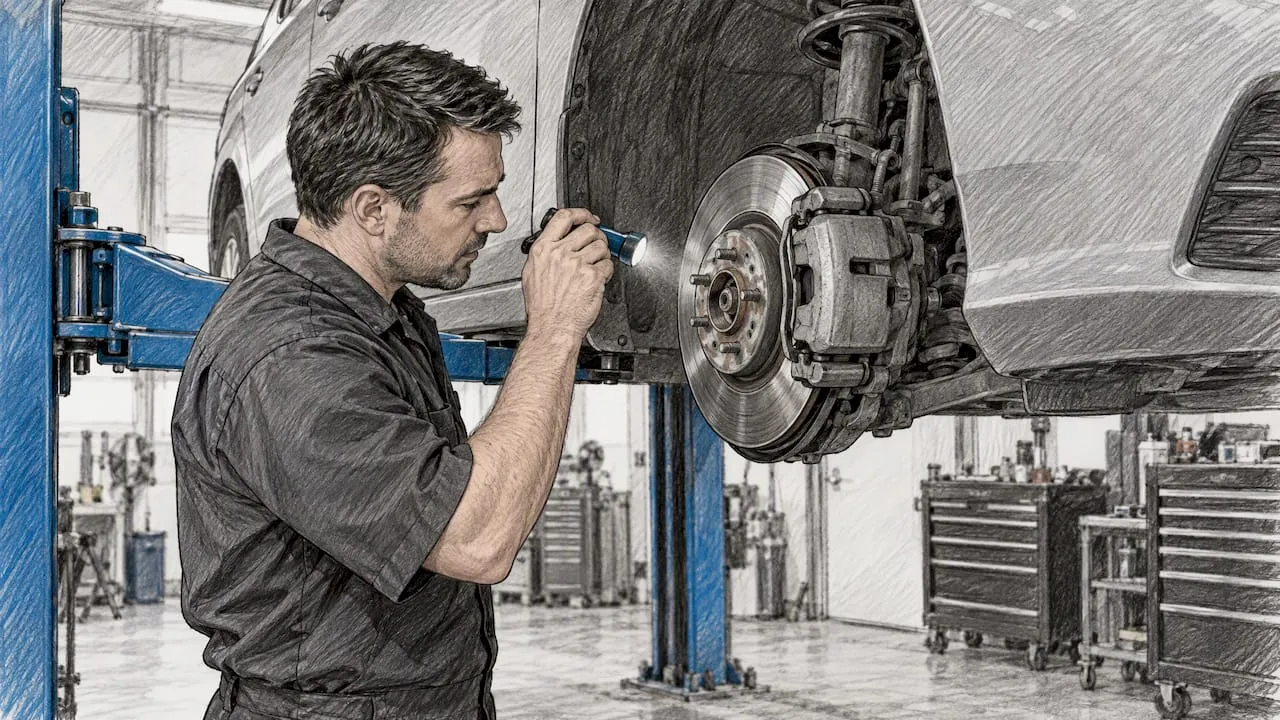
Visual inspection. We check pad thickness and wear pattern, rotor surface condition, caliper movement and slide pins, brake hoses, wheel bearings, and brake fluid level and condition.
Functional checks. We measure pad thickness, test pedal travel and firmness, road test the car for pulling or noise, and look for signs that one corner is dragging.
Common repairs follow from the findings:
- Caliper service or replacement when a piston or slide pin is sticking
- Pad and rotor replacement, or rotor machining when the surface allows it
- Brake fluid flush when fluid is old, contaminated, or overheated
- Parking brake adjustment or cable service when the rear brakes drag
Some situations call for more. If the system has lost pressure or has air in the lines, bleeding the brakes is part of the repair. If the car is unsafe to drive, we recommend a tow rather than a risky trip to the shop. Timelines depend on parts and the extent of damage, so a simple adjustment can be quick while a caliper or rotor job takes longer.
How do we help with brake smell diagnosis and repair?
Integrity Auto is an independent shop specializing in Toyota, Lexus, Subaru, and Honda vehicles, serving owners in the Portland, Oregon area. We offer brake inspections, pad and rotor replacement, and brake repair, with a dedicated diagnosis service to identify the exact cause of a burning smell. Our brake services page covers what we handle for these makes.
When you call, tell us the symptoms from the warning list above: smoke, a soft pedal, fluid, which wheel smells worst, and whether work was done recently. If driving is unsafe, ask about arranging a tow. To book a diagnostic, call us or use our Toyota service page and we will get you scheduled.
FAQ
Is it safe to drive with overheated brakes?
No. Overheated brakes can fade, boil the brake fluid, and leave you with weak stopping power. Pull over, let the brakes cool completely, and avoid water. If the pedal feels soft or you see smoke, have the car towed to a shop.
Is it safe to drive a car with a burning smell?
It depends on the source. A faint, short-lived smell after fresh brake work may be normal burnishing, but a strong or lingering odor with smoke, fluid, or pedal changes is not safe. When in doubt, get to a repair shop promptly.
How long does it take for a burning brake smell to go away?
After new pads or rotors, the smell may gradually fade as the friction material finishes curing. After a hard downhill drive, it usually clears once the brakes cool. A smell that persists beyond that, or keeps returning, signals a fault worth inspecting.
What does a bad caliper smell like?
A sticking caliper tends to give off a sharp, acrid, burning odor from one wheel, since the pad stays pressed against the rotor. That wheel often feels much hotter than the others after a drive. A frozen caliper requires a shop inspection.
Sources
- Signs Your Brakes Need Service | Via
- Why Does My Car Smell Like Burning Rubber? | AAA Club Alliance
- How to Care for Your Car Brakes – Your AAA Network
- 2026 Dodge Durango Pursuit Supplement USC E2
- 11 Ways To Know You May Need New Brakes | AAA Automotive


