
If your ABS light turns on right after a battery change or jump start, the car is most often detecting a voltage event or a stored fault code. Normal braking will still work, but the computerized anti-lock function may be disabled until the issue clears. Check your battery connections first, and if the car drives normally, a short trip to a shop or a brief relearn drive often resolves it.
Table of Contents
- Why ABS or traction warnings appear after battery replacement, jump starts, or battery disconnects
- Quick owner checklist: safe steps to try before a shop visit
- How resets work and why clearing the ABS light may not fix the underlying problem
- What a professional diagnostic process looks like
- When it’s safe to drive and when to tow
- Prevention: how to reduce the chance of ABS warnings after battery service
- An ABS light that lingers after a battery change deserves a proper scan rather than a guess; a thorough diagnostic sequence includes a charging system test, a scan tool readout of the stored ABS code, and a physical inspection of the wheel speed sensors and related wiring.
- Sources
- FAQ
Why ABS or traction warnings appear after battery replacement, jump starts, or battery disconnects
A battery event interrupts the steady power supply that the ABS control module depends on to track wheel speed data. That interruption can leave the module holding an old error, even after the battery reconnects and the electrical system stabilizes. In many cars, several modules communicate over a shared network, so a power drop that affects one system can leave a fault code sitting in another.
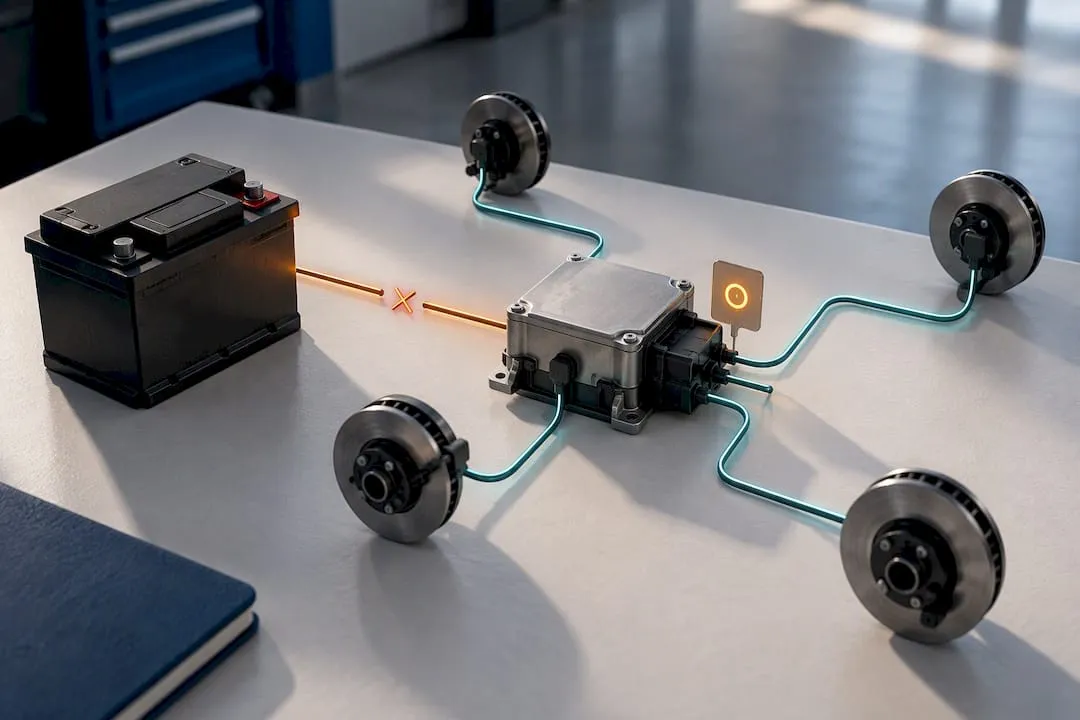
Charging system problems are a common trigger. A failing alternator forces the vehicle to run entirely off the battery, and that instability can cause warning lights to appear that have nothing to do with the part that was just replaced, according to AAA’s guide on alternator symptoms. Once voltage drops or spikes outside a normal range, the ABS module can register the fluctuation as a fault, even when the wheel speed sensors themselves are fine.
A few other causes show up often after a battery event:
- Stored diagnostic trouble codes from the power loss that never cleared automatically.
- Wheel speed sensor wiring that was already marginal and gets exposed once the module resets.
- Corroded or loose battery terminals that create a weak connection mimicking a charging fault.
- A weak or aging battery that cannot hold a stable voltage under load.
A charging system reading below the normal range at idle or under load is a strong signal that the alternator, not the ABS system, is the actual problem. AAA’s comparison of alternator and battery symptoms notes that a healthy alternator should sustain a running voltage in the 13.5 to 14.5 volt range, and readings below that under load point toward the charging system rather than the brakes.
When the ABS light comes on alongside the battery light or the brake light, that pattern usually means the charging system is the root cause, not a coincidence of separate failures. A single low voltage event can trip multiple modules at once, which is why owners often see two or three lights appear together after a jump start.
Quick owner checklist: safe steps to try before a shop visit
Before assuming the worst, a few simple checks can rule out the most common causes without any special tools.
- Inspect the battery terminals and cables for corrosion, looseness, or a cracked case, and clean or tighten as needed.
- Check the ground straps connecting the engine and chassis, since a loose ground can mimic a charging fault.
- Measure resting battery voltage with a multimeter, or have the battery fully charged if it reads low.
- Start the engine and check charging voltage at idle, confirming it climbs into a normal running range rather than staying flat.
- Check the fuse box against the owner’s manual for any ABS related fuse that may have blown during the power event.
- Drive the car under normal conditions for several miles at varying speeds, allowing the control modules to complete a relearn cycle.
During that drive, pay attention to whether the ABS light flickers, stays steady, or turns off on its own after a stop and restart. A light that clears after a short drive usually confirms a transient voltage issue rather than a hardware failure.
Pro Tip: Avoid disconnecting or unplugging the ABS or airbag modules yourself. Doing so without the right scan tool can create new fault codes or communication errors that are harder to trace later.
How resets work and why clearing the ABS light may not fix the underlying problem
Some vehicles clear a stored ABS code automatically once the system completes a successful relearn drive. Others require a technician to connect an OBD-II or ABS specific scan tool and manually clear the code after confirming the fault is no longer active.
Clearing a code is appropriate once the underlying cause, whether a loose terminal or a weak alternator, has actually been fixed. Clearing it before that point only hides the fault temporarily, and the light typically returns within days.
- Disconnecting the battery can wipe some stored codes, but it can also reset fuel trims and other readiness monitors, making it harder to spot a charging problem later.
- A scan tool readout distinguishes a one time voltage dip from a wheel speed sensor or wiring fault that keeps repeating.
- Community reports on forums such as Mechanics Stack Exchange describe cases where the ABS light returned after a DIY reset because a grounding or charging issue was never addressed.
- A sensor, harness, or ABS module replacement becomes necessary only when the fault code repeats consistently across multiple drive cycles.
Owner’s manuals reinforce this caution directly. Toyota’s dashboard warning light reference advises inspection whenever a safety system light behaves unusually after a power event, rather than relying on a reset alone.
What a professional diagnostic process looks like
A proper diagnostic follows a defined sequence rather than guesswork. Technicians start with the basics and work toward the more time consuming checks only when the simple ones come back clean.
- Battery and charging test, confirming resting voltage and alternator output under load.
- Scan for ABS diagnostic trouble codes, pulling the exact fault stored in the module.
- Wheel speed sensor inspection, checking for damage, corrosion, or a disrupted signal.
- Power and ground circuit check at the ABS module itself, since a poor ground can mimic a sensor failure.
This workflow lets technicians separate a voltage related intermittent code from an actual hardware fault. A code tied to a brief voltage dip usually will not return during a controlled road test, while a code caused by a failing sensor or damaged wiring reappears consistently. A running alternator voltage reading outside the 13.5 to 14.5 volt range during a shop test is one of the clearest signs the charging system caused the warning, according to AAA’s alternator versus battery guide.
Diagnostic time and cost vary by vehicle and how quickly the fault reproduces, and Integrity Auto Inc. provides an estimate before any repair work begins through its diagnostic charges page. Chasing the wrong part rarely fixes an intermittent code, which is why documenting the fault before replacing anything matters.
When it’s safe to drive and when to tow
Deciding whether to drive to a shop or call for a tow depends on what else is happening on the dashboard, not just the ABS light itself.
- Drive carefully to a nearby shop if the ABS light is the only warning showing and normal braking feels unchanged.
- Stop and arrange a tow if the car stalls, loses power, or shows a battery or charging warning alongside the ABS light.
- Treat multiple simultaneous warning lights as a sign of a charging system failure rather than a coincidence.
- Use low speed routes, leave extra following distance, and avoid highway speeds or hard braking until the car is checked.
Manufacturer guidance backs this approach. Honda’s owner’s manual notes that when the ABS indicator stays on, normal braking ability typically remains, but the anti-lock function may be unavailable, and the vehicle should be inspected promptly.
Prevention: how to reduce the chance of ABS warnings after battery service
A few habits during battery replacement lower the odds of chasing an ABS light afterward.
- Follow the correct terminal order when disconnecting and reconnecting the battery to avoid a momentary short.
- Confirm charging system health before or during battery replacement, since a weak alternator often surfaces once a fresh battery masks the symptom temporarily.
- Ask the shop to run a diagnostic scan after any battery replacement and keep the results on record.
- Use quality battery terminals and corrosion protection to avoid a poor ground connection down the road.
A quick battery testing and replacement service that includes a charging system check catches most of these issues before they turn into a dashboard warning. Keeping that service record on hand also makes any future diagnostic faster, since a technician can rule out the battery event as the ongoing cause.
An ABS light that lingers after a battery change deserves a proper scan rather than a guess; a thorough diagnostic sequence includes a charging system test, a scan tool readout of the stored ABS code, and a physical inspection of the wheel speed sensors and related wiring.
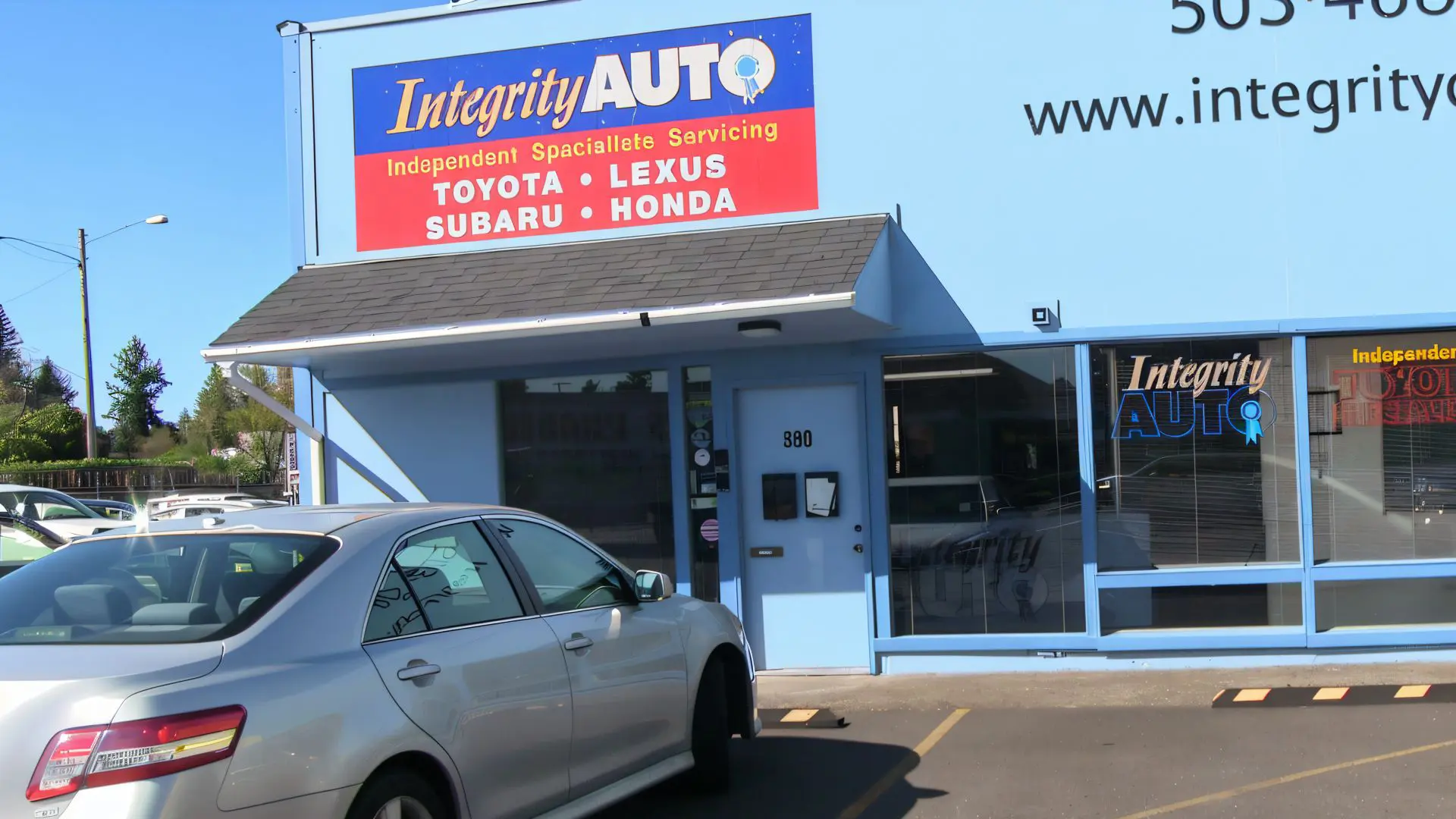
- Charging and battery testing to rule out a voltage related trigger before touching any sensor.
- ABS code scanning using manufacturer aligned procedures for each brand serviced.
- Sensor and wiring inspection when a code repeats across multiple drive cycles.
- A written estimate before any repair begins, based on what the scan actually finds.
| What you get | Detail |
|---|---|
| Diagnostic scan | ABS code readout plus charging system test |
| Estimate | Provided before repair work starts |
| Vehicle focus | Toyota, Lexus, Subaru, and Honda |
Bring any recent battery service paperwork to your appointment, since it helps the technician narrow down whether the current light traces back to that event. Book a diagnostic appointment to get a clear answer instead of guessing at parts.
Sources
- Signs Your Alternator May Need to Be Replaced | Via
- Bad Alternator vs. Bad Battery: A Quick Guide | AAA Automotive
- Instrument Panel — Anti-lock Brake System (ABS) Indicator (Honda owner’s manual PDF)
- Toyota Dashboard Symbols & Warning Lights Meaning | MyToyota
FAQ
Can a low battery cause an ABS light to come on?
Yes, a low or unstable battery voltage can trigger the ABS module to register a fault even when the sensors and wiring are fine. Once voltage stabilizes and the module completes a relearn cycle, the light often clears on its own.
What does it mean when your battery light and ABS light come on together?
This combination usually points to a charging system problem rather than two separate faults. A failing alternator can leave the vehicle running on battery power alone, and that instability affects multiple modules at once, according to AAA’s alternator guide.
Can I still drive if my ABS light is on?
In most cases, normal mechanical braking still works, though the computerized anti-lock function may be unavailable. Manufacturer guidance recommends driving cautiously to a shop for inspection rather than continuing to drive indefinitely with the light on.
Will unplugging the battery reset the ABS light?
Disconnecting the battery can clear some stored ABS codes, but it does not fix an underlying charging or sensor problem, and the light often returns. A scan tool readout at a shop is the more reliable way to confirm whether the fault is actually resolved.


